

*For the international readers: start it from the end, it is in Estonian only in the beginning, otherwise in English. Thank You.
Sissejuhatuseks
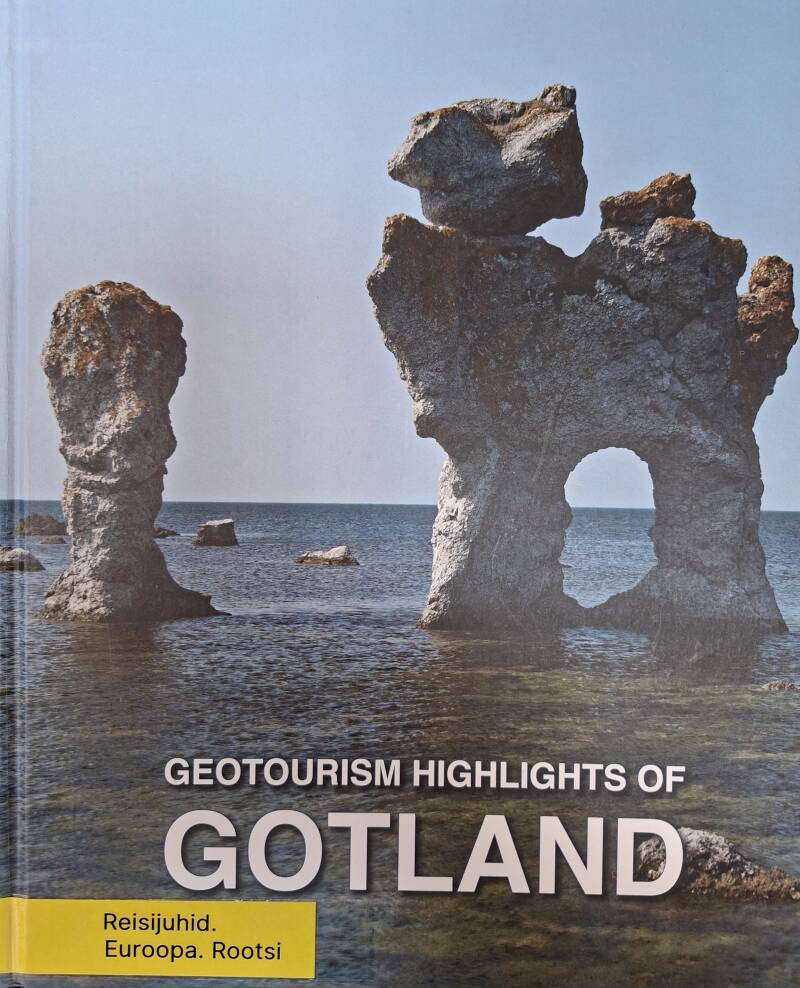
Esimesel juulil, teisipäeval lendan Visbysse. Läbi Stockholmi. Otse Tallinnast ei saa. Endise Läänemere kaubanduspealinna ja Gotlandi kohta üldse on olemas üks vägagi huvitav, hästi koostatud (Uppsala ülikool), vägagi ainulaadse lähenemisega, põhiliselt geoturismi vaatekohtadest lähenev raamat "Geoturism highlights of Gotland", kummaline, et 2010ndal aastal on see justkui Tallinnas ilmunud või koostatud. Selle raamatu avastasin praegu remondis oleva RaRa väikesest majast, mis ajutiselt asub aadressil Narva mnt. 11. Hiljem leidsin ka selle raamatu veebi versiooni, kuid seda .pdf'i ei õnnestunud tehnilise vea tõttu alla laadida ja seetõttu võtsin otse ühendust ilmselt Uppsala ülikooli kommunikatsiooni osakonnaga, kes lõpuks veale jälile said - tegu oli anomaalselt mahuka failiga, jutt jõudis niikaugele, et võiks selle ka eesti keelde tõlkida ja avaldada, sest praegu on ka meite mail geoturism "tiibu rapsides lendu tõusmas", email on mul nüüd olemas, võtku ma ühendust ja miks ei.
Muide, kui sel raamatul järel käisin - raamatukogust väljudes, lamas raamatukogu nurgal rahulikult väikene seljakotikene, jah tänaval, lukk lahti. Võtsin maast koti, viisin 15 sammu raamatukokku - mis teha, seletasin noorukesele raamatukohoidjale? Uurime, mõtleme. Ei mina ei taha politseiga rääkida ega kuhugile, seda viia - kuhu ma viin selle, politseijaoskond on Lasnamäel ju? Aidaku nemad leida lahendus. Kotis olid dokumendid, sularaha, kaardid, telefon ja veepudel - nad vaatasid koti läbi. Lõpuks leidis otsustuskindluse vanem raamatukoguhoidja ja helistas politseisse, teatas omaniku passist nime ja muu, mis politsei telefonitsi küsis. Ma saan aru, tuleb viia politseisse - Tallinna kesklinnas ei ole politseid - mis ma hakkaksin Lasnamäele sõitma või!? Selline on meie pealinn, ei ühtki väikest politsei esindust isegi kesklinnas, kuhu viia leitud esemed. Ei tea tõesti, mis toimub ja on toimunud 30 ja enam aastaid meie pealinna juhtide väikestes peakestes.

Tegelikult ei peakski imestama, et Tallinnas ilmunud või koostatud - olevat ju Tallinna asutamiseks (samuti Riia asutamiseks) lastud Gotlandilt siia tuua 300 meest ja siit edasi võib hakata rääkima juba linnaõiguste kujunemisest. ;)
Blogisse tuleb vahel postitusi ka inglise keeles, vastavalt sellele kuidas siinkirjutaja tunnetab. Kuna üleval olev raamat on ilmunud NGO GEOGuide Baltoscandia poolt, tuletaks peenikeses šifris meelde, mis on Baltoscandia - tegelikult ei - igaüks saab ise panna antud märksõnad AI'sse (soovitan Copilot) ja lugeda.
01.07.25
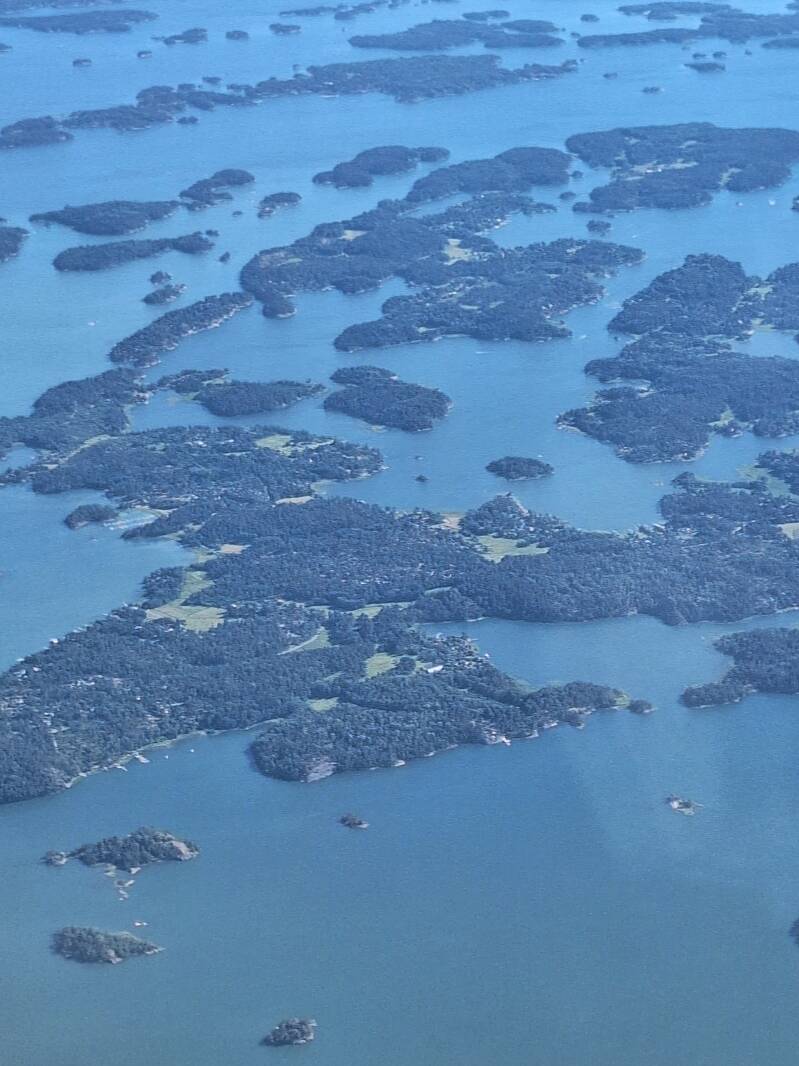
Väga mõnus lend on siiani. Pole järjekordi, Arlanda lennujaam on seekord ülimalt rahulik - pole nii head lennureisi olnudki. No rush. Varsti lendan edasi Visbysse. Jõuan 20.00 paiku.
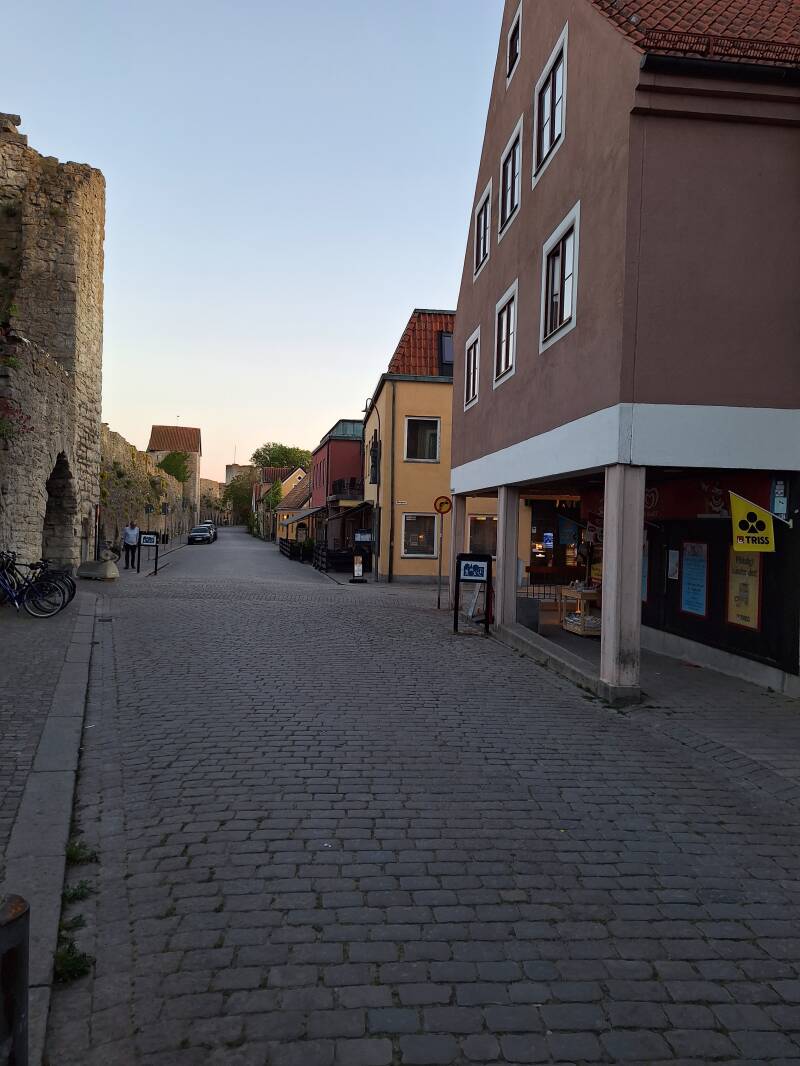
/.../ Hillevi came to pick me up. Was great to meet. There were no key in the key box nr. 15, like instructed in the email, keybox 15 was empty, put code, code worked. Started to call and only chance was security to open the door for me. We drove there - to the house, where my room. Hillevi had a bike for me too. Finally they came - Securitas. Strange, usually all works in Sweden. /.../ They opened it for me, long story. Tmrw I will go then to Housing office and ask the key. No panic. Tried to find some food and made nice travel day photos - first day. Pitty, that can't go 08.00 to harbour, have to get my key first. Hillevi told me to get the key first. It's quite safe in Sweden, so my door stays unlocked until. It so nice and relaxing, the evening walk here. Enjoy the photos. ;) /.../
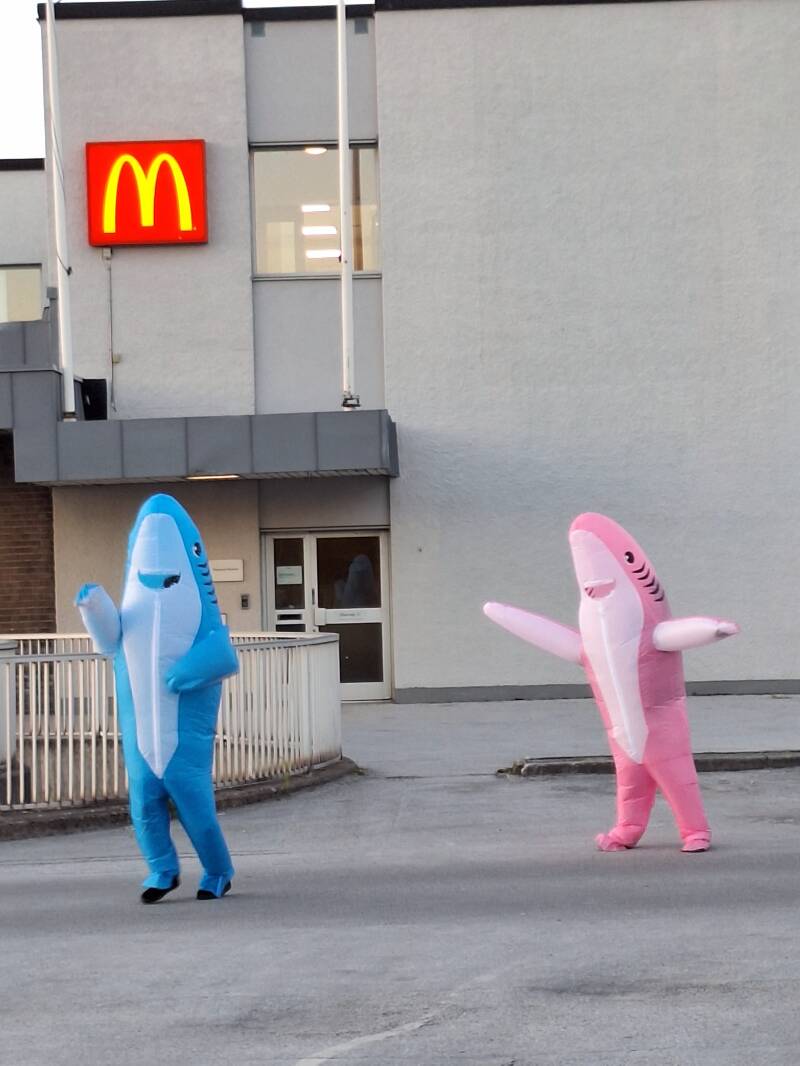
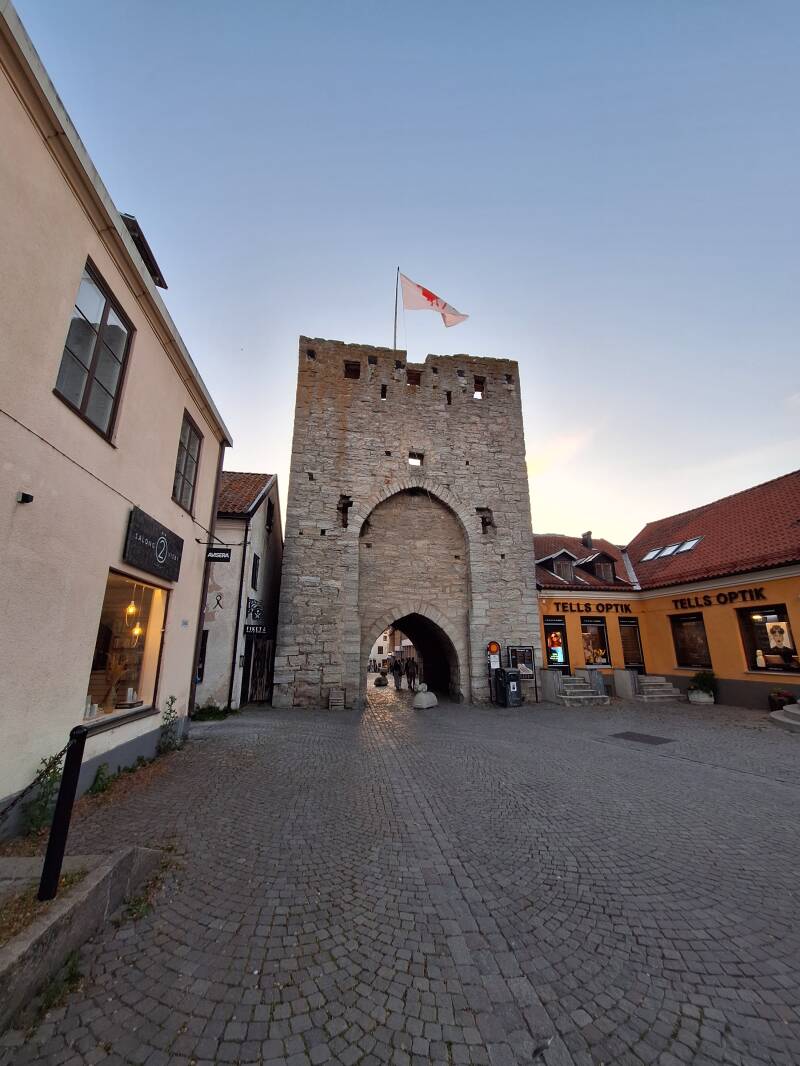
02.07.25
Early morning. Cycling to get accustomed. Almedalen park. Kallbadhuset. Harbour area. First photo is the house, where I have my room. Waiting. /.../
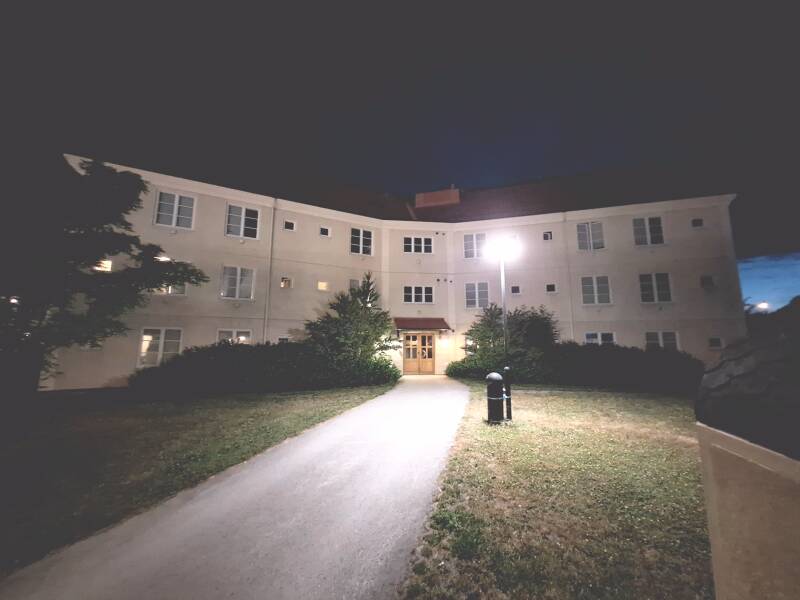
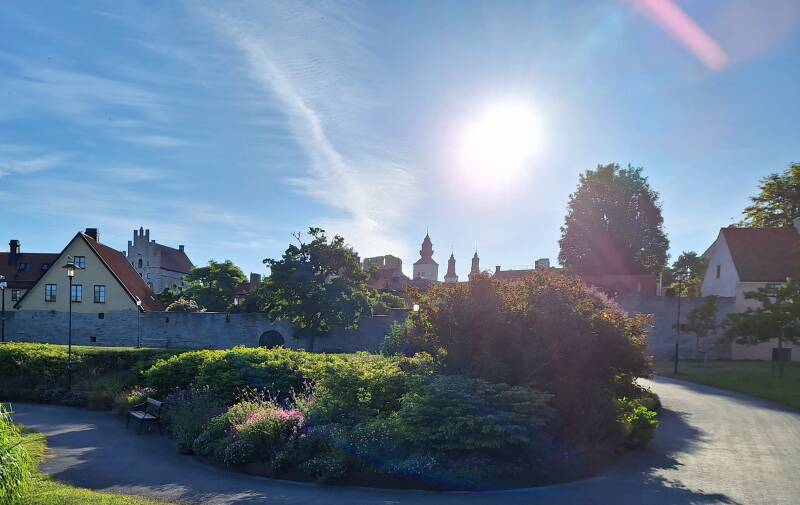
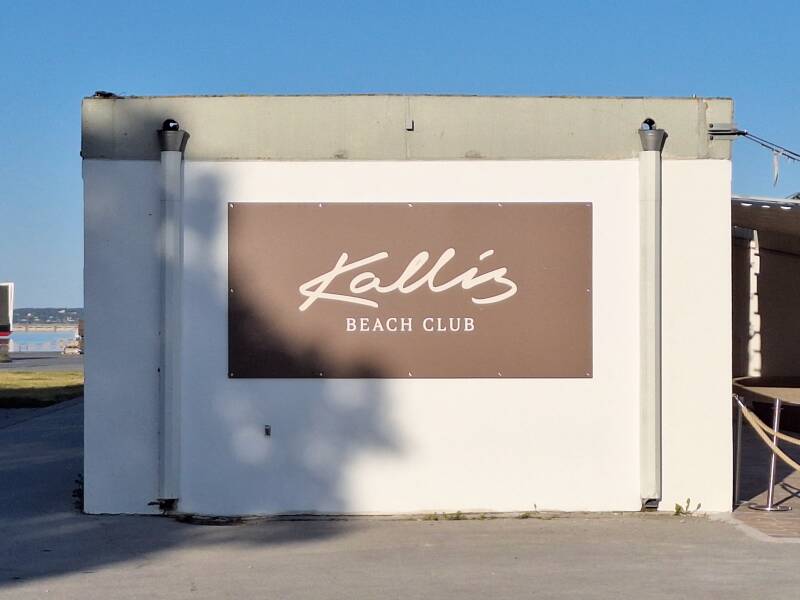
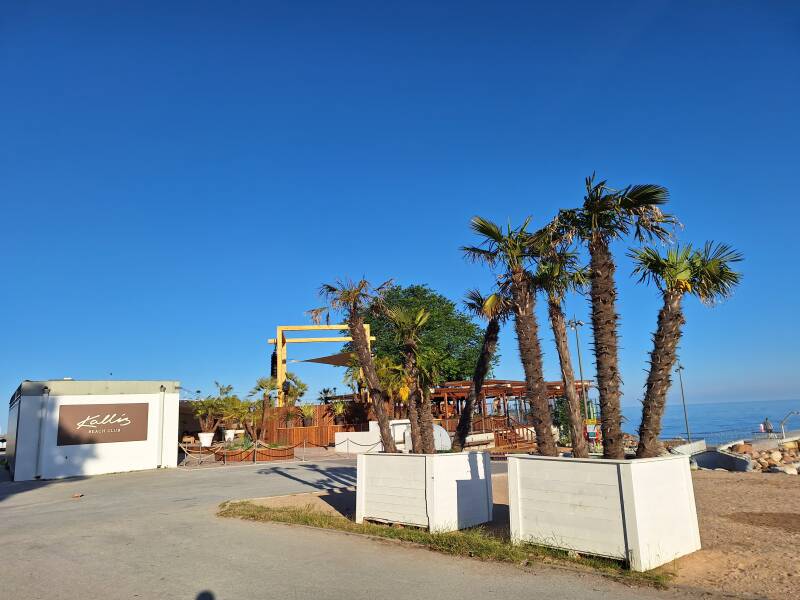
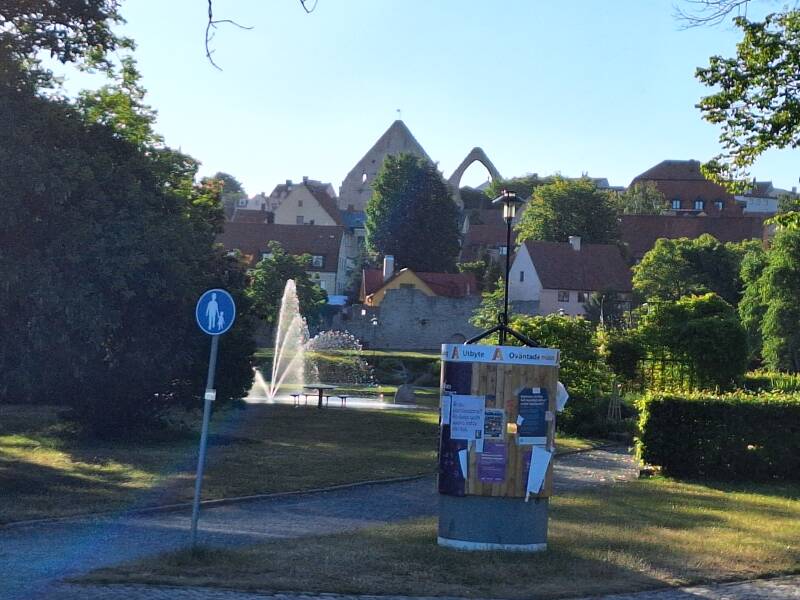
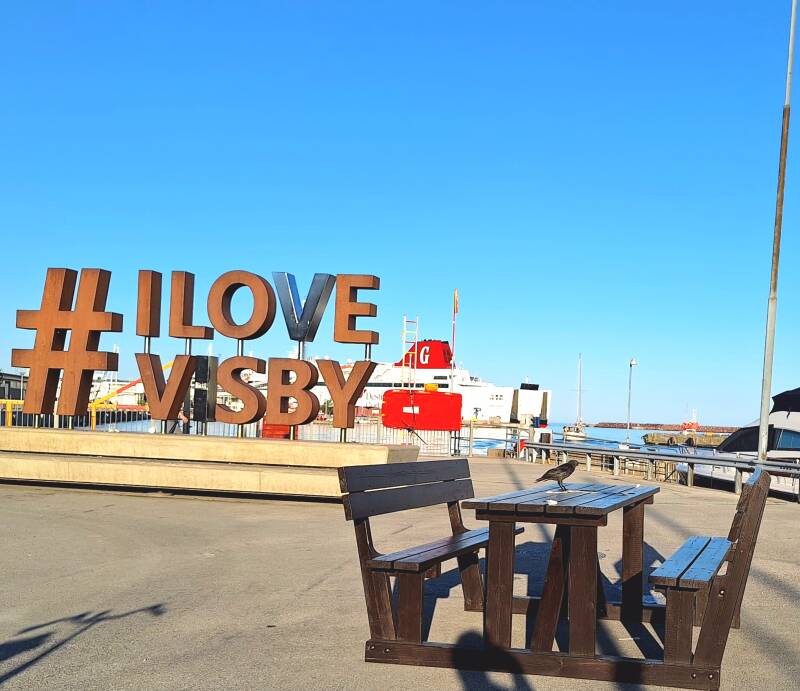
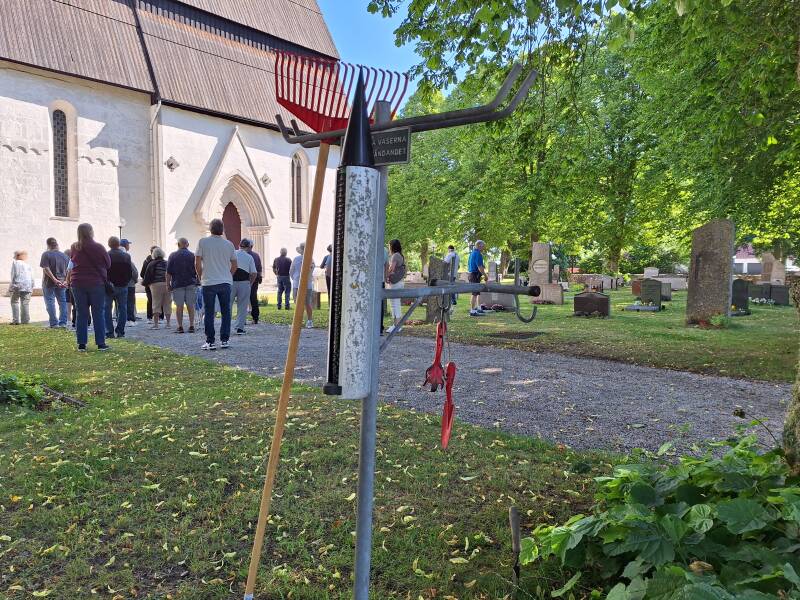
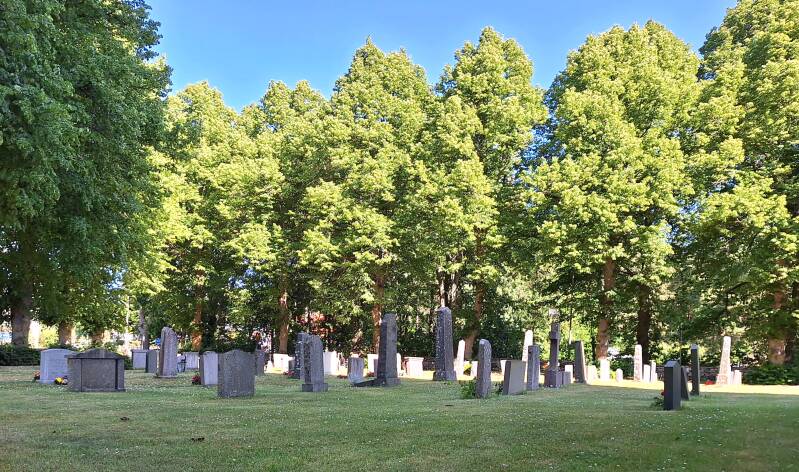
The graveyards must be perfect and gravestones must be placed like doing Swiss watch. /.../
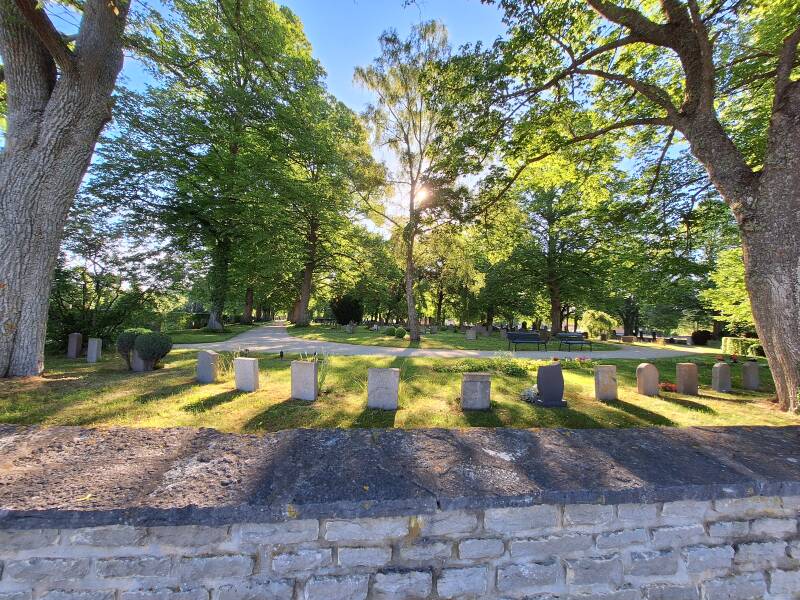
I got the key now. /.../ Going with guide to Högklint and afterwards will be doing walking tour in the town. Great.
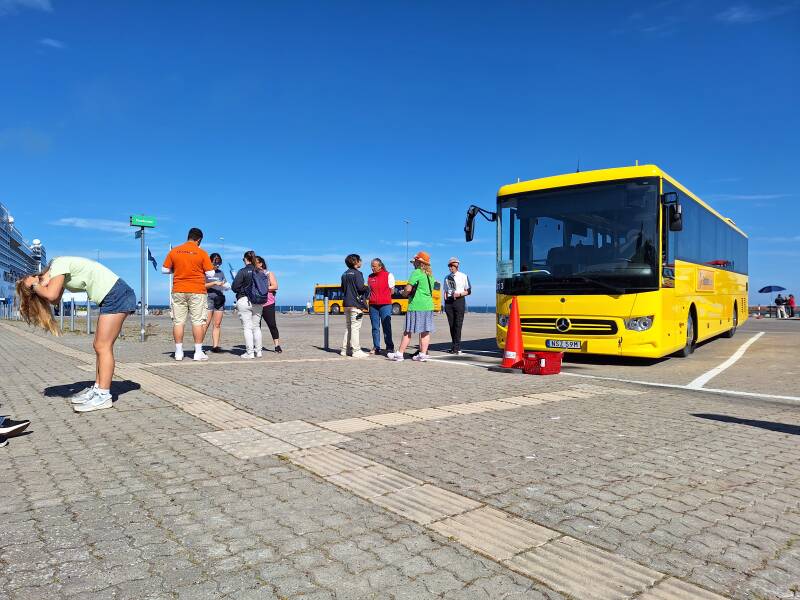
HÖGKLINT & CITY CENTER IN RINGMÜR TOUR, WITH MSC POESIA group, EQUIPMENT, OFFICE, PLANNING
Information about systems and networks. Can't write it here.
Guide Gunnel. Högklint - great views, scenery, fossils. Robber Lily cave. 700 000 US dollar summerhouse. Not enough drinking water at Gotland. Have to carefully use water. 16 000 lambs on island. Blue fire, blomma. Goat starving cave. In Sweden common rights: one can put up tent everywhere (on private land, has to ask permission), go to pick flowers, etc. Gotland lamb: grey fur. Was 16 churches in Visby, when Visby was rich, not anymore. Visby - World Heritage site.
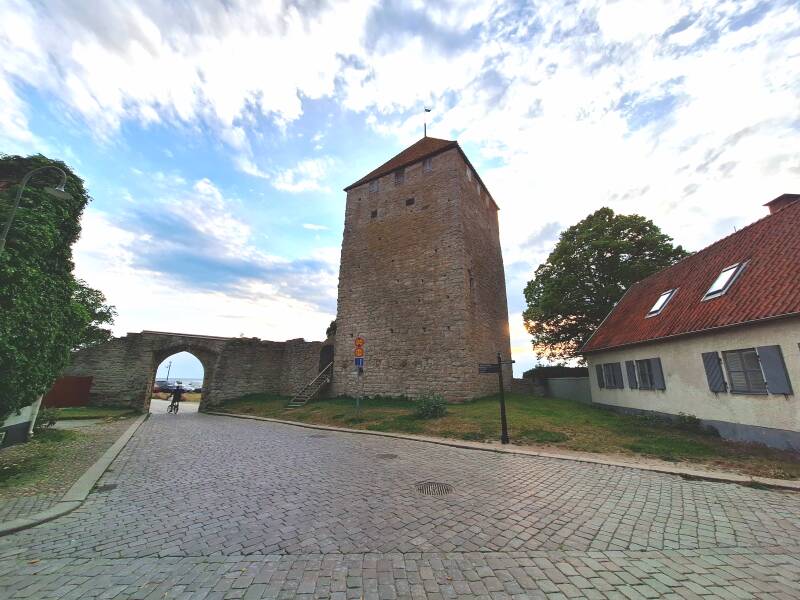
Dalmamangate. 27 standing towers, Ringmür. Dalman wanted to help poor Gotland people. Made warehouse for storing grain. Visby is city of roses and ruins. 9 miljon SEK for that small white house. Near Dalman Gate. St. Mary cathedral turns 800 years in three weeks. Coffin with 4 keys from different Baltic sea areas to open wasn't legend, was really existing early medieval times. Trade agreements inside, keys were held by Visby, Lubeck, Soest and Dortmund. Travelled once a year to the coffin to open it. Main square 5500 years old. Russian Church ruins were found underneath, see white building. Many different architecture styles. Beach gates. Mr. Donner, warehouses, died early. Her wife got very successful, only no-one didn't understand, is it a woman running that business. Was titled Madam Donner, dear Sirs. Elm trees were planted - Almedalen park. Uppsala University, one of the oldest.
Learnt a lot: speak as your true yourself, not formally. Be simple and creative to international and multibackgrount people. Don't rush. Most important is not to lose people in the group, count them as much time as needed, better to be cautious. That was my responsibility too...
Photos here:
https://drive.google.com/drive/folders/1ANn5_o5WrUlSK6TXU_d0UiGy127NyNKZ
Going to walk towards Botanical garden. Evenings are really nice here in Ringmür, mornings too. /.../
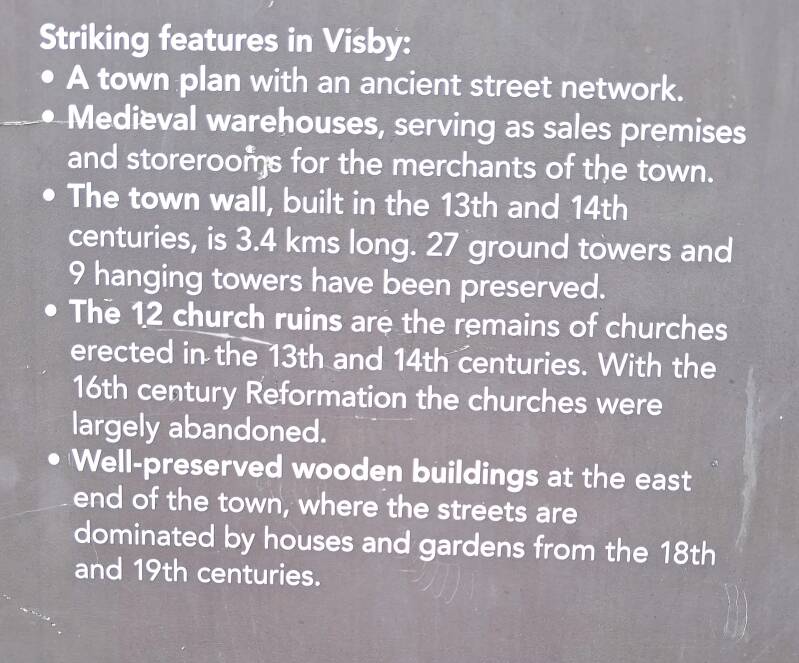
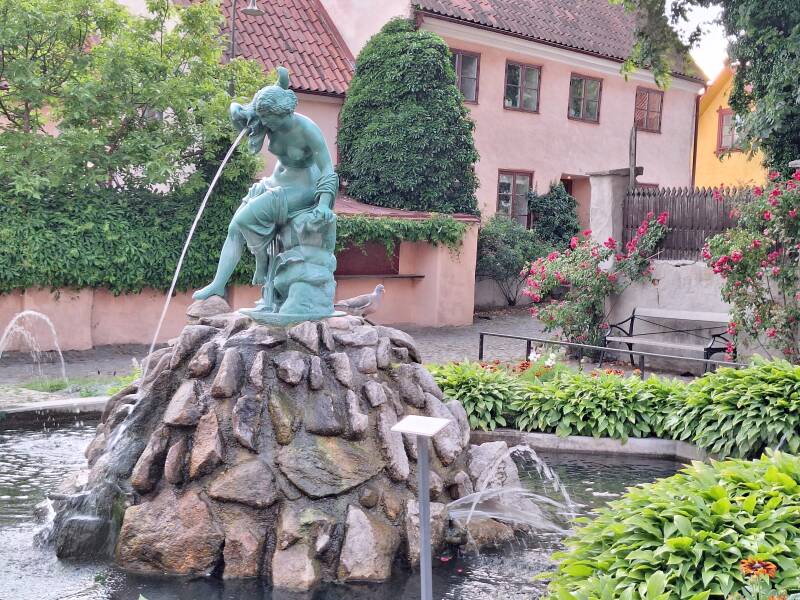
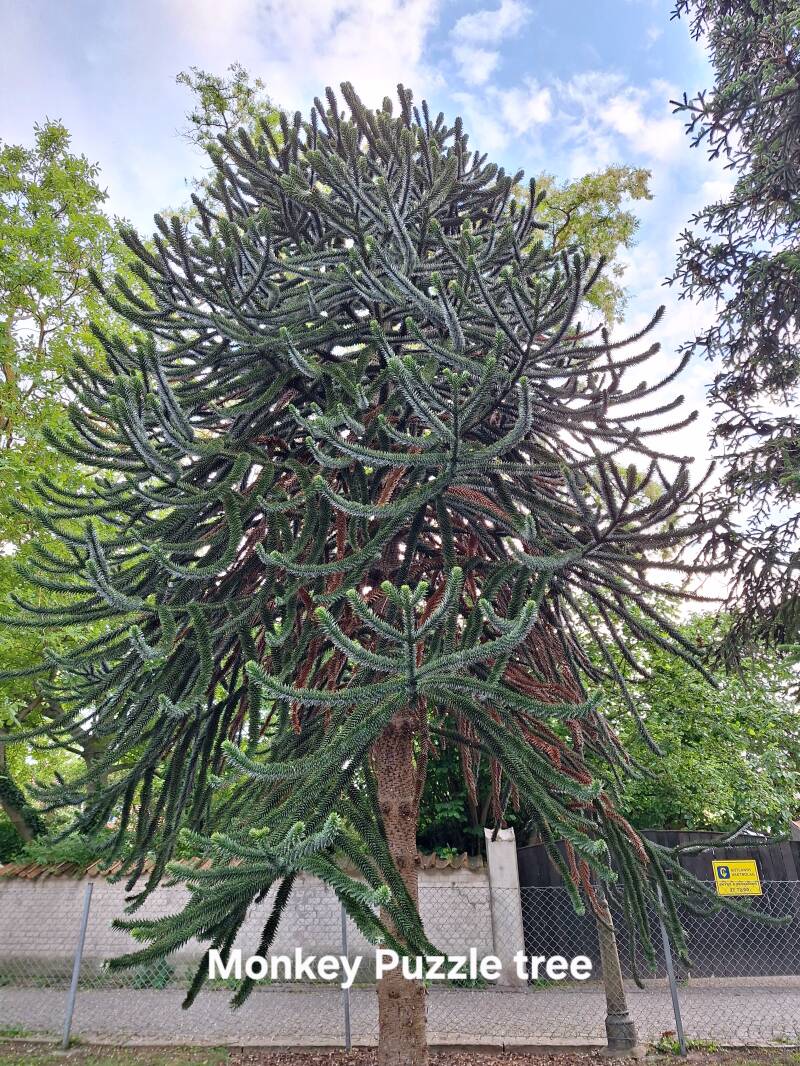
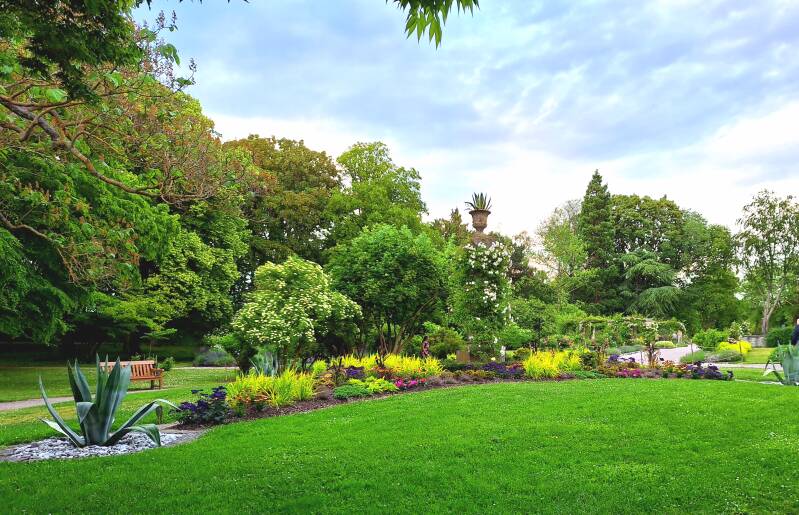
Botanisks Trädgård needs a whole day. /.../
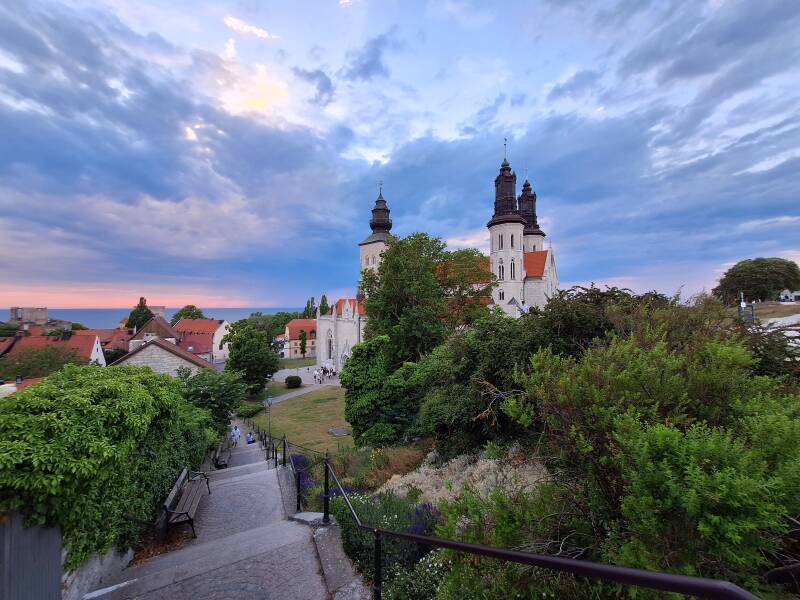
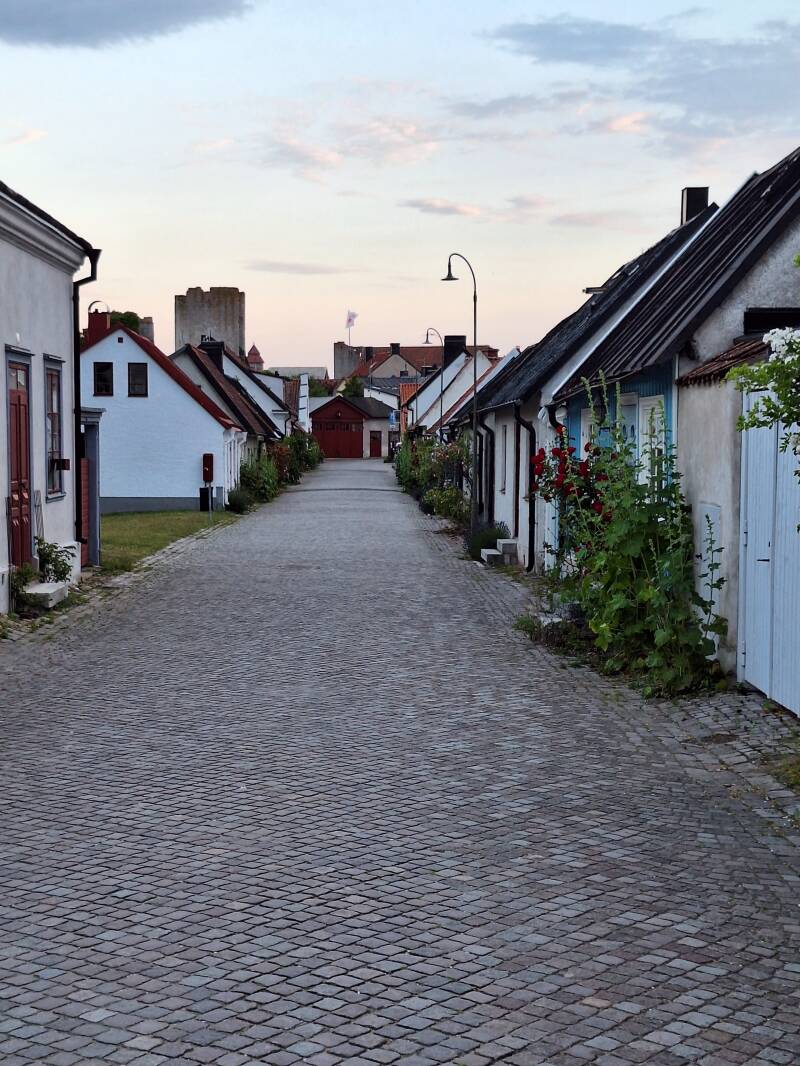
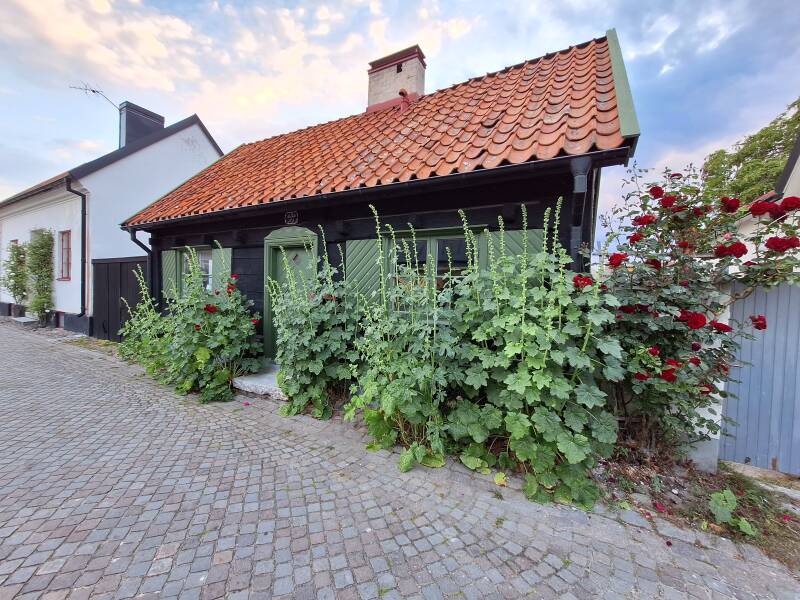
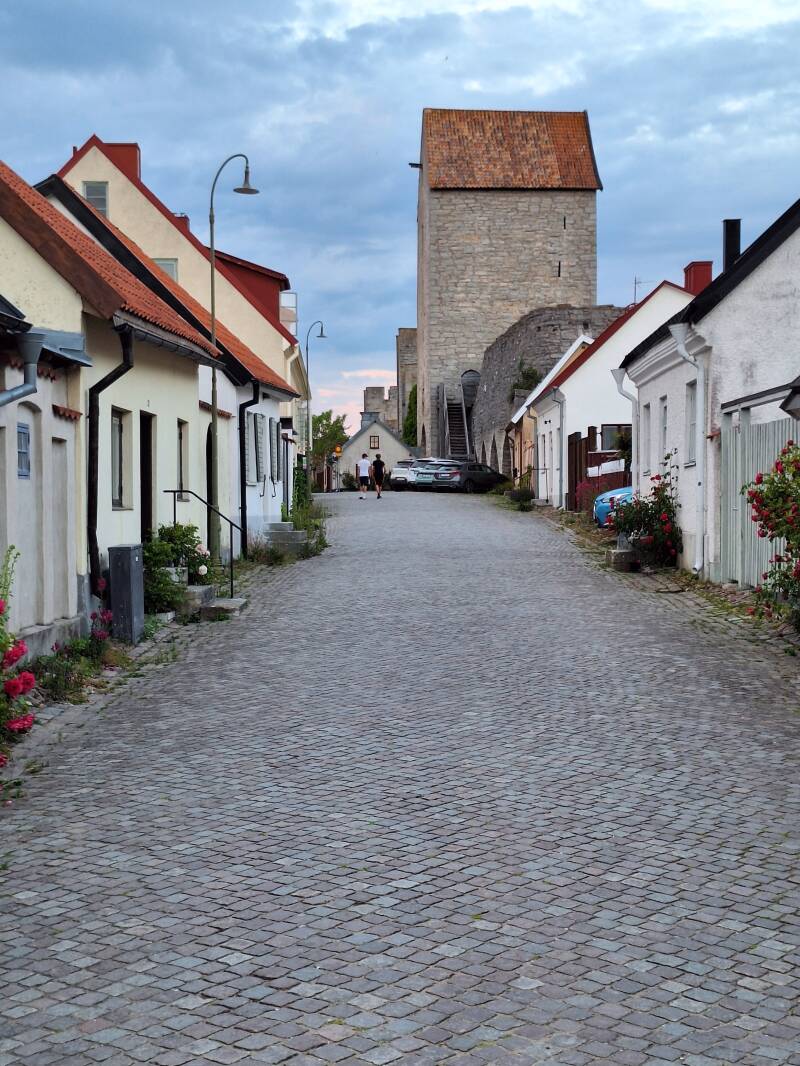
03.07.2025
Täna me kohtume Hellavi ja Gunillaga Österporteni juures. Ma ei tea, kas Christian ka tuleb. Laevu ei ole täna sildumas ja lähme fikale, peame plaani... Hiljem on mul giidiga, kes just lastega peredele teeb tuure, tuur, et õppida temalt, kuidas kehakeel ja muu - et osata ka lastele ja perekondadele olla giidiks. Valmistan ka oma giidituuri marsruuti - sihtpunktiks Gnisvärd'i kividest laotud laevhaua matus - suurim siin, 40 meetrit pikk. Ilm on ilus. Gotland oli Lääne mere "World Trade Center". Eile ajasin ühe Kuveidi härraga pikalt juttu ja seletasin talle, et kui Visbys oli rikkuse periood, siis oli tõepoolest 16 kirikut ringmüüri sisesel alal. Hiljem tuli vaesem periood ja ei jõutud kirikuid käigus hoida, sellepärast need varemed ongi igal pool. Rääkis mulle, et teenib oma TikTokiga 100 dollarit kuus, lihtsalt reisib ja teeb videosid ja pilte ning jälgijaid on nii palju tekkinud...
Ah jaa - ma saan nüüd niipalju, kui süda lustib käia tasuta Gotlandi muuseumis, piisab vaid nime ütlemisest. Gunilla helistas sinna lihtsalt, tal on vist seal keegi tuttav.
Gotland Guide and Cruise Service AB töötavad kõik litsentseeritud Gotland'i giidid. Hillevi ütles, et kui tahad ka rääkida millestki, mida tead siis võib ikka. Lepib giidiga ennem kokku. Tervitused Visby raamatukogust. Gotalnd campuse kõrvalt (Uni. uppsala).
Rootsis on standardne käibemaksu määr 25%, toiduainetele 12% ja näiteks kultuuriüritustele, raamatutele, ajalehed ja ajakirjad 6% - tundub väga mõistlik.
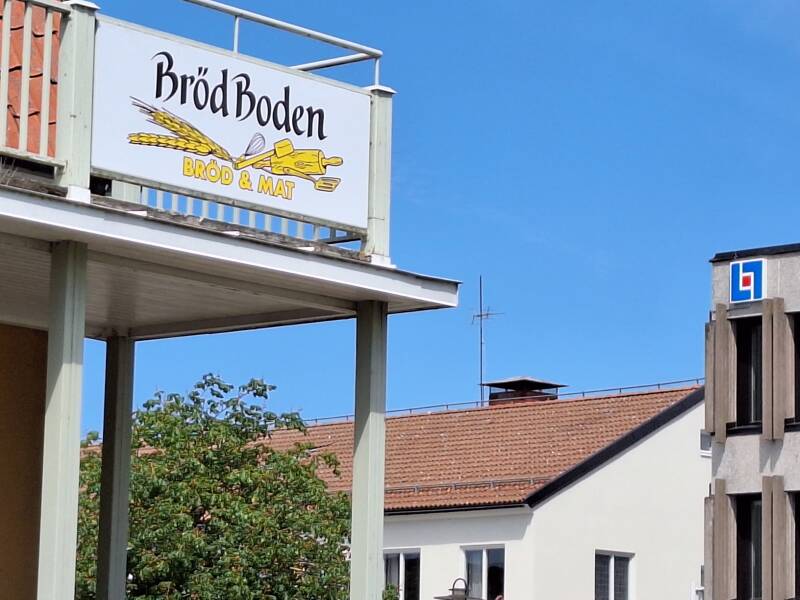
Giid Ann rääkis rootsi keeles. Tal oli spetsiaalne tuur peredele, et lapsed hakkaksid ajaloost huvituma. Kindlasti rääkis ta Pippi Långstrump'ist ja paljust muustki. Igal juhul oli väga huvitav.
Fotod siin: https://drive.google.com/drive/folders/1FFVN385SL5EhJCljhye6rycDwCVAPQ39
04.07.2025
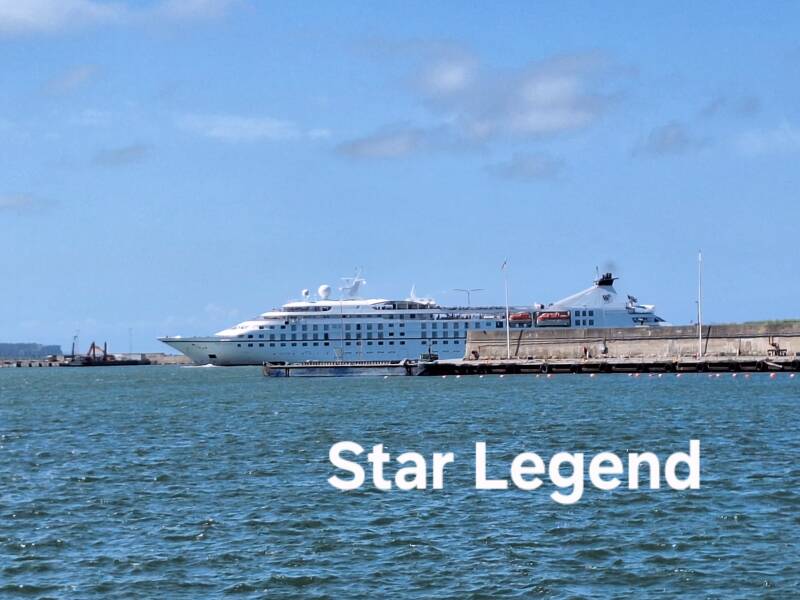
Tomorrow. Star Legend. Lummelunda. Ilmselt jõuan ka Gotlandi muuseumisse peale plaanitavat vettehüpet Almedaleni pargi juures, Kallis badplatsil. Kell on viis hommikul ja ma juba askeldan. Mu elukoht siin on nagu väike loss, sees on ka lift, elan kolmandal. Kõik mugavused ja igal korrusel ka suur köök, lisaks toas olevale. Tuba on ka suur. Hästi osatakse siin ehitada ja elada.


Abundance of the picture stones, from Gotland found around 500, are the most important source of knowledge of the Iron Age. Whirling discs, sailing boats. How the stones were used at burial sites is quite uncertain. Gotland's picture stones are unique in the world, and have not been found anywhere else.

Gotlandium - name of the Silurian period Gotland, after the island's bedrock. Our continent was at the equator in a tropical climate.

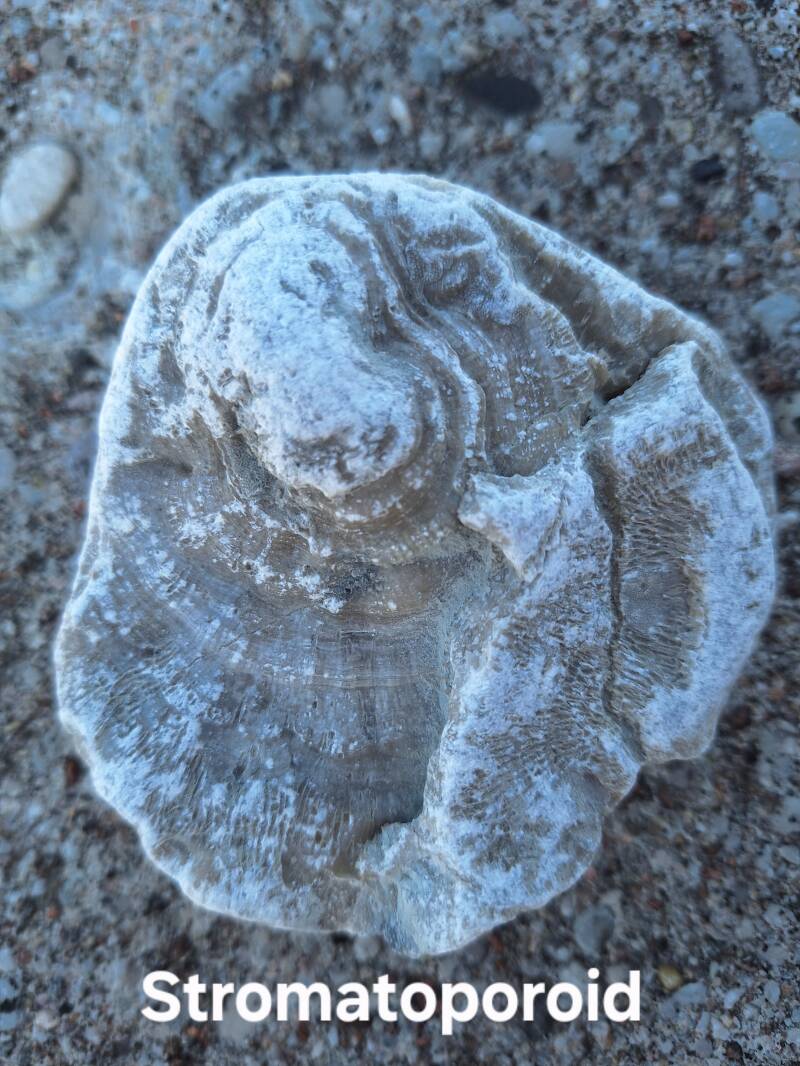
One of the largest specimen found on Gotland. Stromatoporoid. These fossils were so hard, they could not be burned and remained as residues in the lime kilns.

Translation of that huge rune from Viking ages:
"Now he sits armed on his Gothic horse, his shield strapped over his shoulder" - exactly what we see on the Gotlandic picture stones.

No other Swedish time period is as well-known and notorious as the Viking Age. How come? We begin at the beginning...
(On the photo: TOE BONES OF A LYNX
AND A BEAR, LAU PARISH 550-7TH CENTURY
The grave of a woman, who had lived in the Vendel Period, was unearthed in Lau Parish on Gotland. She had been placed on a bear skin. She held a newborn child in her arms. DNA confirmed that the woman was in all probability the mother of the child. Phalanxes of a lynx were also found in the grave.
The lynx has been connected with women who hold a special position as a religious or ceremonial leader in their communities. They were closely associated with Freya, the goddess. She travelled in a chariot pulled by cats.)
The world was in a turmoil in the mid-6th century. Enormous volcanic eruptions occurred both in the northern and southern hemispheres. Volcanic ash blocked out the sun and covered the ground. Society was afflicted by the cold and famine. In Scandinavian almost half the population died. Conflicts and diseases plagued Europe in the wake of the climate disaster.
This was followed by a warmer period. The light returned. During the 600 years, which we have chosen to call the prolonged Viking Age, the Gotlandic nature and culture thrived.
About 25,000 people lived on Gotland. They created marketplaces, arts and crafts, discovered the world around them. The coasts were distinguished by trade, craftwork and fishing. The landscape was full of wetlands and lakes teemed with fish.
Here, the Gotlanders lived close to animals, supernatural beings, gods and tales.
This is Midgård - the home of the Vikings.
/Will be continued, I return there, to the museum later.../
Photos: https://drive.google.com/drive/folders/1-KRRFyGnPFVi8TVMdcAMETszVxXgAAFu
Guide Âsa. Happy anniversary U.S. Passing Prison of Visby. Graves under those oil cisterns. In Visby 25 000 people, Gotland 60 000 people live. Gotland has most days sunny. Slite has big factory: cement. It is the biggest in Sweden. Biggest employer - the community itself: schooling, health sector. Also many builders, carpenters and jobs on ferries. Vikings of Gotland went up to muslim areas - findings. Theory how Vikings got rich here? Selling slaves at Islamic areas, catched people and sold people there for silver - theory. Later in history of course the people of this island became christian around 1050. And later became trading with western people, instead of Islamic people. Bronze Age grave 15 hundred years b.c.

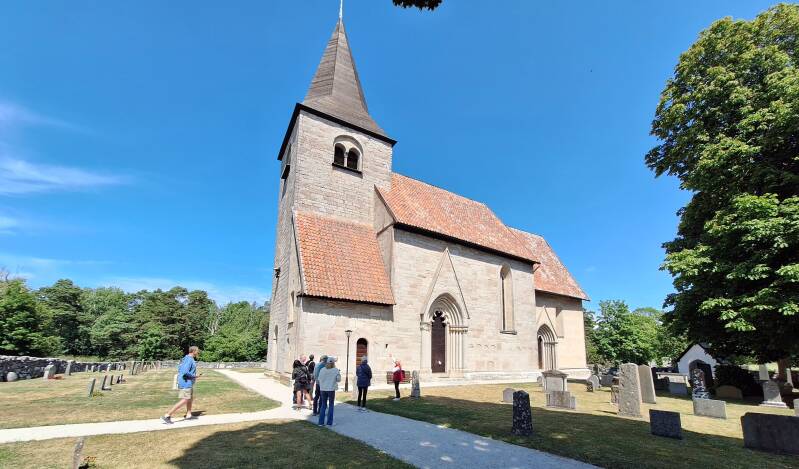
Visiting Bro kyrka.
Griffin - fighter, can land and take off fast. 10 min. via Swedish airforce built road to Lummelunda. Battery gets empty. Church had many picture stones, also a very special big statue of limestone, holy water in, special door for the ones who don't want to enter church and then they could still see the Holy Worship - Church builders here we're very creative, kind of artists, very interesting. Very high quality food production on Gotland. Most dangerous animal? There are almost none of those, no wolfes. Eastern part has eagles.
Guide Emla for the grottan (cave). 3 Swedish boys found Lummelunda grottan (cave). Film about it. 8 minutes. For a years nobody didn't know where they are all the evenings not even their parents. Dangerous if there had happened smth when they explored the 4 im long cave with candles.
Stalagmites & Stalactites:
- A stalagmite is a mineral formation that grows upward from the floor of a cave, formed by the deposition of minerals from dripping water.
- It should not be confused with a stalactite, which hangs down from the ceiling of a cave.
To Visby. They sold luxurious things to British kings and got rich. Gutnish accent, Swedes recognize it immediately. Republic of farmers. Was independent, free. No aristocrats. Sophisticated way of living. Gotlantd's law. Symbol is Ram and seal. 1645 goes part of Sweden, not before. Civil war, 13th century, Ringmür builders (Germans and locals) vs local peasants. Gutnish law was civilized - no torture. But there were slaves. In Ringmür lived 3000 persons. Nowedays some Viking age, small wooden houses conserved, onto those in past, the big merchant's stone houses were built.
Photos: https://drive.google.com/drive/folders/12Un6YSBFrBG6Aata--7dZSY_H0uVI1ZL
Was very exciting and got a lot of new knowledge. US citizens as tourists in Europe are kind of a bit different kind, but were very good listeners - Europe seems to them a bit difficult to perceive or understand.
05.07.2025
Heavy shower outside. Today there will be quite many ships coming in. We'll see. It is too stormy. Gunilla & Christian are calling the guides, because cruise ships cancelled.
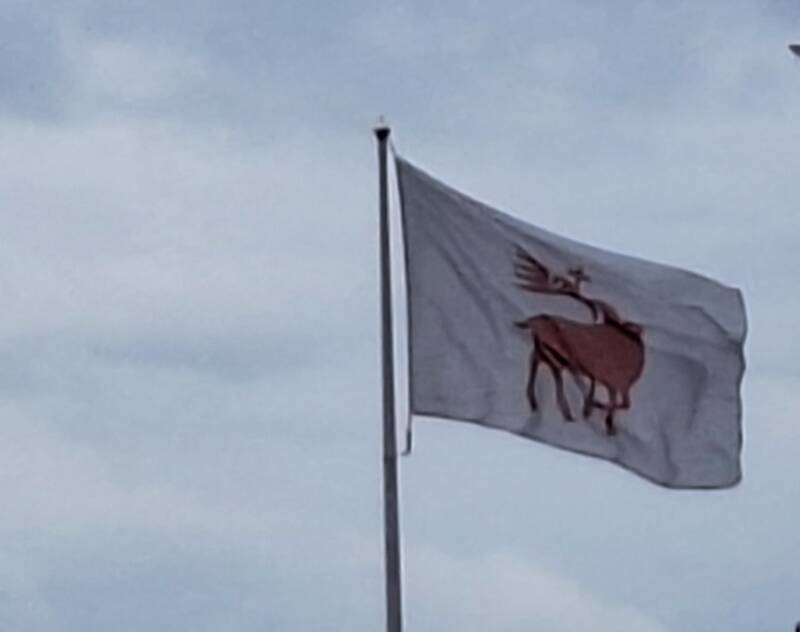
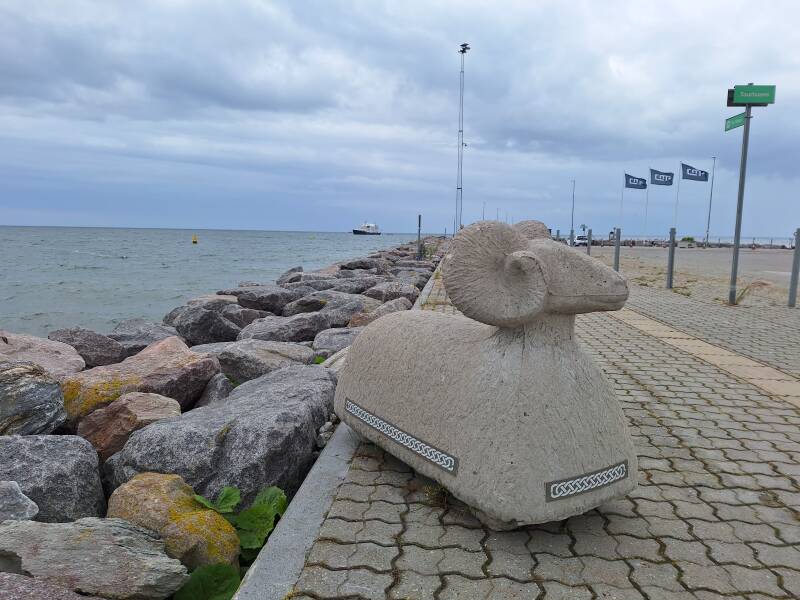
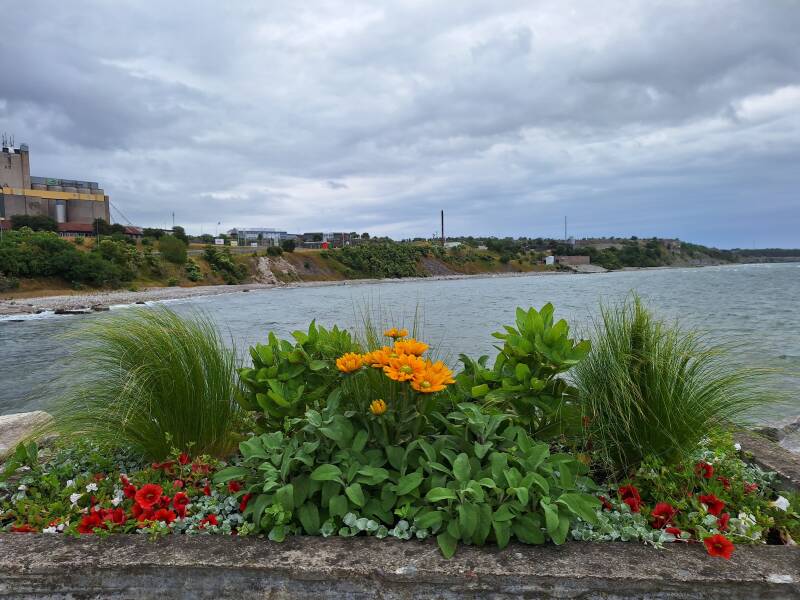
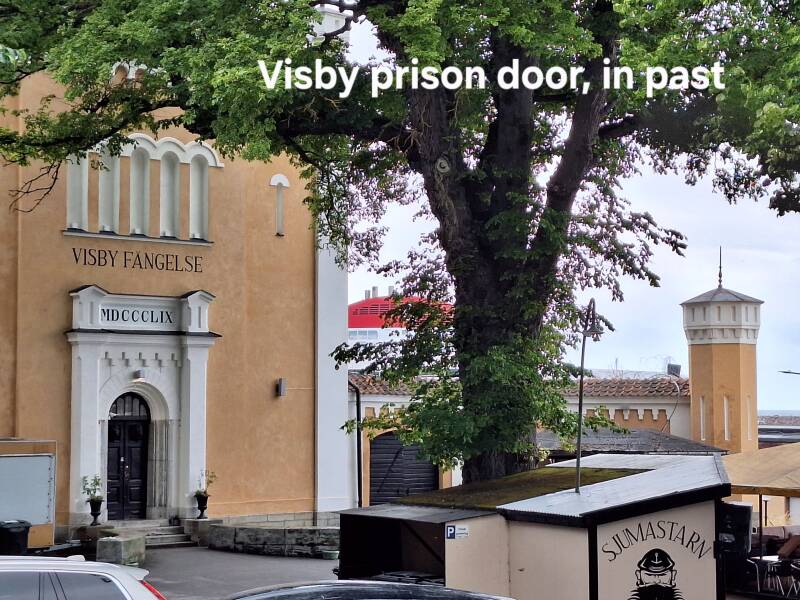
I will continue from Gotland's museum, where I left off. It's a very interesting new age shop and bookstore here on Adelsgatan.
Found a theatre of Visby, Gotland: Länsteatern.
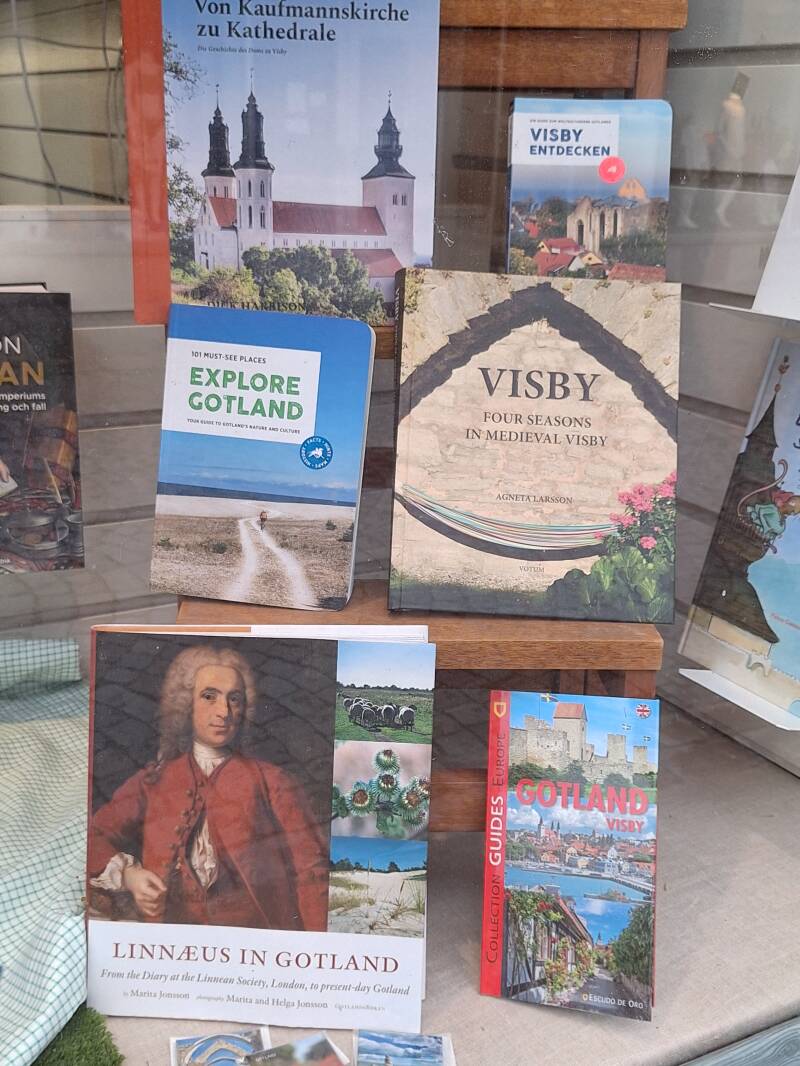
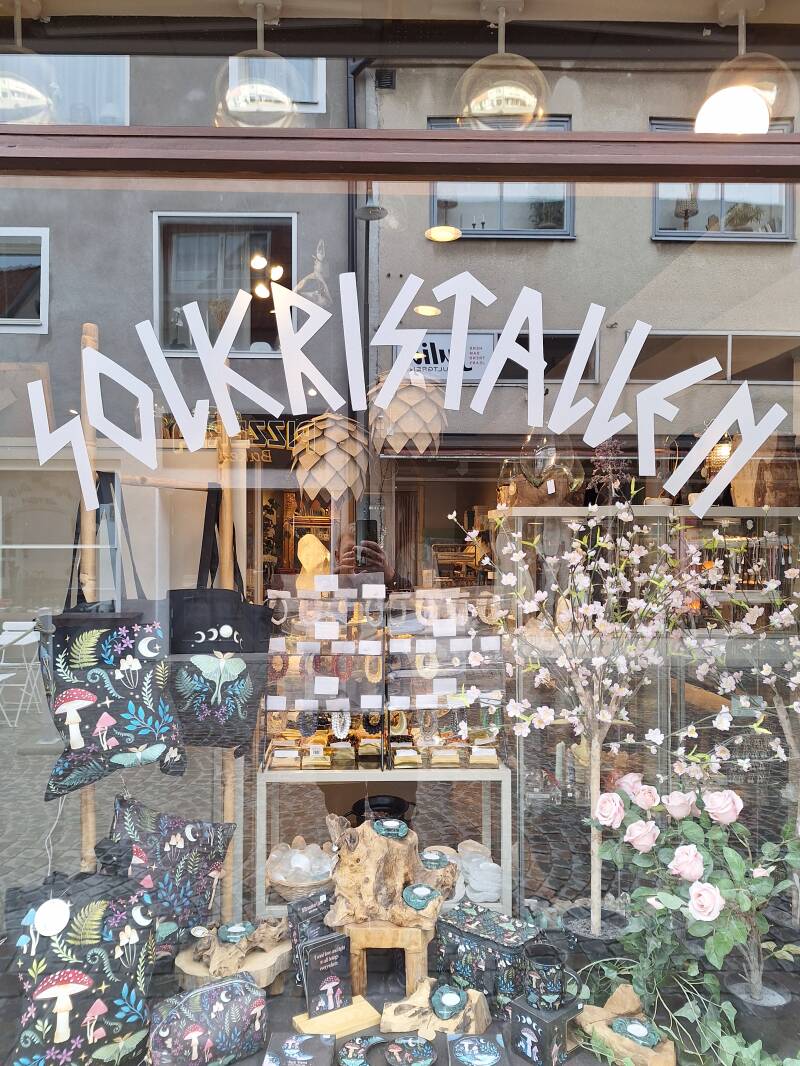
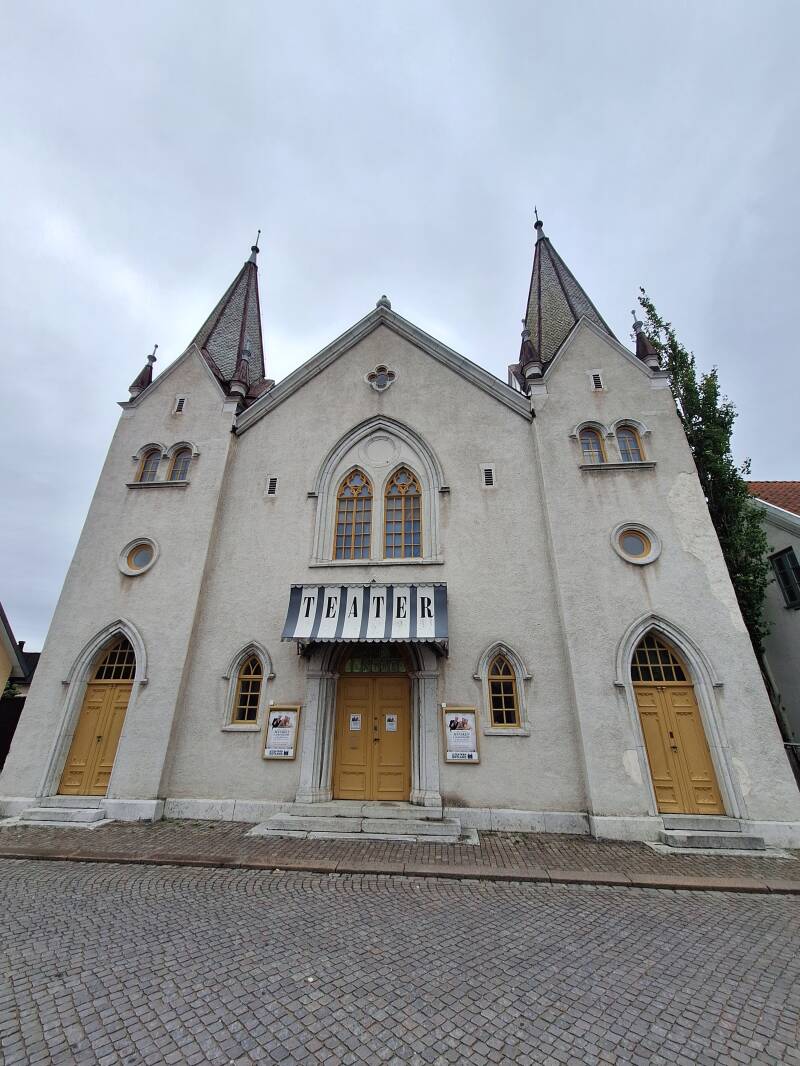
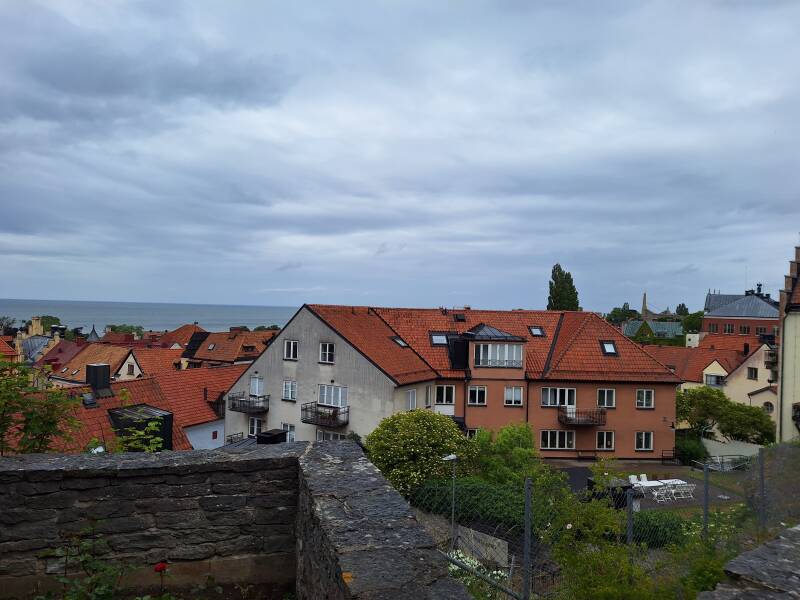
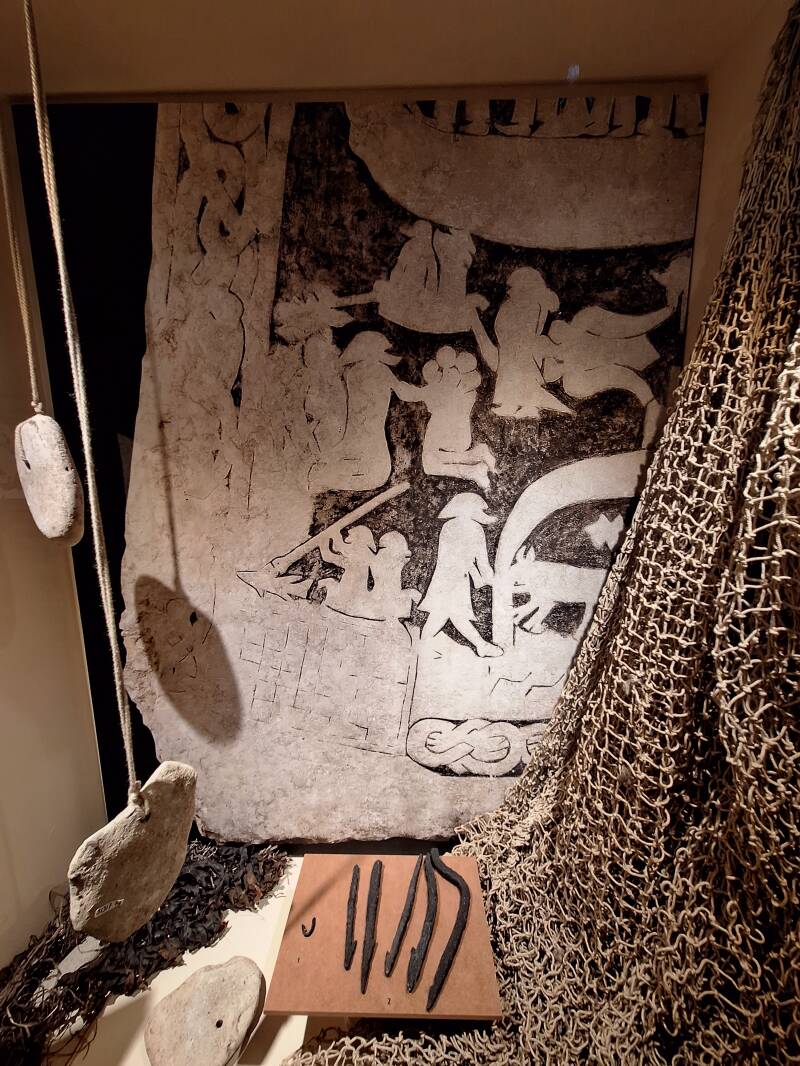
Spoke to one Estonian family, who came by Tallink in the museum's lobby.
Fishing has been important for Gotland, not least freshwater fishing. Since there were no big game to hunt on the island, it was the main source of subsistence. Two people can be seen in the picture, they are in a boat and fishing with a net and possibly a large leister. On Gotland a method called 'flåiga' was used in fishing. The fishermen sealed off a bay with a net, then they beat the water to scare the fish into swimming towards the net. Perhaps the picture stone illustrates fláiga?
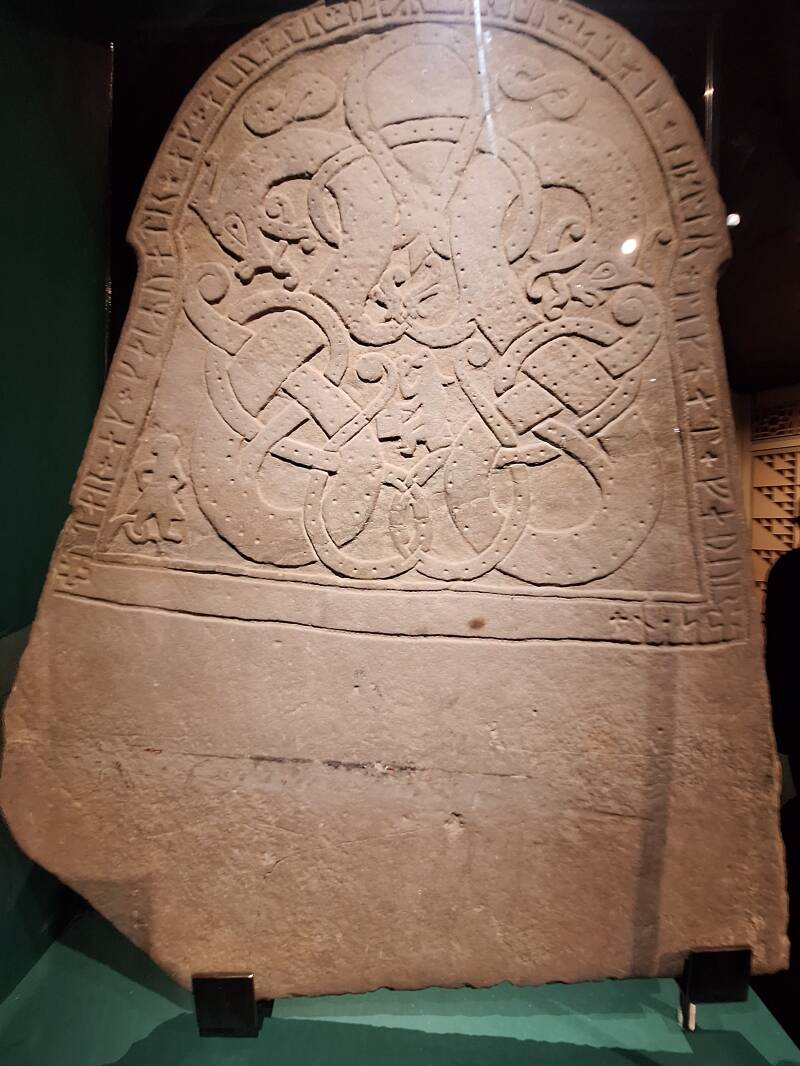
THE ODIN PICTURE STONE
STORA VALLE, RUTE PARISH
8TH 10TH CENTURIES
LIMESTONE
Male figures wearing a horned helmet occur in Late Iron Age art. The motif is usually deemed to be Odin, with two ravens on his helmet. It was Odin who determined which warriors would go to Valhalla. This picture stone from Rute parish might depict him escorting a fallen warrior on the ship of death, on its way to the underworld.
The placing of the figure behind the ship may also symbolise Odin as a mighty guardian of both the ship and its crew.
On Gotland, Odin seems to have had a more important status than the god Thor. Triskelions and 'valknuts' (knots of dead warriors), the triangular symbols carved on picture stones, are associated with Odin.
Odin describes in what is called Odin's Law in 'Heimskringla' how after death, each person would have access to whatever they had buried in the ground during their lifetime. Since Odin was an important god on Gotland, this might be an explanation as to why so many silver hoards have been found here.
RESURRECTION EGG
Onfluences from the east increased in the late Viking Age on Gotland. These eggs were produced in the east long before glazed pottery came to Sweden. They were often called resurrection eggs, and were commonly made in two parts by pressing clay into a mould.
Before the two halves were put together, one or more small marbles were placed inside the egg. The egg then produced a rattling sound when it was shaken. One interpretation is that the rattling was proof that the egg was empty-like Jesus' grave. Christ had resurrected.

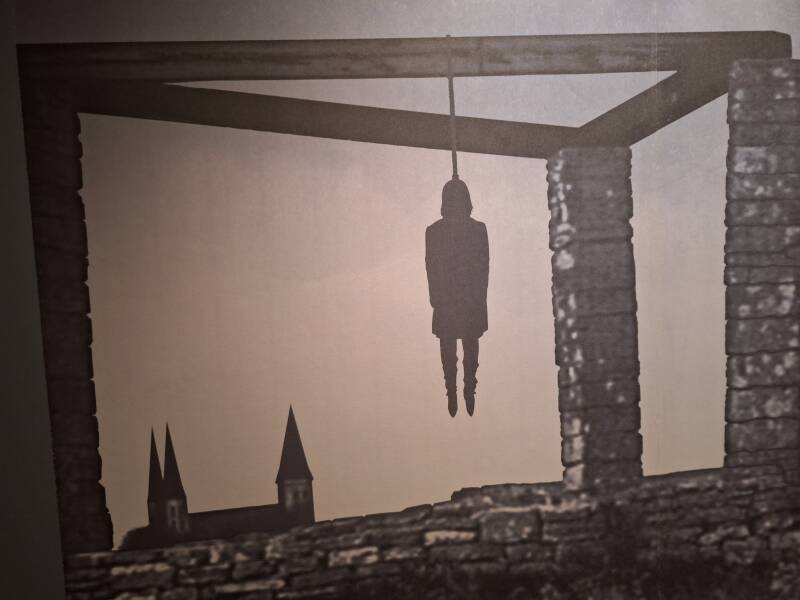
Murderers, thieves and felons have always existed throughout history. Our attitude towards crime and punishment, however, has changed. In the Medieval Period, Gotland made a distinction between people and people, and whether you lived in the town or in the country.
The provincial laws of Gotland (Gutalagen) divided people into groups: Gotlanders, non-Gotlanders and thralls. The most serious offences were against Gotlandic men and women. Since thralls were considered to be legally incompetent, they could not be punished by law, and their owners had to pay a fine instead. The Visby Town Law from about 1340 governed people in the town. Town-dwellers and strangers received different treatment.
The provincial laws of Gotland (Gutalagen) acknowledged revenge for murder or rape. Relatives were granted the right to punish the offender themselves. People were fined for neonaticide by exposure and for taking part in sacrifices. Only theft led to a sentence of public hanging. The town law was more severe, whereby a wider range of crimes led to capital punishment
Sanitary standards were reasonably high in Visby in the Medieval Period.

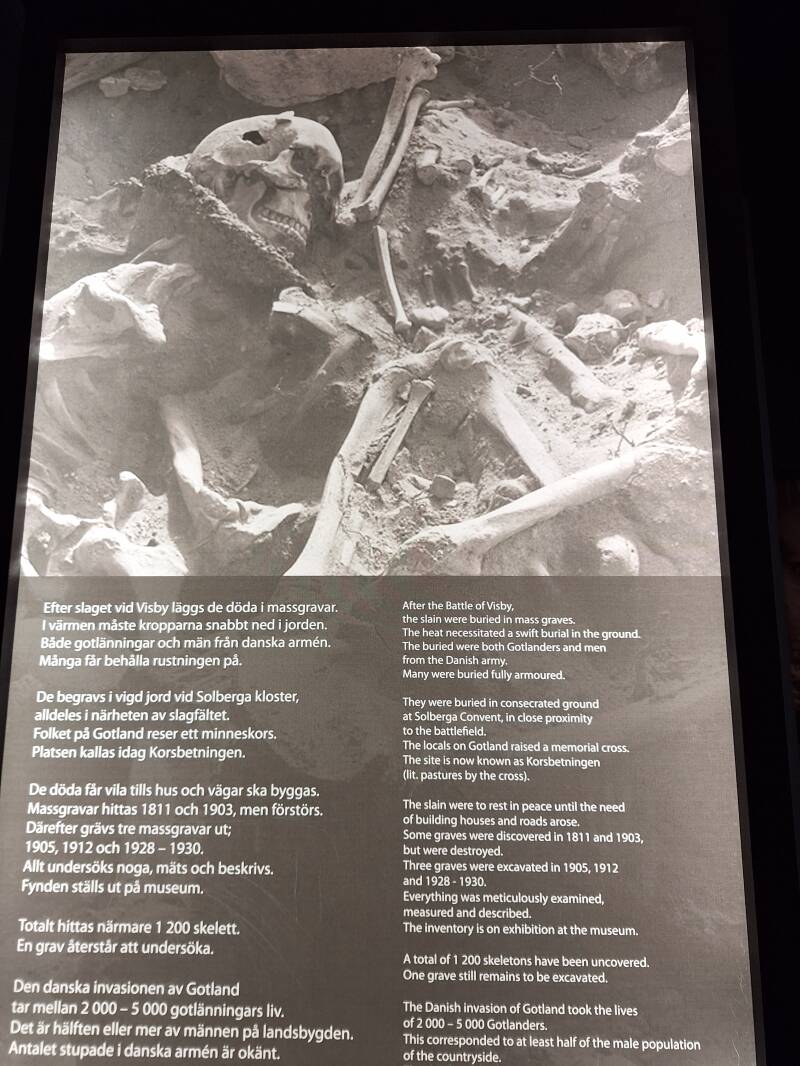
Guide Åsa spoke about 1361 invasion by Valdemar II, who didn't succeed to dominate Swedes in the long run, but killed many-many peasants. Then reached to the gate of RINGMÜR, which was closed. Peasants didn't know, they were not told from the RINGMÜR that don't fight, you get killed, because Danish army was trained and had better weaponry and there will be negotiations coming. I have read about that. Danes had depts to European kings and princes and needed to cover those debts somehow.
More photos: https://drive.google.com/drive/folders/1MRihSNrWNtEOZA-v7uXTmQy1VF5TTNL6
If you wish to take a Viking age quiz: https://utforska.gotlandsmuseum.se/viking-age-quiz/
06-07.2025
Free. But I have nice plans in my mind, because I am doing guide route. Hillevi bought me orange juice and gave some names for north from Visby to visit too, if I go to explore Korpklint, before I went to the guide Ann's excursion... I like it a lot here, better than in Italy.
That's my first Sunday here. Very good McDonald's here. Daim Mcflurry with medium coffee will wake me up hopefully.
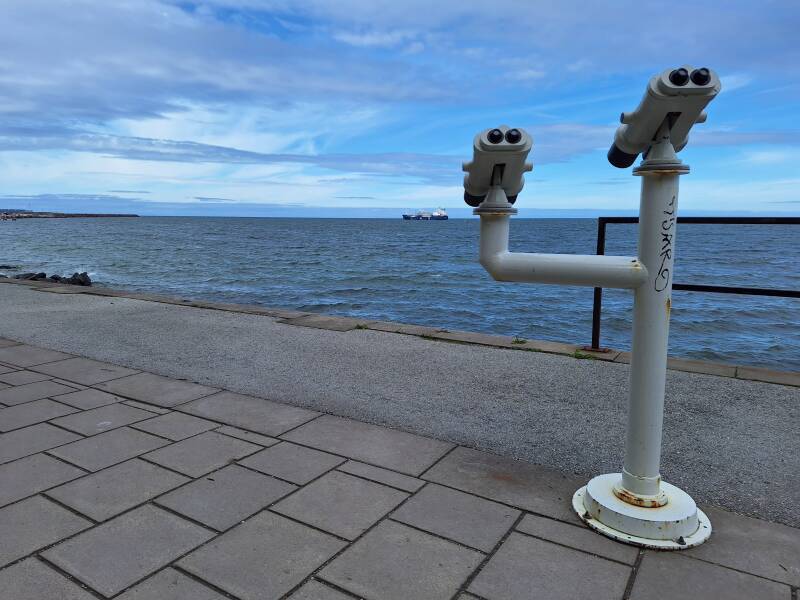
Cycled downhill from Österport. Is a bit windy today, but very relaxing. Ship to mainland can take up to 500 cars and 1600 passengers and is on LNG. Public toilets are free of charge here, nobody doesn't have to do into her/his trousers if card is not functioning properly or no cash. That's really friendly approach.
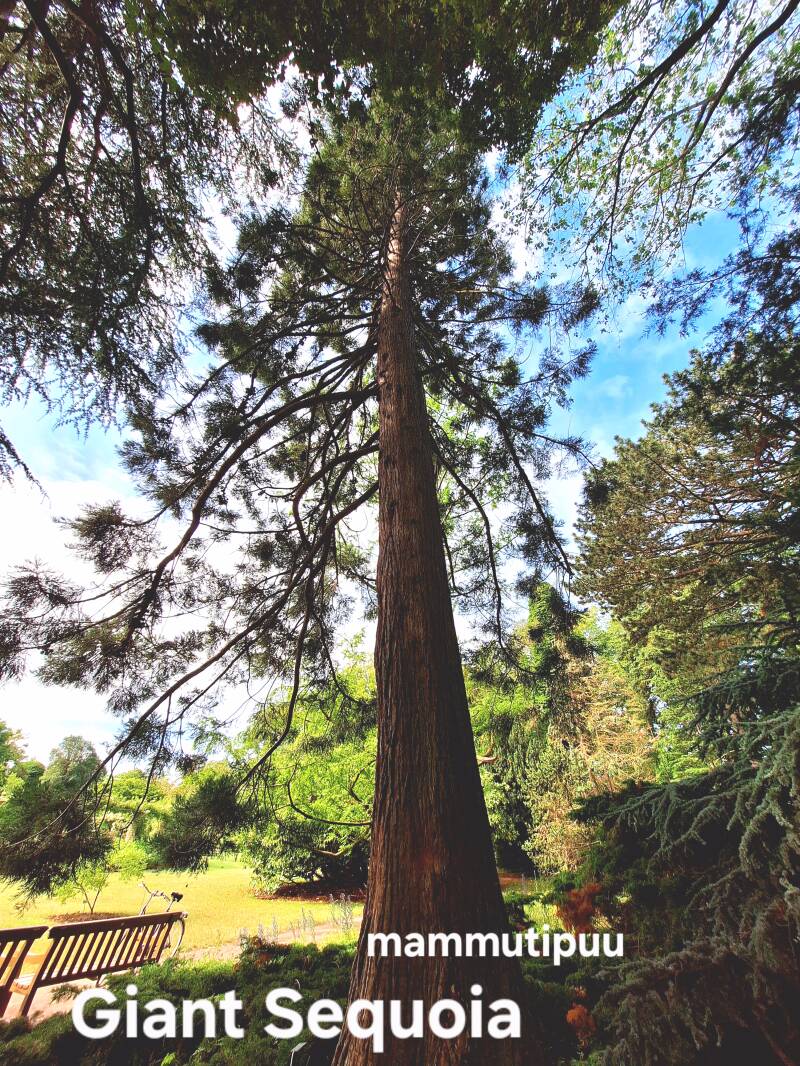
Sequoiadendron giganteum (Cupressaceae)
Giant Sequoia (in Estonian: mammutipuu; Swedish: Mammutträd)
An evergreen conifer that can grow to nearly 90 m tall and have a trunk diameter of 11 m. The bark is reddish brown and soft, and the leaves (needles) are narrowly scaly. The globose cones sit on top of special lateral shoots and are “only” 4-9 cm in diameter; on each cone scale there are several, up to 13, winged seeds.
Sequoia trees grow in a few areas in the Sierra Nevada in California (USA), mainly at an altitude of 1800-2500 m. The species is often confused with the equally large species Redwood (Sequoia sempervivens), which is also found in the western United States. The latter differs from the sequoia tree in having smaller cones and a different shape of the needles.
Sequoia trees are among the largest organisms on Earth; a few other tree species can grow taller, but none of them have the same volume. They also grow quickly and can reach a height of 25 m in just 50 years. However, the wood is brittle and is therefore not used commercially. The maximum age is about 3500 years.
There is medieval settlement under the Botaniska Trädgård, archaeological excavations have shown.
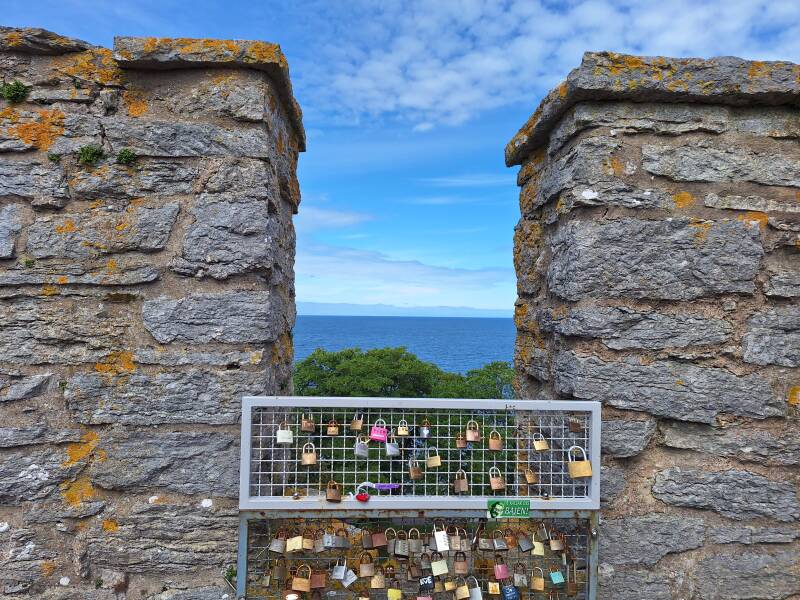
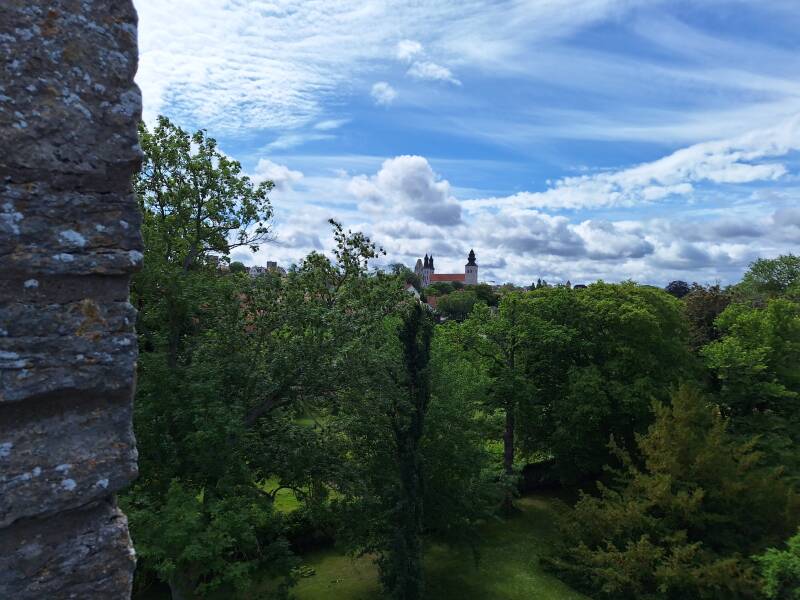
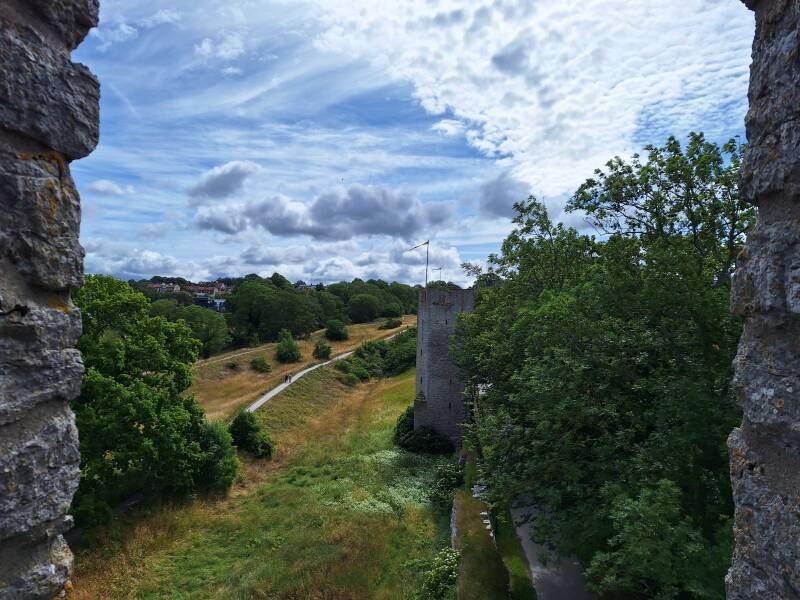
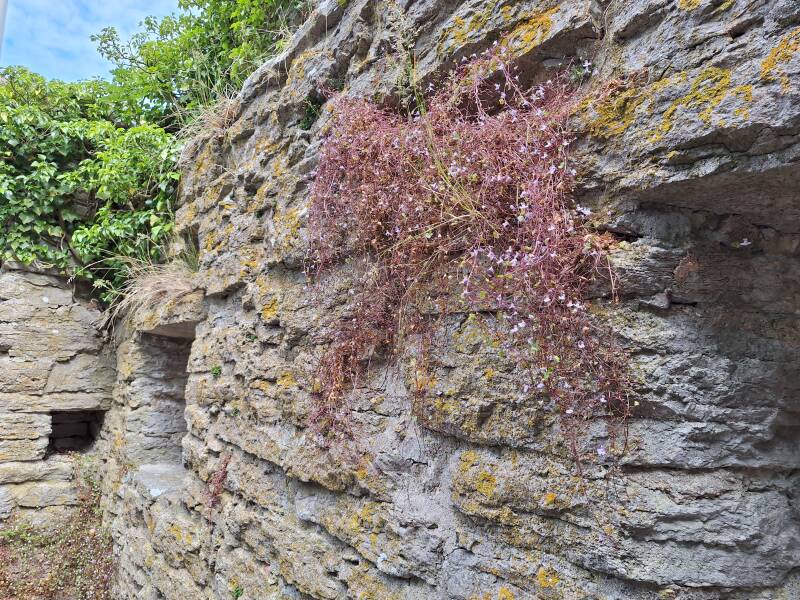
Silver Cap - The corner tower, northern wall.
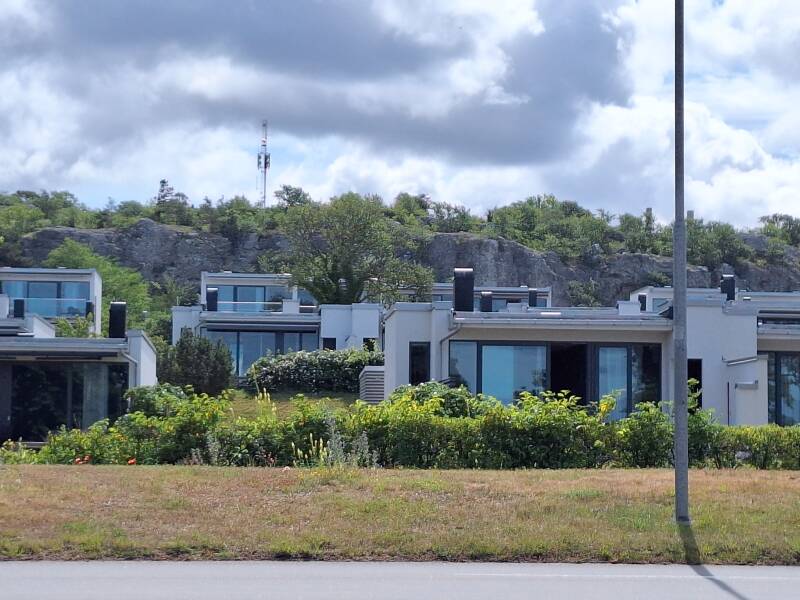
Heading to Korpklint and afterwards Galgberget and other spots.
Here is more information about the area:
https://storymaps.arcgis.com/stories/9716da52712d4a80ae4741550e66f156
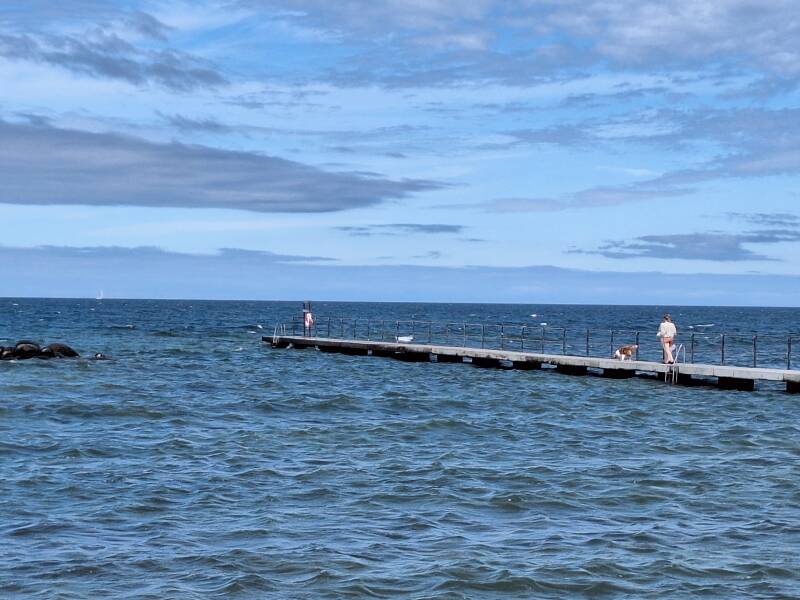
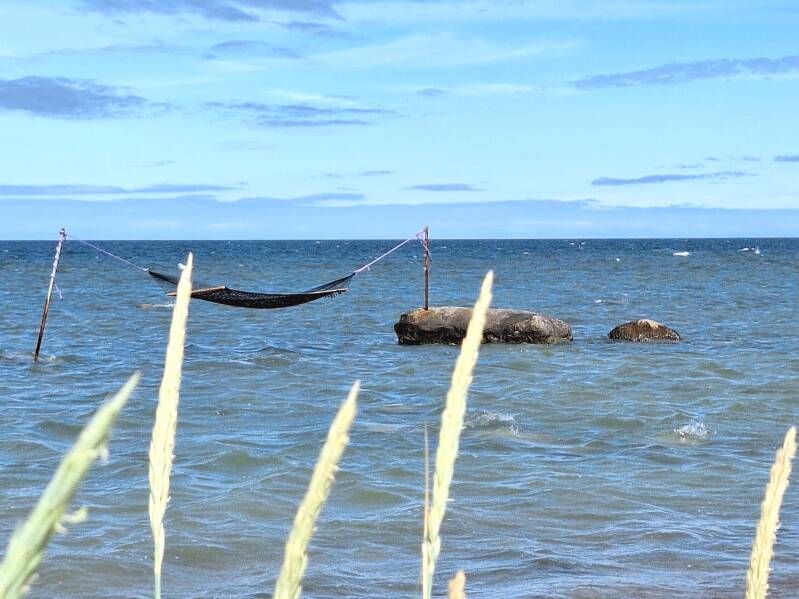
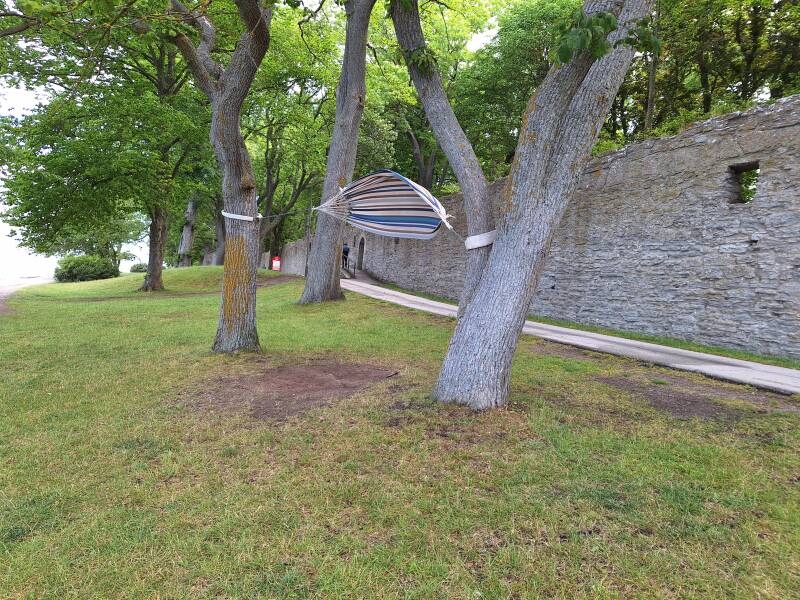
Could somebody explain me, what is this? Swing? Smth for fishing? Smth third?
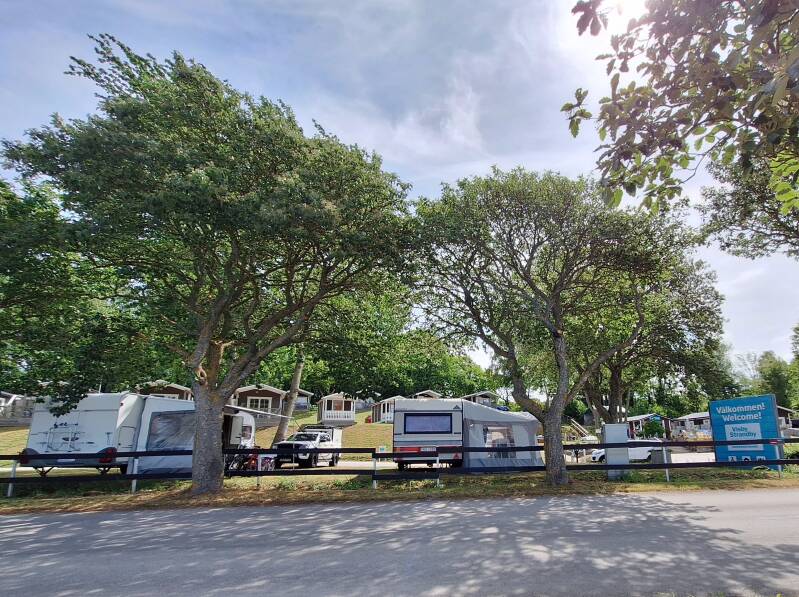
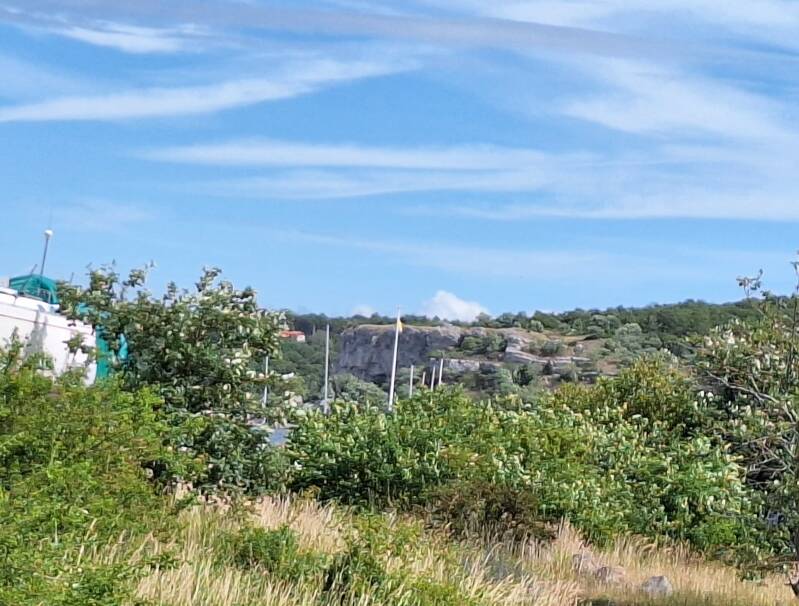
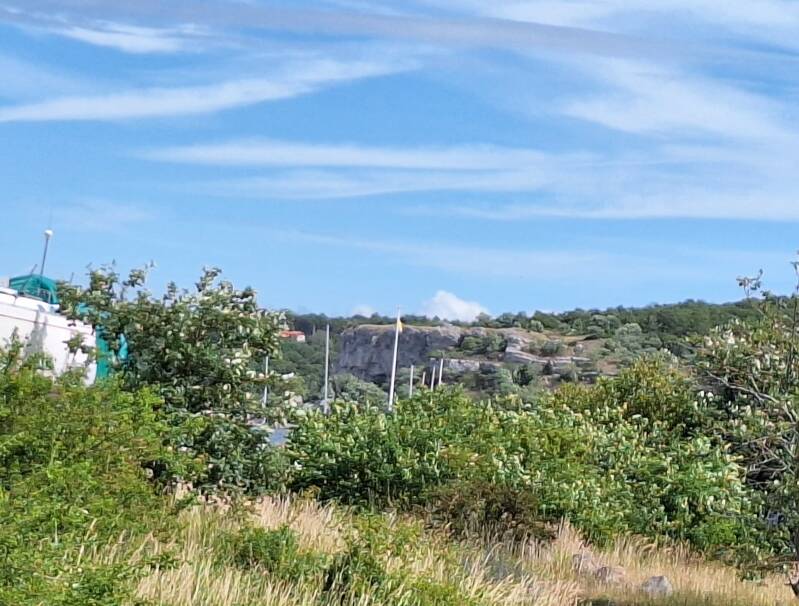
Information about recreational fishing:
https://www.lansstyrelsen.se/gotland/djur/fiske/recreational-fishing.html
Camping houses all the way to the Korpklint on my right.
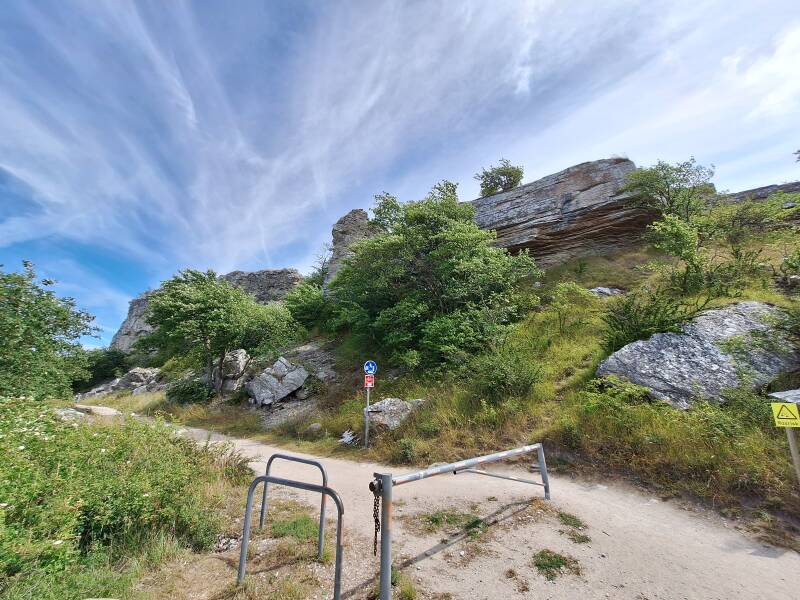
Korpklint
Linnaeus and his companions came riding from Visby
to Korpklint on 25th June 1741. They had passed
beautiful yellow meadows and a field of buttercups and charlock. Here at Korpklint, they studied the sheer cliff face and found some interesting fossils. The cliff was compared with landborgen on Öland, and described as a steep Attestupa (ancient "suicidal precipice"). They climbed up the cliff, which had been formed by petrified organisms and silt on the seabed 425 million years previously. The road on the cliff top ran along a beach ridge, where they were almost blinded by the strong light. Linnaeus wrote: The road, which was pure white, tormented our eyes in the bright sun, since limestone shingle, when eroded by weathering, disintegrates into a white soil... These rounded pebbles, although they were lying so many feet up and along the crest of the ridge, indicated that they had been rolled and thrust together here by the waves of the sea. One can imagine that when the sea laid the first foundations of the land, this ridge had been thrust up as a bar. Day by day, the sea added shingle and sand, then gradually withdrew...
The journey continued to the cave at Lummelunds mill
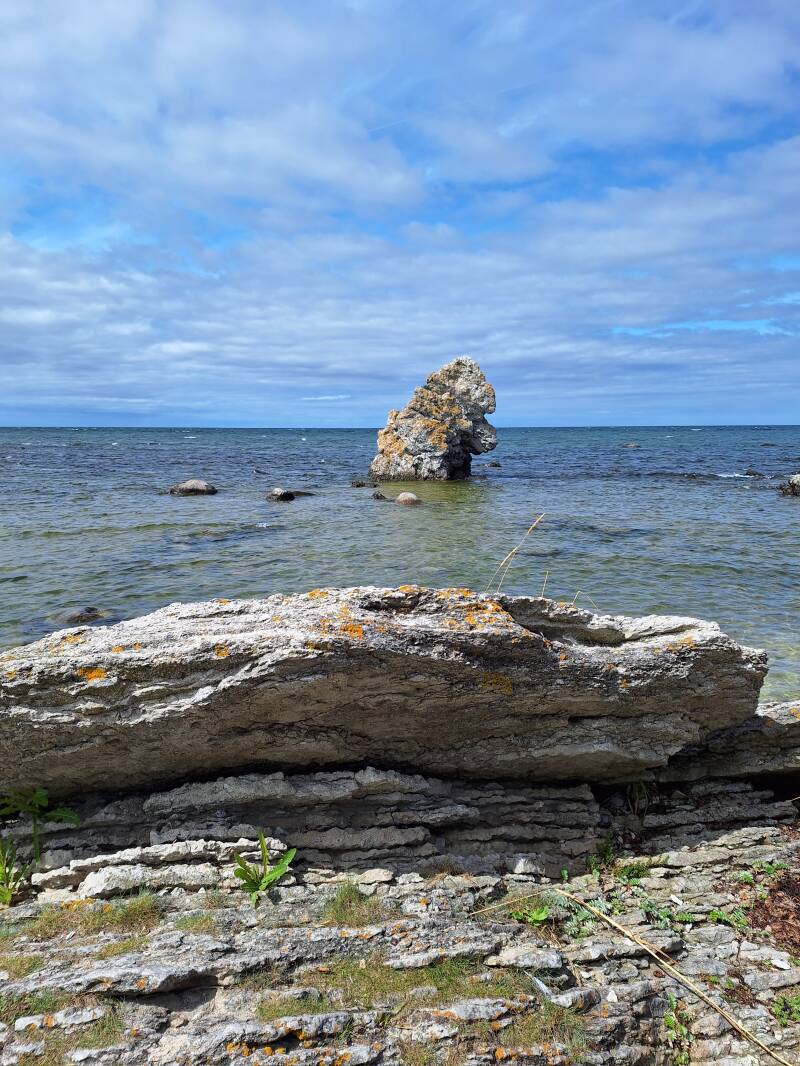
Rauk

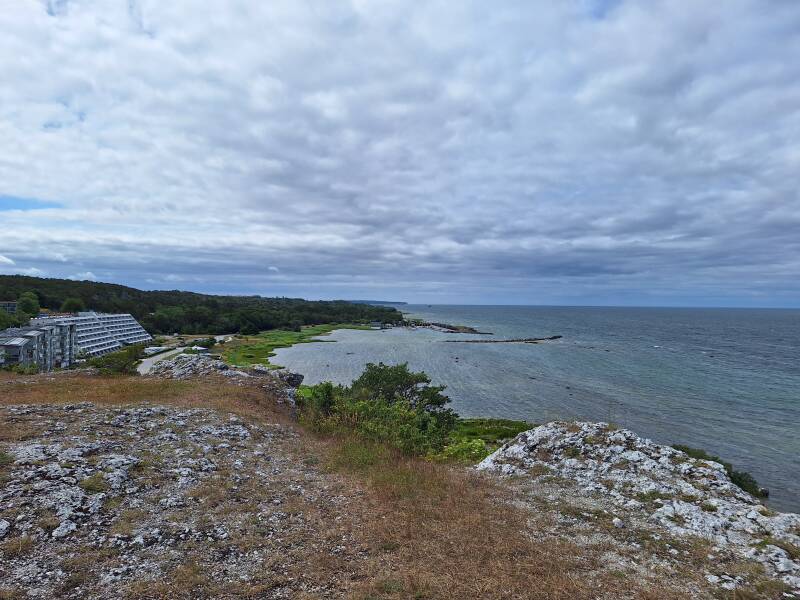
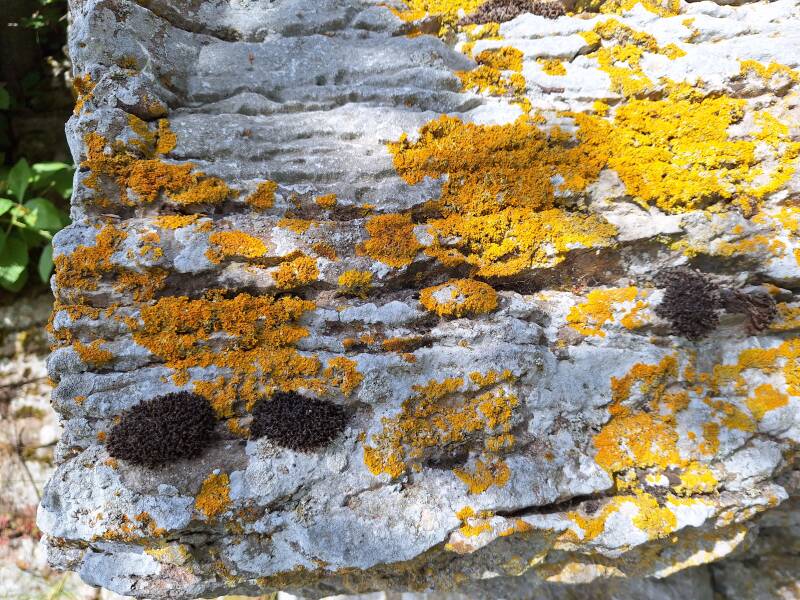
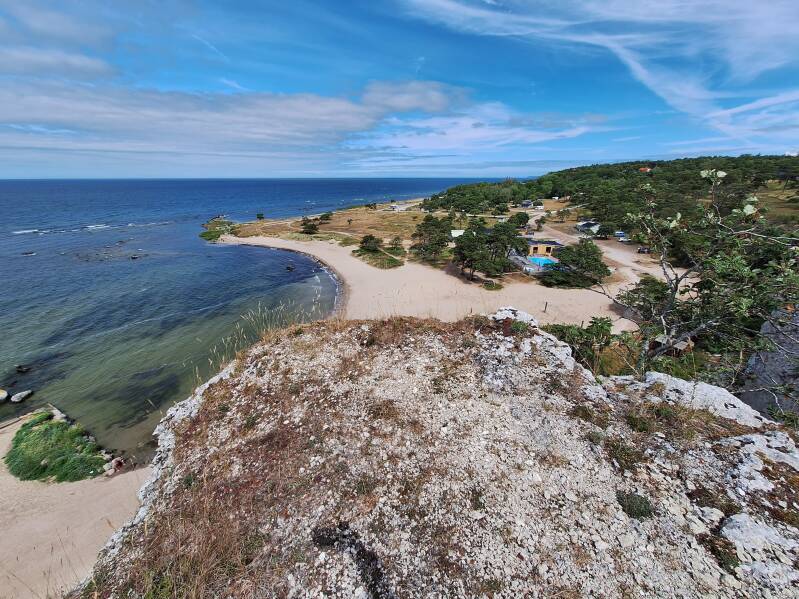
Astonishing views and relaxing nature trails.
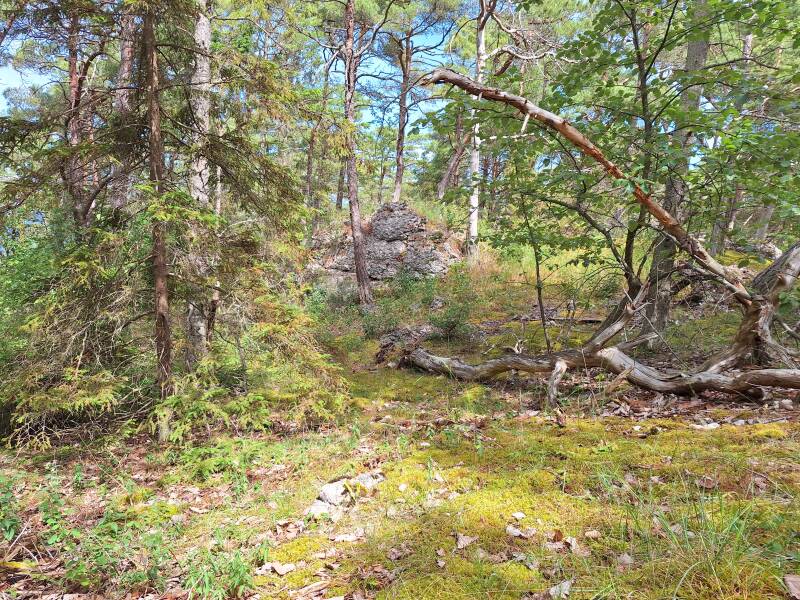
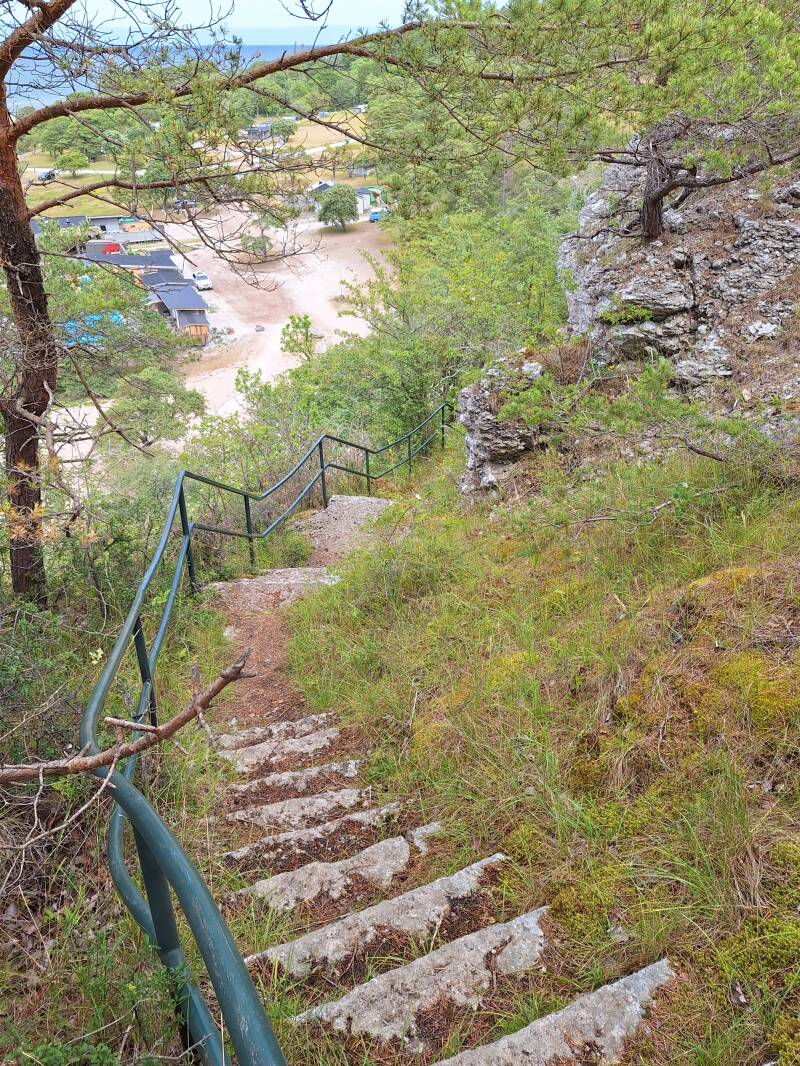
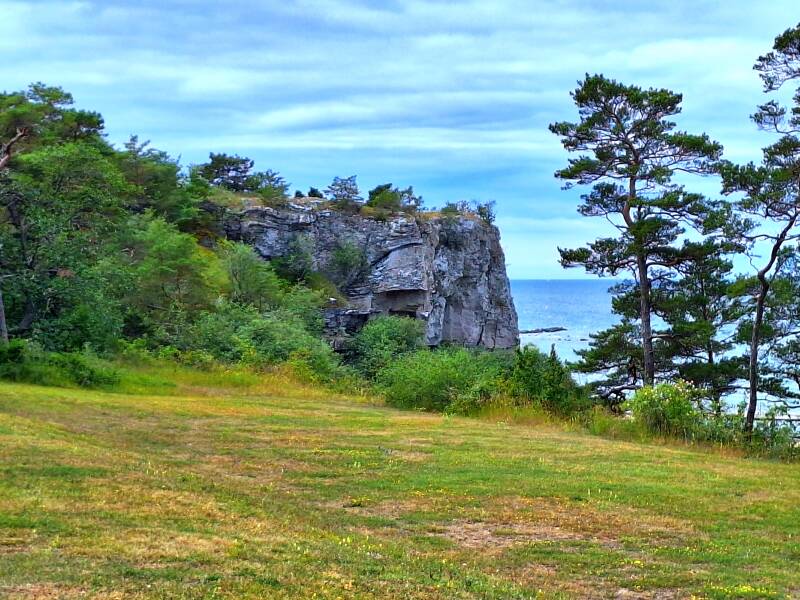
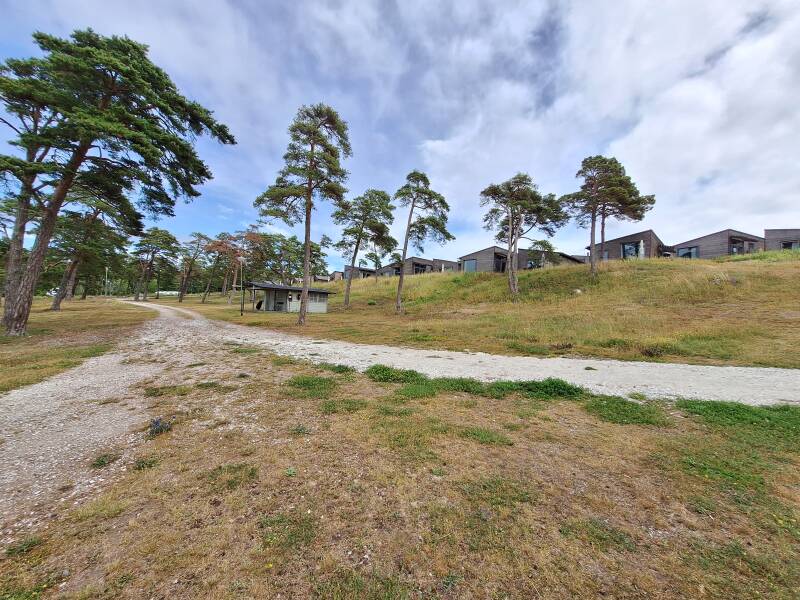
Tent camping area. 310 SEK without car, 370 SEK with car. Kitchen, toilet included. Payment via QR Code.
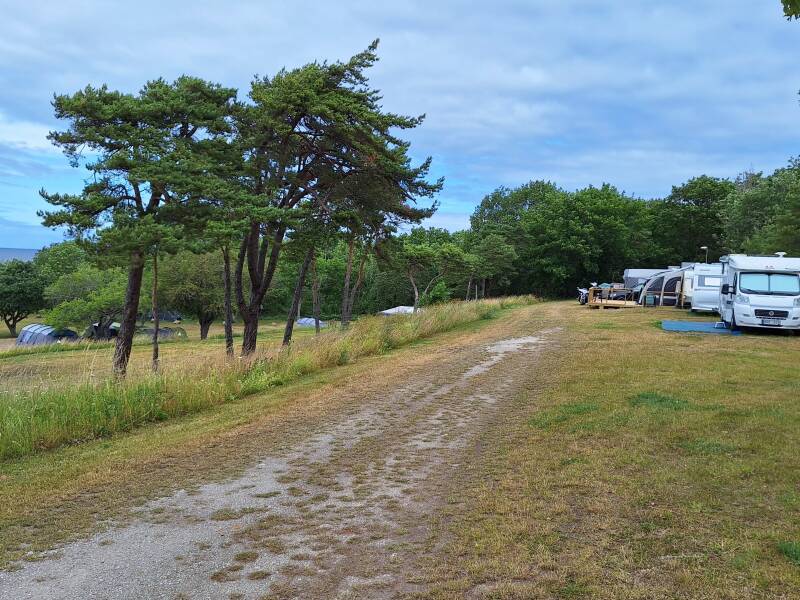
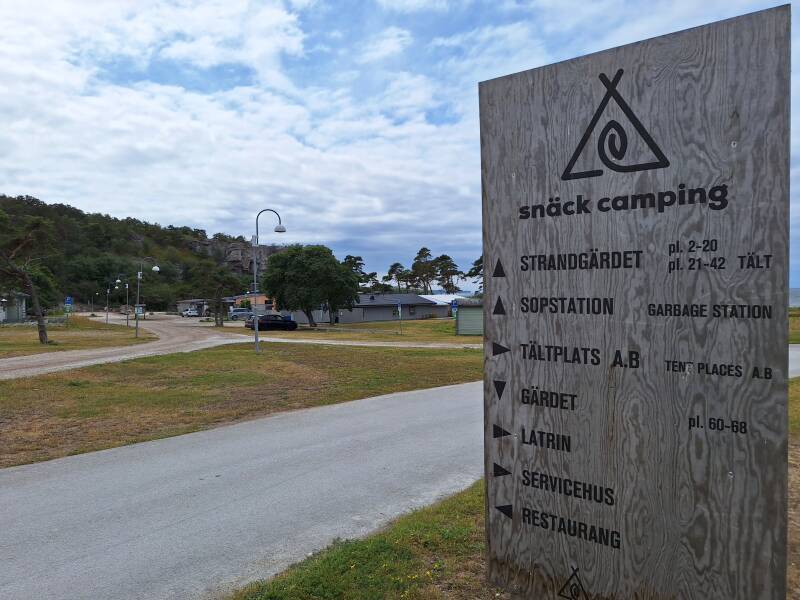
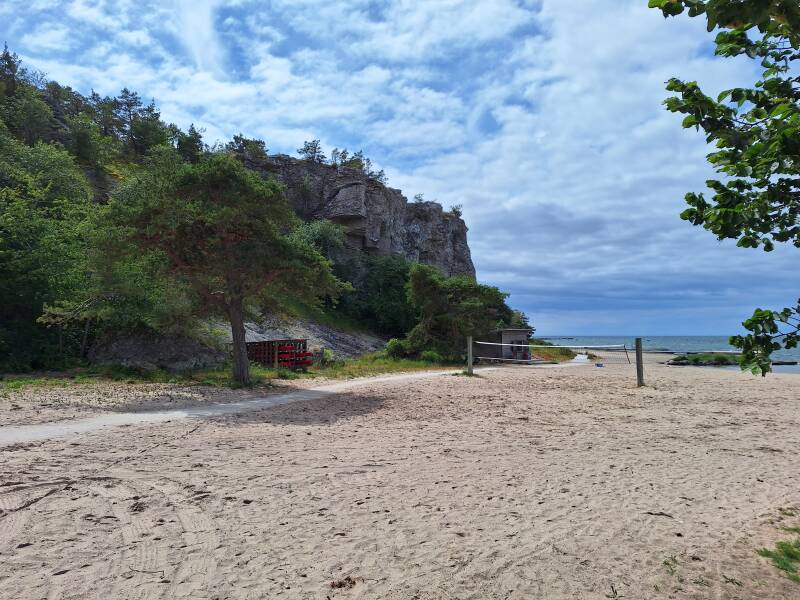
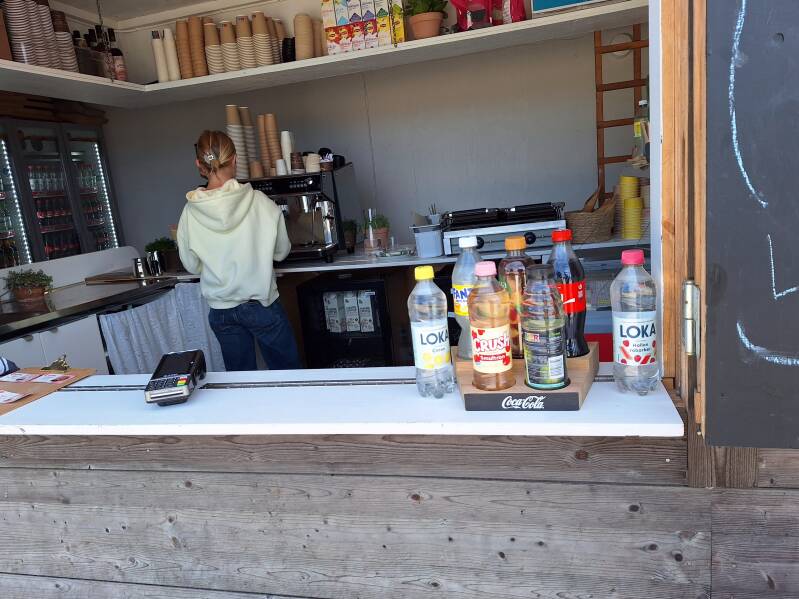
Snäckvikens Bad
Brucebo Nature Reserve
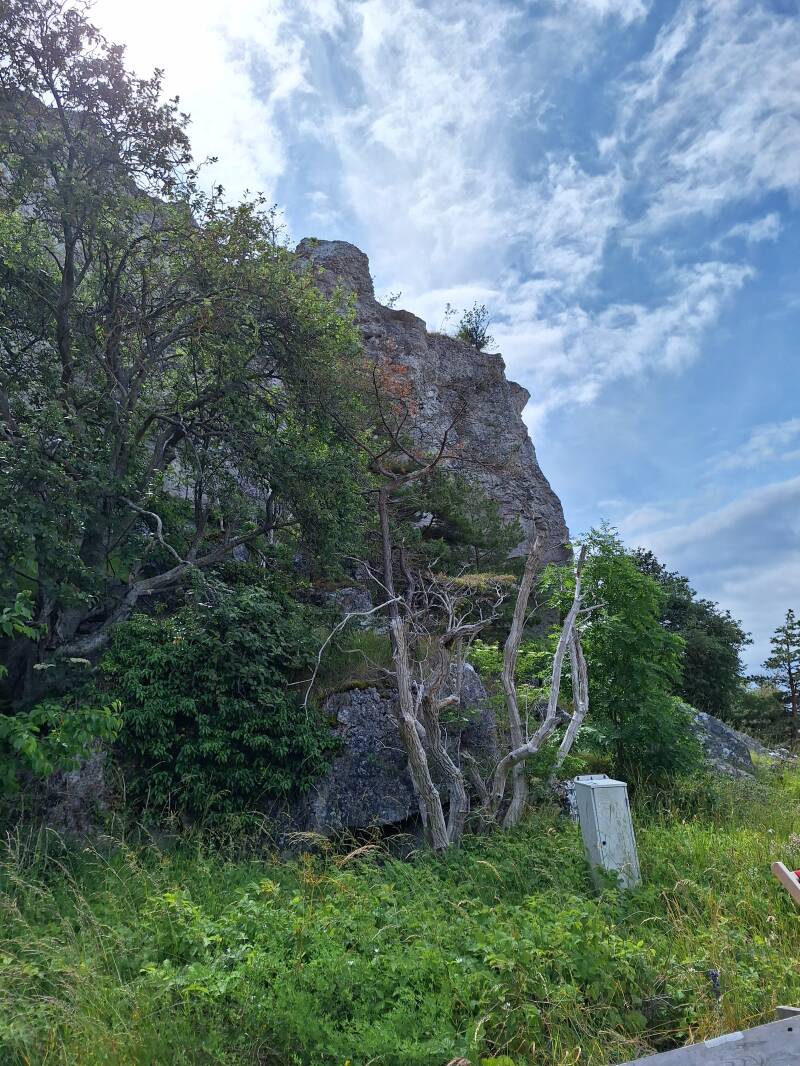
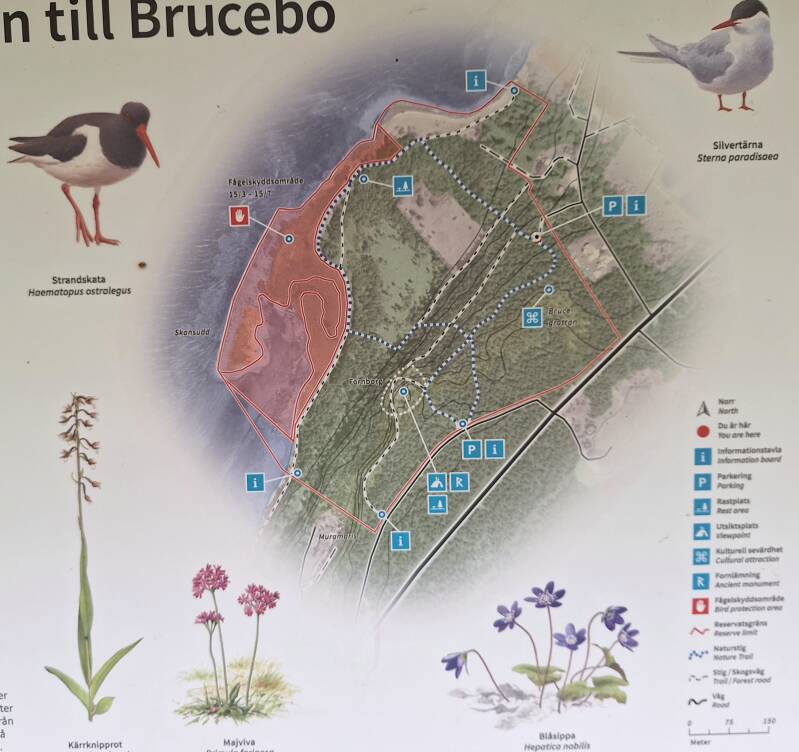
Although Brucebo nature reserve is only about 100 acres in area, it accommodates a number of different habitats, including plunging cliffs with caves and overhanging rocks, meagre pine forests and lush spruce forest, winding soligenous brooks, orchid- rich fens and wet meadows, pebble and sandy shores, and Skansudd - a sand spit supporting rich bird fauna.
The reserve is divided in two by a tall coastal cliff, up to 35 metres in height. Sparse and meagre pine forestland is prevalent on the plateau crowning the cliff. The actual crown of the cliff offers a magnificent view across the sea and the lower part of the reserve. The ancient hill fort 'Bygdeborg' is on the crown.
The nature reserve changes character beneath the cliff. The actual cliff slopes support a lush spruce forest, and water trickles out from the ground at several places. Some of these flushes have formed narrow brooks which wind their way down to the sea.
Going to visit it afterwards, also grottan (cave).
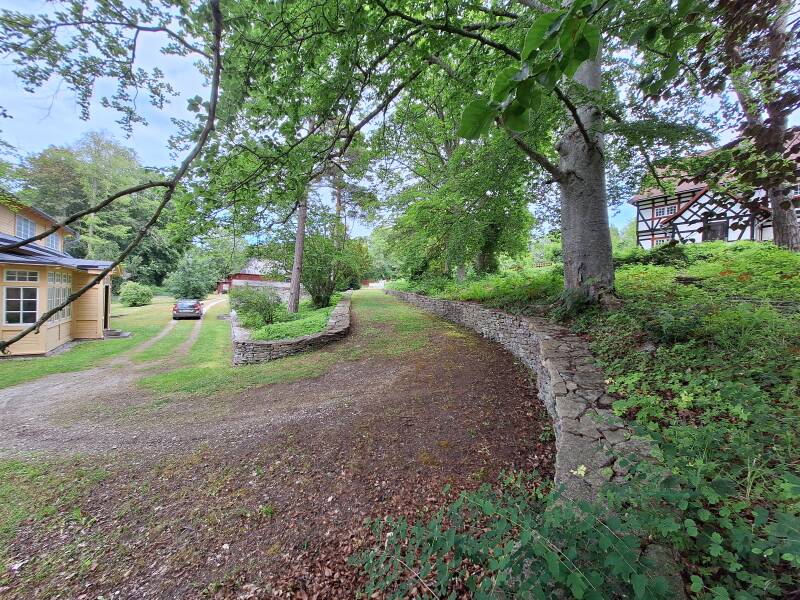
Konstnärshemmet Brucebo. Guided tours in English, Fridays at 13.00. 24.06 - 16.08. infobrucebo@gmail.com
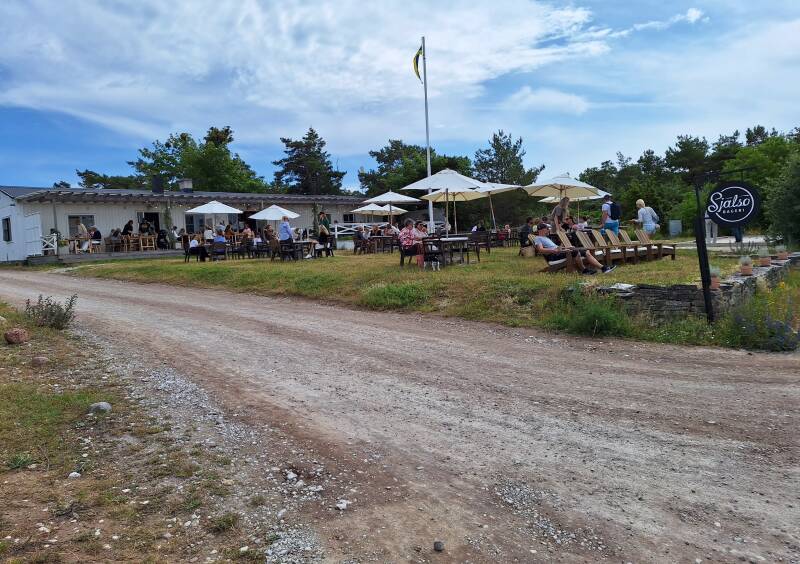
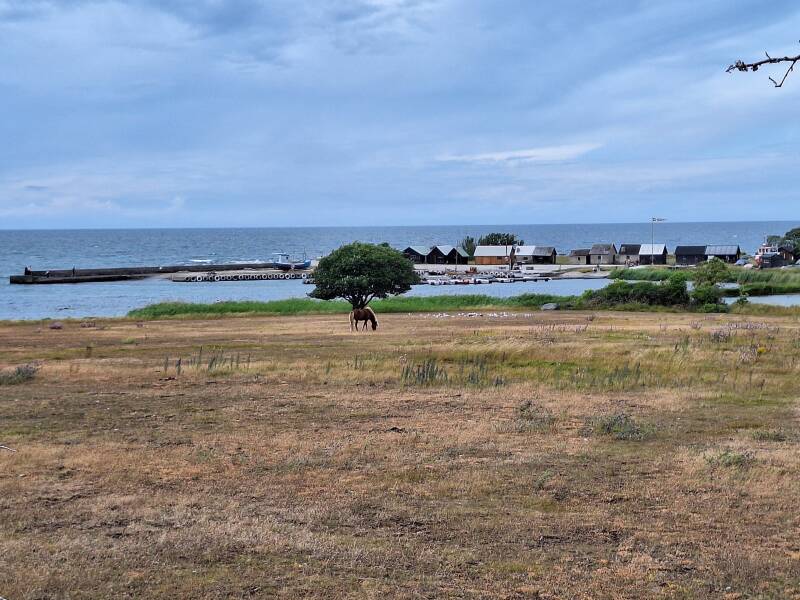
Själsö hamn. Fresh fish to sell.
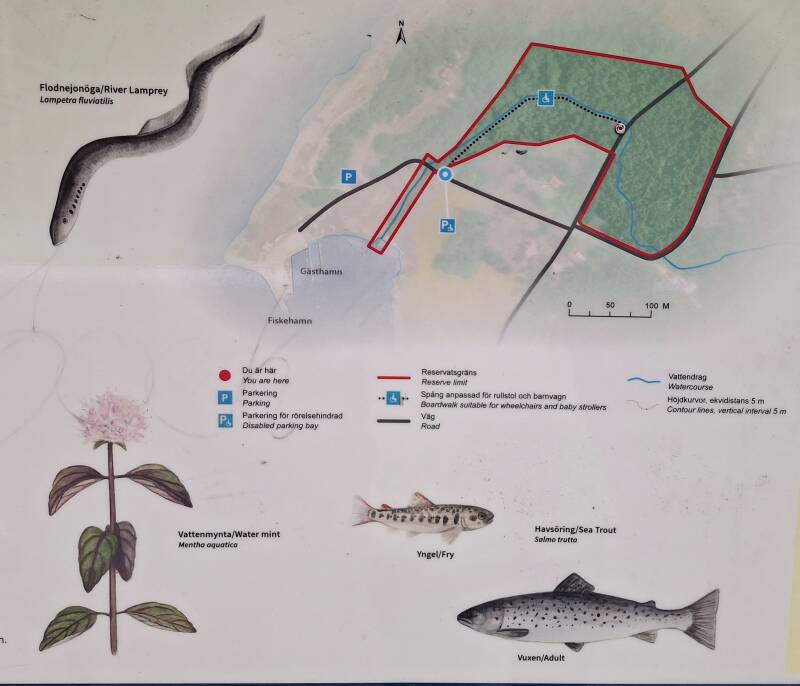
Själsö naturreservat (There are 162 naturreservats in Gotland)
Sea trout could tell many stories about life in the calm stream and the vast sea. The life cycle of Sea trout here in the stream at Själsö has been studied by biologists for a long period of time. In October to December, the Sea trout return from the sea to spawn in the stream. The female lays thousands of eggs which hatch in spring when the water is warmer. The smolts normally remain in the security of the stream until the of one to two years. Many, however, also migrate out to sea after just a few months. There is not enough space for all the smolts in the stream, especially in summer, when water flow is low. The Sea trout return to the stream after at least one year in the sea. Contrary to salmon, Sea trout spawn several times in their lifetime.

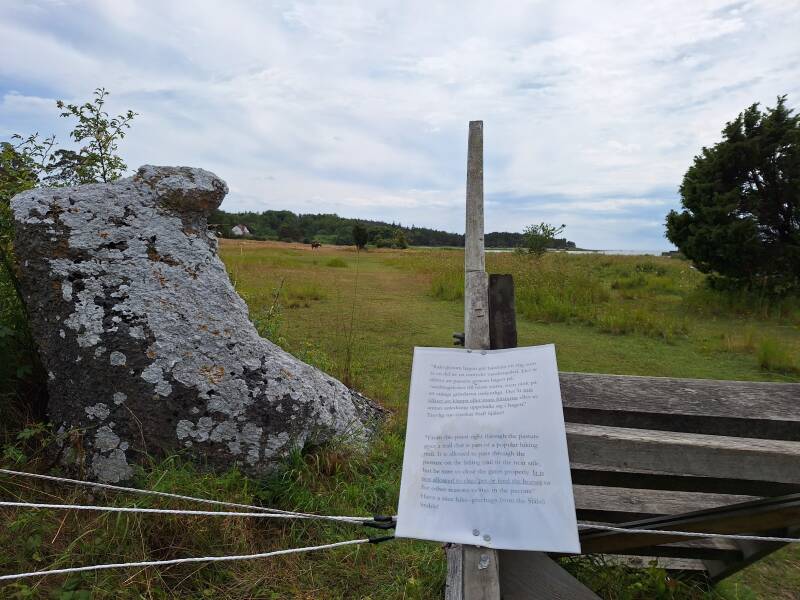
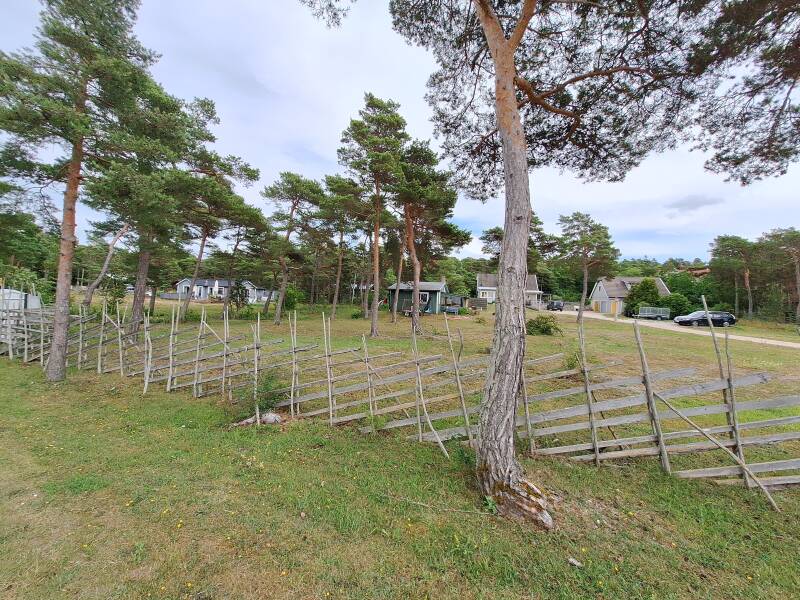
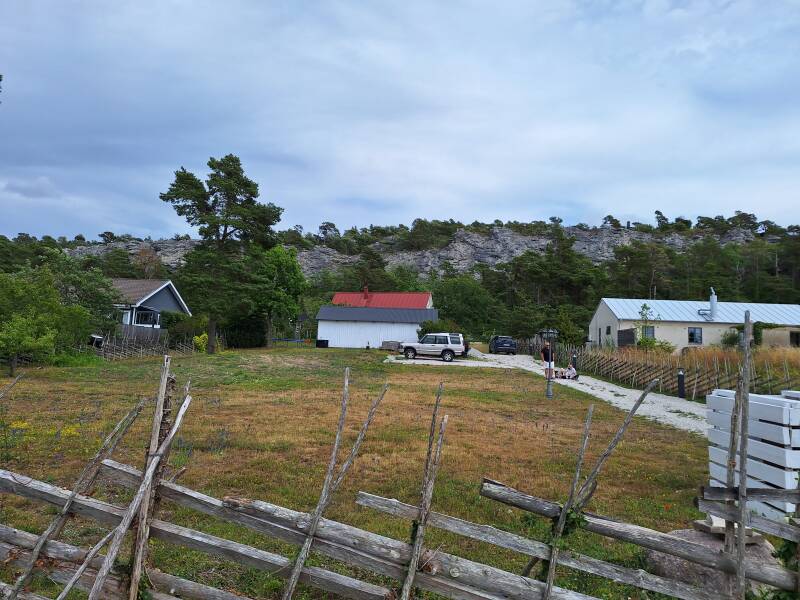
Själsö->Brissund->Krusmyntagården
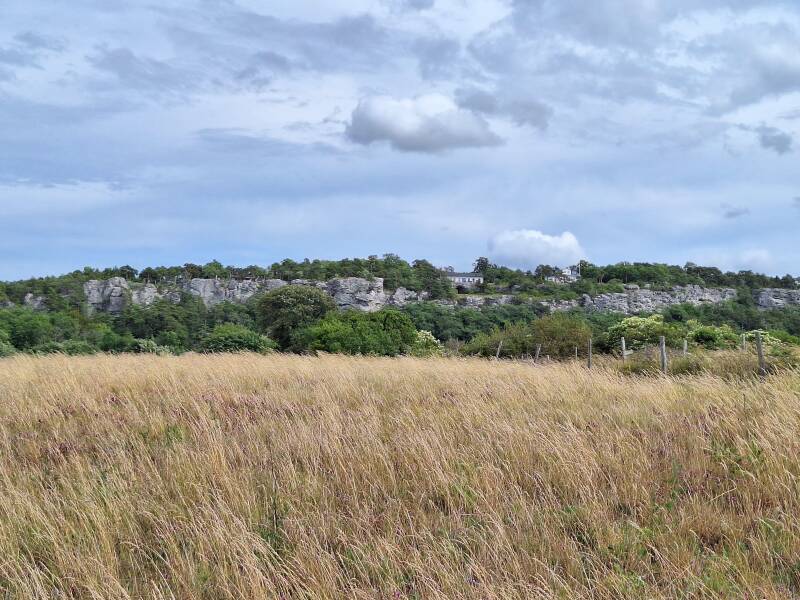
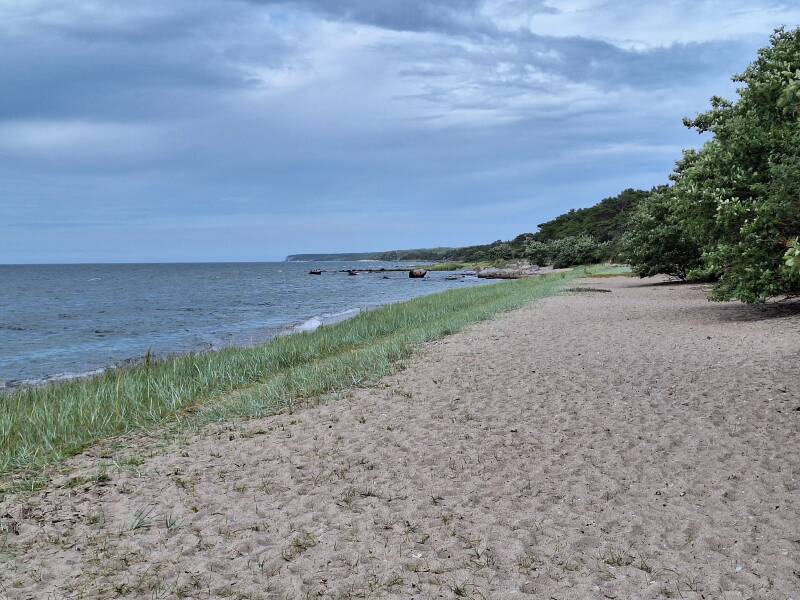
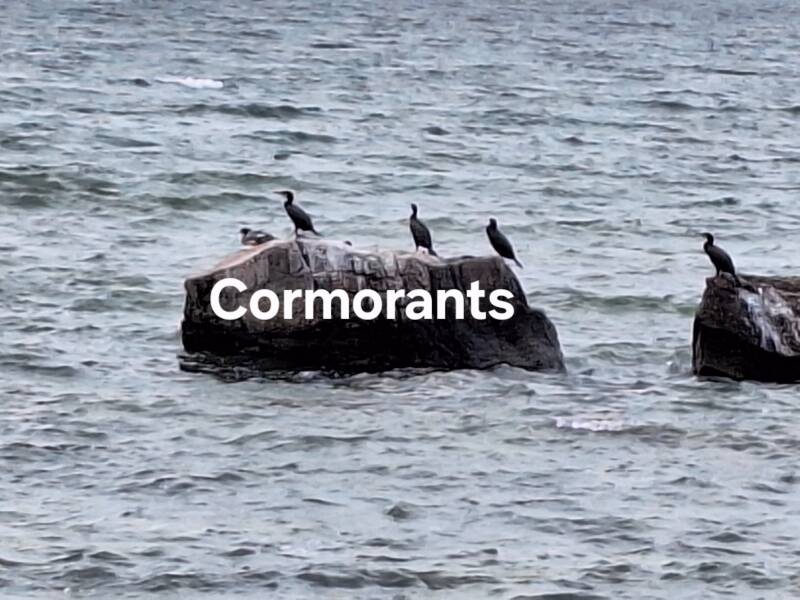
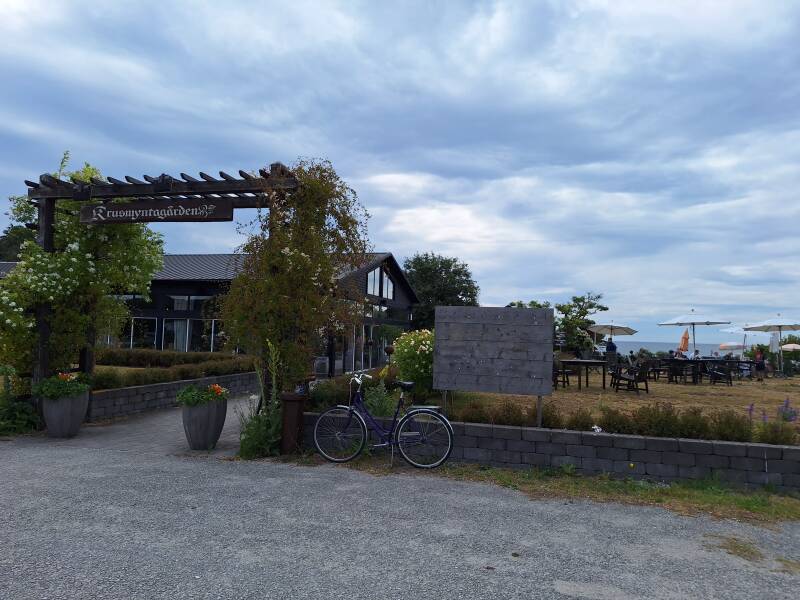
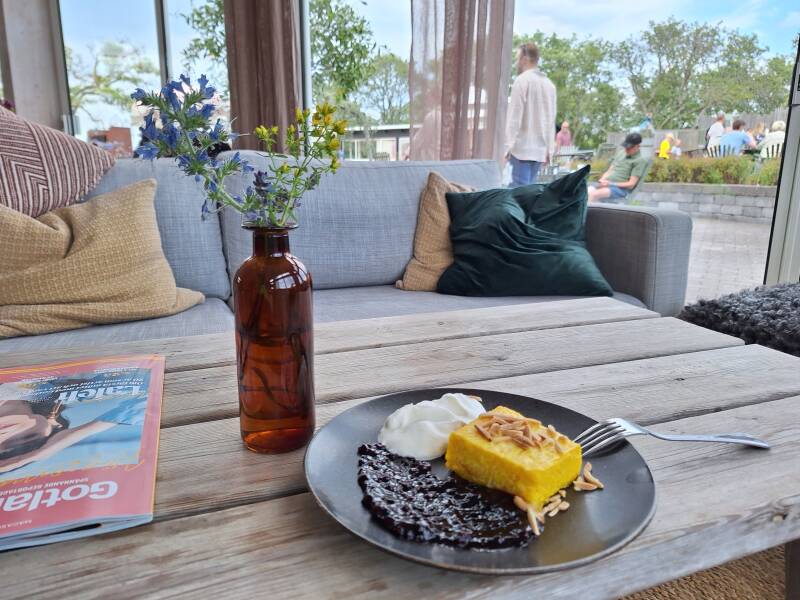
Safran pancake. Safranspannkaka. Popular here. Saffranspannkaka, or saffron pancake, holds a special place as the provincial dish of Gotland, the island you're currently on. It's a festive dessert made from rice pudding, cream, eggs, sugar, chopped almonds, and saffron, baked until golden and traditionally served with dewberry jam and whipped cream. Its origins trace back to medieval times, when Gotland’s trade connections through the Hanseatic League gave locals access to exotic spices like saffron. Over time, it became a celebratory dish for weddings, Christmas, and other special occasions. It's definitely a culinary icon of Gotland.
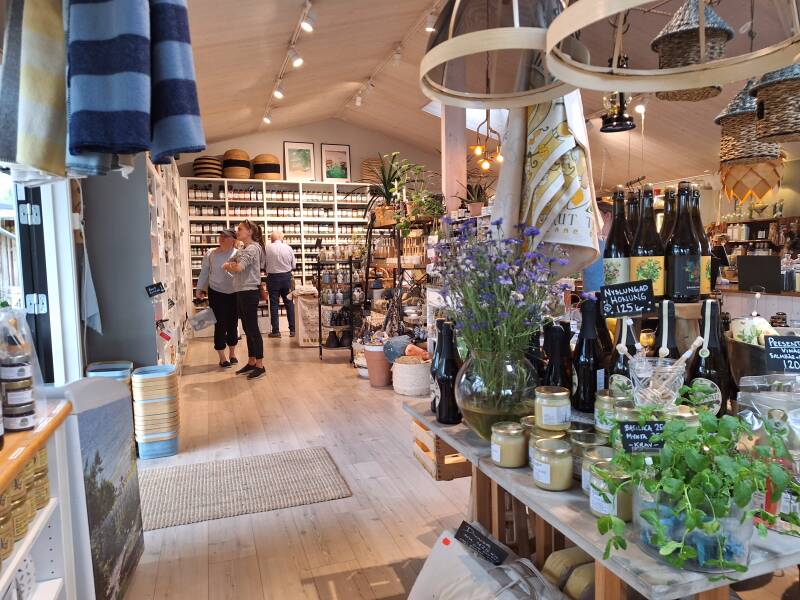
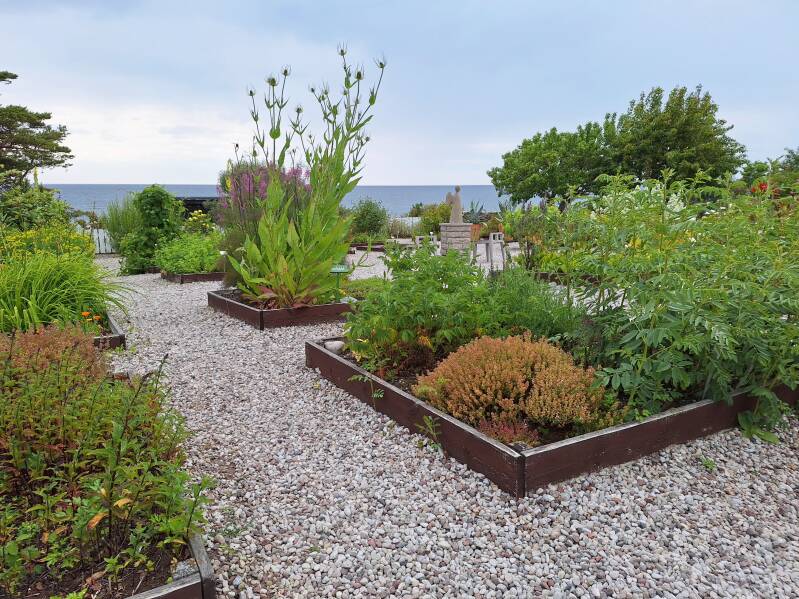
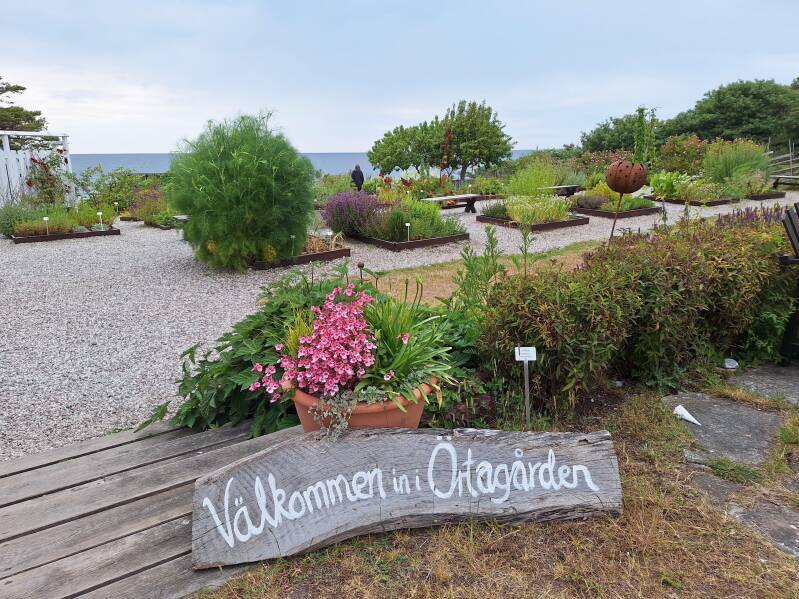
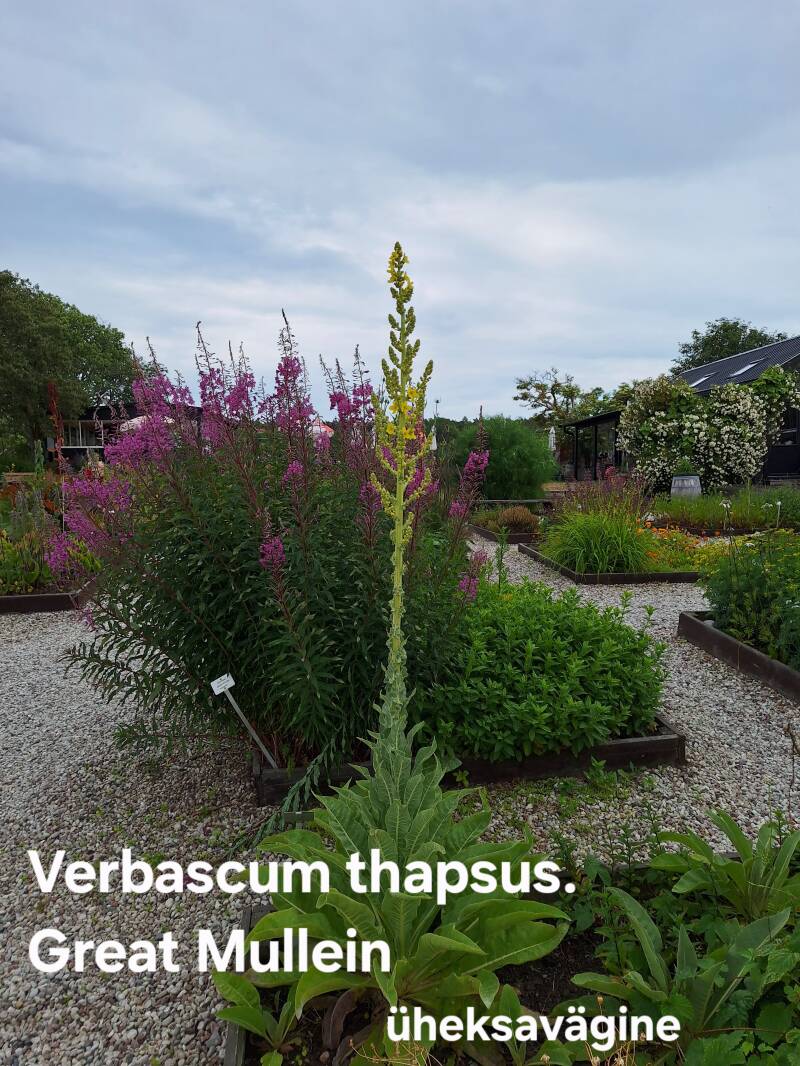
It's so many plants here. Smth has to be left for next time to take a closer look. Heading back.
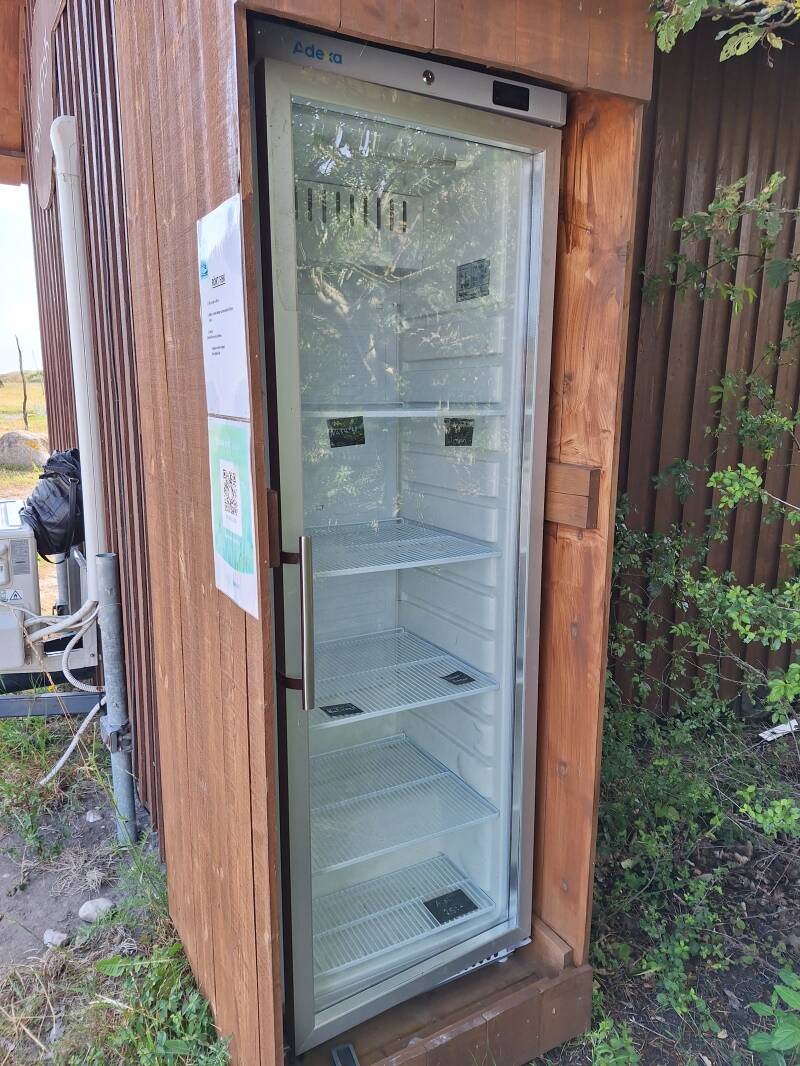
Fish kiosk, back to Själsö Hamn is empty, however it is possible to buy it just with Swish:
https://app.swish.nu/1/p/sw/?sw=1230628255&msg=&src=qr
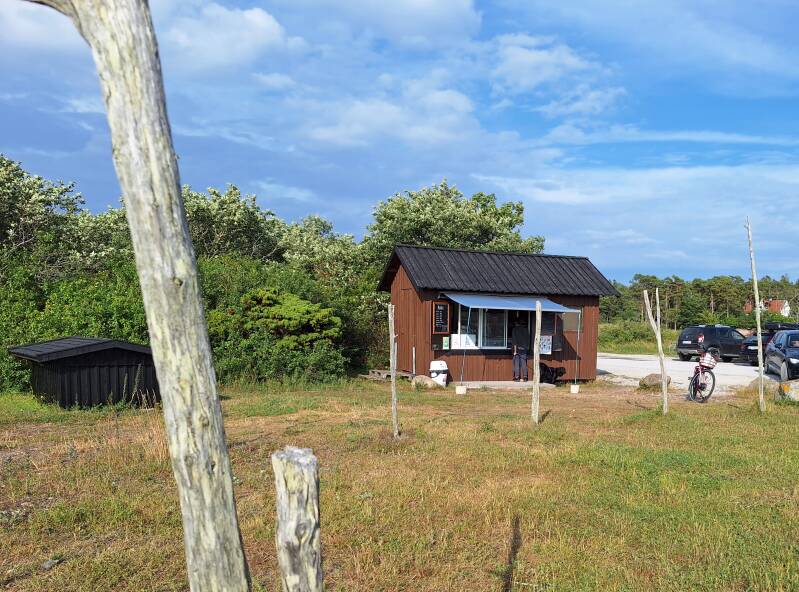
Ah, from kiosk when it is opened and later on from self service. I think I have to buy Kummel fisk (Hake)...
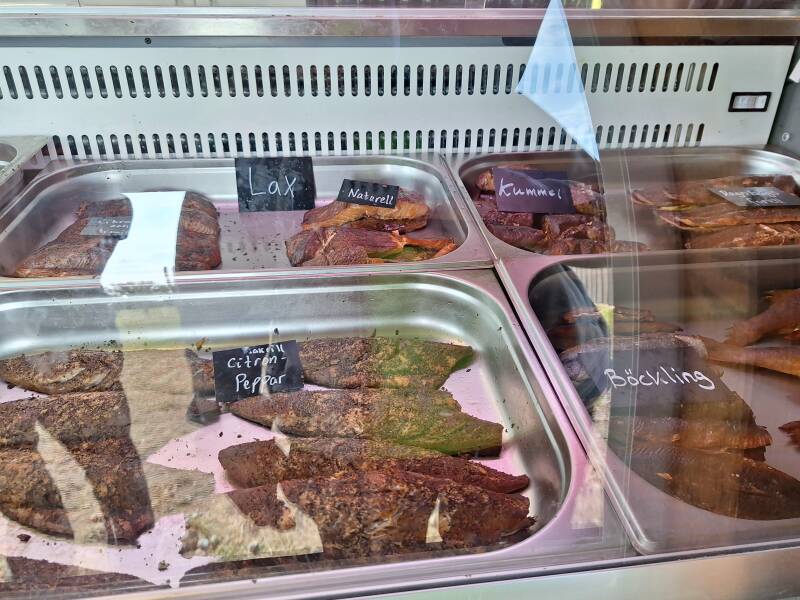
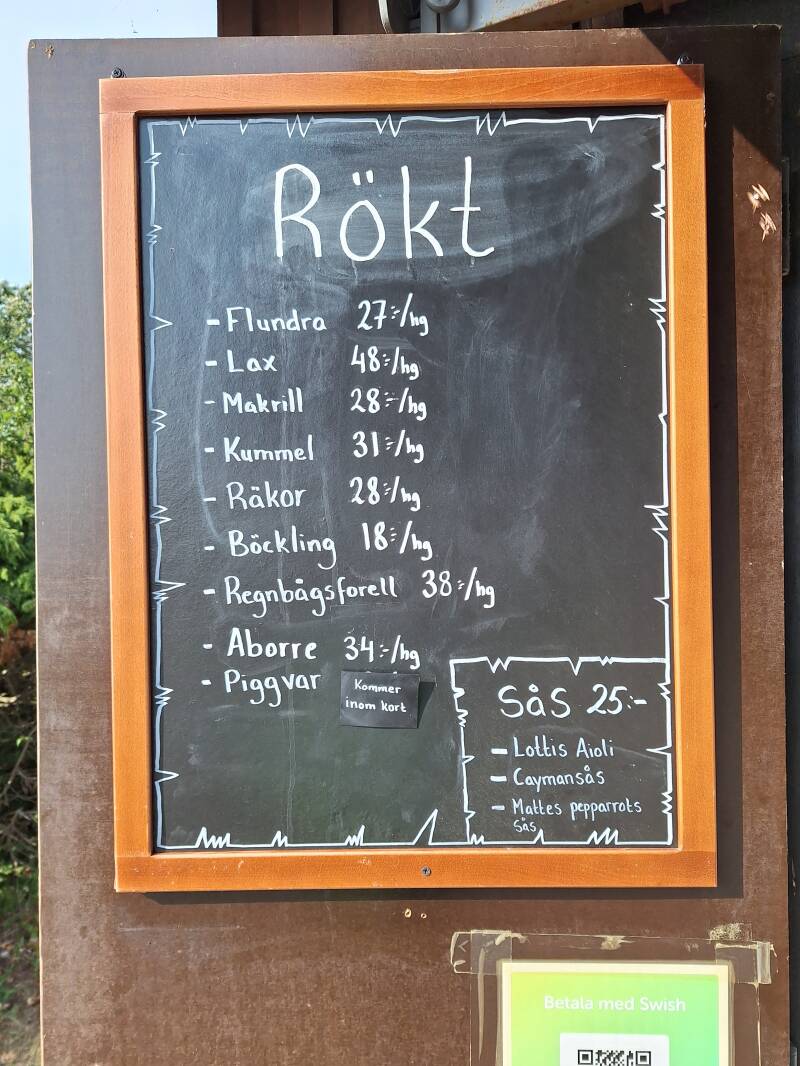
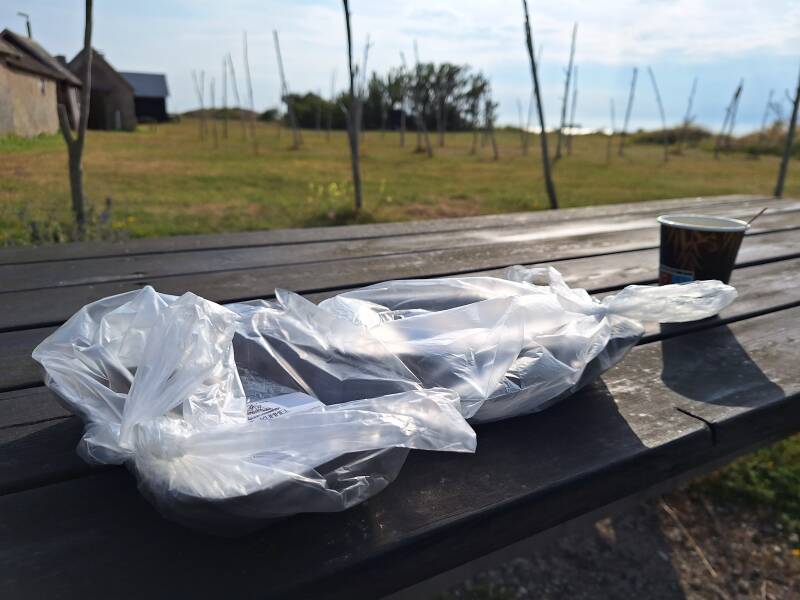
Bought Lax fisk too (Salmon). Studied Swedish, she didn't want to speak English. ;)
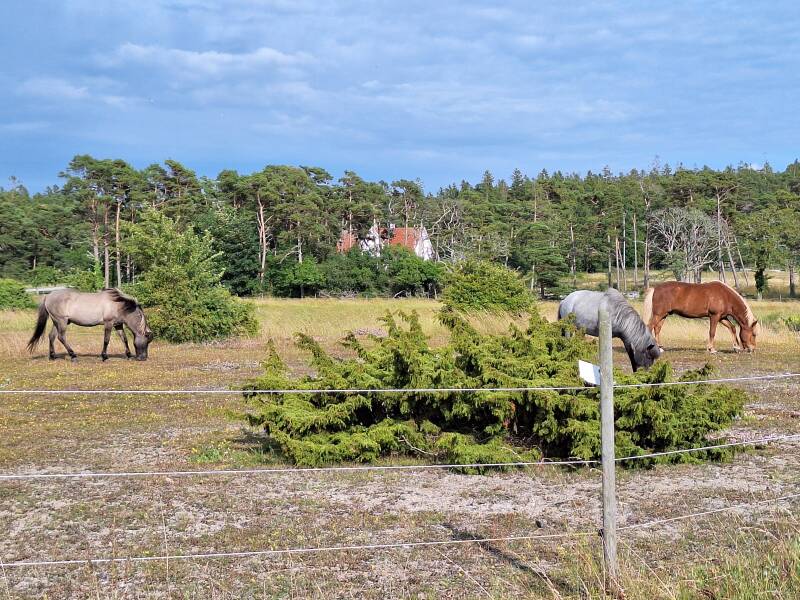
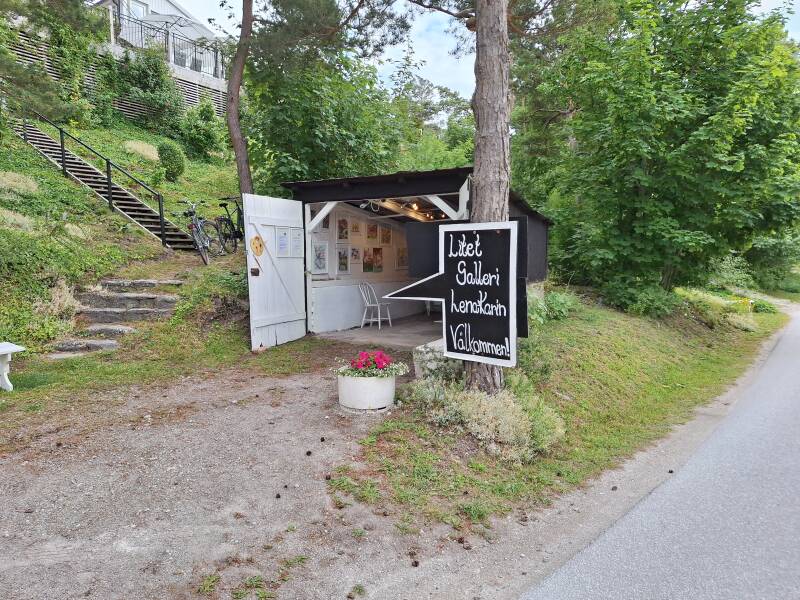
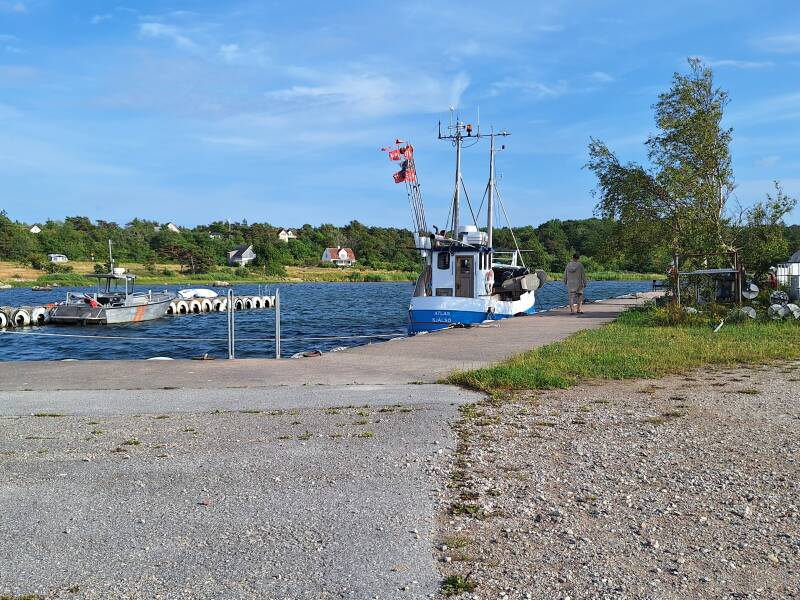
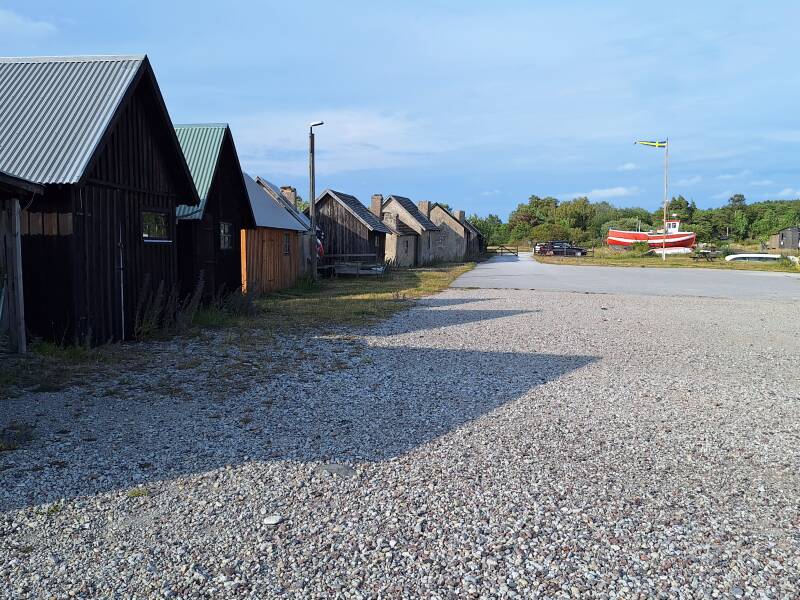
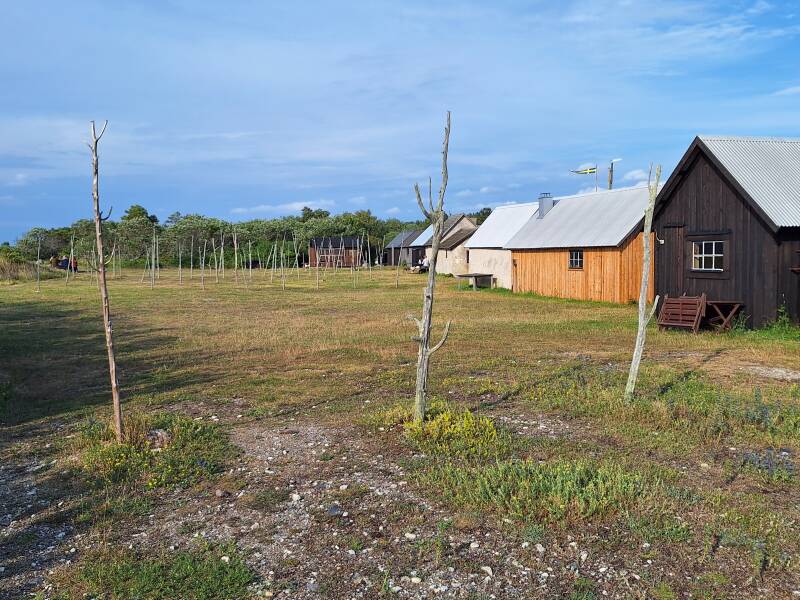
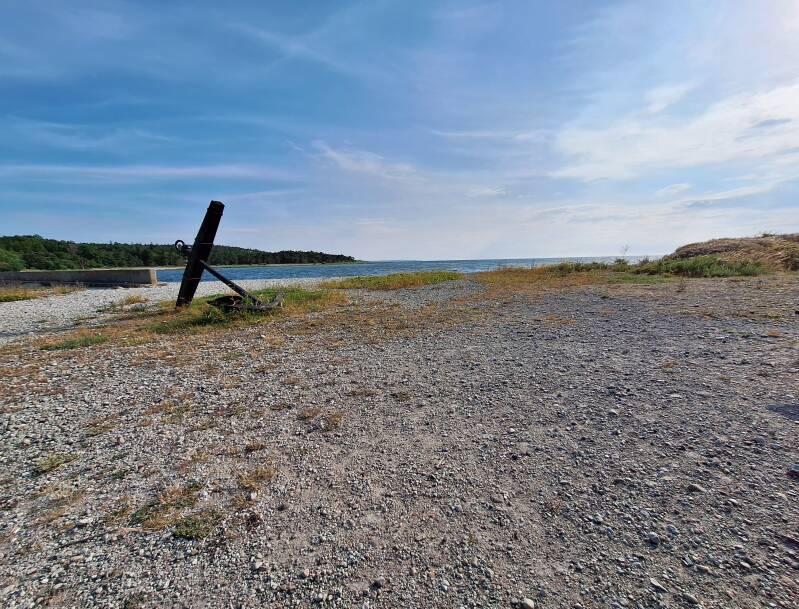
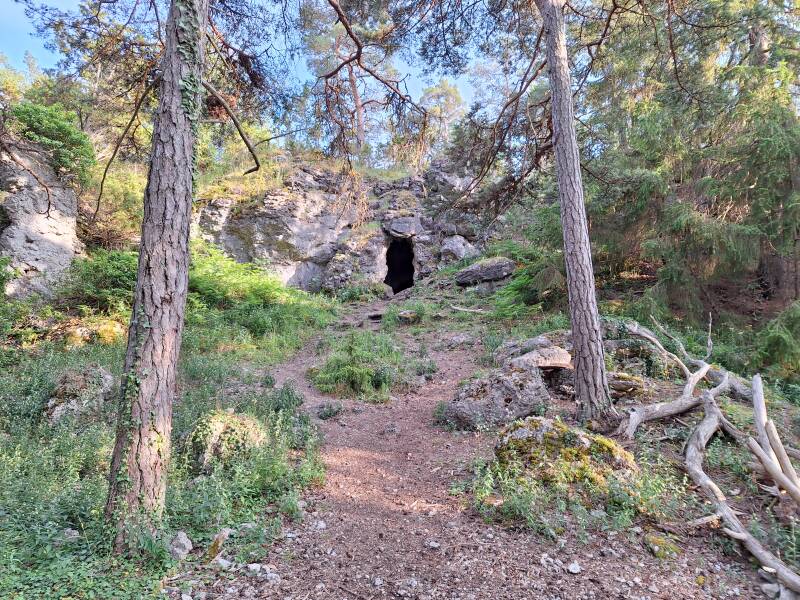
Back here to Brucebo Naturreservat & Brucegrottan. The trail should be 2 km long...
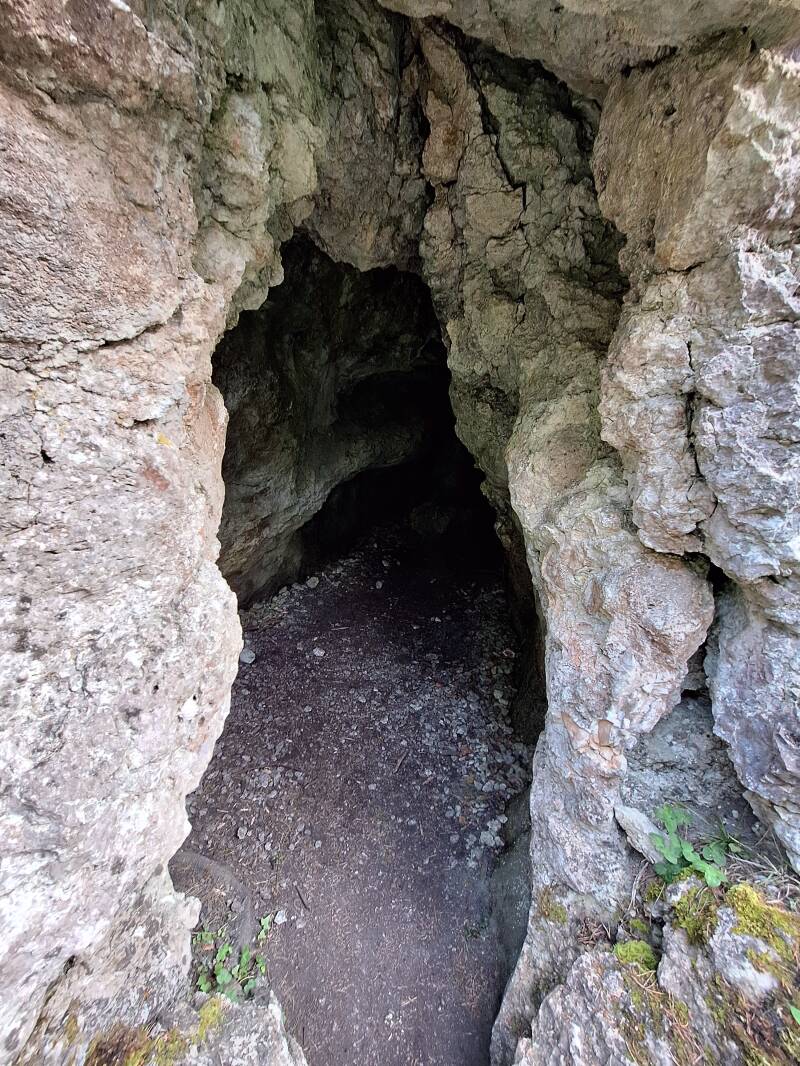
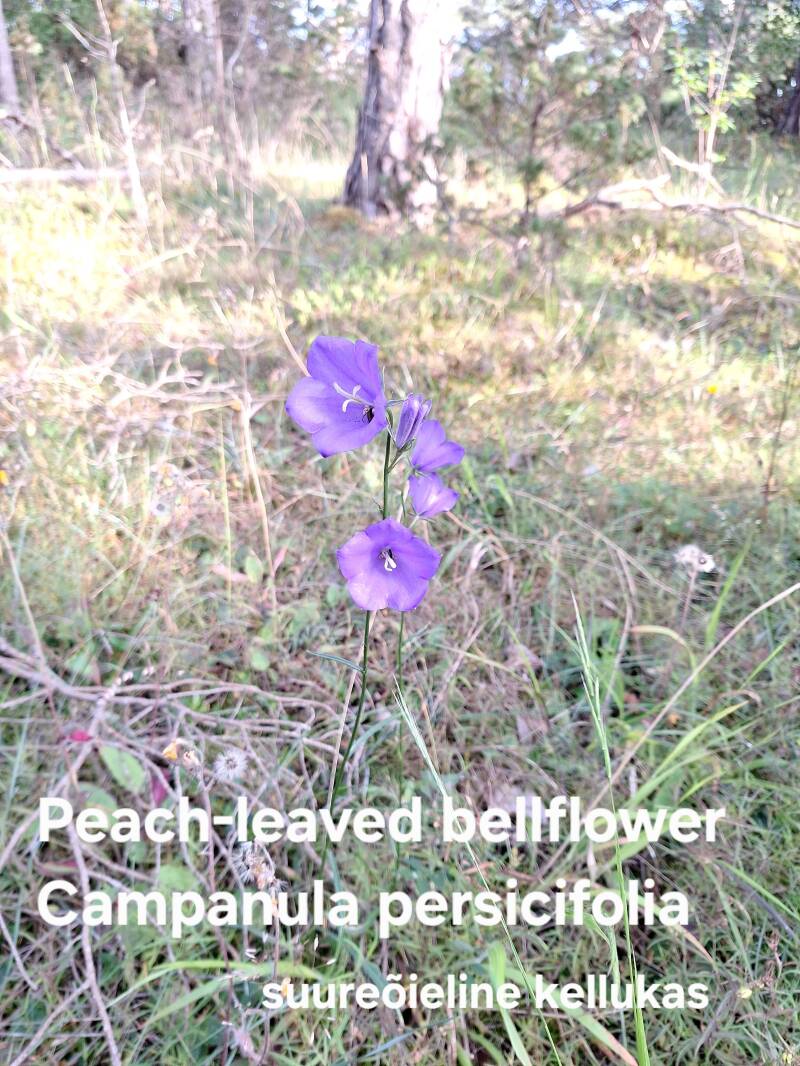

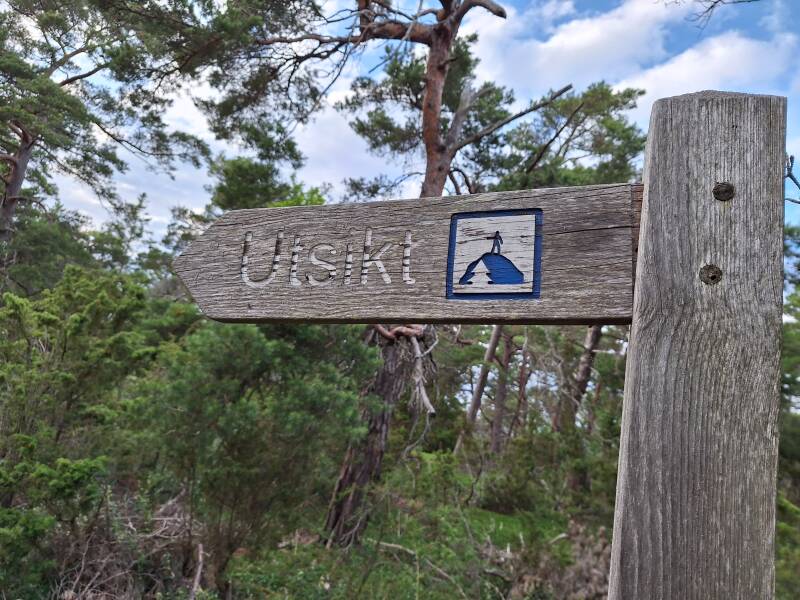
Utsikt - view.
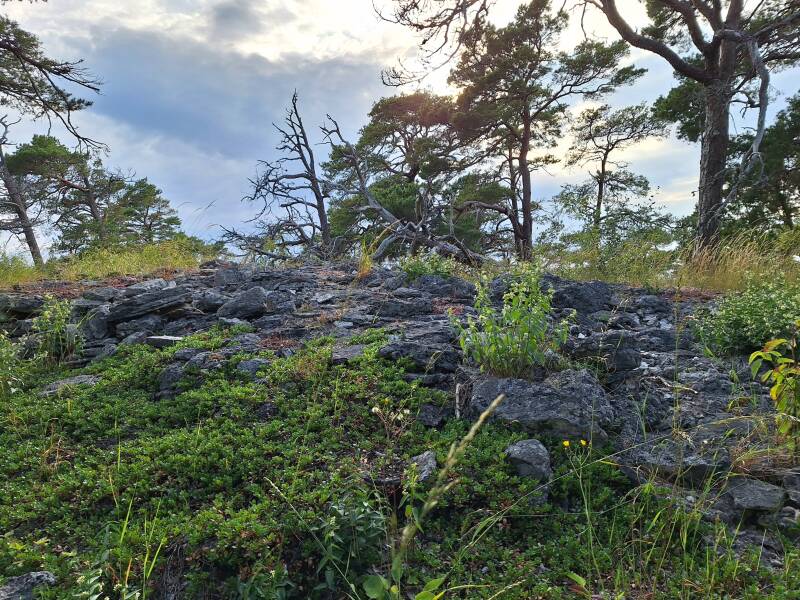
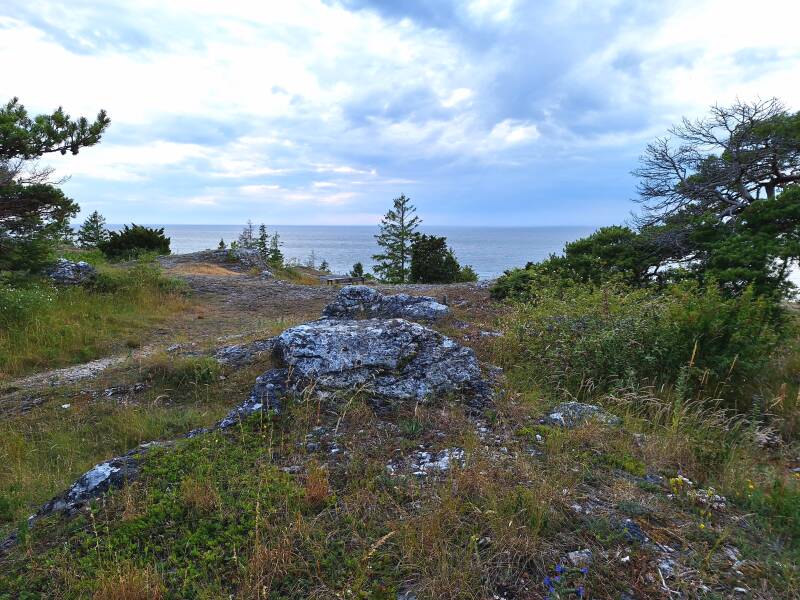
Bygdeborg Fornborg
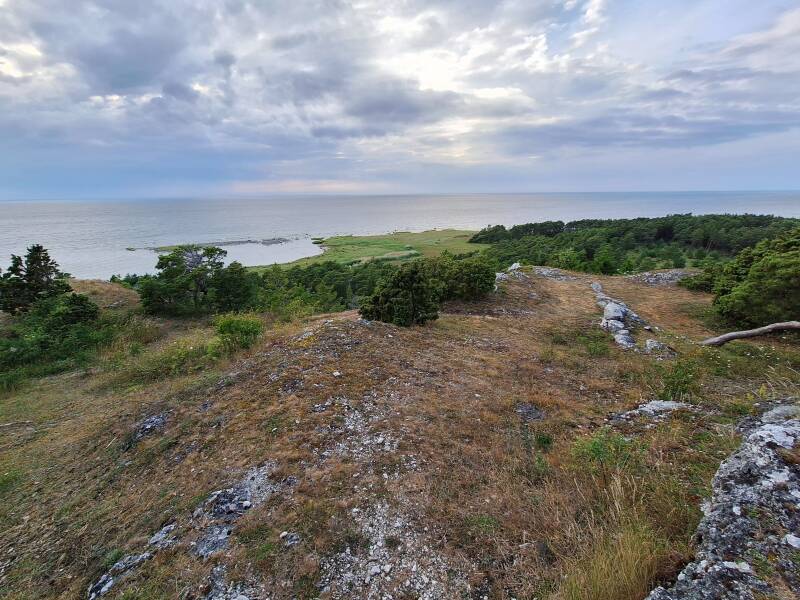
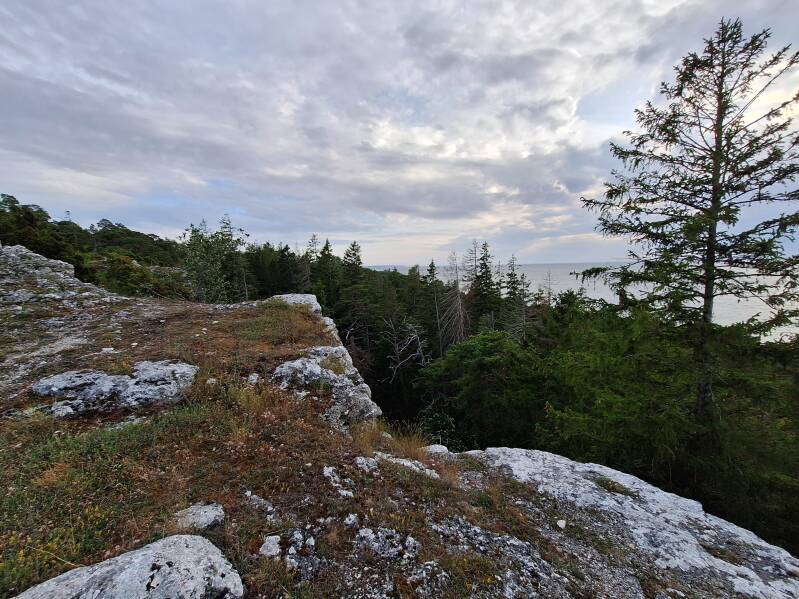
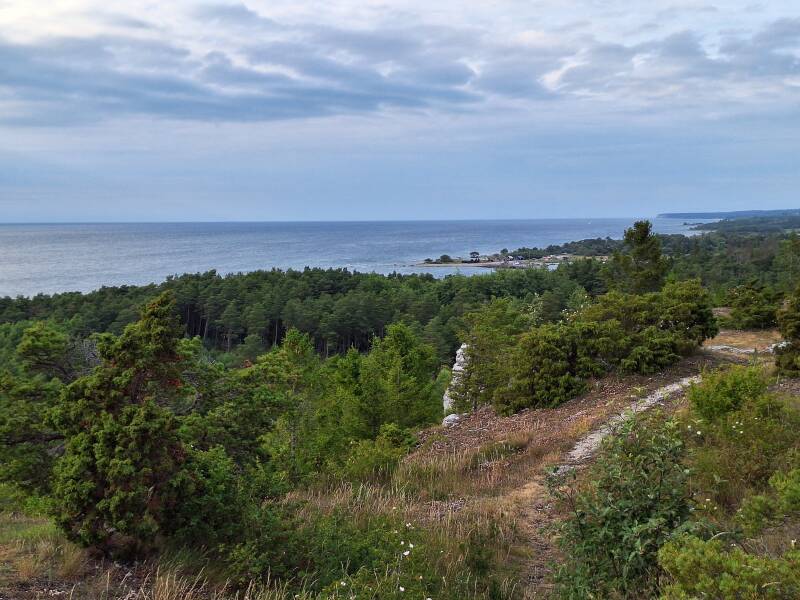
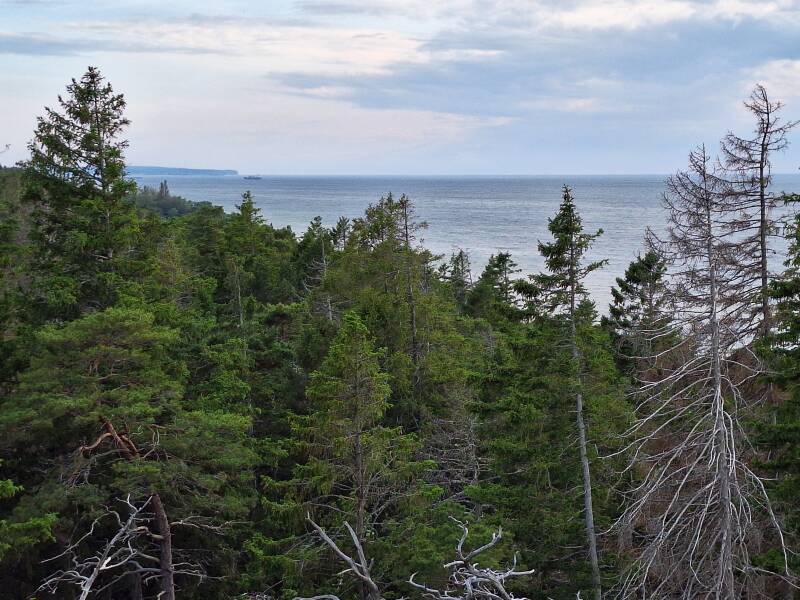
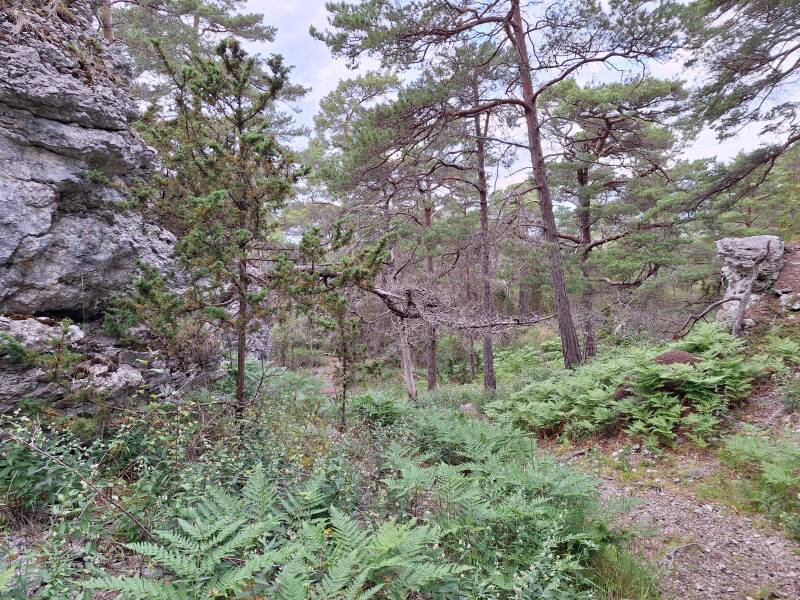
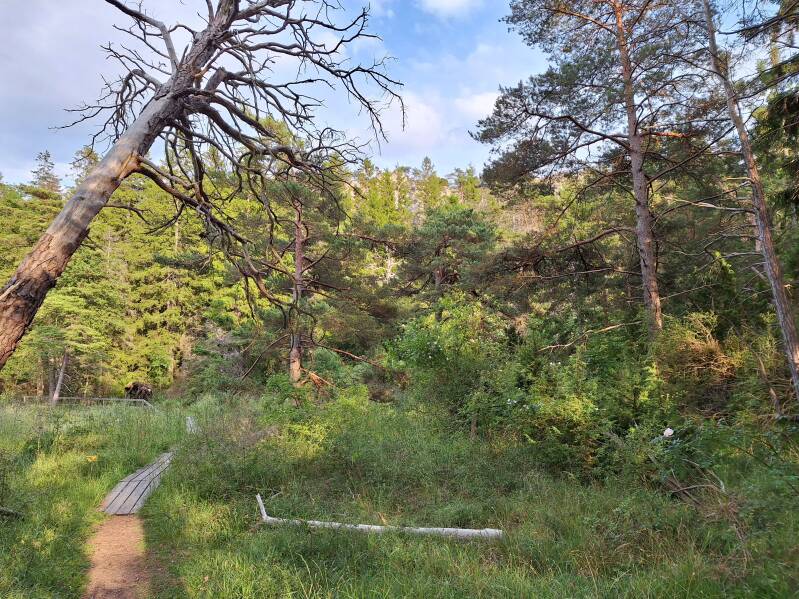
The trail is divided into two parts: higher (where were) and now walking on a lower part, which is also very nice and relaxing.
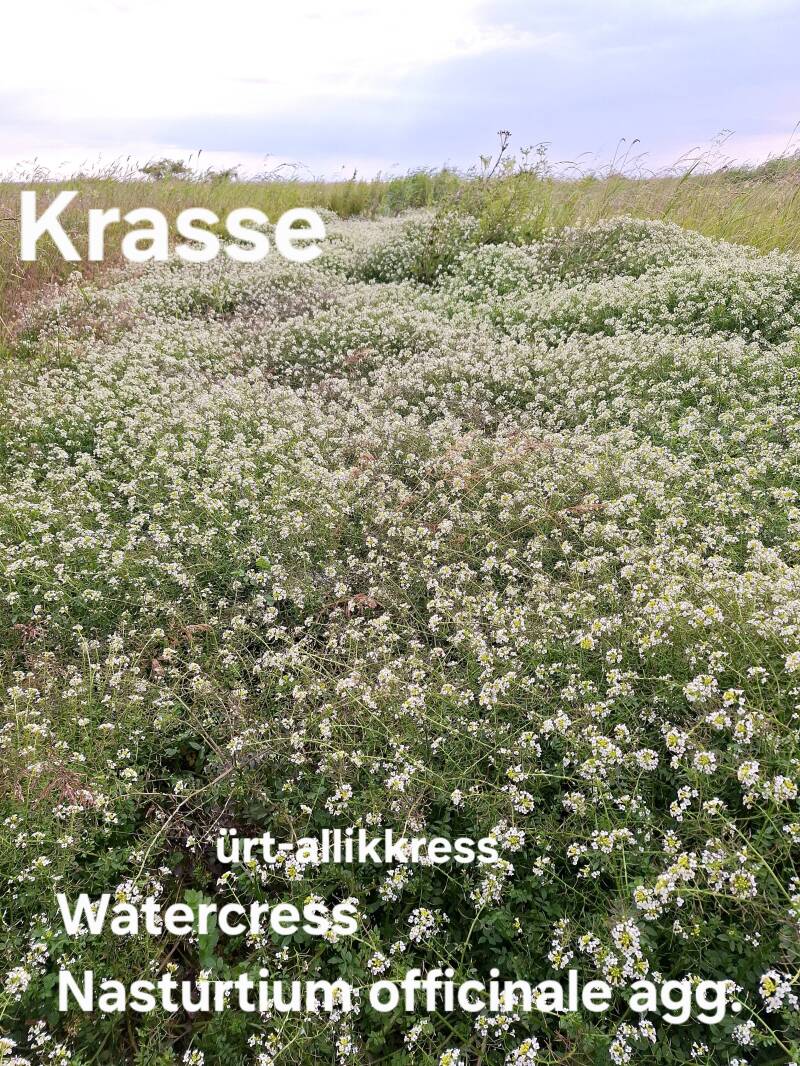
Will walk that trail and to the place we're they hang people - going next time -, Galgberget. They don't hang people anymore, don't worry. There is a Kärleksstigen (Love Trail) too near Visby...
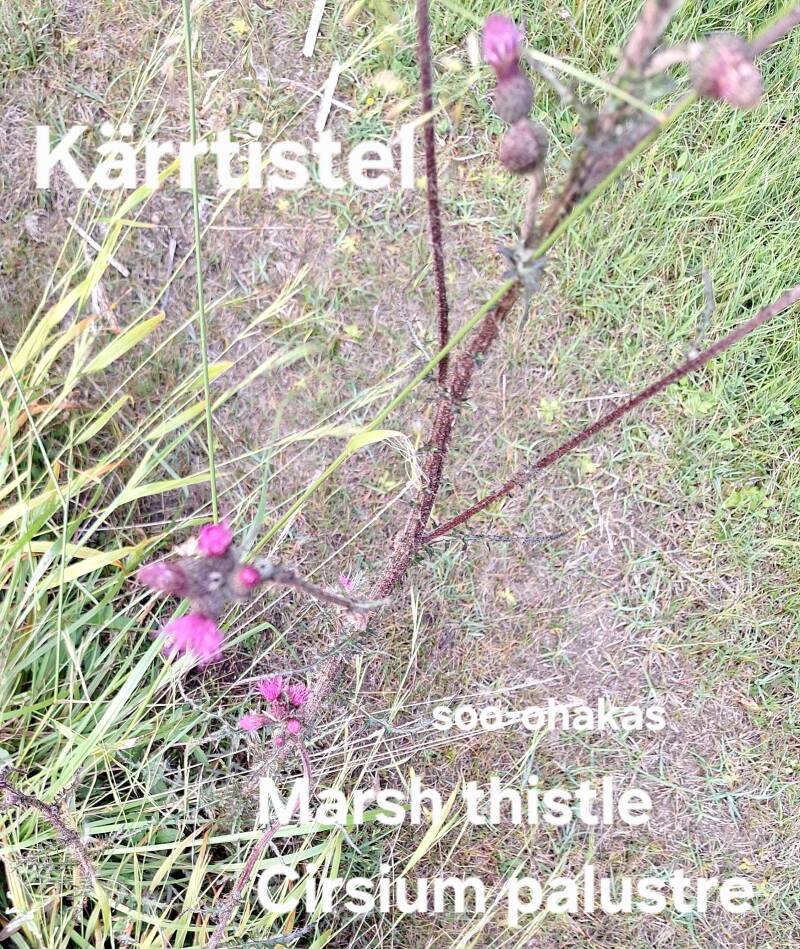
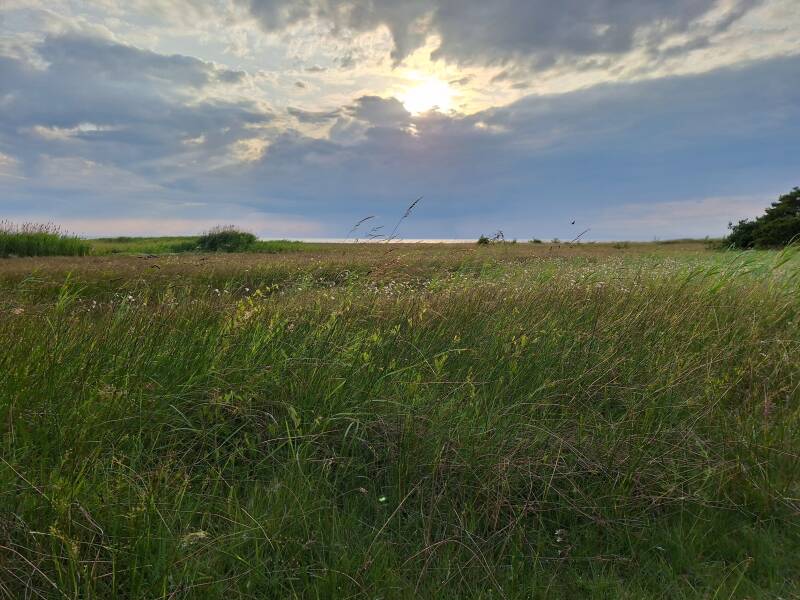
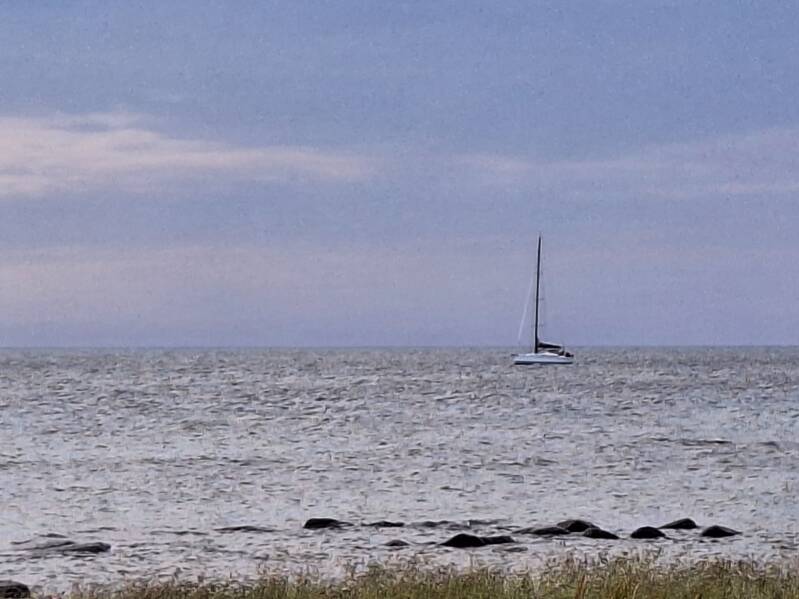
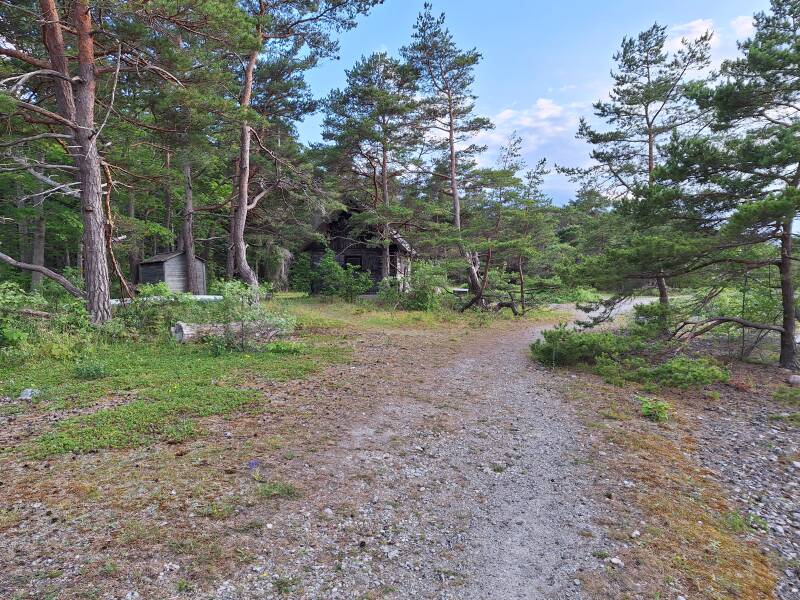
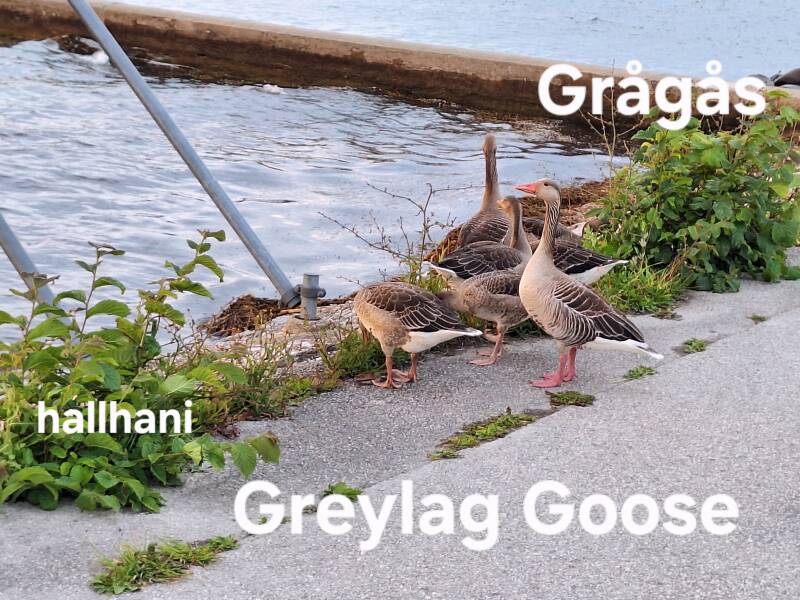
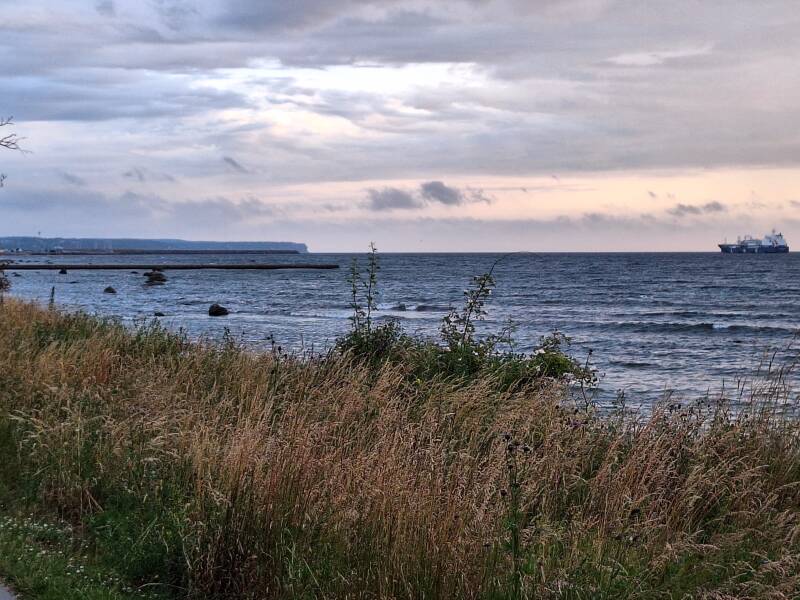
Amazing day. Astonishing views. What a delicious smoked Kummel (Hake). Got a little lost, on the way back from Brucebo trail, there was mystical wooden artist's house, in it's lonely solemnity - like a perfect place to paint or draw on the coast and woman speaking to phone in front of it. And in the south Högklint stands in it's lonely evening peace. . .
07.07.2025
Free day. There are probably ships, but cruisers haven't ordered excursions. Calm, windless day coming, however rainy. Probably going to library (to work a bit with my guide route/tour), keep on biking and for a little Baltic sea bathing. Galgberget & Kärleksstigen, today? My EU data roaming plan has 20 GB, have to set myself to the economy mode.
Parking areas can't be to small, because then the buses can't maneuver. The ancient burial grounds from different periods are quite unique here. Different.
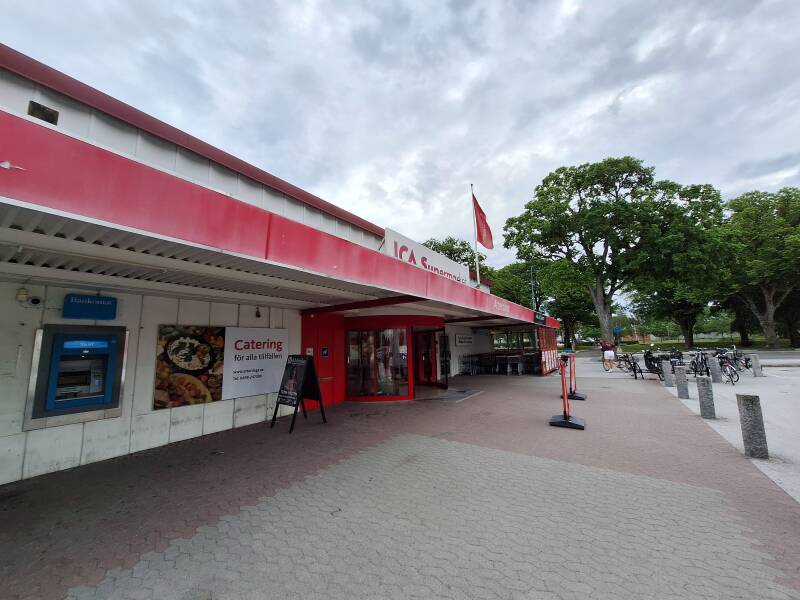
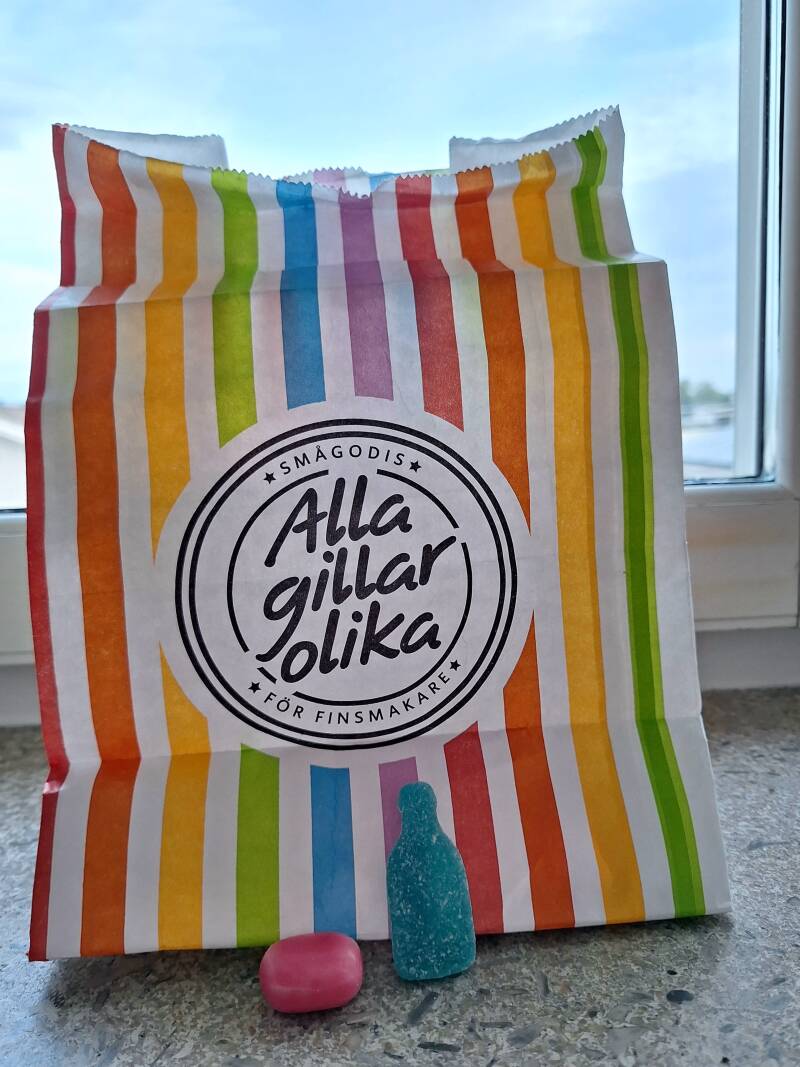
Very enjoyable is that Gotland, Visby don't have those security cameras here, nobody watching you, recording you. And it is safe here. One can leave his/her door opened. Also drinks with alcohol are sold up to 3,5 degrees alcohol inside, in kiosks, gas stations, stores. If one wants to buy stronger alcohol - the special stores are opened quite few hours and they are far from common shopping areas. The politics and regulations on those fields of expertise are really well established here.
Söderport is the most closest entrance gate to the Ringmür for me and it is kind of shopping area in the beginning of the street. 1611 there was a big fire and lot's of interior got burnt down. That's one of my favorite places in Ringmür at Värdklockegatan. Great utsikt.
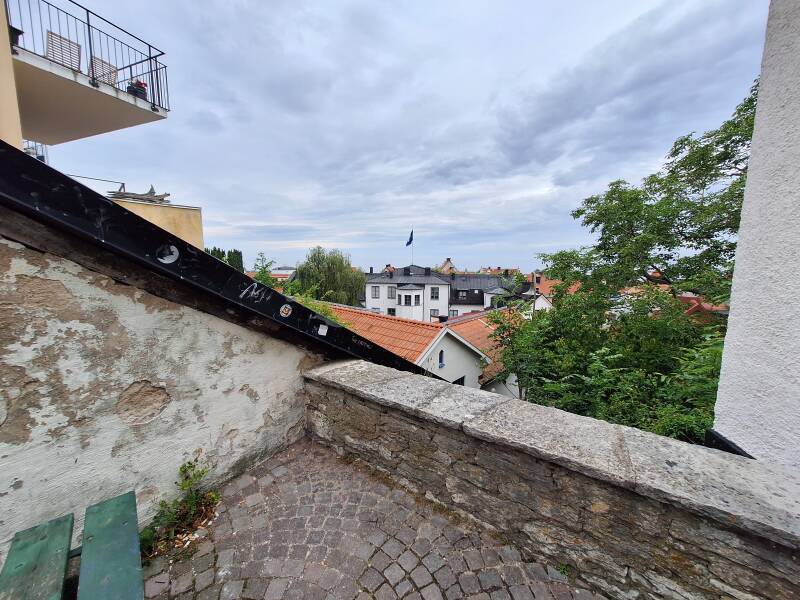
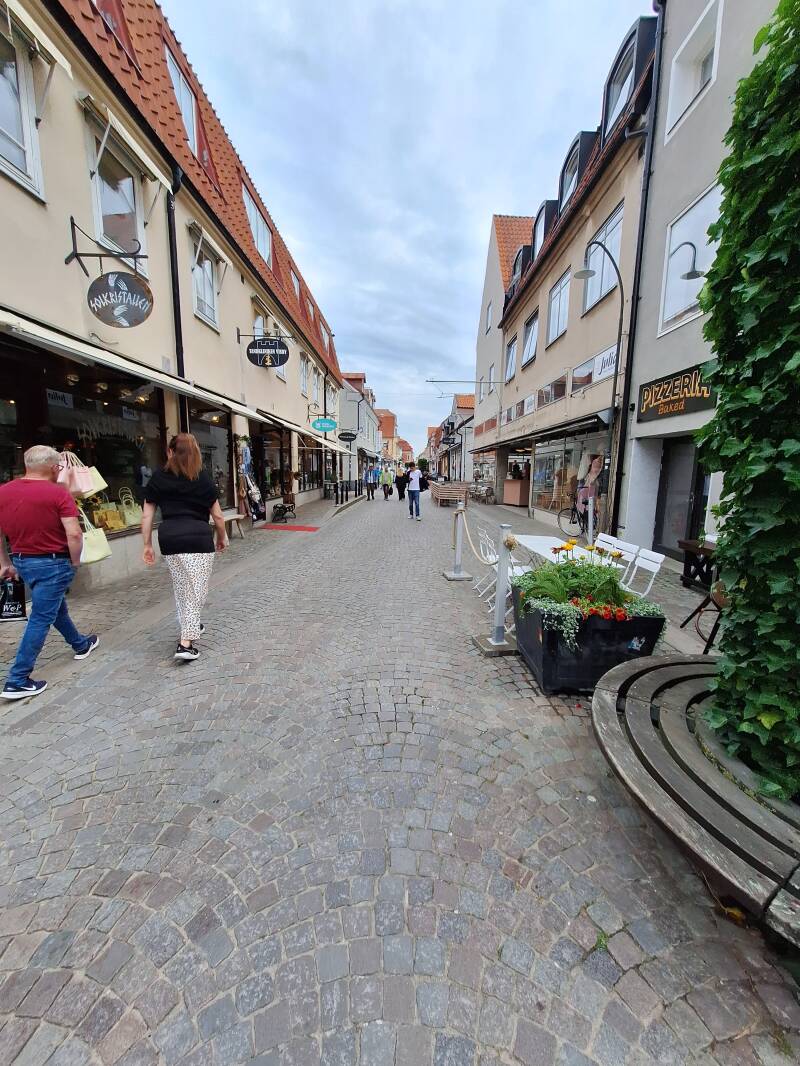
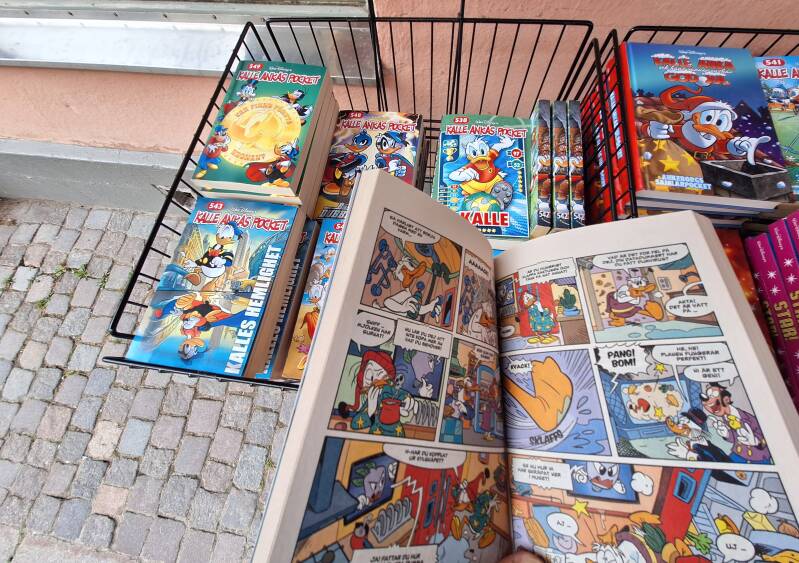
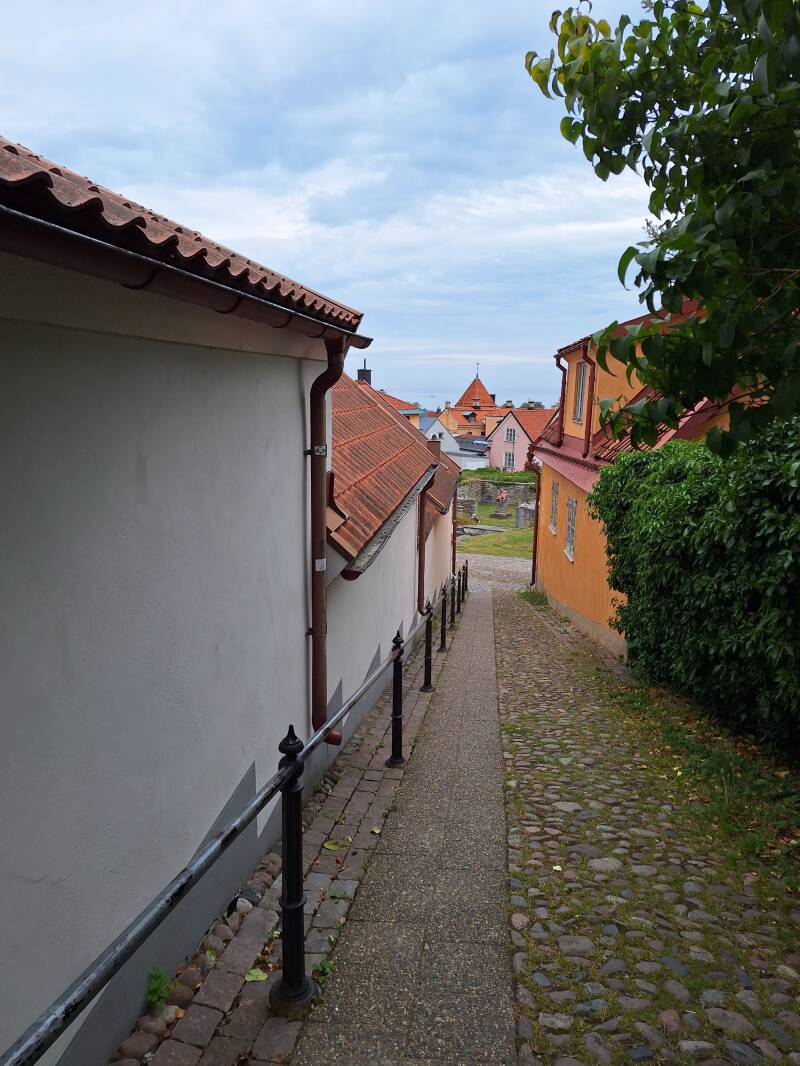
There will come ruins of St. Hans.
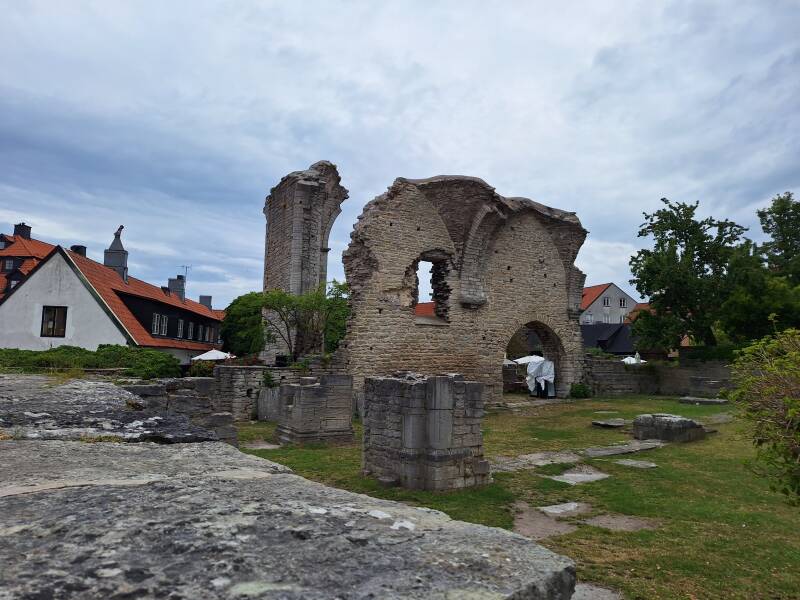
Excavations show that the churches of Sankt Hans and Sankt Per had older predecessors. The earliest one is Sankt Hans predecessor, Visby's first known stone church. The oldest of them all was Allhelgonakyrkan.
The 13th century Gutasaga tells that Botair from Akebäck had Allhelgonakyrkan (All Saints' Church) built - Gotland's first church. When the Gotlanders became Christianised in the mid-11th century, the church was built at Vi - their old cult site. Archaeologists found no trace of the church, however they did find the churchyard with finds from the second half of the 11th century.
In the first half of the 12th century, a small stone church was built north of Botair's church. It was the predecessor of the church of Sankt Hans, and the first known parish church in Visby. In the second half of the 12th century, Sankt Per
(Saint Peter) church was built in the same style just south of Sankt Hans, where Botair's church had stood. Sankt Per was probably the parish church for the town's German inhabitants. Both churches were extended, and merged, in the 13th century.
In the early 16th century, the churches were regarded as Visby town church - the biggest in the Nordic countries. In the 1530s, both towers were pulled down so that they could not be used to bombard Visborg Castle. The ruins became a supply of stones for new housing constructions.
In 1805, the church ruins in Visby were given legal protection and in the 1880s they began to be maintained. Nowadays several of the ruins are used for different summer events. The National Property Board manages the church ruins, which are part of our shared heritage.
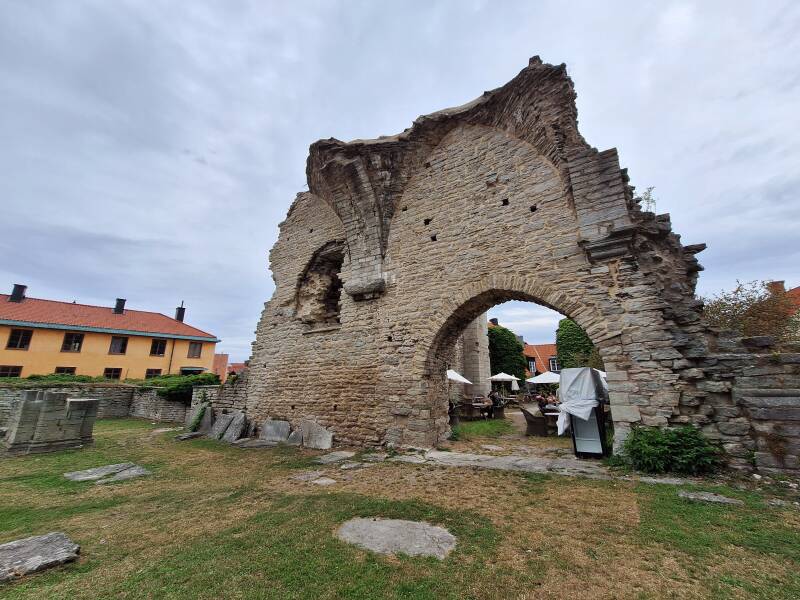
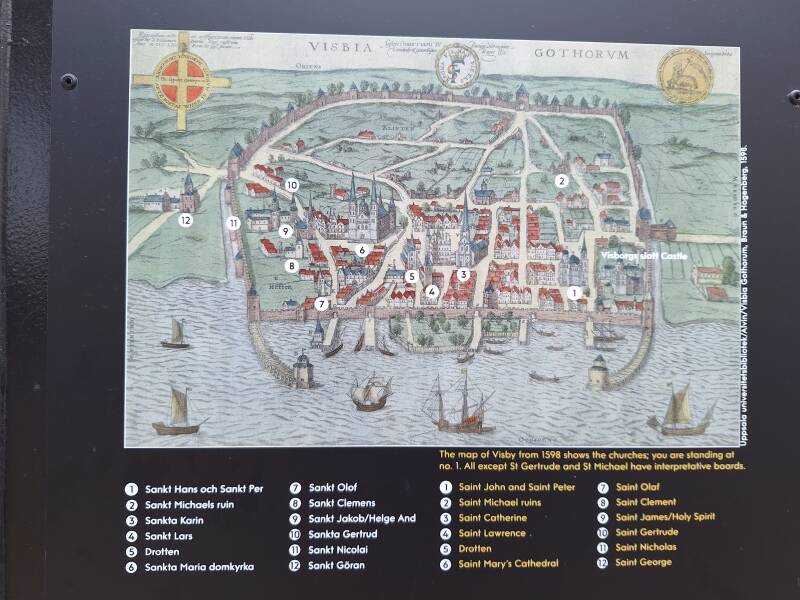
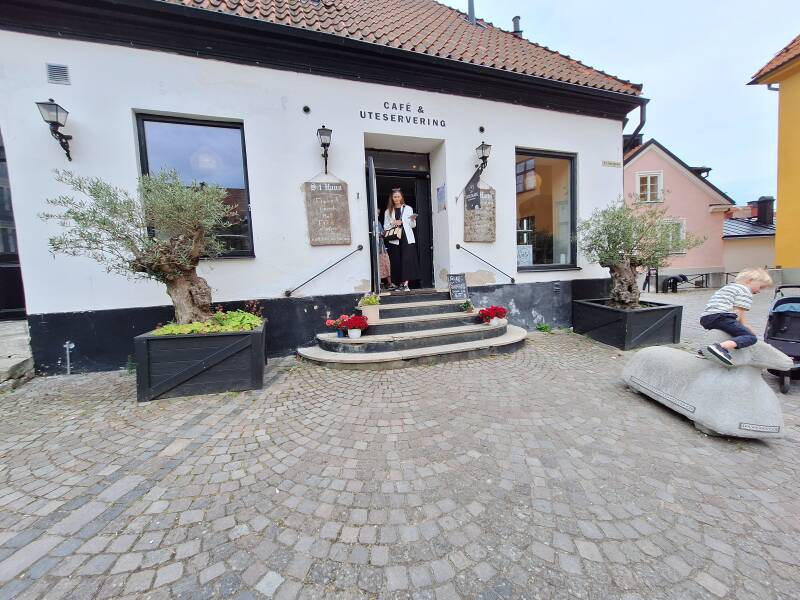
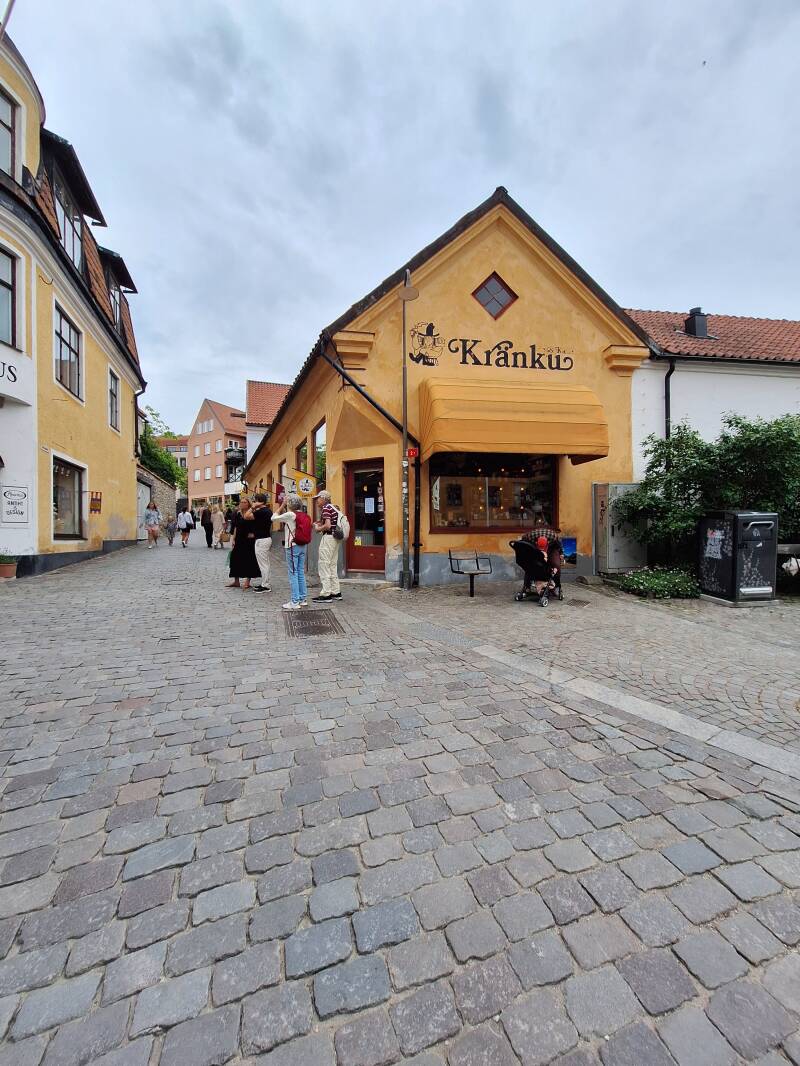
Kränku has herb teas to all kinds of natural Gutnish stuff. Even the sheep droppings candies.
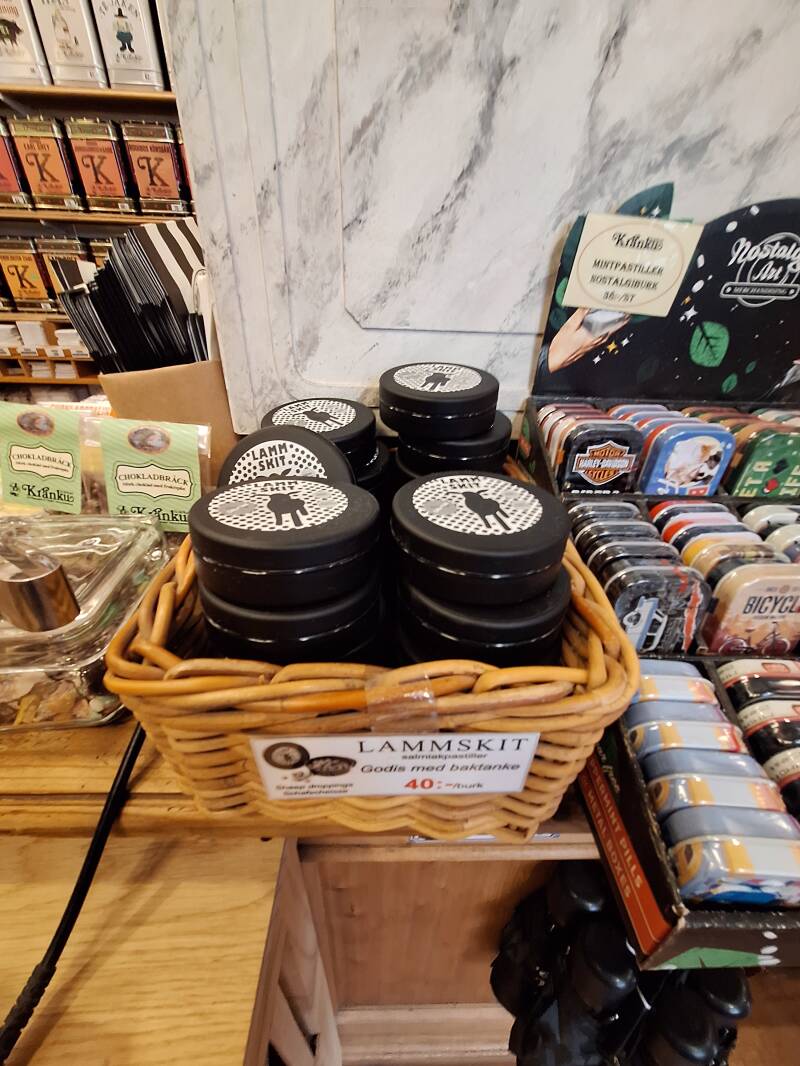
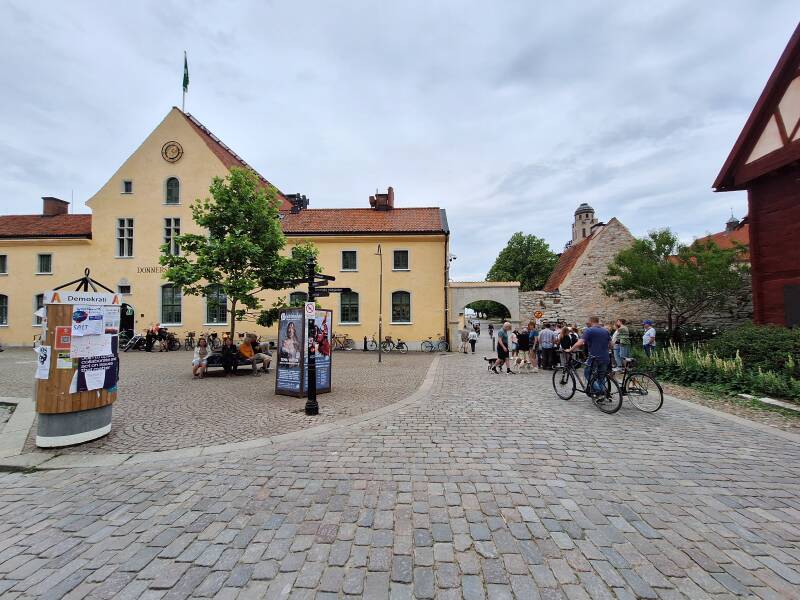
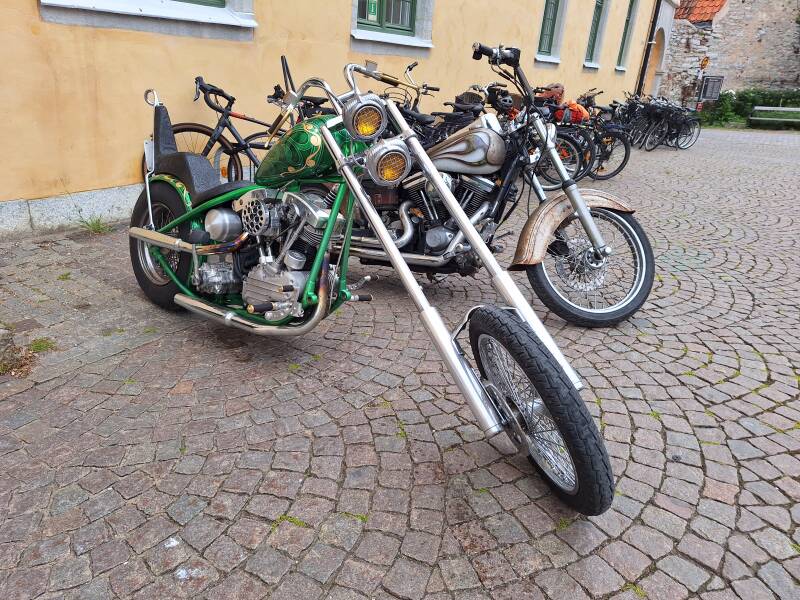
Donnersplats, where the Tourist information is situated, is also one of my favorite spots in Ringmür, they offer guided tours, starting from 11 a clock from here. I think those are in Swedish.
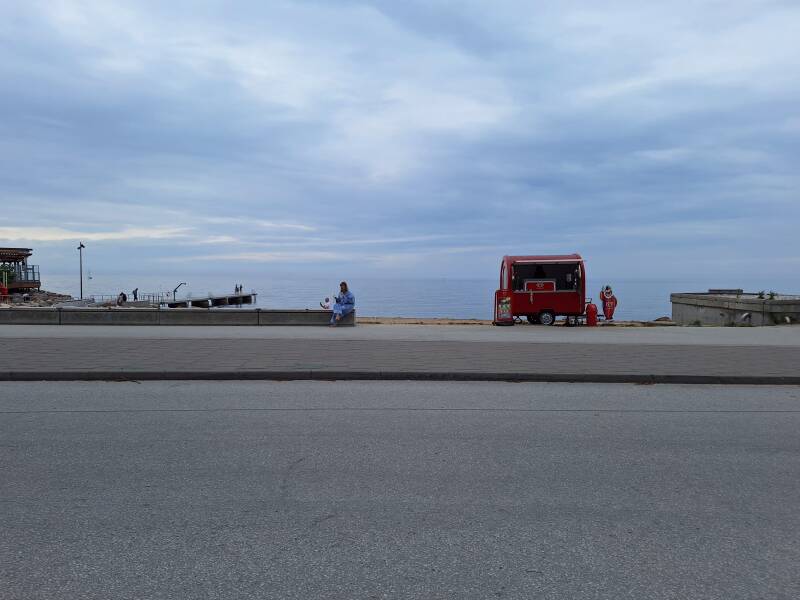
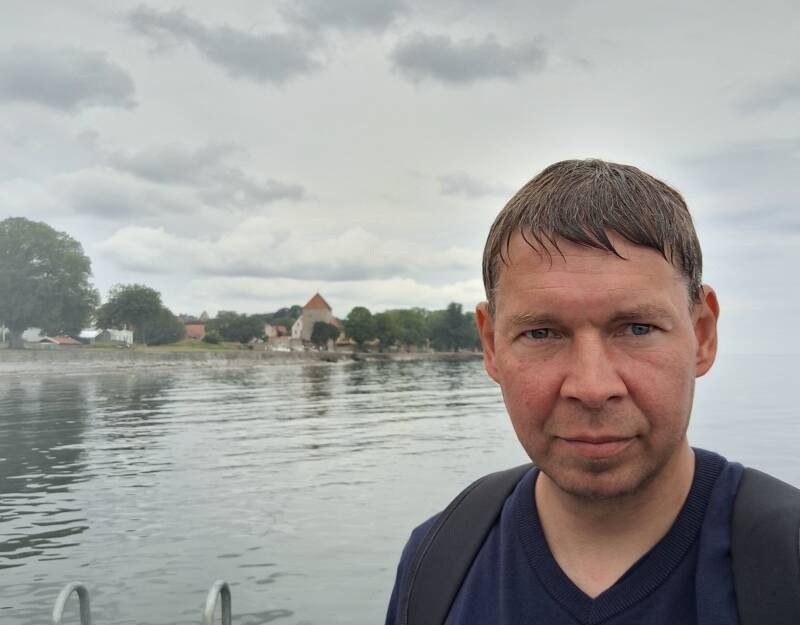
18 Celsius, water temperature 🌡️
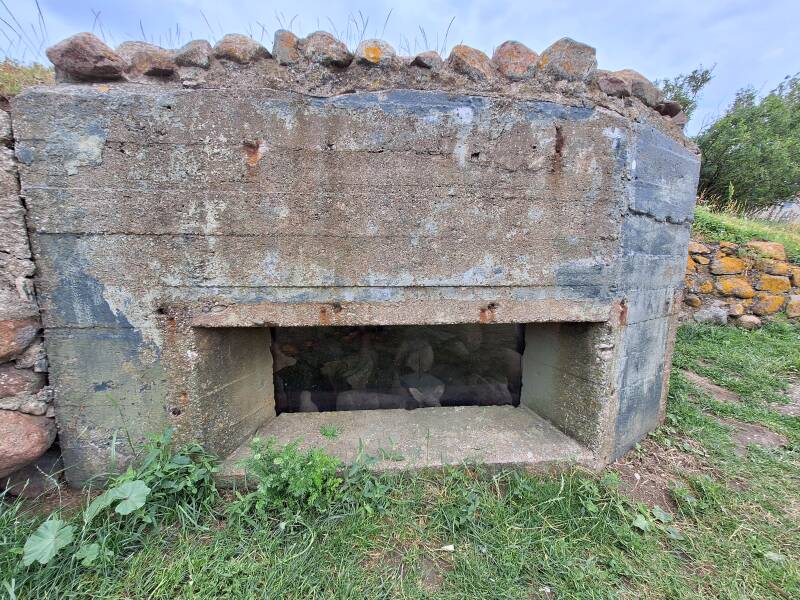
Information for the II WW experts & all interested ones:
Bunkers Intended for the Infantry from the Second World War.
When the Second World War broke out in September 1939, the risk of Gotland being invaded for the purpose of military operations in the Baltic Sea area was high.
When Soviet troops invaded Finland without prior declaration of war on 30th November 1939, war felt imminent. General mobilization was commanded for the Forces of Gotland, and work on the 220 bunkers, initiated prior to the war, was accelerated. By the end of January 1940 more than 190 were completed, and when the Germans attacked Denmark and Norway on 9th April, practically all 220 were largely completed.
By December 1940, 1000 bunkers were completed at strategic points, such as airbases, harbours and suitable landing beaches. The bunkers were generally built in a row. In certain cases, such as along the shoreline, they were also equipped with barbed wire obstructions.
Types of Bunkers
The bunkers were built by mobilized units and by civil building companies around the island. They were built in reinforced concrete, and constructed to withstand attack by 150 mm naval artillery and 50 kg airbombs. Camouflage was achieved by painting and modelling the concrete, which was then covered peat or other organic material. Camouflage nets could be attached to iron hooks or brackets, cemented in the concrete.
The shelving of the bunkers was initiated in 1990. Some were donated to the landowners, while others were demolished. Permanent gun-bunkers, machine-gun bunkers, observation-bunkers, mortar positions and foxholes were built, along with a large number of defensive works of less resistant material.
Manning
The permanent infantry bunkers were manned by forty territorial platoons, organised in eleven territorial companies. There were certain stipulations for the armament and defence of the bunkers, establishing in what circumstances one should open fire, how to defend oneself in close-quarter combat, how to find shelter in bomb raids, etc.
Gas alert was considered part of top priority alertness, meaning that all doors and shutters should be closed, and apertures letting out chinks of light be sealed. Manually-operated fans dispersed gunpowder gas, thus reducing the risk of carbon dioxide poisoning.
Permanent fortifications were also built for the artillery, anti-aircraft artillery and above all for the coast artillery, for whom extensive fortifications were built, mainly in the north of Gotland.
The Fortified Line
Almedalen - Brucebo
-
Twenty bunkers were placed out along the coastline from Visby harbour to Brucebo during the war years of 1939/40, and have been preserved to this day. They were manned by the infantry from the Visby Territorial Company.
In 1996 they were brought under the protection of the National Monuments Act by the County Administration Board of Gotland, in consultation with the National Fortifications Administration Board. The bunkers were handed over to the Municipality of Gotland (except for three on private property) and are no longer an integral part of military organisation.
A. The Gun-Bunkers
Constructions, including a gun-bunker in Almedalen, were built for the 37 mm anti-tank guns. They were drawn by motor vehicles, and thus able to be swiftly redeployed for other purposes in mobile operations. They had a firing range of approx. 1000 metres towards lightly-armoured vessels. Most other gun-bunkers were equipped with older 80 mm artillery pieces without wheels.
B. Machine-Gun Bunkers
Numbering 15, this is the most common type of bunker, and can be found in two varieties depending on the mounting. They could either be mounted with the heavier 8 mm water-cooled machine-guns on gun- carriages (see illustration B1) or with the lighter 6.5 mm light machine guns (see illustration B2). The bunkers have three openings with a 90 degree angle of traverse. The bunkers with the lighter mounting could also be employed for control of direct fire.
C. The Observation-Bunkers
Bunkers on a higher level were intended for gunnery control, one of them is still in existence on the fringes of Galgberget. The supporting artillery was deployed some kilometre inland from the coast.
D. The Foxhole
Foxholes with concrete walls and gun openings at the top were built for riflemen.
E. The Personnel Bunker
A special personnel bunker was built for those soldiers who were not able to get shelter in the bunkers. One, next to the observation-bunker at Galgberget, has been preserved. It was intended for twenty men.
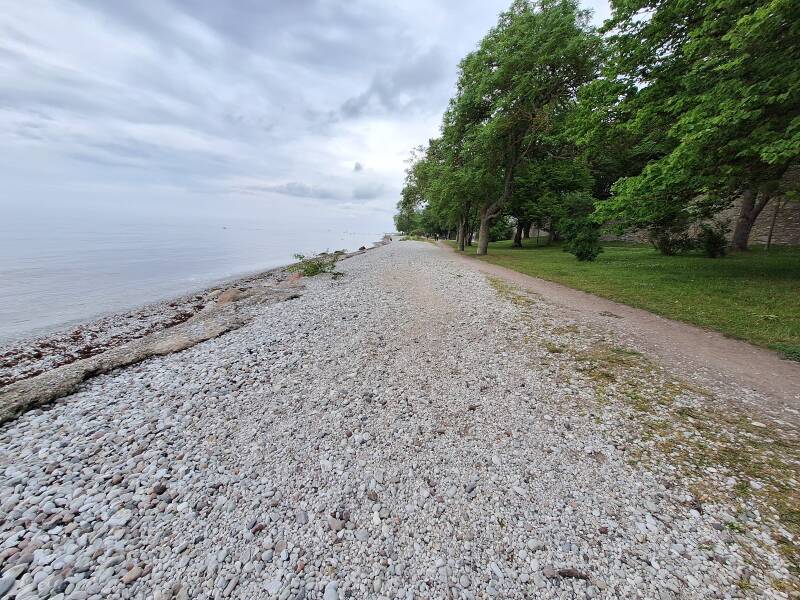
Pebbles. Do I find any fossils?
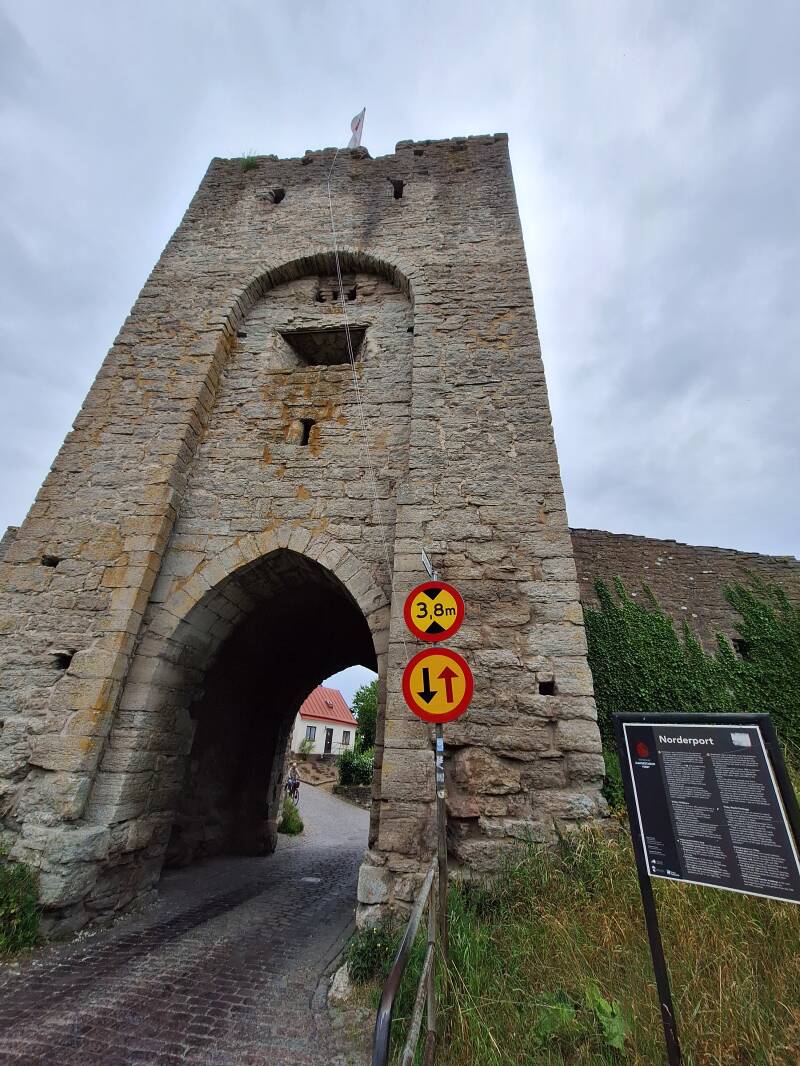
Heading to Galgberget.
Norderport, which is the best preserved gatehouse in the town wall, provided one of the three main entrances into Visby from its hinterland; the other two are Österport and Söderport. All rural produce was liable to market tolls, paid at the toll booths in the gatehouses.
This gateway was built in about 1280 to reinforce the other simpler gate, built on the site some decades earlier. Norderport was supplied with double timber gates, and a portcullis on the outside.
The room above the archway once had a
fireplace, indicating the presence of a guard force in winter time in times of unrest. Joisting holes and sockets beneath the battlements indicate that the tower was furnished with a brattice and a roof.
In 1710 the tower at Norderport was mounted with cannons, which entailed a widening of the arrowslits. Norderport is still to this day the main thoroughfare leading from the countryside in the north into the town centre - just as in the Medieval Period.
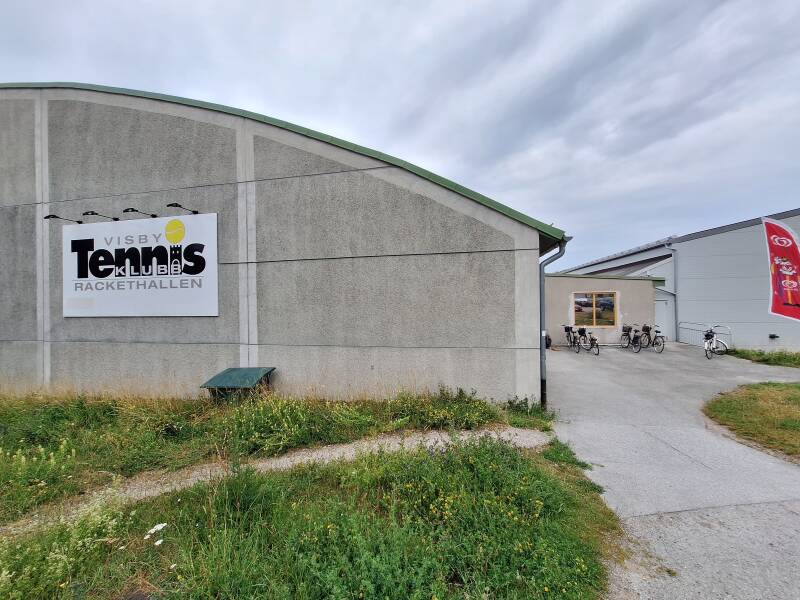
https://visbytk.com/kontakt/ 700 SEK to play with trainer, racket, balls, court included. Not bad. Might try it out as a hobby player. Passed small ICA. Take away coffee 15 SEK, middle one. Shrimps, fresh, can shovel to bag, 179 SEK per kilo, not bad at all.
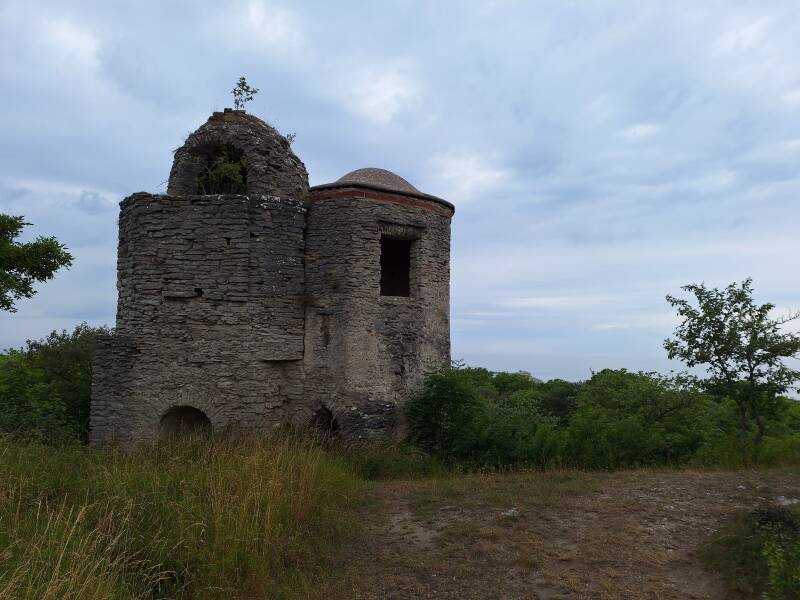
Wisbyberg Lime Works, built in 1856. Had an interesting conversation with one man from Stockholm, let's see do I find the way to Galgberget, it must be close from here already.
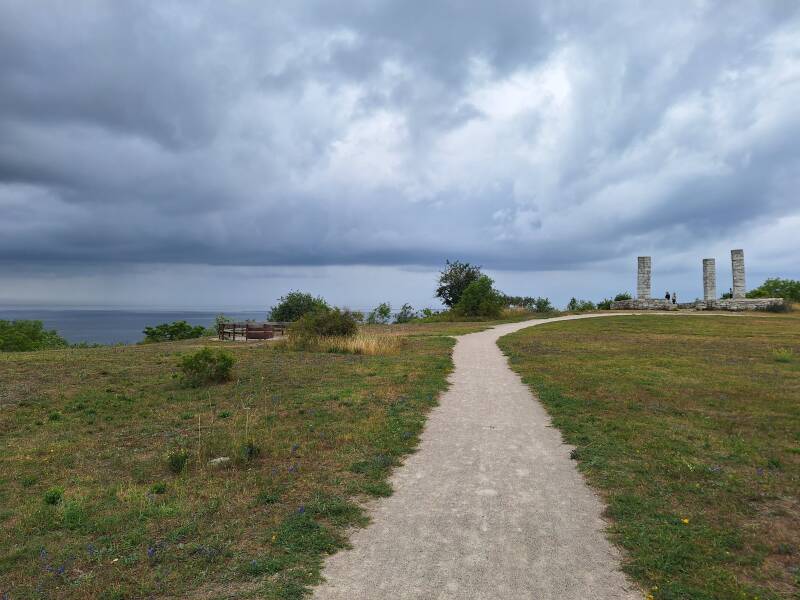
The Visby Gallows can be seen from miles away. Here criminals were punished to death from 15th century until 1845. The dead bodies were often left hanging in public as a warning. The gallows is the most well preserved gallows in northern Europe. How the Stockholm's IT man, system administrator didn't find it?
Birdlife and Ivy
The reserve is divided in two parts by a limestone cliff. The upper part holds a limestone plain with dry alvar meadows and thin forest with several species of whitebeams. The alvar is rich in insects and the rare large blue (Phengaris arion) can be found. Below the cliff you will find broadleaf forest, fresh water springs, caves and marsh. The floor of the forest is covered in blue anemone and ramson flowers and many trees are covered in ivy. Highlights of the bird fauna are skylarks, wrynecks, linnets, woodpeckers and greenish warbler.
The medieval gallows
The area is known for its spectacular cultural history with remains dated from stone age to moderna times. The gallows at Galgberget is probably from the 15th century. In historic times the view was clear all the way to Visby so everyone could see the dead bodies in the
gallows and consider their warning example. In the lower part of the reserve there is a classic labyrinth, "Trojaborg", and an old dam which used to power a watermill. In the area you can also find many traces of historical farming and limestone industry such as small quarries and an old lime kiln.
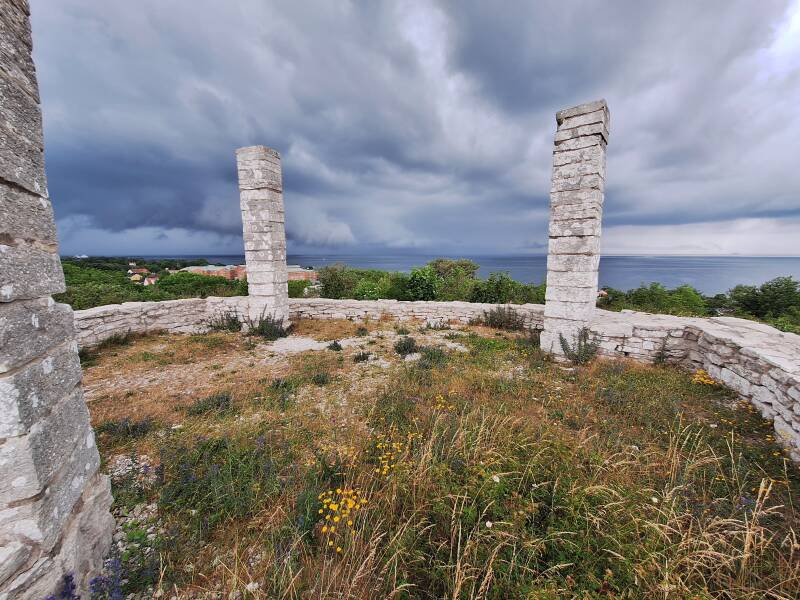
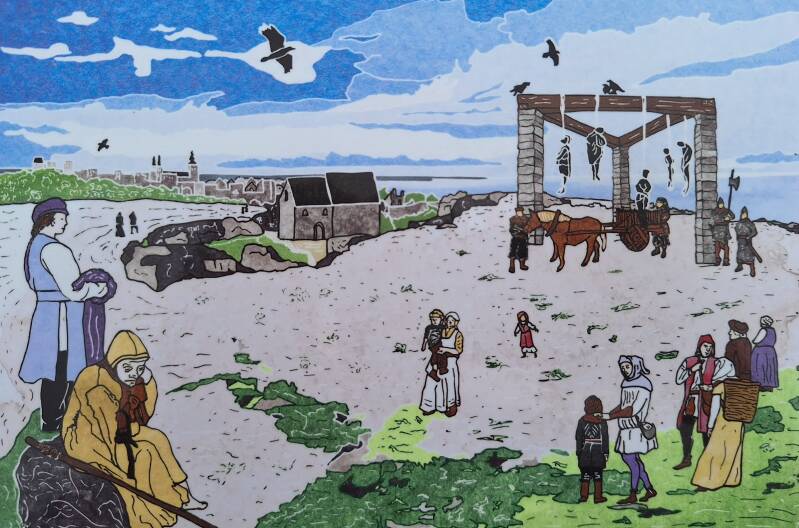
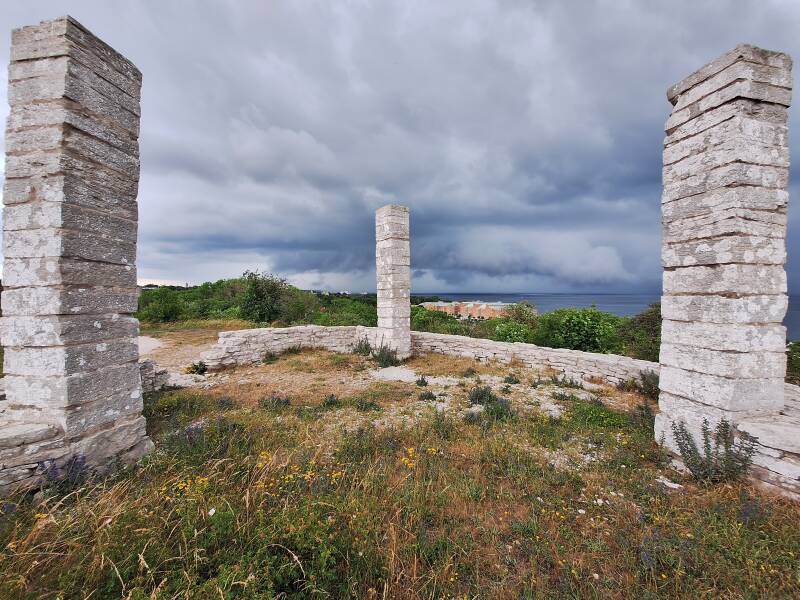
The executions were public events, often with a large audience. Hanging was the most common execution method in medieval times. Though horrible, the gallows is also a symbol of law and justice. It show that there has been a working judicial system on Gotland for a long time.
The three stone pillars were united with beams where prisoners were hung in hooks and ropes. The bodies where often left hanging in the wind until they roted away or got eaten by birds to state an example. People who were executed were not allowed to be buried in the cemetery. They were often buried around the gallows, denied of peace in heaven for their eternal life.
The last execution here took place the 5th of March 1845. It was the hat maker Anders Johan Hasselberg who was decapitated due to murder. Death penalty was completely abolished in Sweden in 1972.
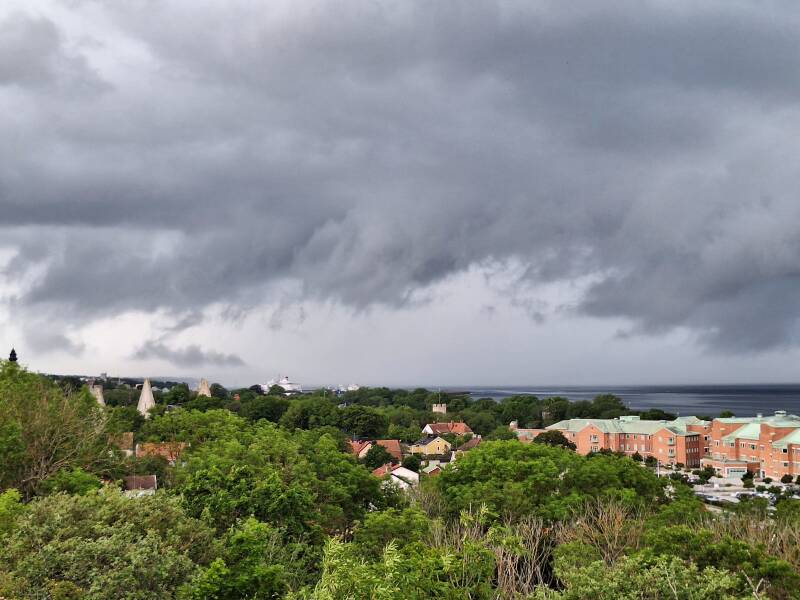
Parking area is enough wide for the bus to maneuver here.
To the Kärleksstigen (Love Trail)...
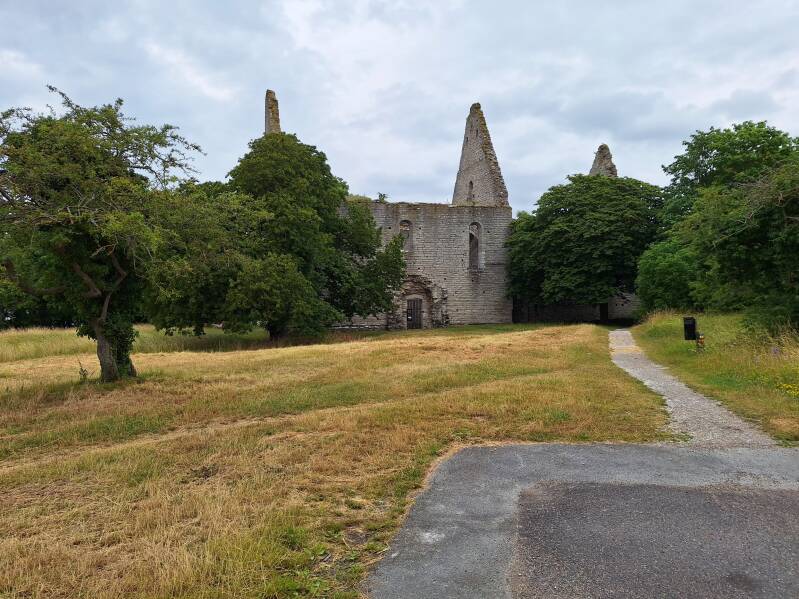
In the Middles Ages, Saint George's was the biggest hospital in the Nordic countries-today it is one of the best-preserved. The hospital was for victims of leprosy, the disease, it was believed, Saint George could cure.
Leprosy, incurable and feared, spread in Europe in the 12th and 13th centuries. Those falling ill had to undergo a symbolic funeral and were consigned to a life in hospital. But a life outside the community conflicted with the Christian commandment to show mercy to the diseased. Therefore, in 1179 the Catholic Church decreed that the hospital must have a chapel, priest and churchyard.
There was probably a hospital here at the end of the 12th century. Archaeological excavations have revealed a small church which may date back to that time. The church burned, but the nave was possibly built of wood and the chancel was of stone. The new nave was built around 1215, the chancel around 1250, and finally the sacristy, which is no more.
The chancel roof arches and the south porch to the nave show influences from churches in Westphalia, Germany.
The hospital buildings stood near the church. One of the buildings was built adjoining the west gable wall of the church so that the lepers could walk straight in. The lepers only had access to the west part of the church. The rest may have been used by pilgrims travelling to or from Livonia, Northern Latvia.
In 1542, the hospital closed and the few remaining lepers were moved to Helgeandshuset (The House of the Holy Spirit) in Visby. The churchyard remained in use, for example during the Plague of 1711–1712 and the cholera epidemic in the 1850s.
Saint George's is one of several church ruins in Visby. The ruins were given legal protection -in 1805 and in the 1880s their upkeep began. Today, the National Property Board manages Visby's church ruins, which are part of our shared heritage.
Love Trail starts from the St. George's hospital. It is 2 km long.
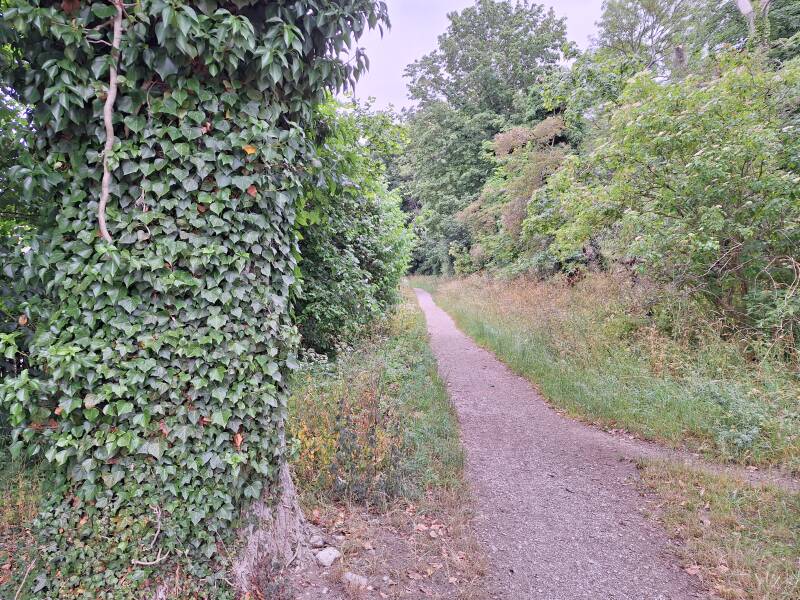
Lot's of grassy plants. Ahaa, from Wisbyberg Lime Work (tennis courts are just 10 m behind of Lime Works) goes straight way to the Love Trail. Perhaps some cruisers would like to have tennis lessons with professional trainer or just play instead of hiking.
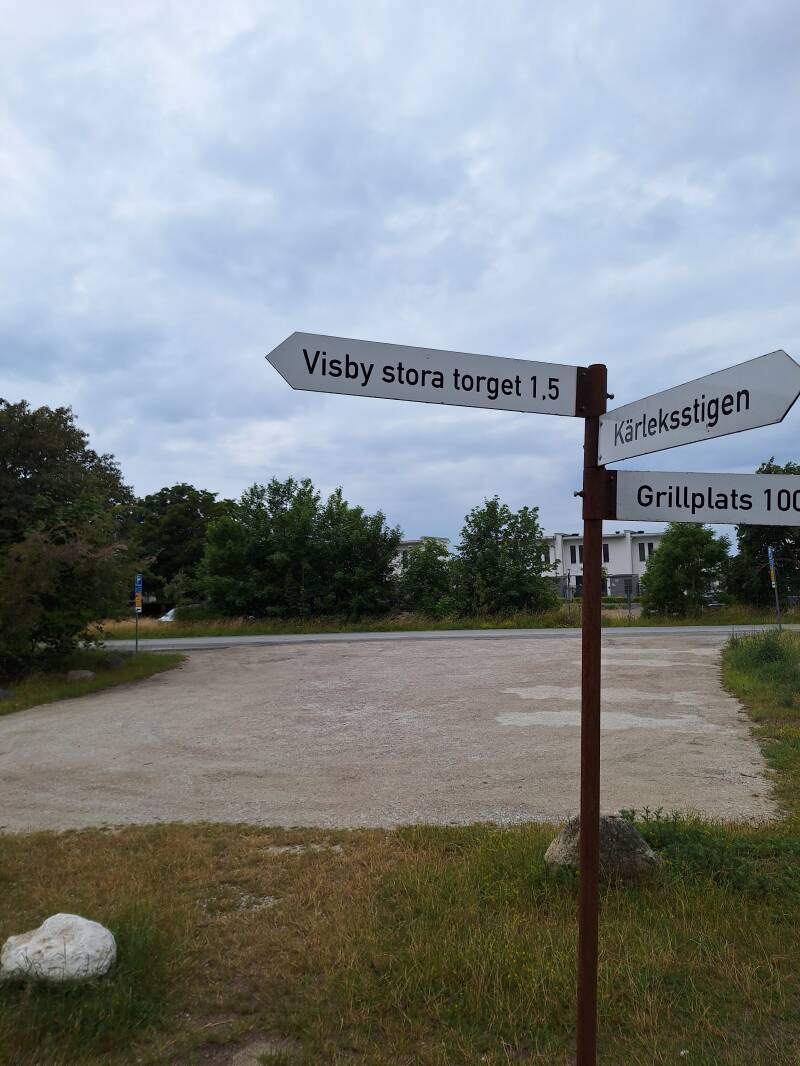
Here is also a good parking area.
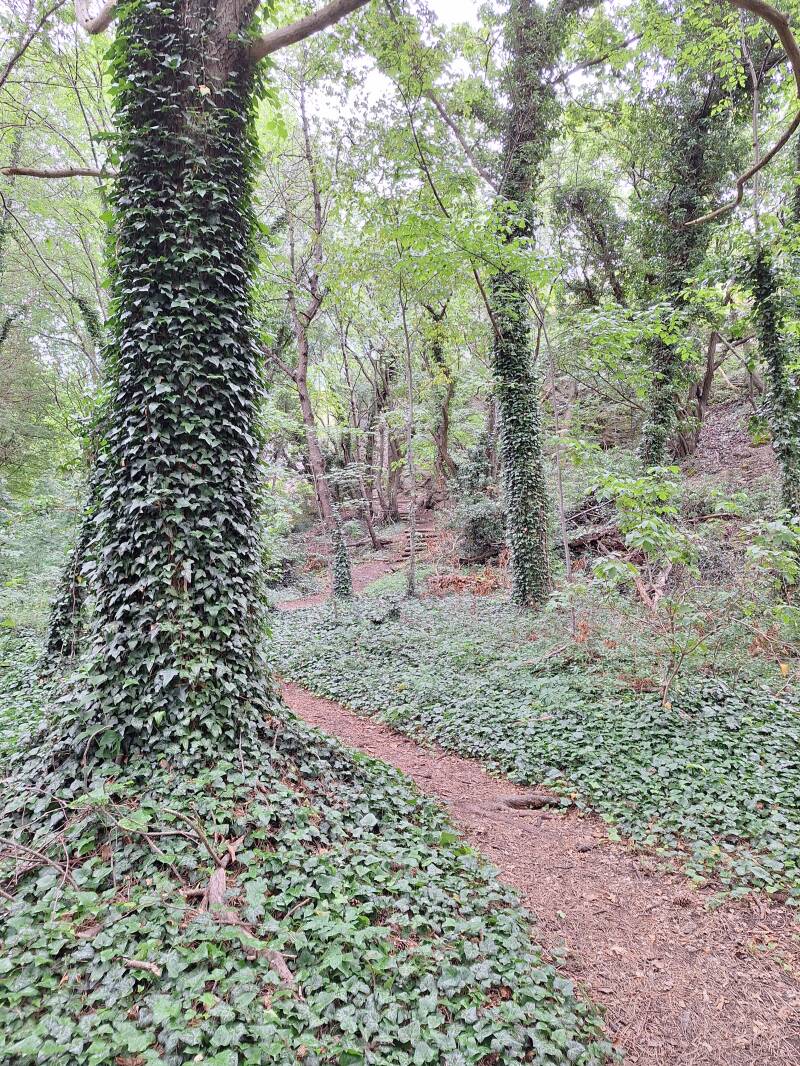
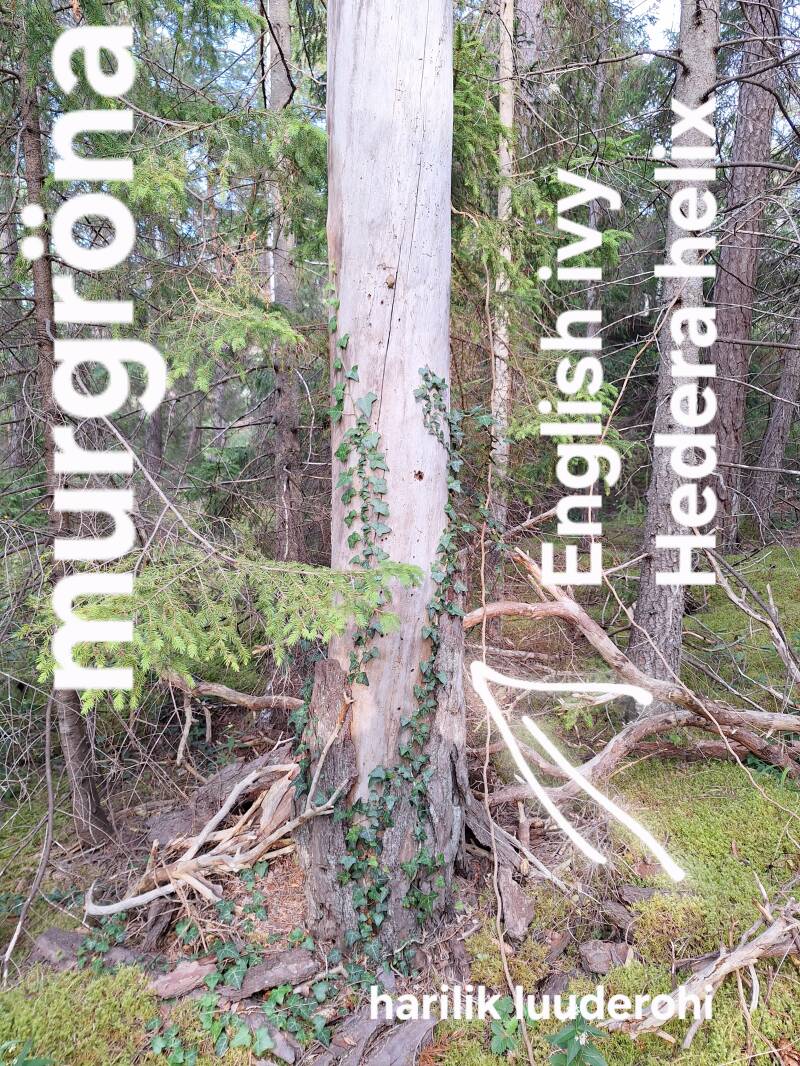
Possible to turn up to galgen. Lot's of helicopters today. Common Ivy is the state flower of Gotland. It's possible to turn to the way what goes just by klint.
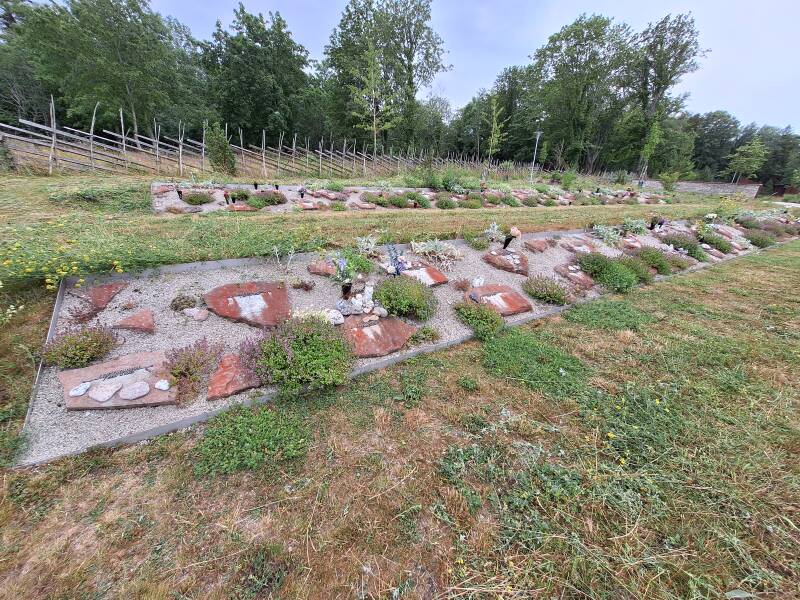
Allhelgonakapellet. Towards the Åhsbergska Hagen, Love Trail ends there... Actually the end was just after the graveyard, but may continue until the Åhsbergska Hagen. I come back here tomorrow by 🚲 to take GPS coordinates for parking and stuff.
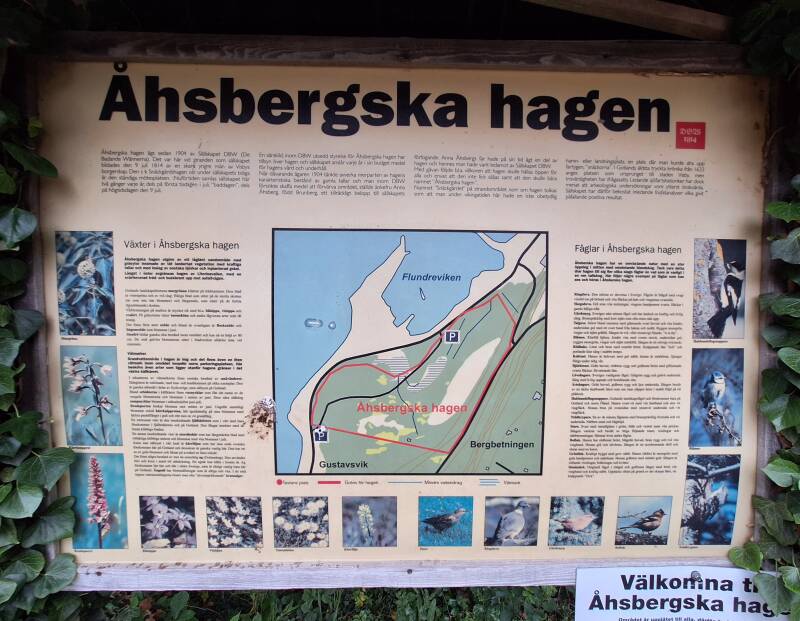
Heading back. More photos: https://drive.google.com/drive/folders/1RjZeqXKiSEATbDeUO5_b0yasvj0hxBiu
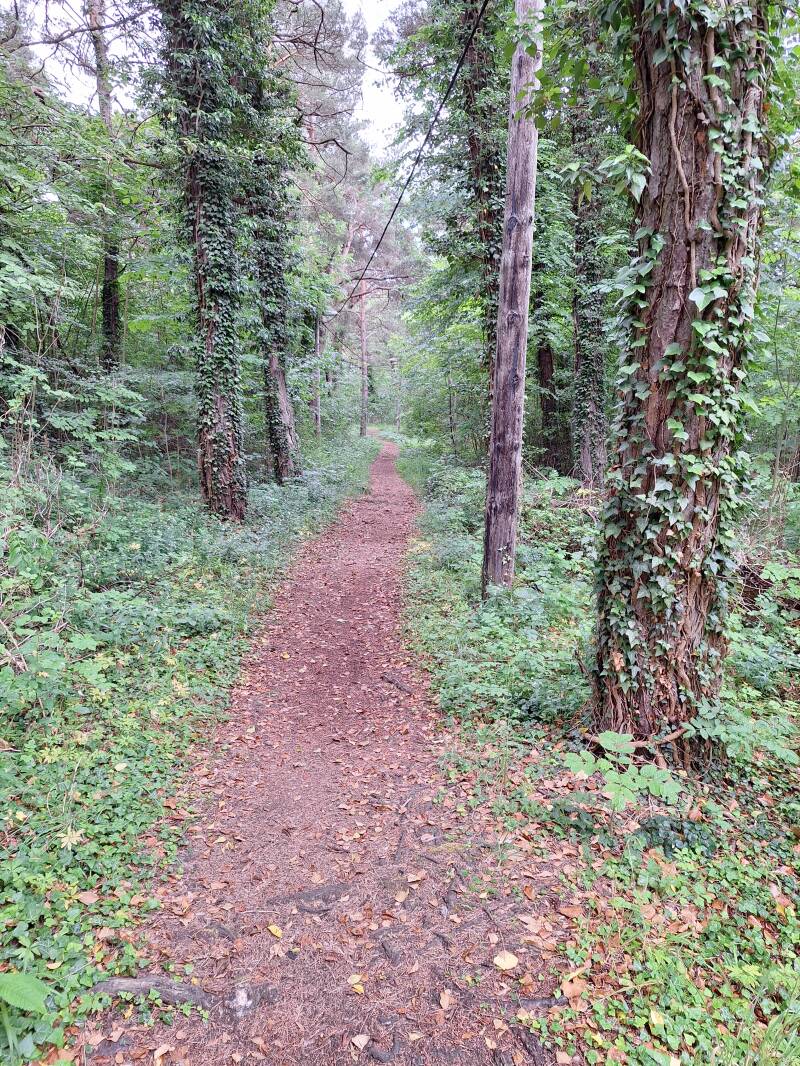
Found stairs straight from the cave on Love Trail to galgen. Sitting in Thai Restaurang nearby, charging phone. Saw couple of Roman snails. In Gotland they are rough and edible compared to the common ones.
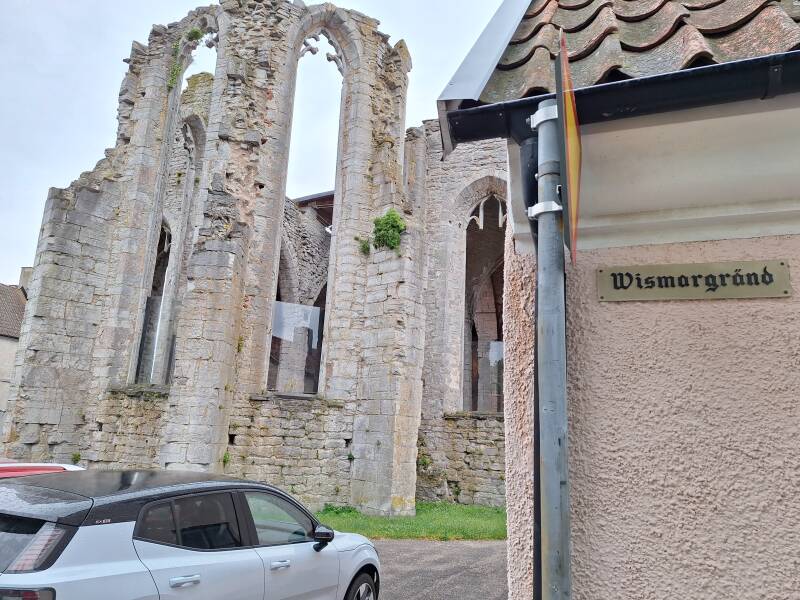
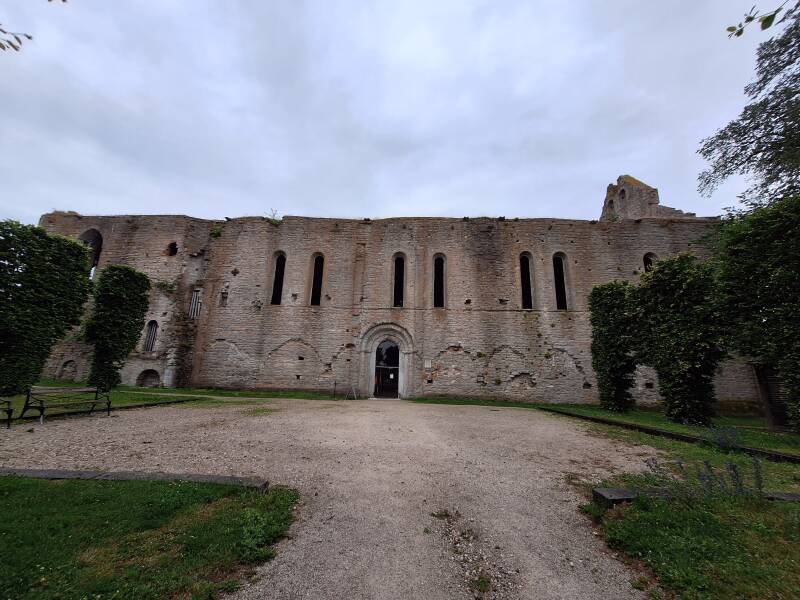
Sankt Nicolai (Saint Nicholas) Abbey church was the biggest in the Nordic countries. The church belonged to the Dominicans and had magnificent decor, as well as underfloor heating!
The Dominicans came to Visby in 1228 or 1229 and took over a church that had been destroyed by fire. The church comprised a large nave, a tower in the west and a chancel with a rounded apse in the east. The church may have been built for German inhabitants or for a guild, an association of for example merchants.
The Dominicans had the church built after designs from Westphalia, Germany. The tower was demolished and the nave was extended eastwards. The west gable wall was completed in the 1250s, impressive with windows in High Gothic style and brick rosettes. The portal from the old west gable wall was moved to
the southern wall. The nave was extended and ended with the chancel where you are standing. Extension continued until the end of the 14th century. The other convent buildings stood immediately north of the church.
In 1525, Visby was attacked by forces from Lübeck and parts of the town were burned down. A few years later the Crown (state) introduced the Reformation and closed all the convents and monasteries. In Visby the buildings were taken over by Helgeandshuset, an establishment for the poor, sick and elderly. The churches became redundant, fell into ruin, and became sources of building stone.
In 1805, the church ruins in Visby were given legal protection and in the 1880s they began to be maintained. Nowadays several of the ruins are used for different summer events. The National Property Board manages the church ruins, which are part of our heritage.
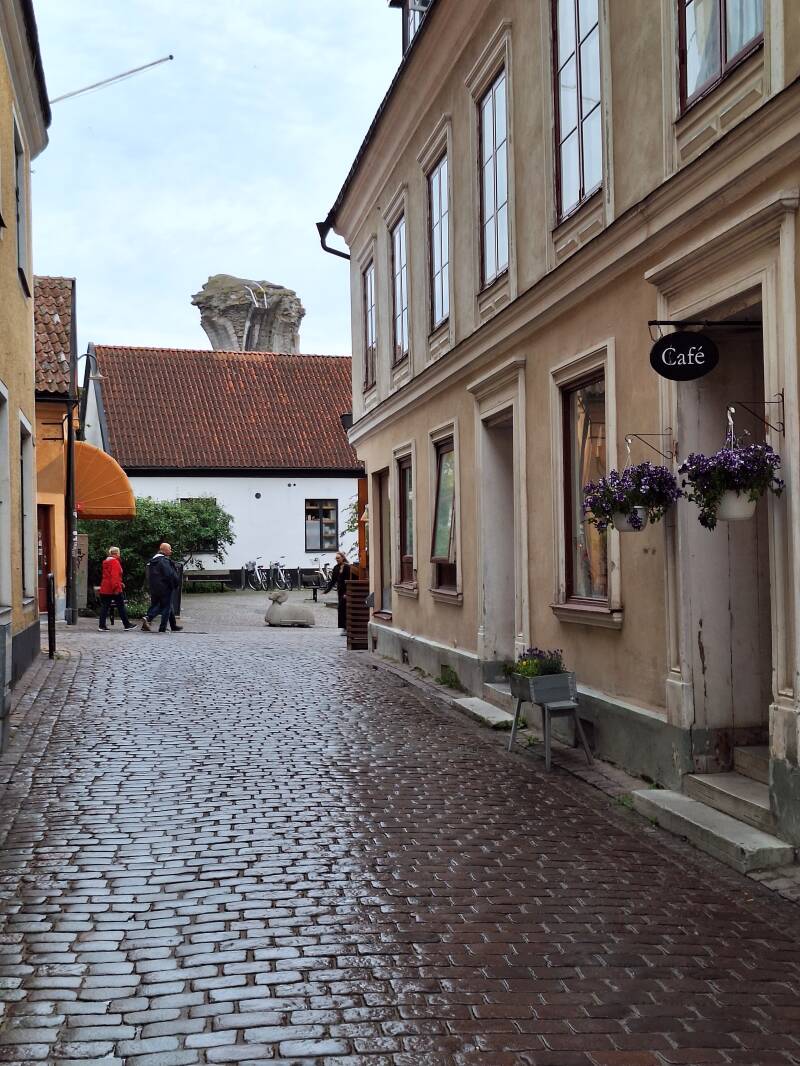
08.07.2025
Library day - had a video call with Hillevi. Blog & guide route / excursion plan / itinerary. Tomorrow starting from cruise pier.
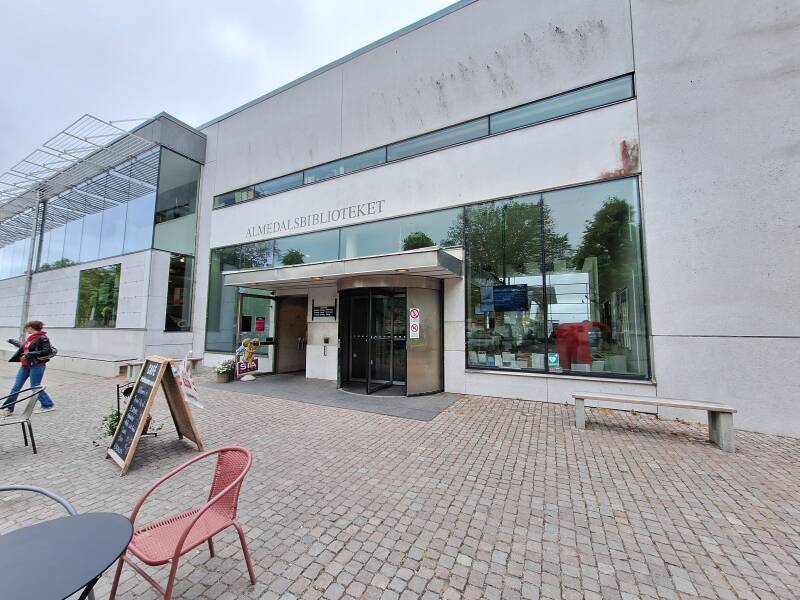
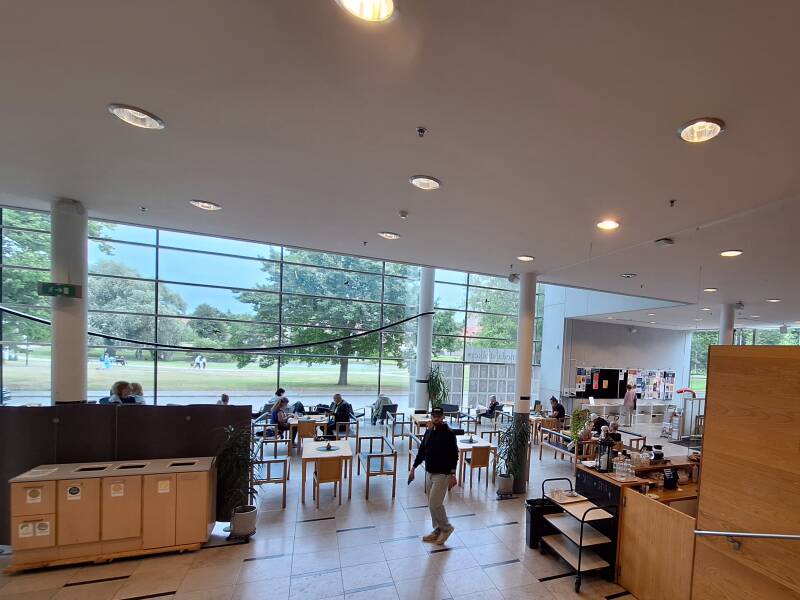
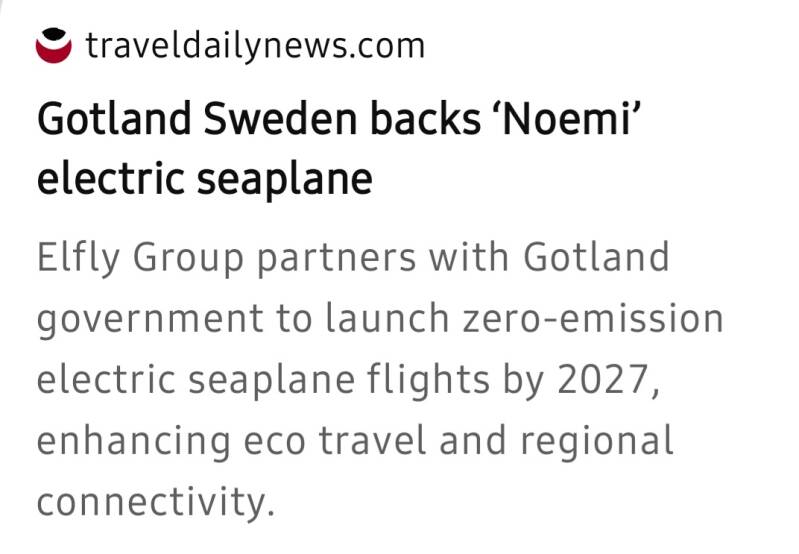
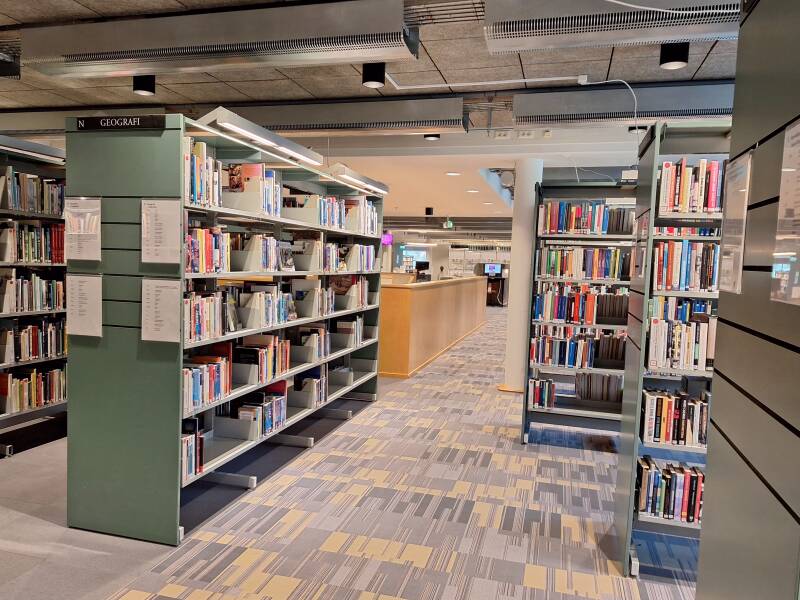
Checking also the headlines of Gotland. Military & NATO getting pretty active for security and defence on those days. This is more interesting:
There will be an electric seaplane.
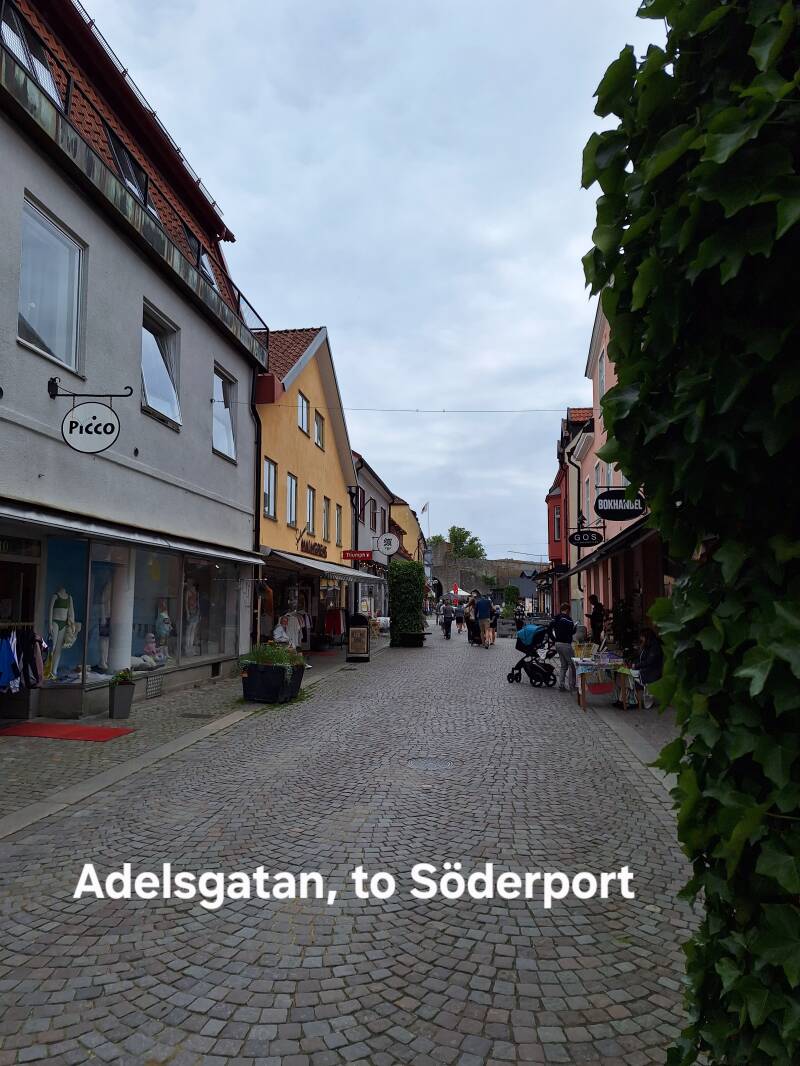
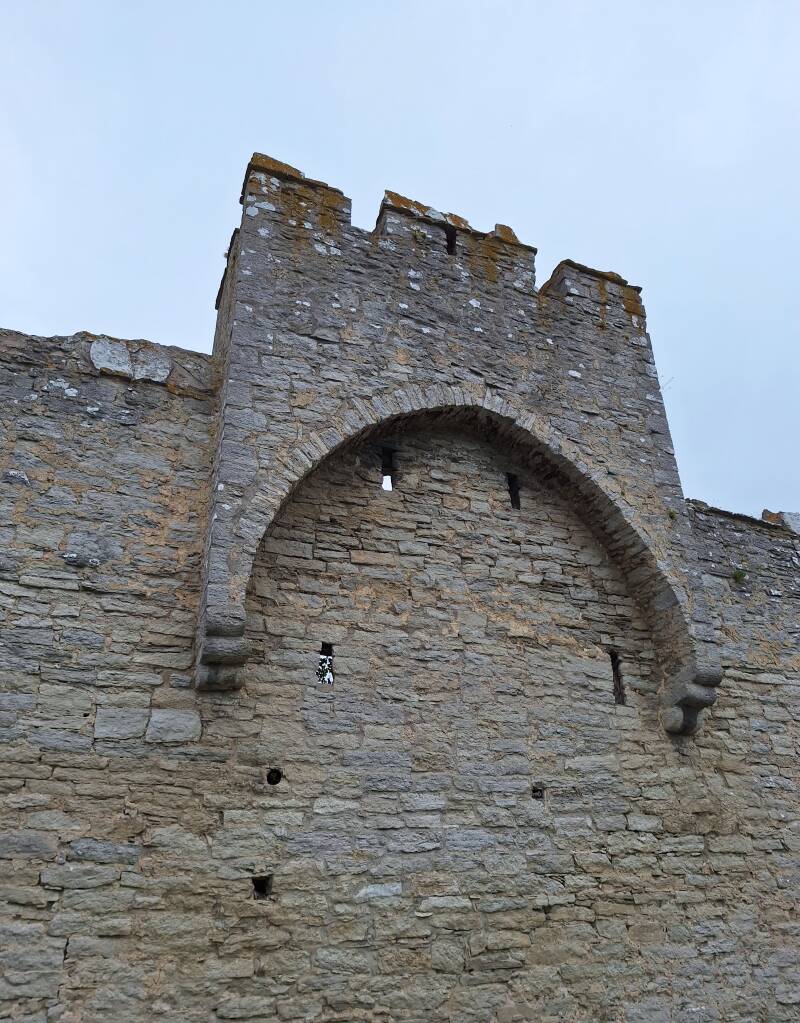
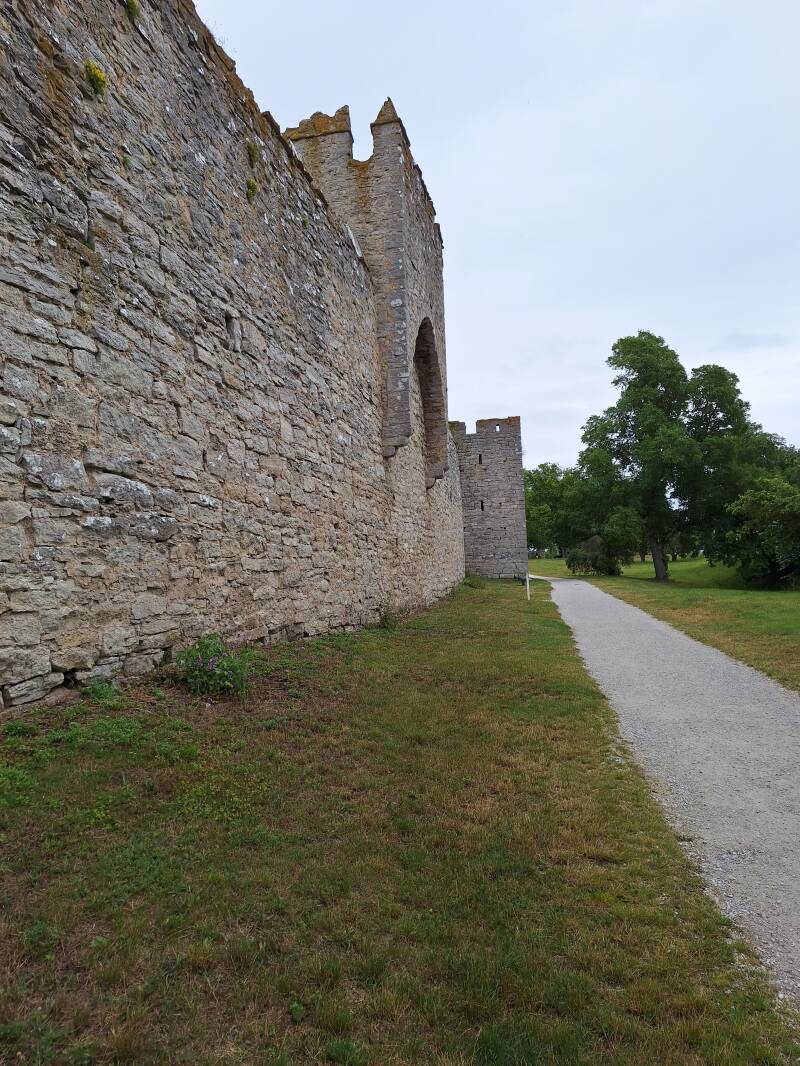
BIG HENRY - ONE OF THE TOWERS OF THE SOUTH WALL
The section of the Town Wall between South Gate and the Redoubt Gate is called South Wall. The height of the wall here was increased at an early stage. Two wall towers were constructed during the earlier building period. Durring the 17th century the western one was known as Big Henry. After 1726 it was renamed the Lesser Powder Tower, because the area outside was used by the Royal Ordnance.
The wall towers are squatter in shape than the towers, and they only have four stories instead of the usual five or six. In the west façade of Big Henry can be seen a roundarched doorway which once led from the old archers' parapet up to the second story.
The two saddle towers were built when the height of the wall was increased. Notice the well-preserved, saddle-shaped crown of the masonry. Some of the original rendering which once covered the masonry of the tower and wall façades is still visible.
09.07.2025
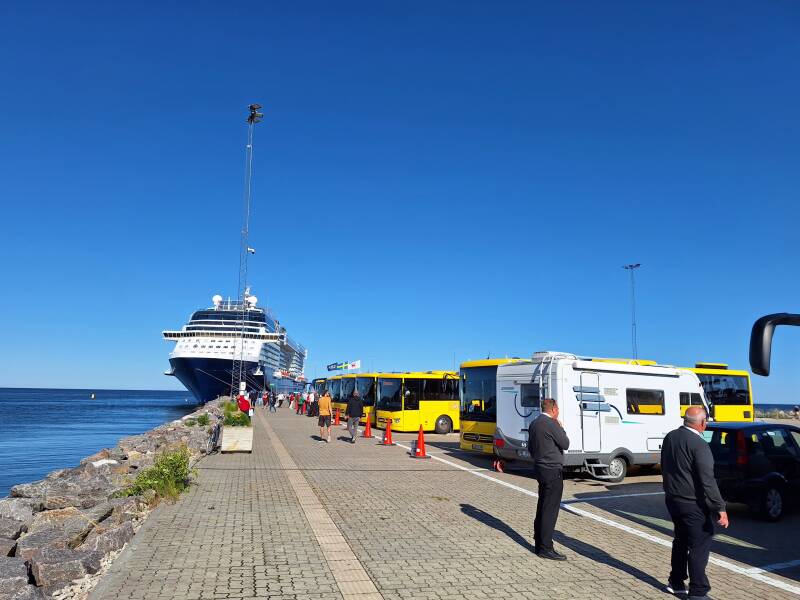
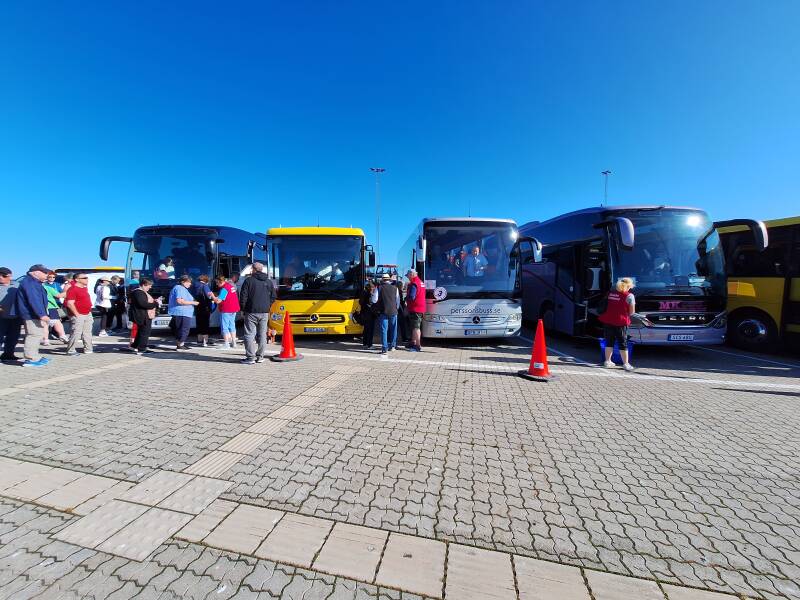
Weather is good. Going to be 20 Celsius. Sky is clear. No clouds. Moderate wind. There will be many cruise ships today. Celebrity Eclipse is going to be at kajplats 14. And I am going to cycle there.
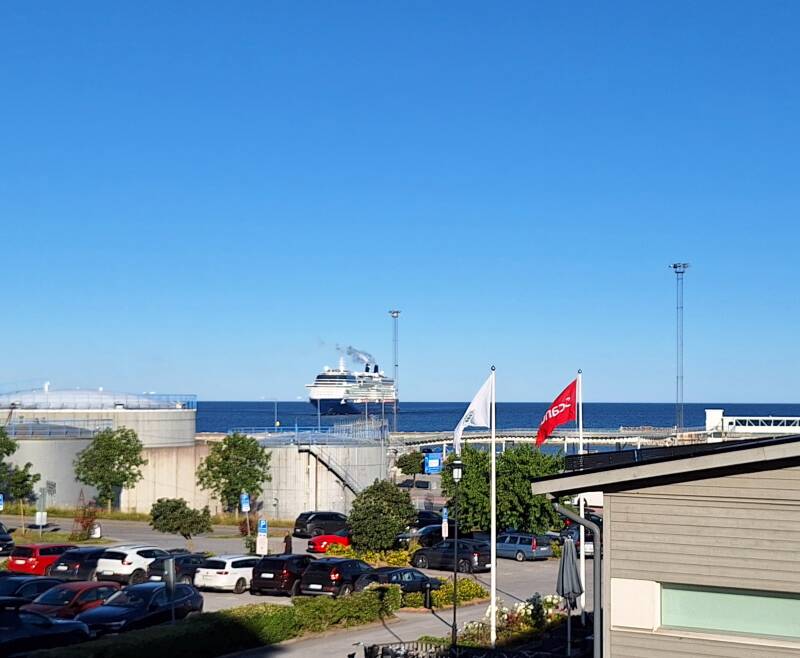
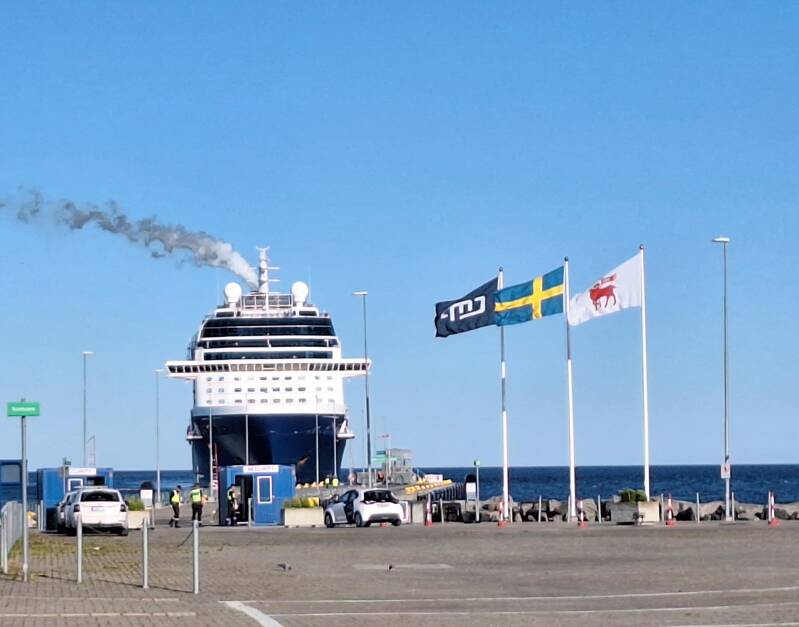
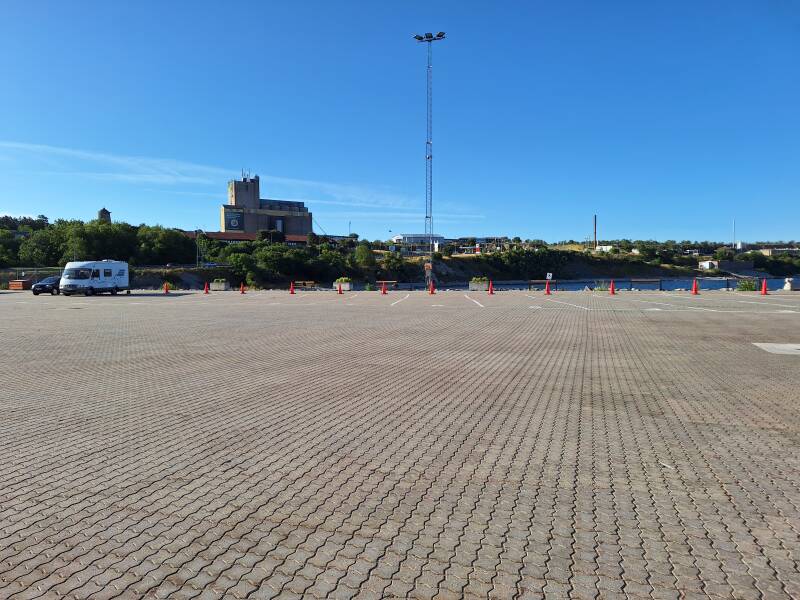
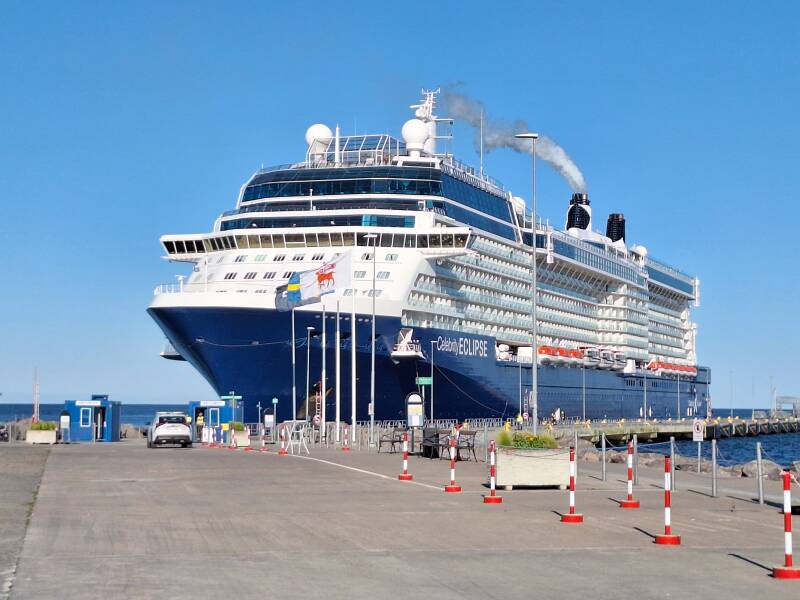
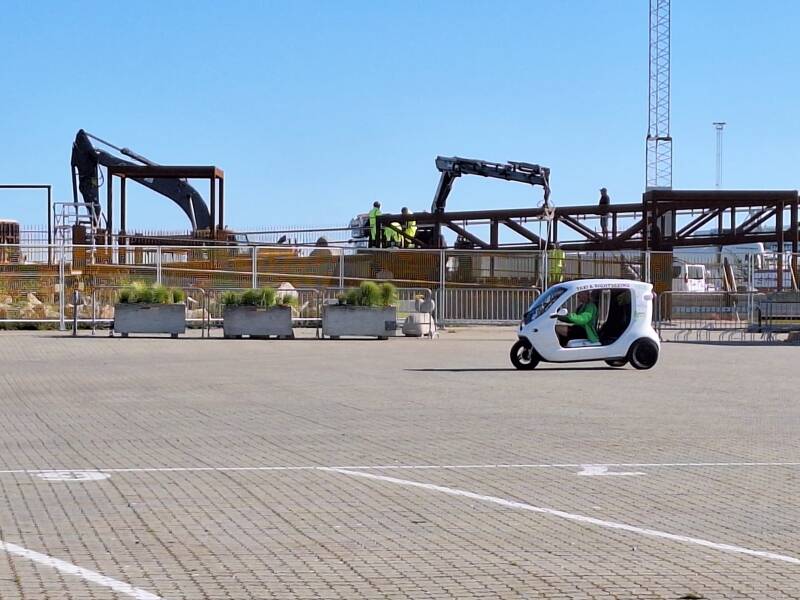
Today 1166 people going to tours from that ship. Busy day. I help on kaj, there are trips with headsets too and then going to the trip with guide to the west-northern coast.
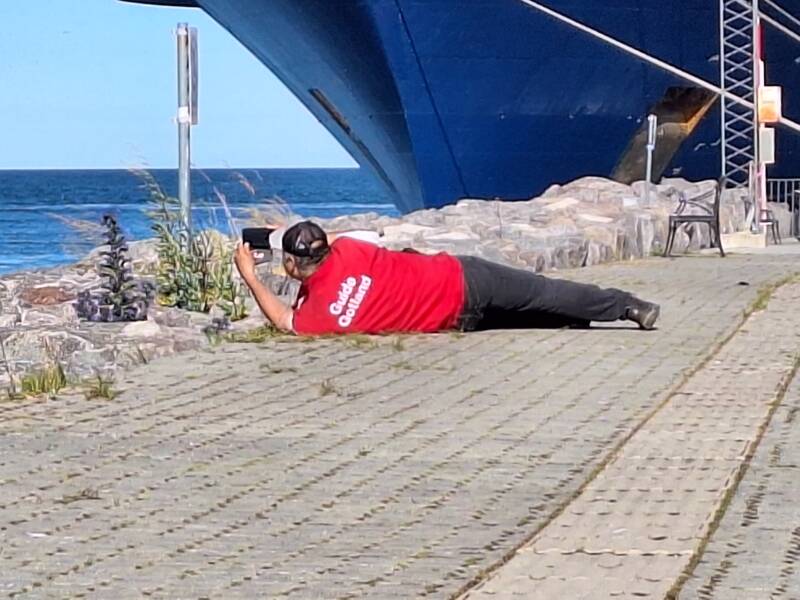
Joni taking photo of Blue Fire... Ei siis Sammakon kieli, vaan Neidon kieli.
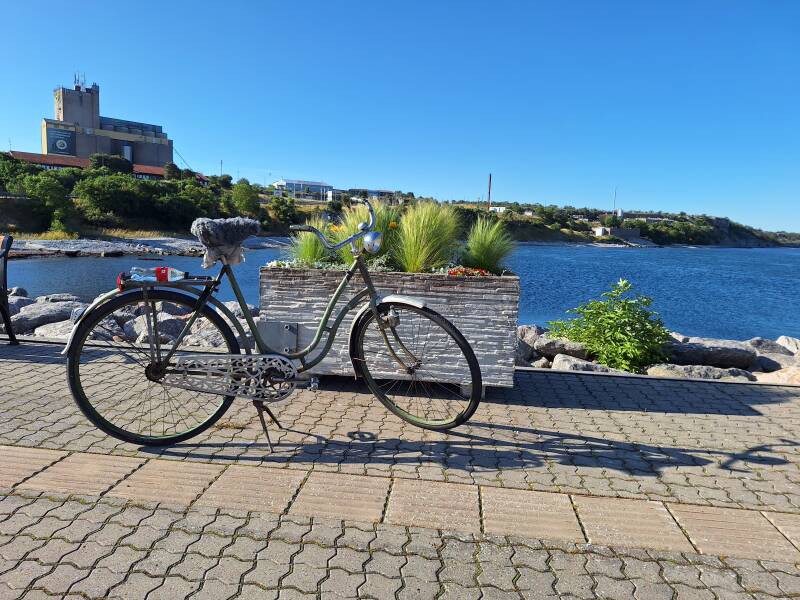
Joni has a biking trip today, up to Högklint with fika.
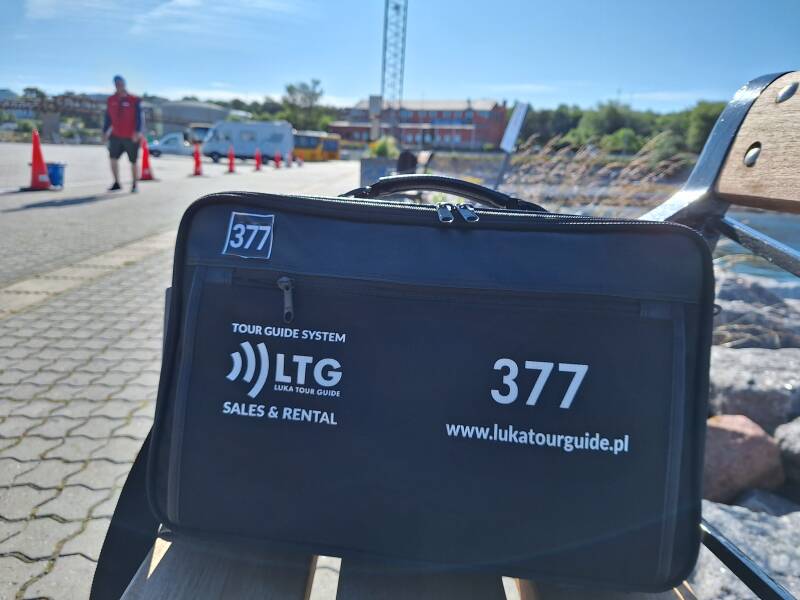
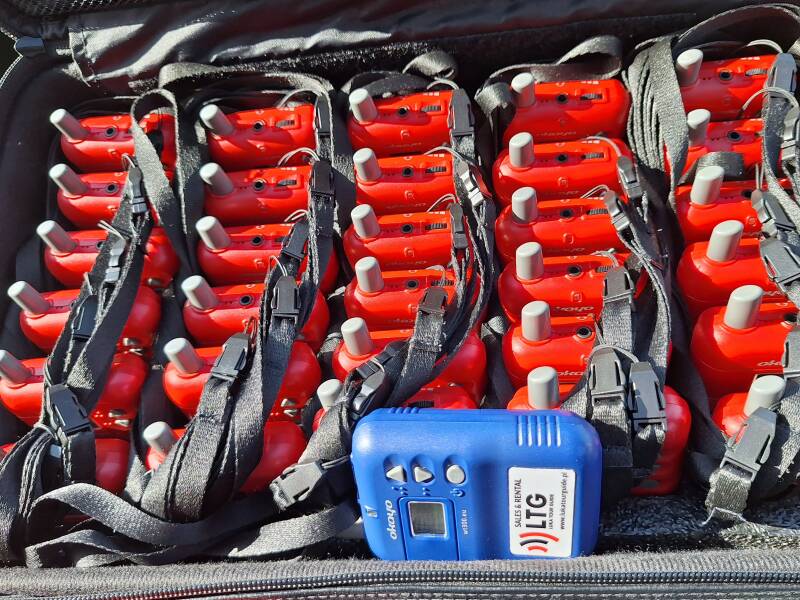
Headset systems.
Guide Lucinda from England. Moved here 20 years ago. Will be 6 h trip. Countryside, medieval church, fishing village - lunch break and back to Visby. They were, the cruisers in Poland yesterday. 29 people on excursion, 27 from US, 2 from Canada. In Gotland yes is jou, not ja like in Stockholm ja (yes) accent. 200 000 people at summer time, countryside is sparse. GOTLAND COUNTRYSIDE and WEST COAST TOUR (south-west). National animal: hedgehog. Gotland was Danish 300 years.
Eskelhem (small town), medieval church. 92 working churches over Gotland now. Now only one working church in Visby. Visby 25000 people. Gotland 61000 people.
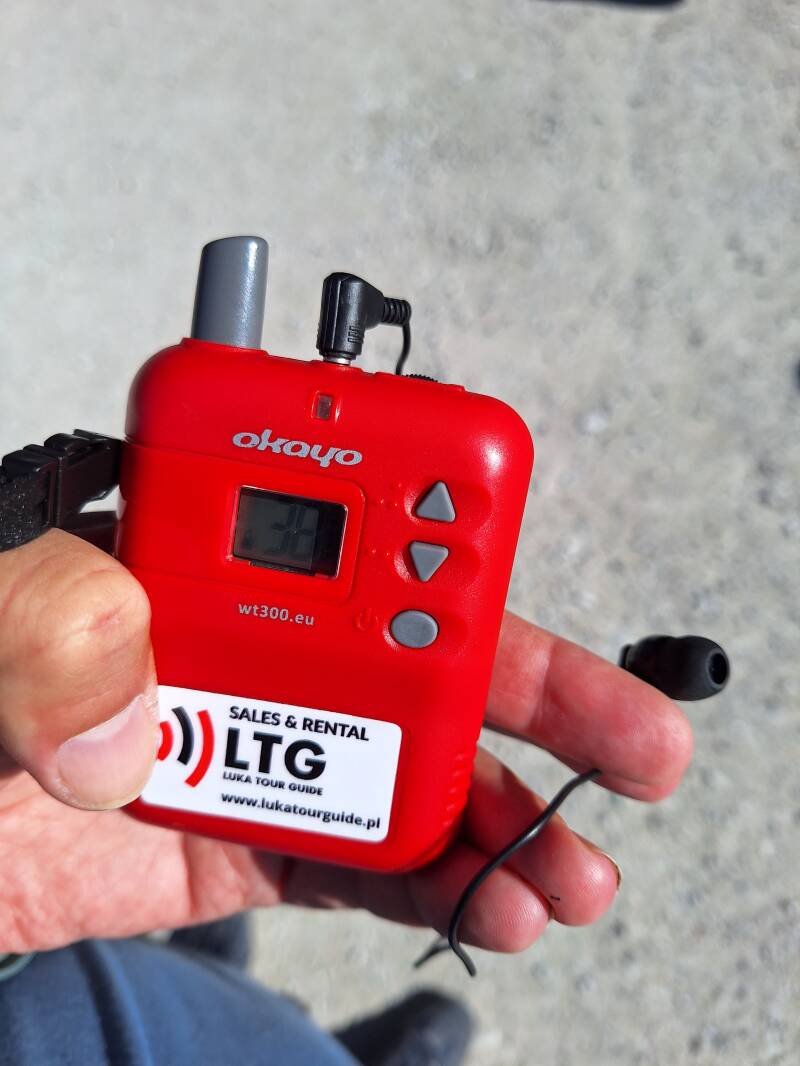
Headsets, those function well.
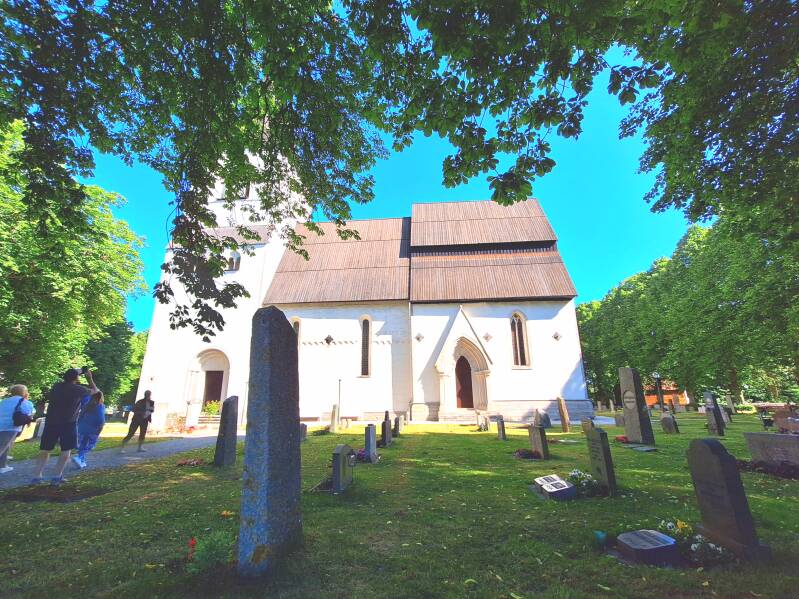
2% tax like in Finland for church members counted from salary. More photos will be via shared link soon;)
Gotland warmest place in Sweden.
Should make also guide notes memo, like Lucinda has for own guided tours A5, A6 format, in film, not to get wet in rain. Just to have a look sometimes onto them. Well, she actually used it only once in church. Very nice weather. Lovely church. Bishop visits every 3rd year to endow countryside churches.
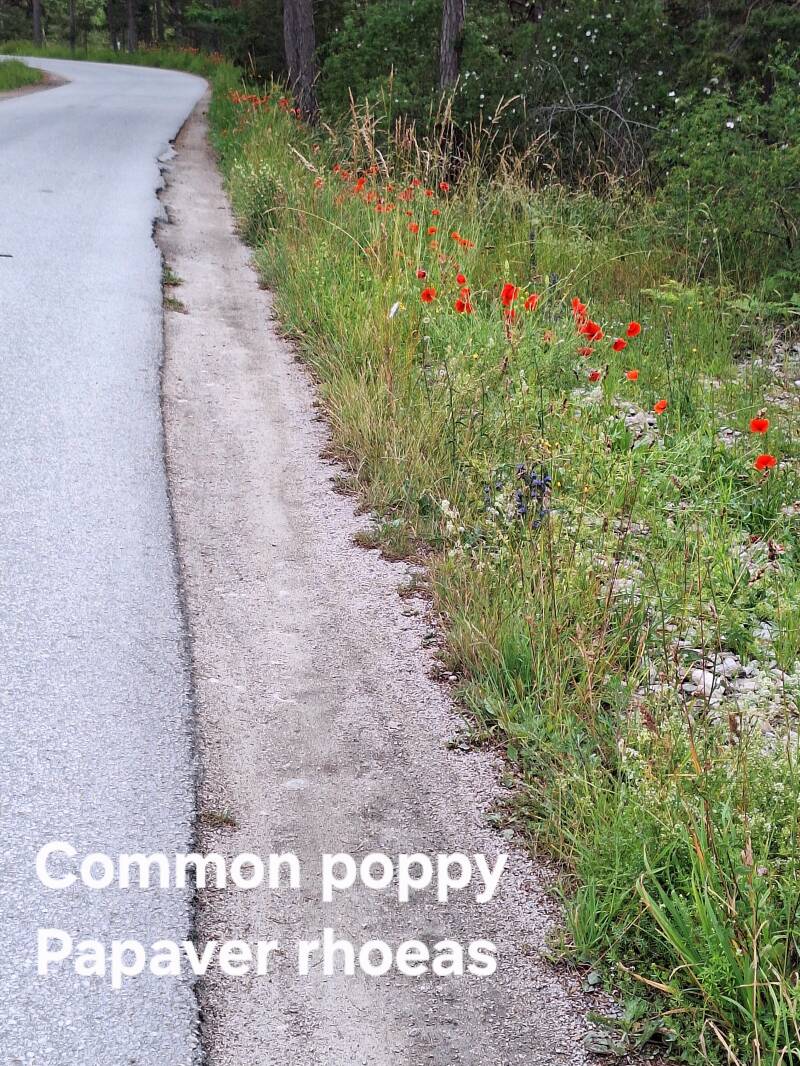
Stone ship, Stenkumla. Milk production, horse riding. Lot's of people have horses here. Lot's of red poppies.
Each part of Sweden has different taxes. Gotland has highest, 35%. If one's salary is high levelled then 50%. All are equal here.
Gotland is also a coral riff originally. Fossils are found in inland too. Trading history of Gotland is very rich in history from coins from Iran, Iraque to goods from Novgorod.
Sandstone churches are not washed white from outside.
Gotland: Hawaii of the lime. Mild winters.
Klintehamn. Klinte: hill. Pipi Lockstocking's movies were filmed on Gotland. Guide Lucinda is a teacher of native English. Klintehamn school. Governmental alcohol shops really rare, only two shops on island, which sell alcohol. People make them at homes too.
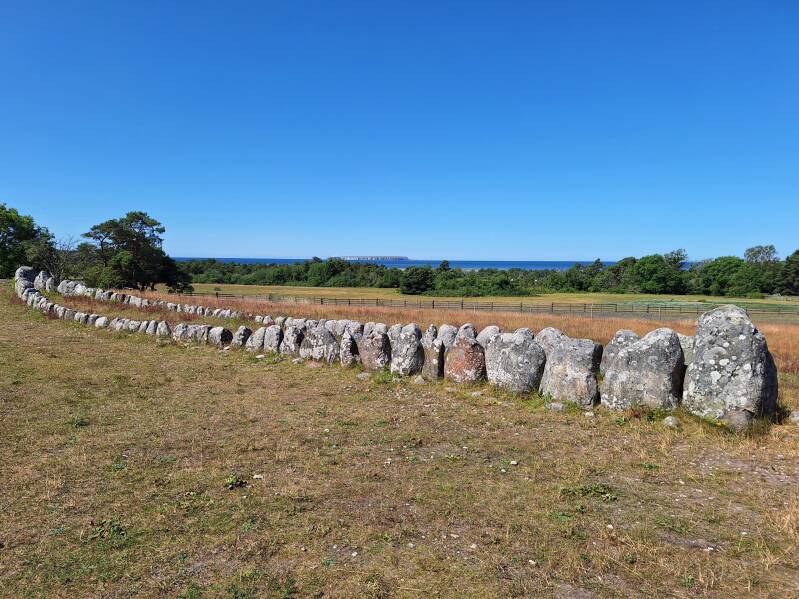
Late Bronze age stone ship. Over 350 those kind of ships on Gotland. Burial sites. Gannarve.
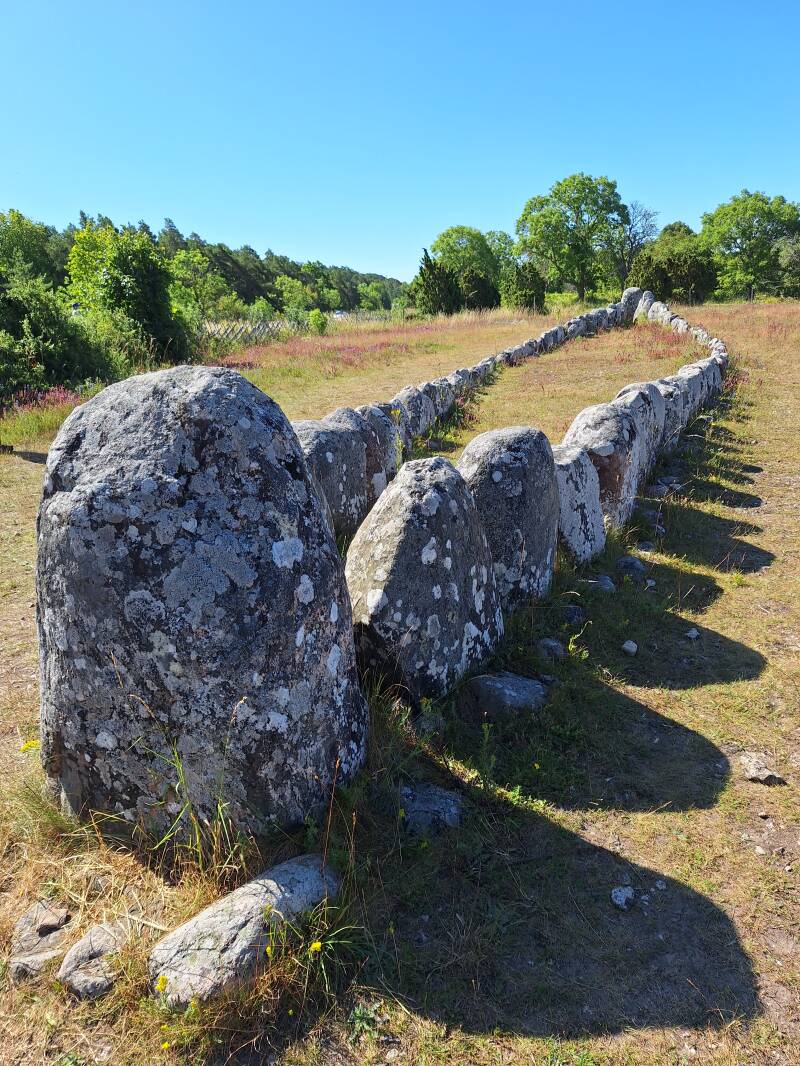
This is actually what I really wanted to see, so unique way for burials.
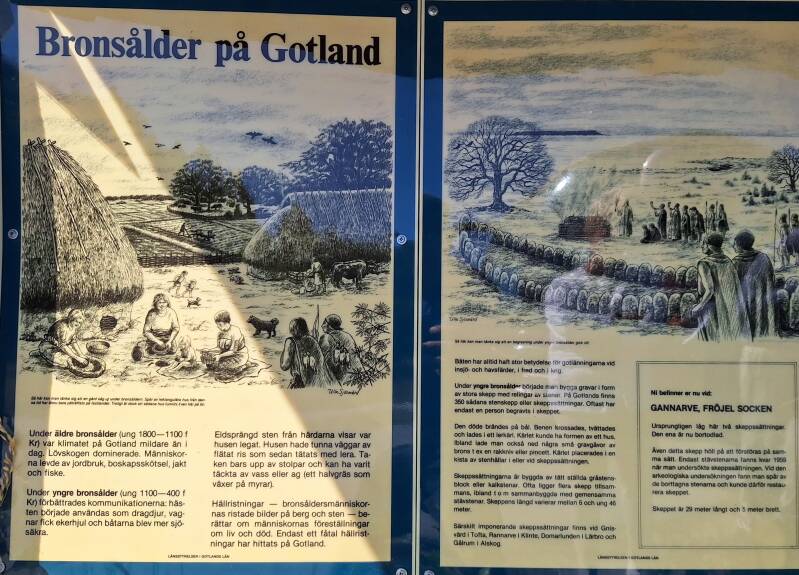
In the Early Bronze Age (C. 1800-1100 BC) the climate on Gotland was milder than today. People lived off tillage, animal husbandry, hunting and fishing.
In the Late Bronze Age (c. 1100-400 BC) communi- cations improved when people began to use the horse as a draught animal, wagons were furnished with spoked wheels, and boats became more seaworthy.
Fire cracked stones from hearths indicate the loca- tions of houses, which had walls of interlaced twigs daubed with clay (wattle and daub). The roof, which was supported by posts, may have been thatched with reeds or sedge (Cladium mariscus).
Rock carvings, of which there are only a few on Gotland, give us an insight into the Bronze Age people's conceptions of life and death.
Boat-shaped graves
Graves in the Late Bronze Age were arranged in the shape of large ships, outlined by standing stones. On Gotland, 350 graves have been identified.
When the deceased was cremated, the bones were crushed and cleaned, after which they were placed in an earthenware urn, possibly with a few small grave goods of bronze. The urn, which was sometimes in the shape of a house, was placed in or beside the boat-shaped grave.
There are often several adjoining graves. Their length varies from 6 to 46 metres.
Impressive boat-shaped graves can be seen at Gnis- värd in Tofta, Rannarve in Klinte, Domarlunden in Lärbro, and Gålrum in Alskog.
There were originally two boat shaped graves here. One of them has been churned up by the plough.
This grave almost met the same fate. Only the stem and stern stones remained in 1959 when the site was excavated. Archaeologists found traces of the missing stones and were thus able to restore the grave.
The grave is 29 metres long and 5 metres wide.
To the fishing village. Nature reserve.That Mac sign on keyboard comes from Gotland. Keges brings stuff to businesses, restaurants - delivery. Djupavic.
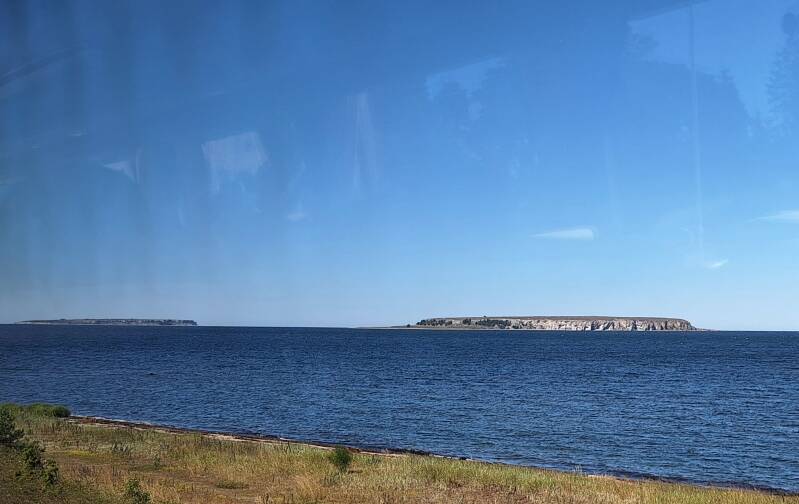
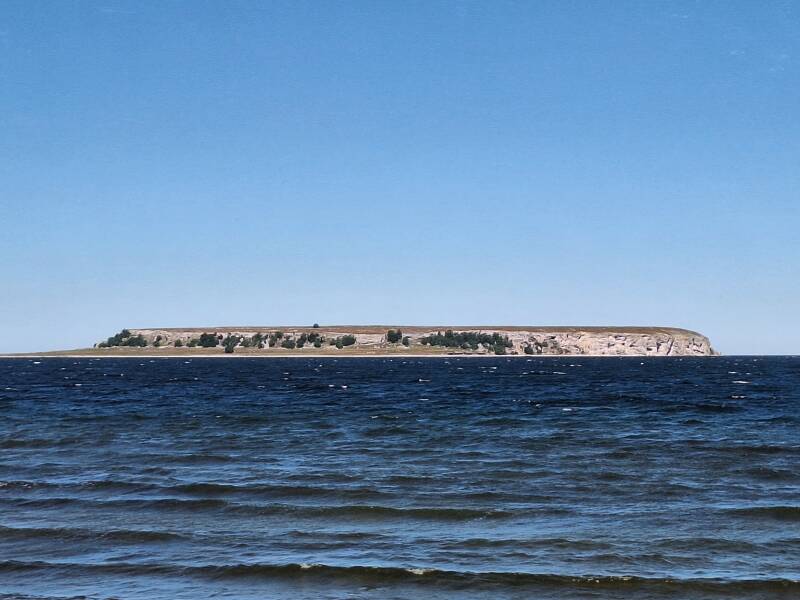
Stora & Lilla Karlsö - second oldest nature reserve in the world: Stora Karlsö. Nearby from here Danish King landed and went to Visby,
May stop a car and put up a tent freely...
Coast of Ekstakusten
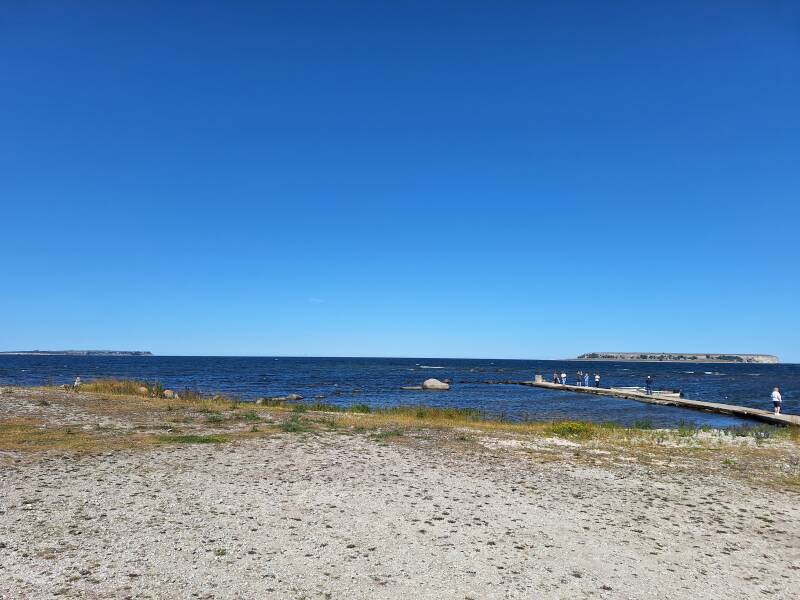
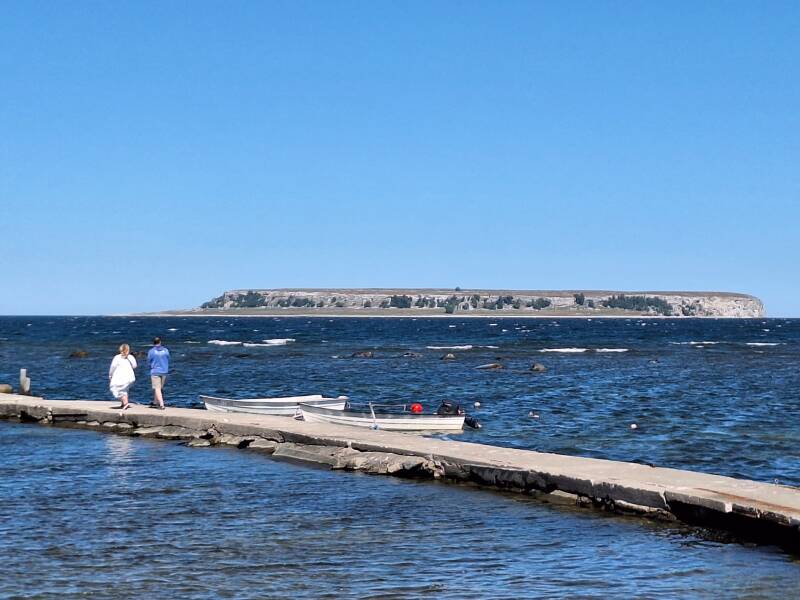
You are about to enjoy a beautiful stretch of coastline with pronounced shingle beach ridges and stunted, windswept coastal coniferous forestland. The coastal track, which winds through the entire reserve, offers a magnificent view of Stora and Lilla Karlsö (lit. Greater and Lesser Charles Isles). The distance from Skansudd to the closer of the isles, Lilla Karlsö, is less than 3 km.
Geology
The shingle beach ridges indicate that the land has risen from the sea, and the shoreline has shifted further seaward. The pebbles on the beach are mainly from the Gotlandic limestone rock, although you may find some other rock types that have been carried, then dropped by inland ice.
Vegetation
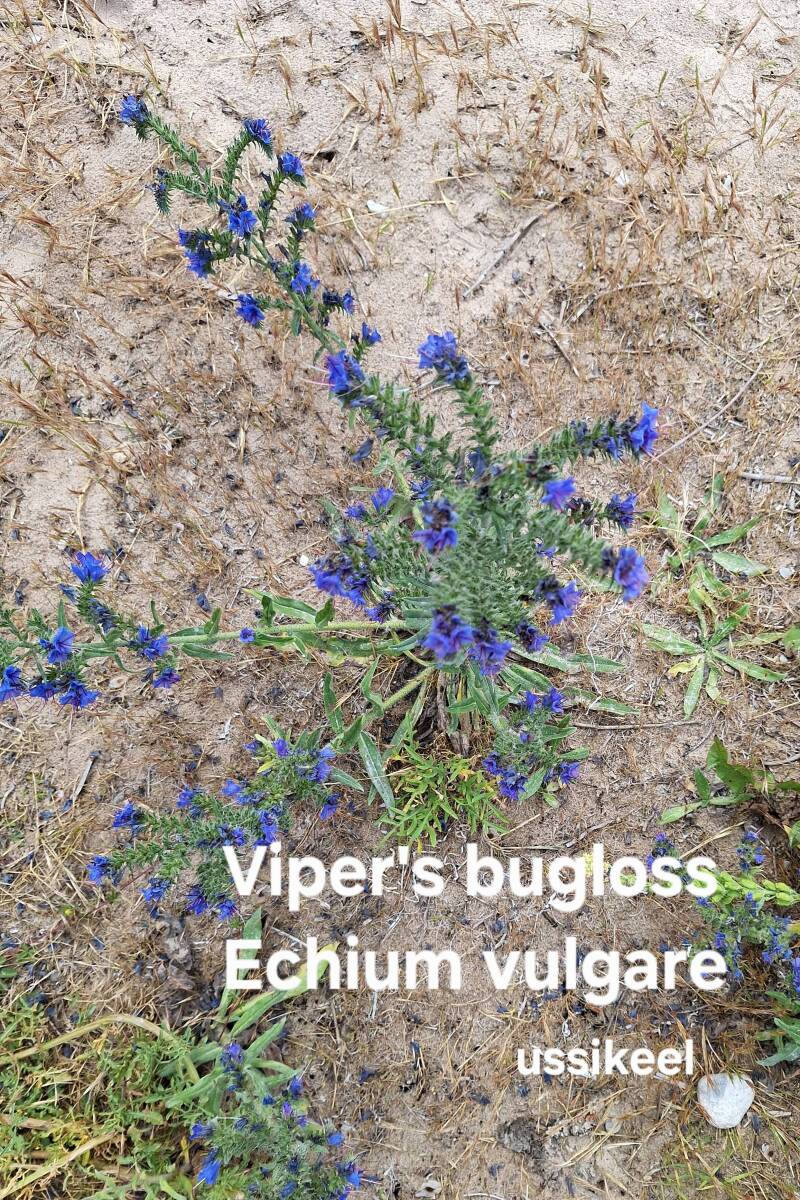
Only grasses and herbs adapted for growth under dry conditions thrive on the shingle beach ridges. These include Sheep's fescue, Wild thyme, Mountain everlasting and Viper's bugloss, as well as different lichens and mosses. North of Kronvald fishing base, there is a small population of Sea holly, a protected species which is critically endangered. A stunted coastal
Martorn (Eryngium maritimum)
forest follows on further inland. The peripheral pine and spruce trees have been misshapened by wind and salt spray; they literally crawl along the ground.
Birds
White-tailed eagle can often be seen flying slowly along the coastline searching for food; you may also spot Little tern, which seeks fish in the area. During spring and autumn, the area is swarming with grazing passage birds. Bird species breeding in the reserve include Eider, Skylark and Wheatear.
Kronvald Fishing Base
Kronvald fishing base occupies a central location in the reserve. It was much larger in bygone days. Fishing was relocated to Djupvik in the 20th century, due to improved circumstances there. Legend has it that King Valdemar Atterdag of Denmark and his armed forces went ashore at Kronvald on 22nd June 1361.
Skansudd
The name Skansudd derives from the redoubt known as Kronvalds skans. The defences were established in 1713 and comprised a 130 m long embankment of gravel and sand with a capacity to house 9 cannon. In the First World War, the redoubt was utilized as a coastal signal station.
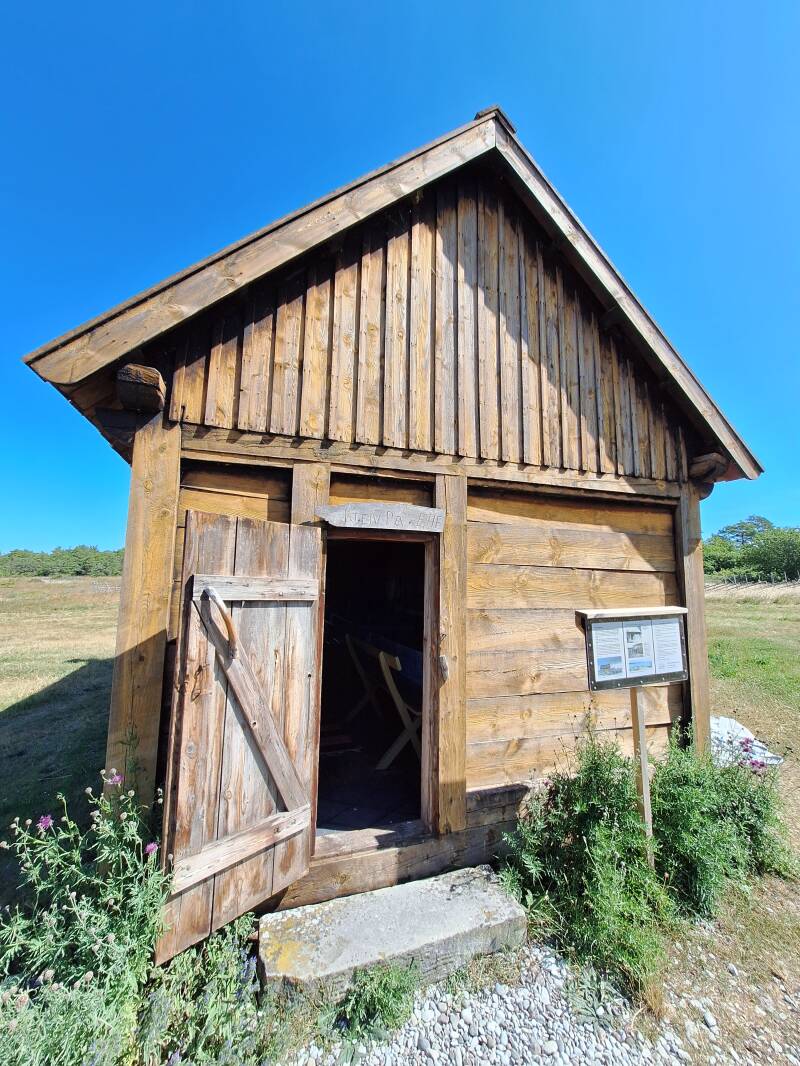
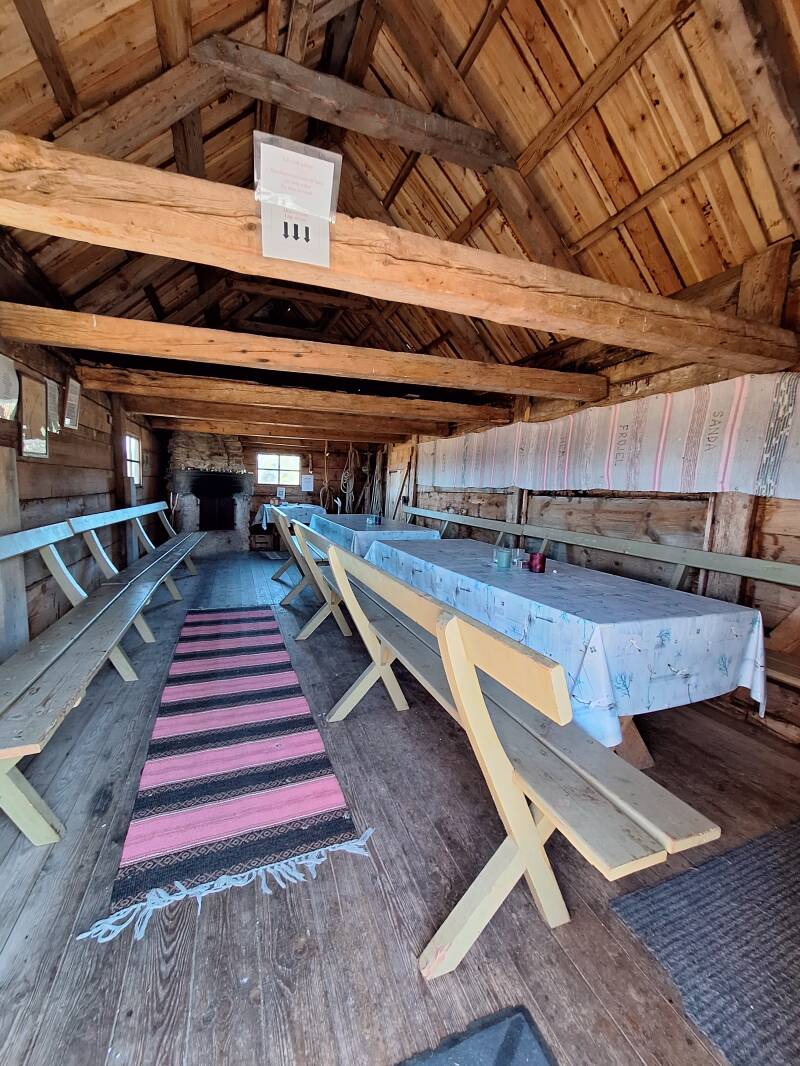
Old fire place 1767.
Kronvallsboden
The barn was originally a barn house at Bjerges. When the land was divided in the 1880s, it was decided that the then owner, Jacob Jacobsson, would move all his properties to a new place to live. In connection with this, the then barn house was moved to Kronvall and became a beach hut for the then owner at Bjerges. However, the seaman Julius Bolin saw opportunities for other uses for the beach hut and therefore moved it to his property at Hammars in Eksta. There, the hut served as a storage shed etc. for a number of years. In 1983, the Eksta Hembygdsförening received the hut as a gift from the Bolin family. It was then moved by enthusiastic Eksta residents back to its location in Kronvall and became a beach hut again. The land was leased by Eksta Tredje Skifteslag to the Eksta Hembygdsförening. The hut is open to the public all year round. No one can subscribe to it - everyone is free to be there at any time. It is very well visited all year round according to the guest book. Among other things, tourist buses stop for coffee pause.
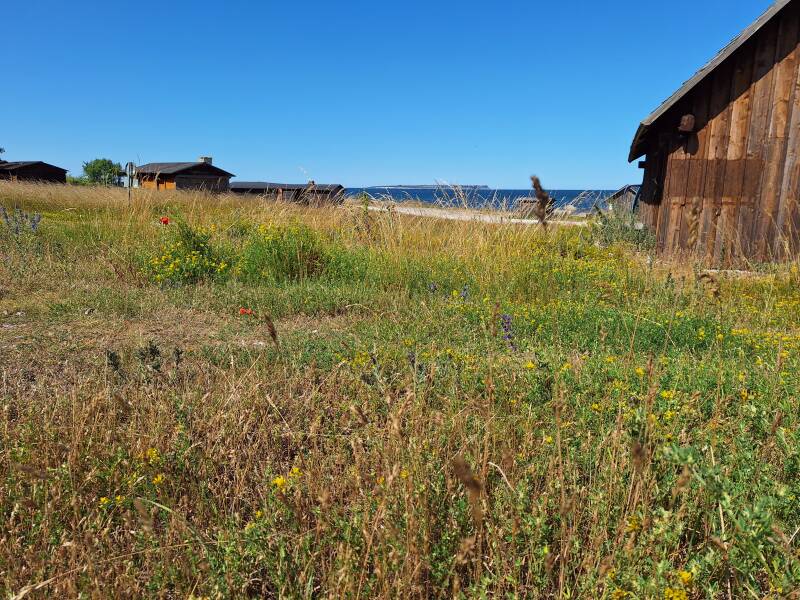
Spot where Danish King landed, as is assumed. Lot's of windmill parks.
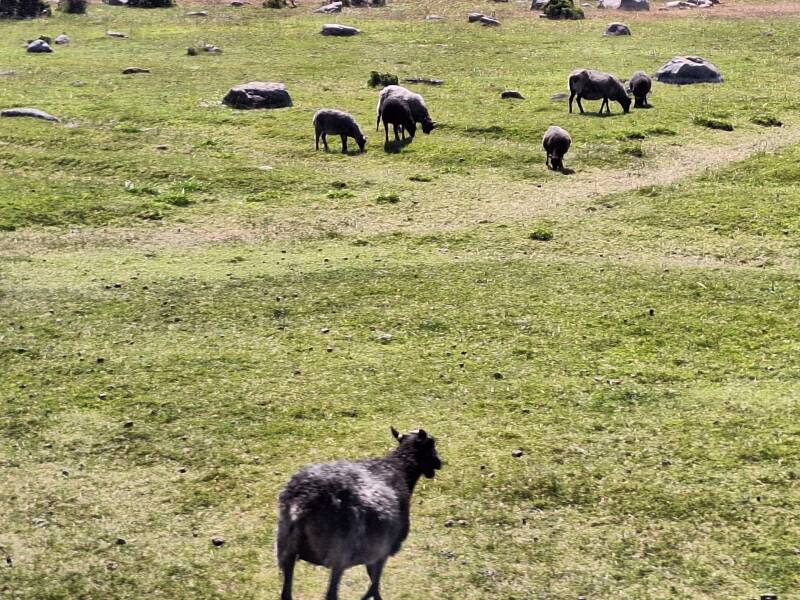
Gotland's lambs.
Towards the fishing village and then to the local, family owned restaurant. Bjõrkhäga camping and beach on left. Västergarn - expensive, to buy house there, to that village. Passed a smallest museum in Gotland, belongs to a band called Tasteless, translated to English. Michael Douglas and Tom Cruise have played golf on Gotland and others. Tofta beach on the left, parties at summertimes. Nightclub. Crazy holiday part of Gotland. Expensive area.
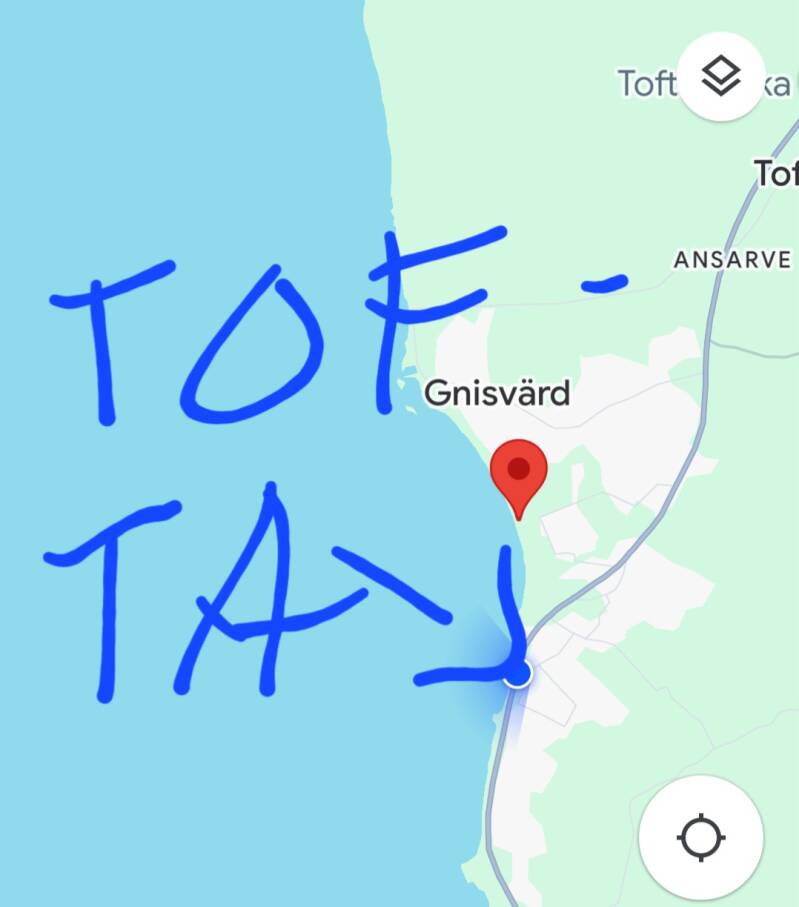
Gnisvärd. Meaning: wrap the sword.
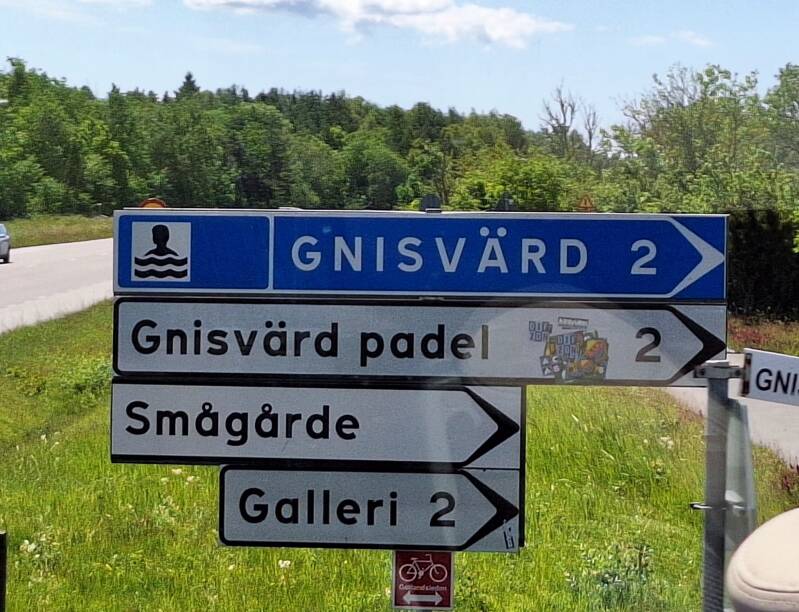
Tiny huts for renting out. Surf shop. Surfing is popular. When there is more than 18 persons, headsets are really useful.
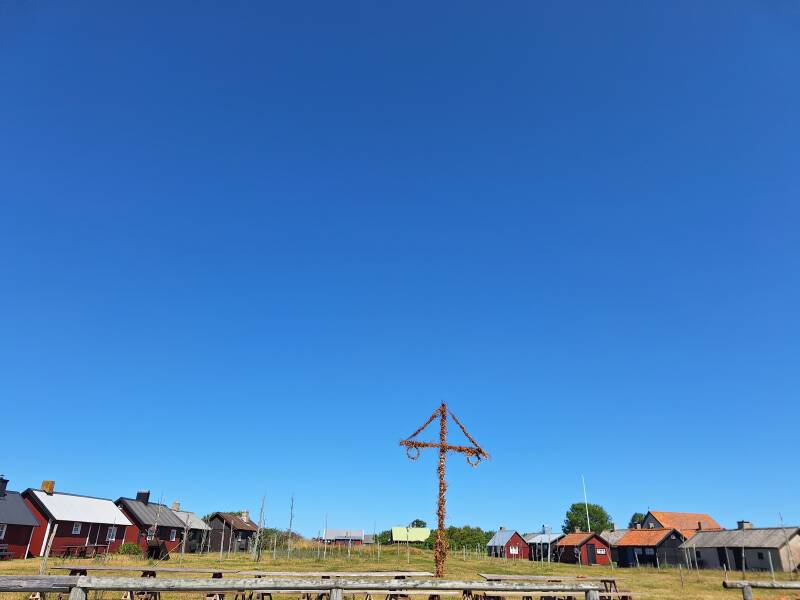
FISHING STATIONS ON GOTLAND
In bygone Gotland fishing was part of the farmer's life. Much of the diet consisted of fish, mostly herring from the Baltic Sea caught in rivers and fens. The fish was salted in barrels and eaten every day the whole year round.
During a few intensive weeks in spring and autumn the men gathered at the fishing station, where they had huts for their gear and boats. Behind the huts was a enclosed area where the nets were dried.
Many fishing stations originated in the eighteenth century. When agriculture began to flourish in the early nineteenth century, fishing declined in significance. The coastal farmers nevertheless continued to fish, some of them becoming full time fishermen.
When bad times for fishing came in the nineteenth century, they started fishing for salmon. For this they needed better boats and harbours. The trawler fishery of the 1950s required large investments in équipment and boats, and fishing was concentrated to a few harbours.
Fish used to be sold through wholesale buyers or by the fishermen themselves, walking from farm to fram. After World War I sales of fish were coodinated.
Today Gotland's entire fish requirements are catered for by two trawlers.
The oldest fishermen's huts consisted of a roof placed directly on the ground or on a low foundation of logs or stones. Many huts were built of drywalled limestone. They had no windows and had roofs of boards with grooves to lead off the rainwater. In the south and south west the roof was often of thin sandstone slabs.
The fisherman's hut, which was mostly used for sto- ring tackle, consisted of one room with a door ope- ning inwards and an aperture for a window. Someti- mes there was a fireplace and some beds.
Sailing into the fishing station could be difficult. When darkness fell, fires were lit and placed in iron baskets hanging from a jib, or on a stone pillar. The fires were tended by old fishermen. Lighthouses did not come into existence until the early nineteenth century.
The oldest harbours had channels and landing places lined with stones out in the water, one for each boat. The Gotland boat was easy to row and sailed well. There were three man, two man and one man boats.
At the end of the nineteenth century breakwaters were built to protect the landing places. For the motorized fishery of the 1920s, deep harbours were constructed with concrete piers and jetties.
It's very good and healthy food here. Ate sej fisk, means Pollock fish or in Estonian Euroopa süsikas.
Back to Visby...
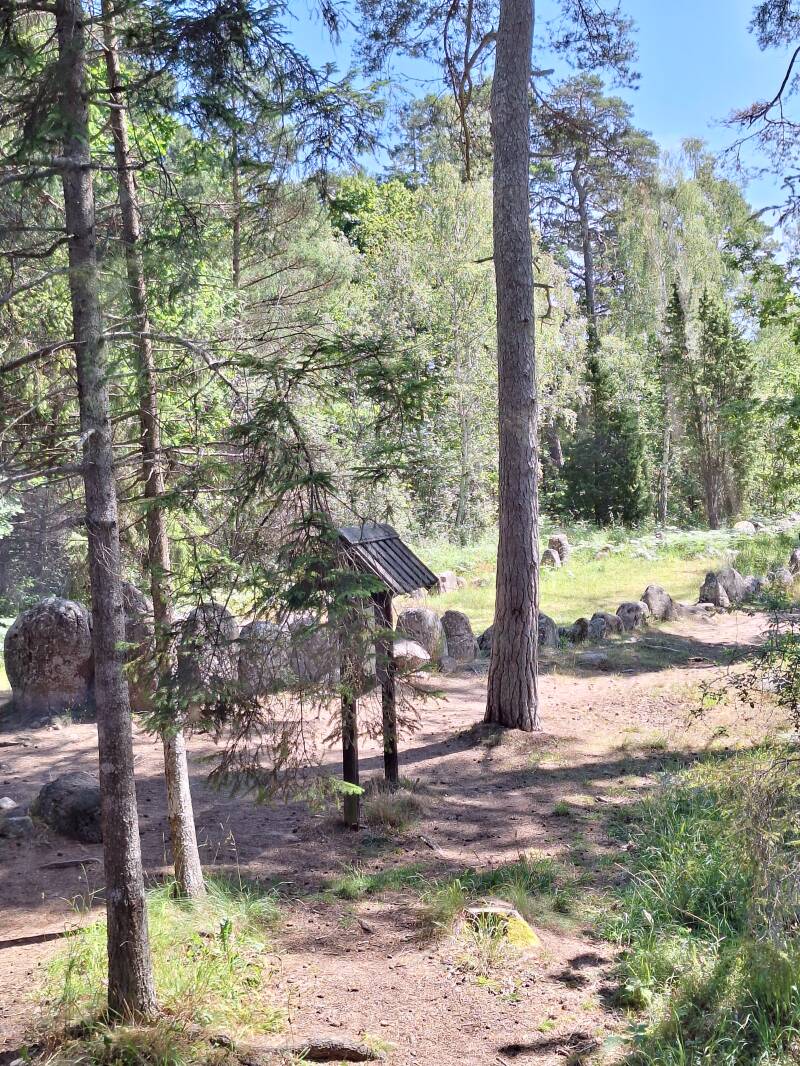
One more huge boat grave, before getting to Visby.
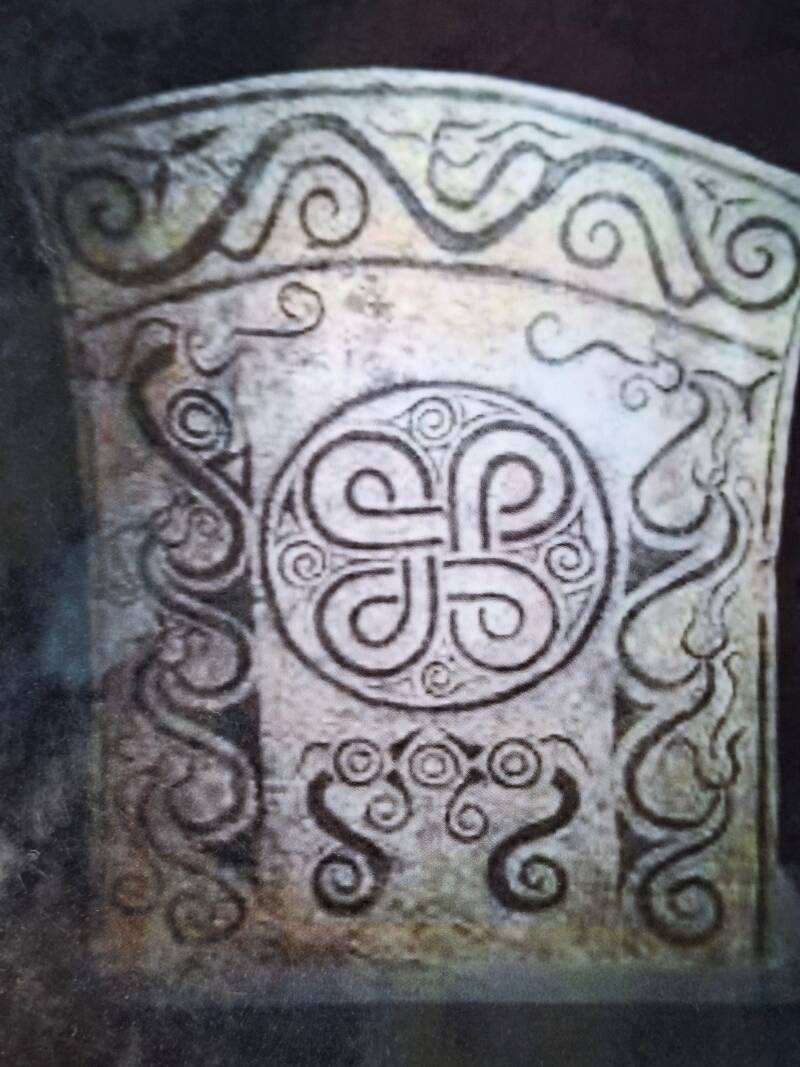
Command sign on Mac keyboard comes from picture stones from Gotland. That sign is on the road traffic signs showing a direction to a place of interest or sight In Gotland too.
Somebody forgot phone to restaurang, so they solve it, that it will be brought to harbour by somebody.
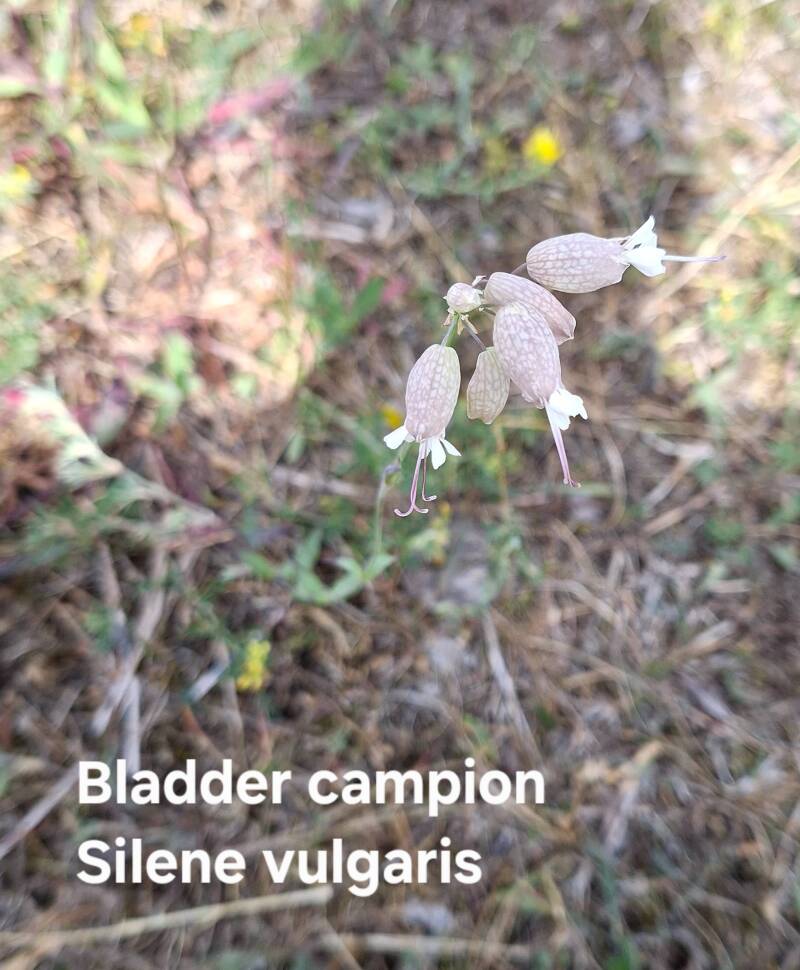
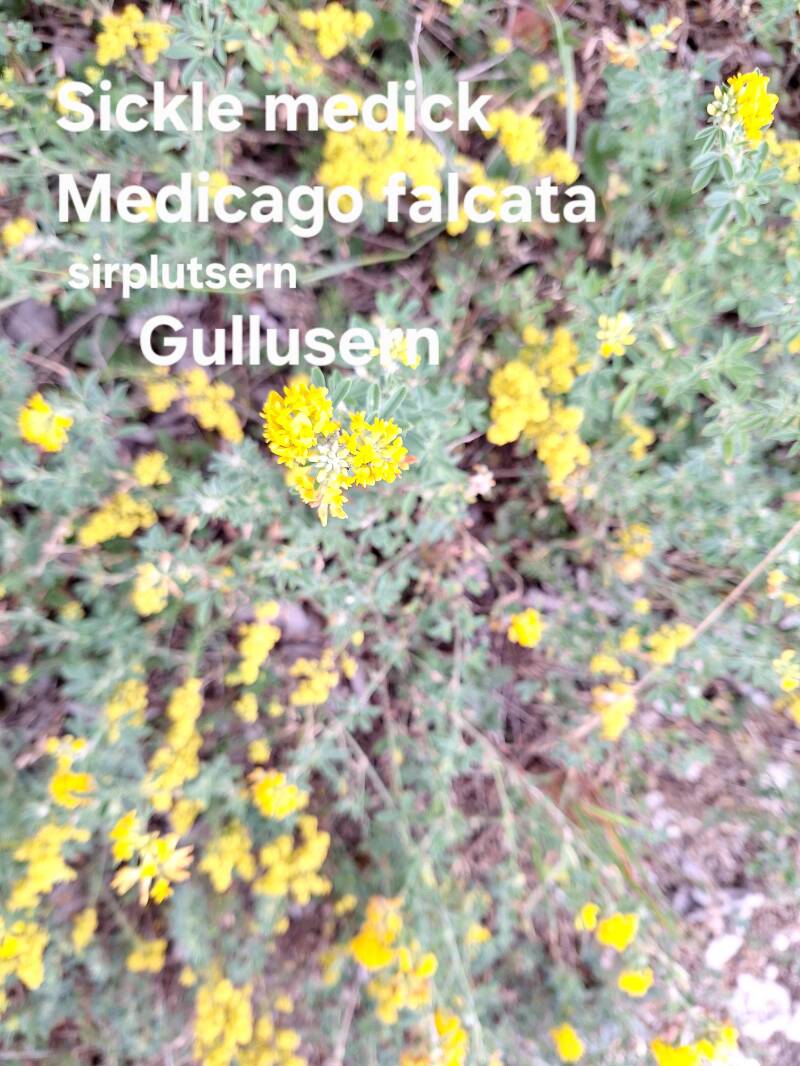
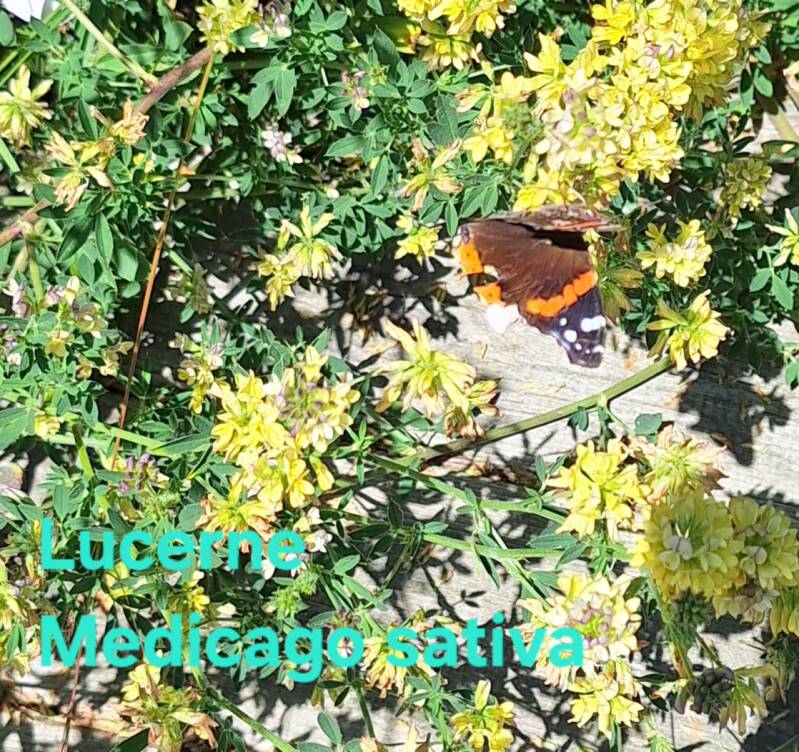
They used to drive on the left side in Sweden, times ago. Visby Ringmür - most well preserved medieval wall in Europe. We have stop at Galgen. If the person can't find a job in Gotland, has to take the job on mainland - it's not excuse. No dentists on the island, only one or two of them. Many Bladder Campions (Estonian l:, harilik lõhklill, Alfalfa or Lusern in Swedish).
That's very relaxing, a lot's of time in bus trip. Very informative in many ways. Again learning quite a lot.
Next week will be a DJ and party week in Visby... Passing old malt factory of Visby. Photostop in Almedalen park and back to harbour. Lot's of shops doesn't accept cash anymore...
Very special place: Gotland. Even the Guide doesn't want to go home anymore. The fish in restaurang in Estonian was harjusk (gråsej fisk).
On Saturday, I will be the headset dude.Tomorrow other cruise ship 🚢 coming.
Some evening walk photos:
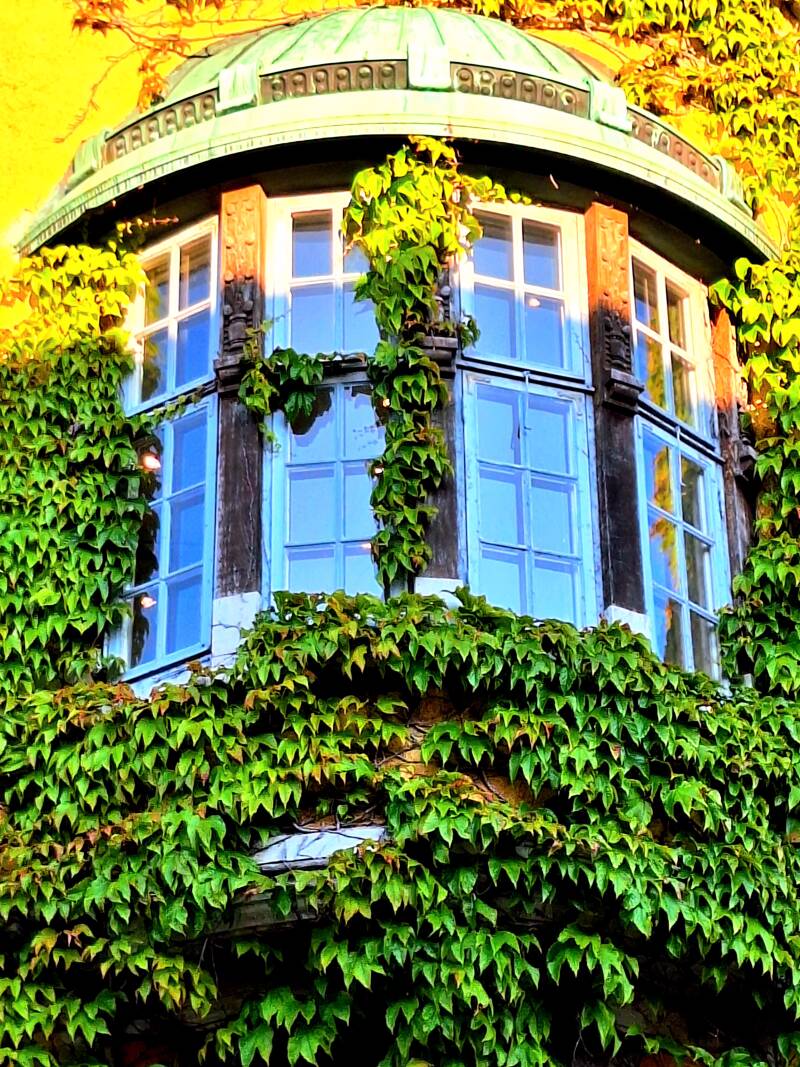

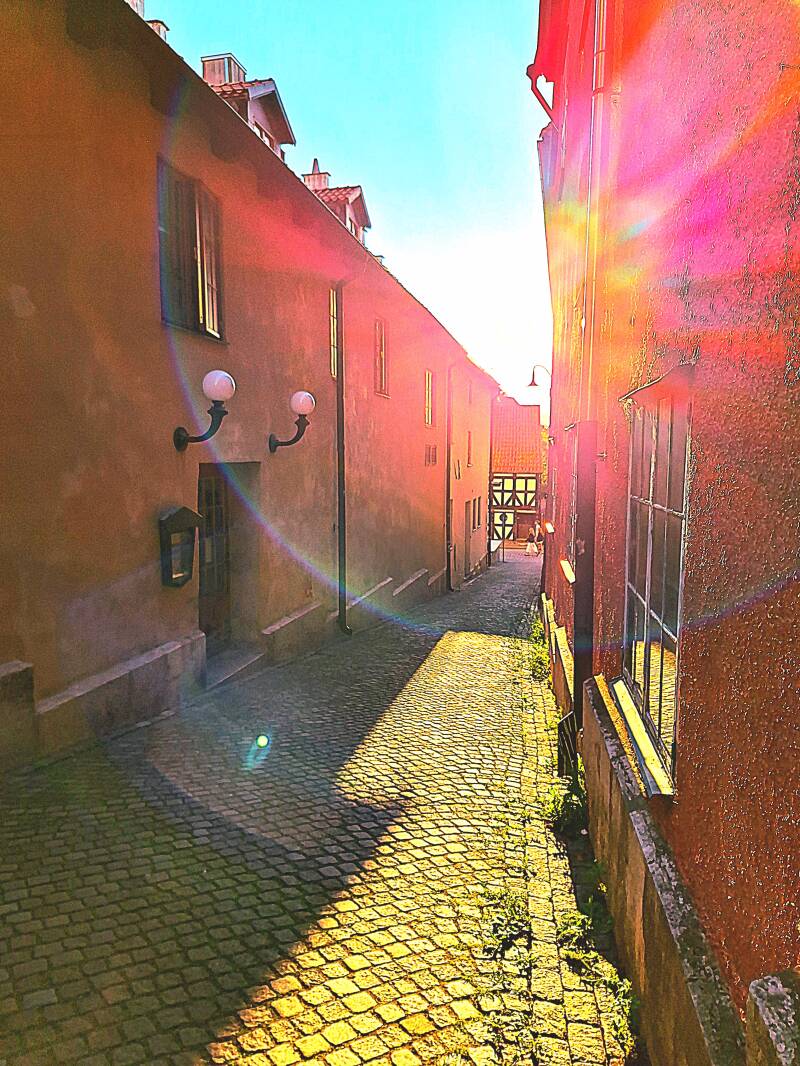
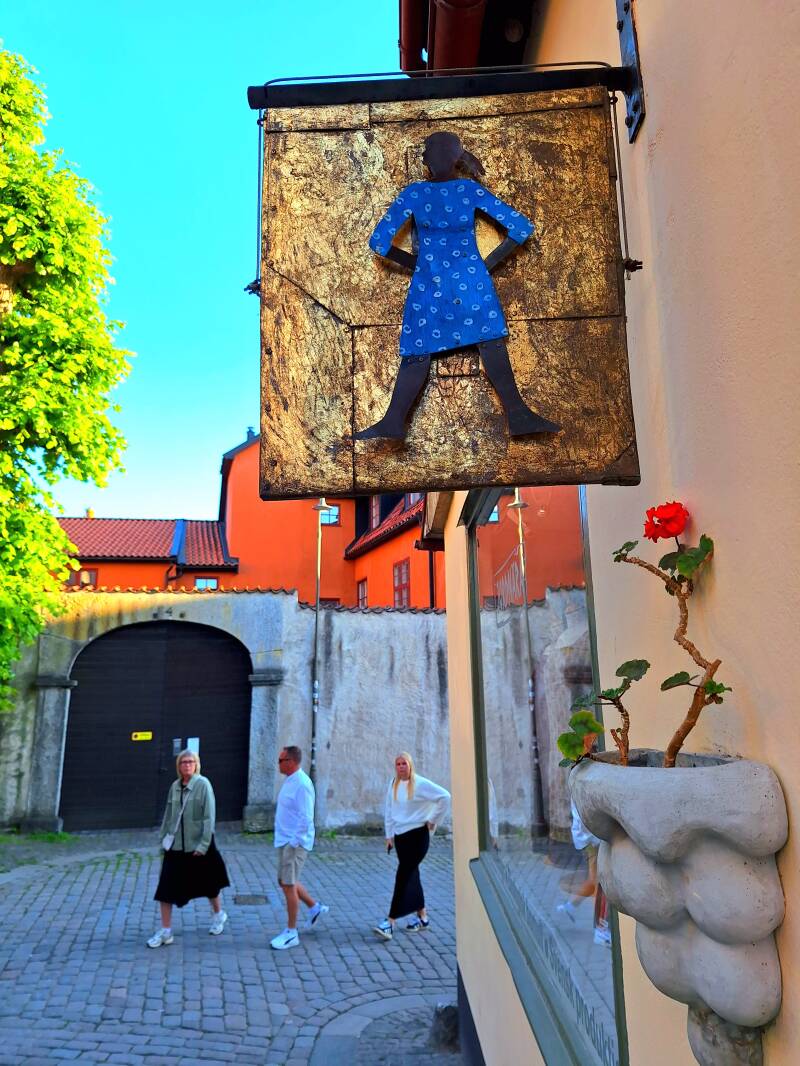
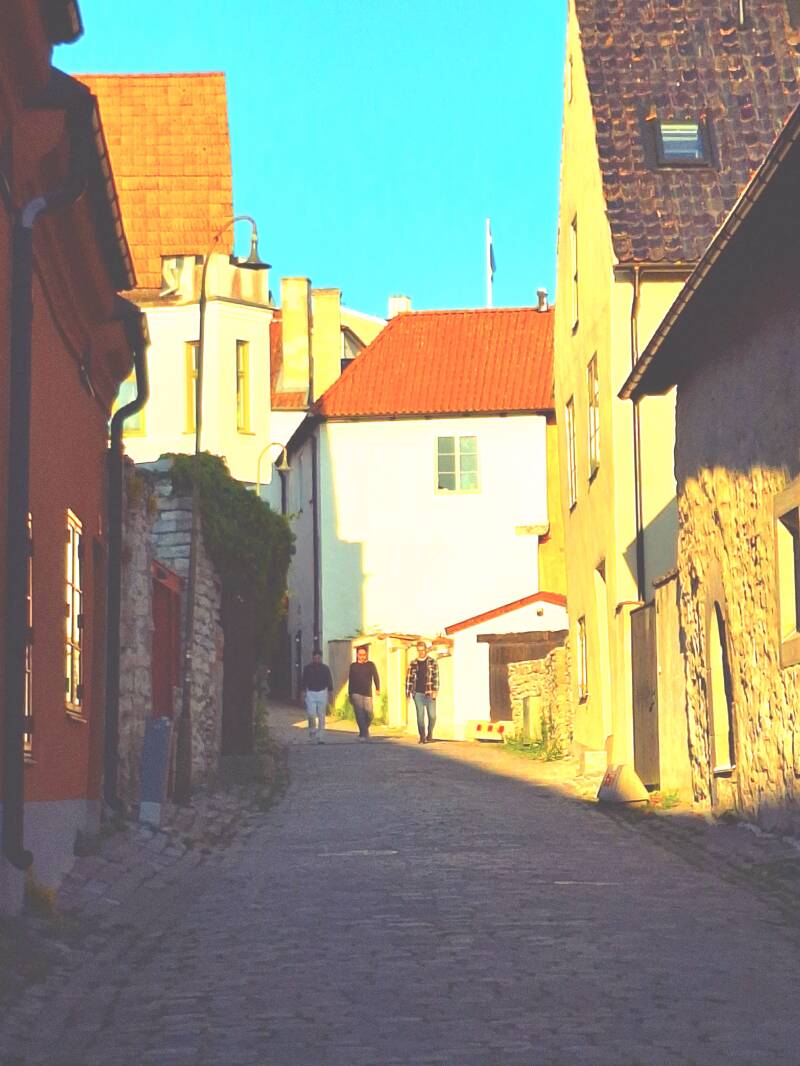

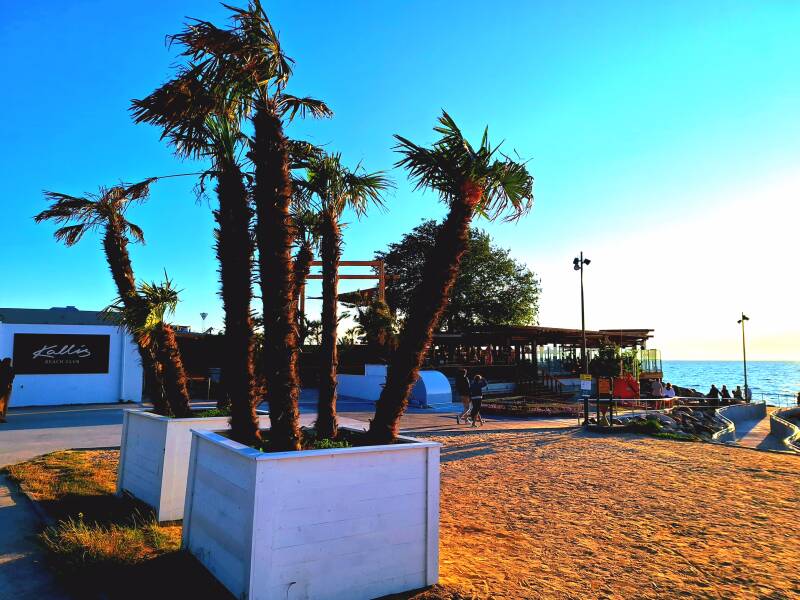
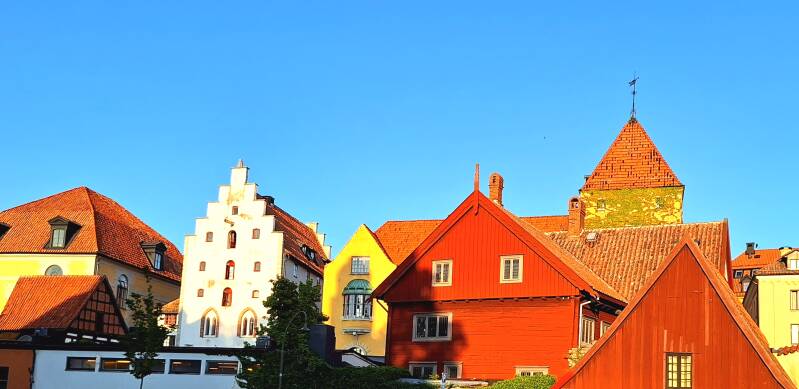
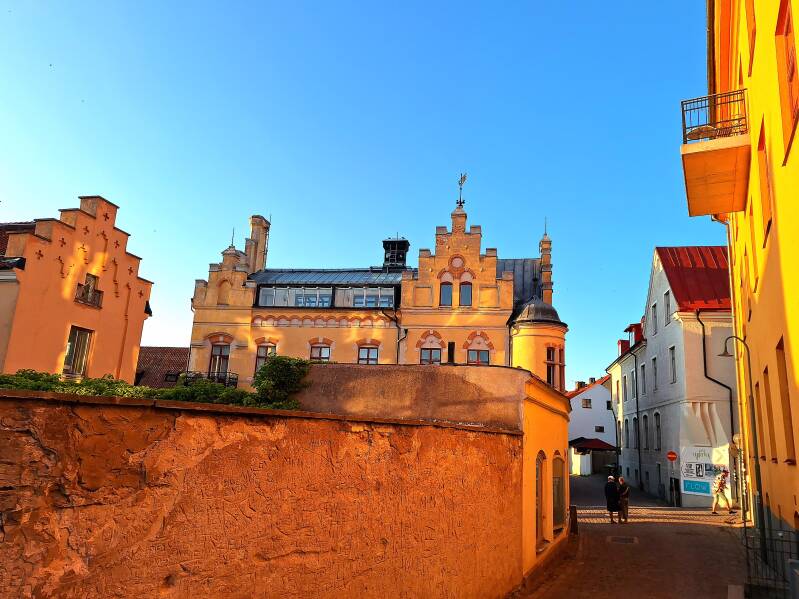
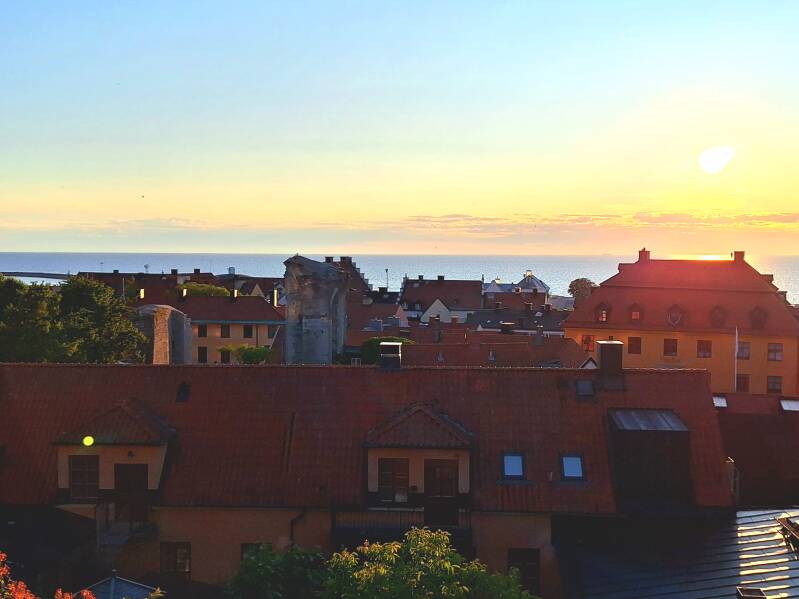
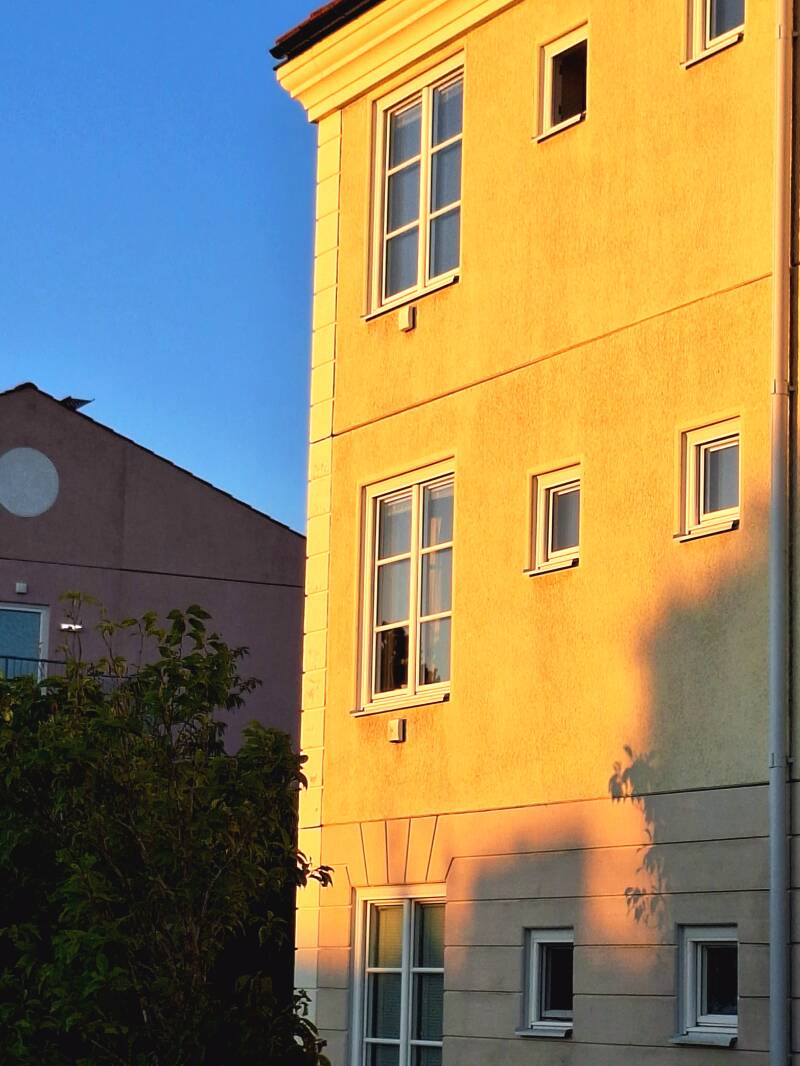
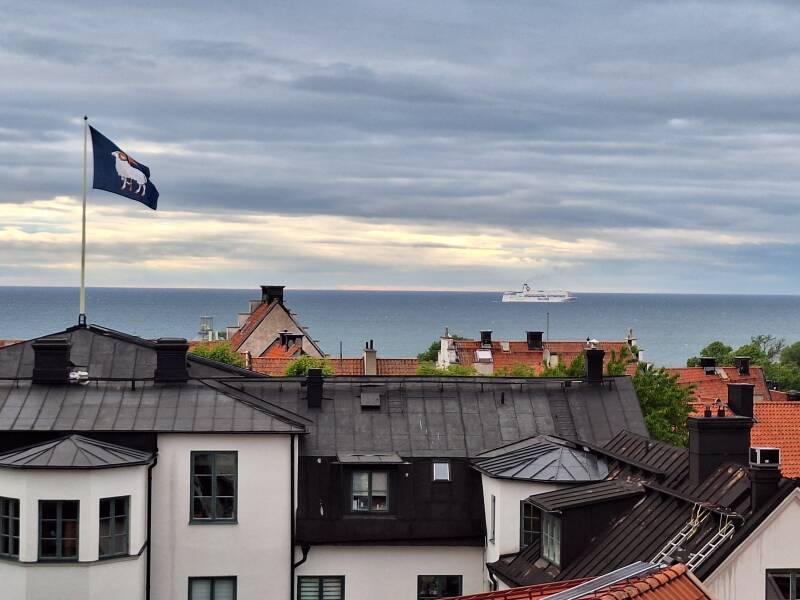
Gotland's flag or national bird is Whire-tailed eagle, animal is Hedgehog. Cultural & historical symbol and on the national flag is Ram.
10.07.2025
Not all the ICA stores have take away coffee, had a nice cycling to the north of Ringmür. Near tennishall, ICA has good takeaway coffee. Will be very nice weather today. They open already at 7 AM. Systemizing plants and studieng the common ones here to know English names from my head. On the cruise pier it starts afternoon today. Seadream II and Vista.
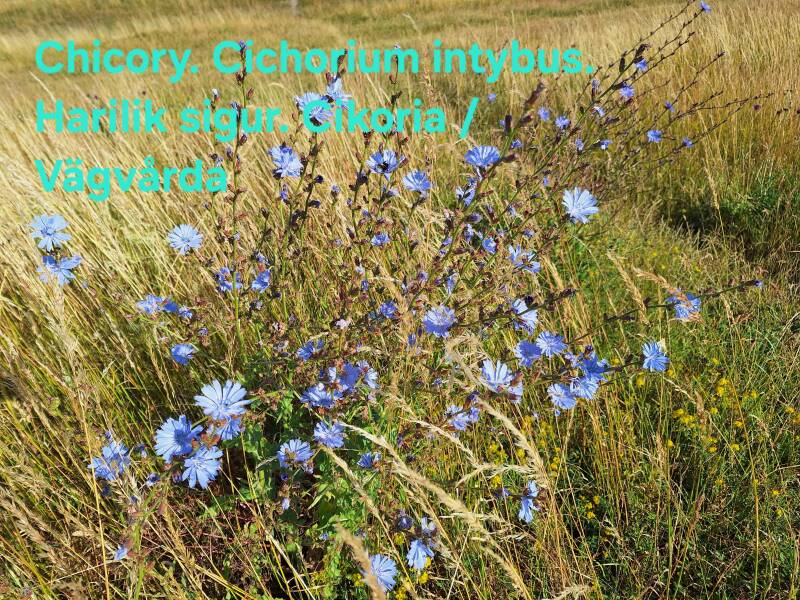
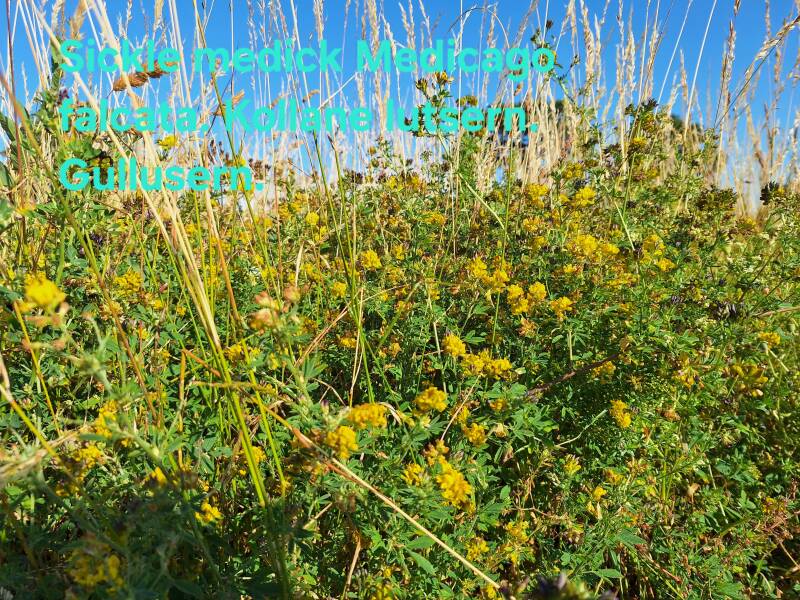
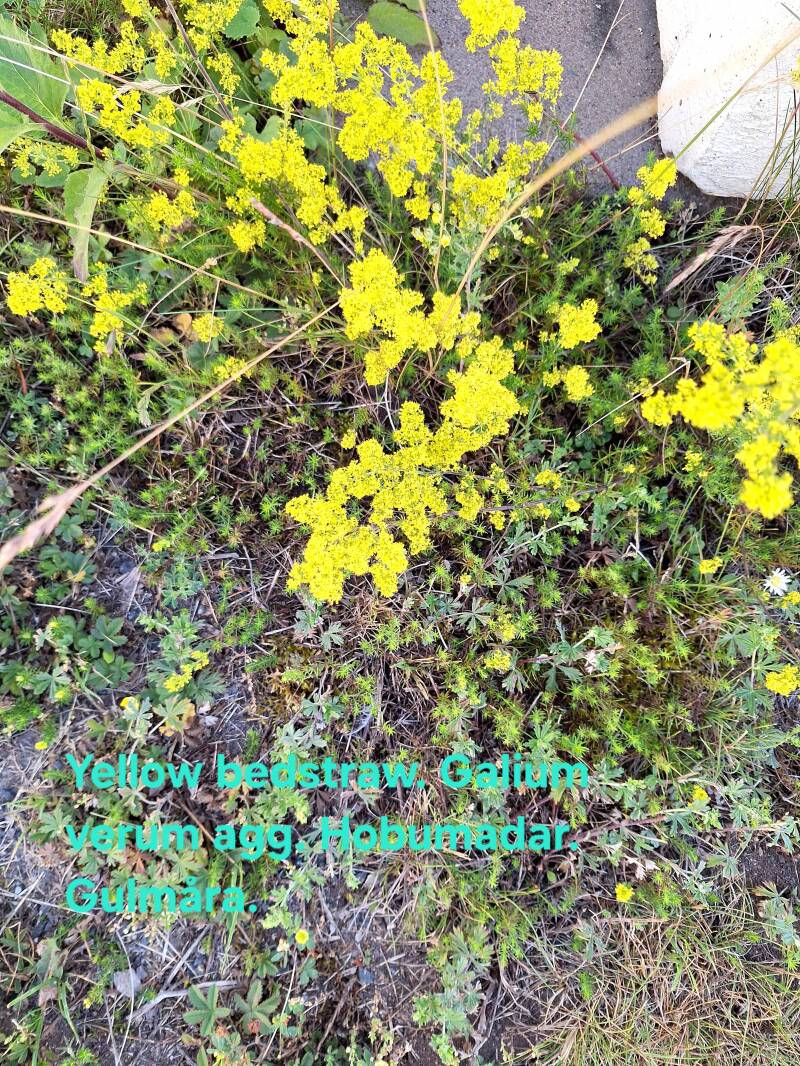
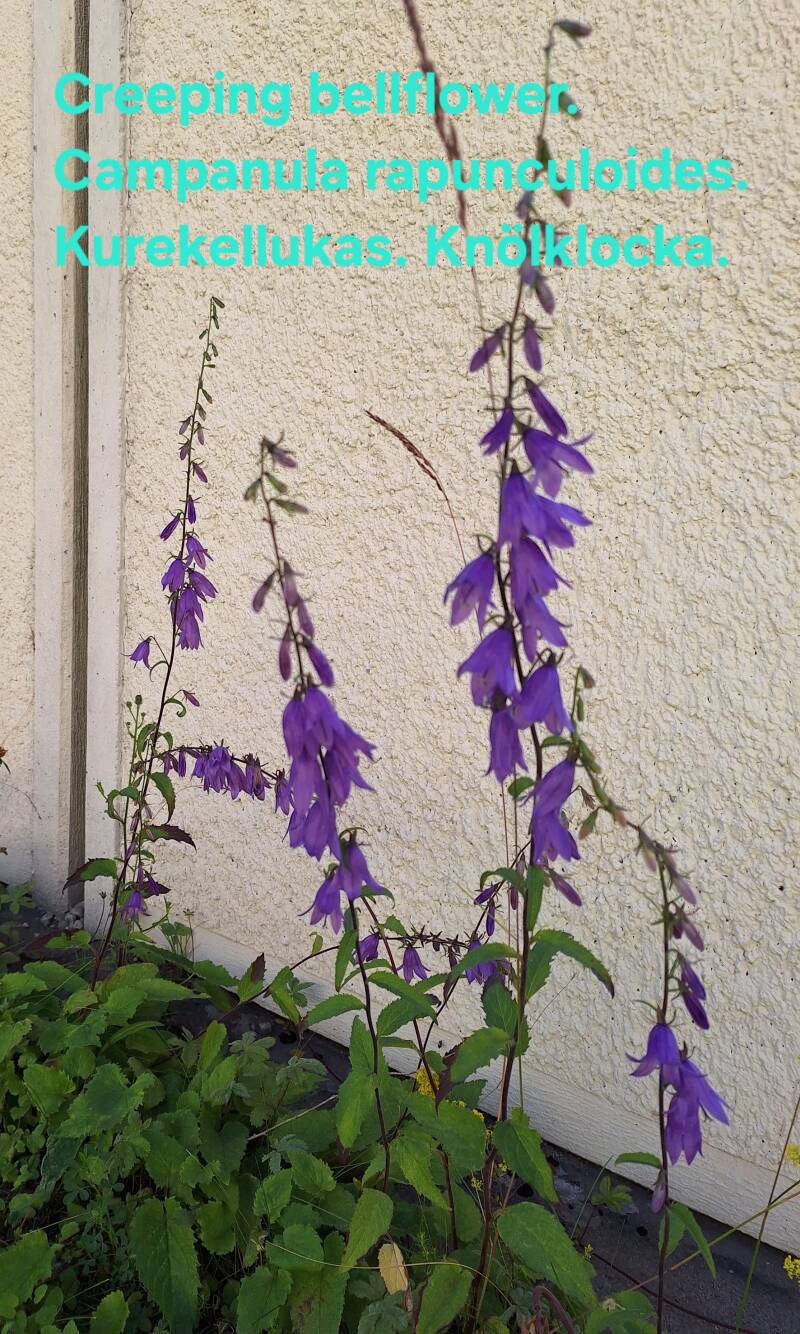
K2A service man came to put a new electrical stove;) and puts my name to postbox too, then my Wise card will arrive for 100%. Thank You very much.
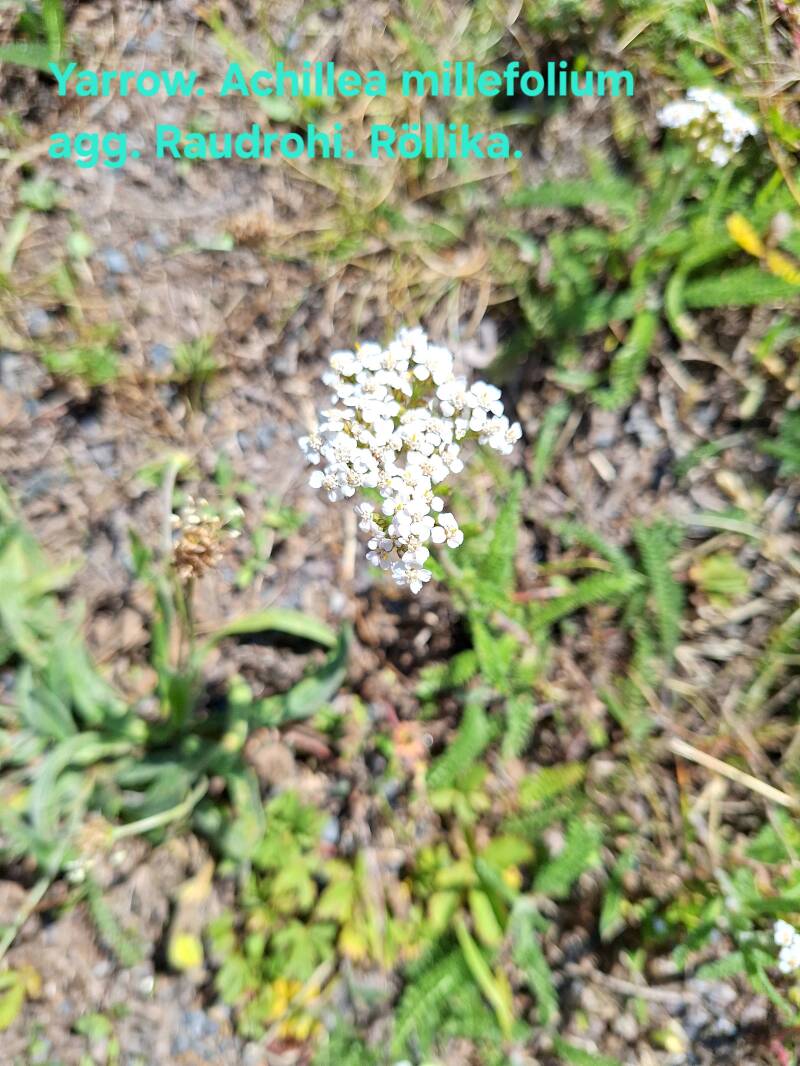
Came different way to the cruise pier, today.
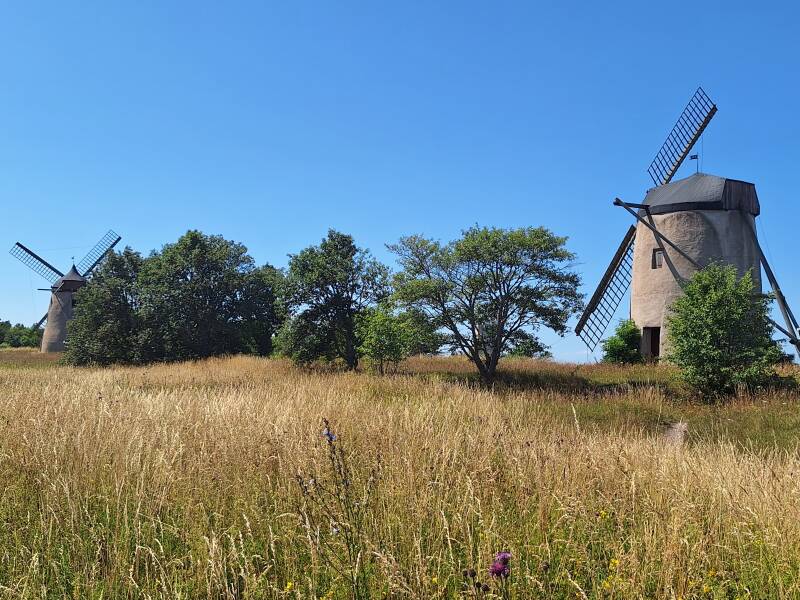
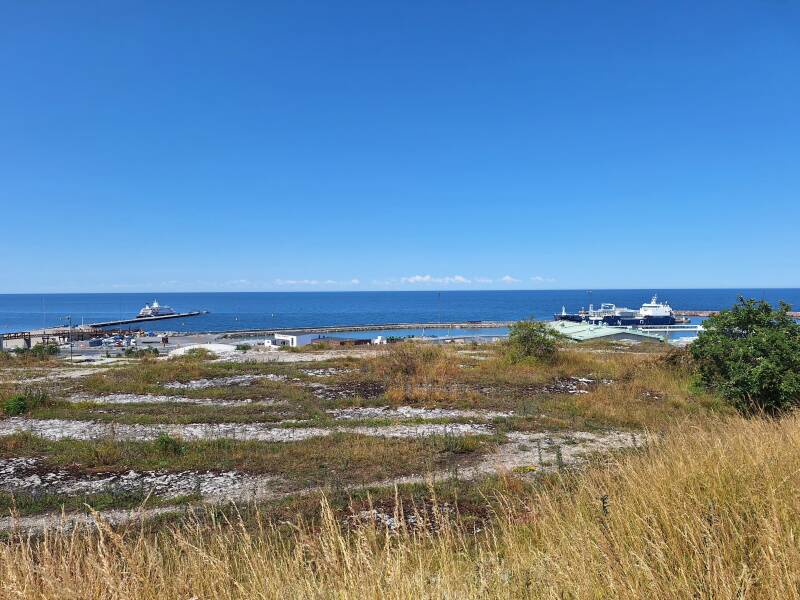
There is small cruise ship Seadream at cruise kaj...
800 km of beaches in Gotland. Sweden has most islands in the world. Next is Finland. Guide Peter. He was chief information officer and coordinator for businesses, worked for government. Journalist too. Started working groups in Ösel & Dagö times ago. Has been a lot to Saaremaa, Tartu and so on. Gotland means Good land. 3000 students from all over the world at Gotland campus - Uppsala University's Gotland's part. Stop near the library. Many politicians come all over the world here. Germans interested in big fossils. And afterwards (spoke about Silurian period) ice age, 2-3 km of ice pushed the land down. Then vikings. Textiles, herb - saffron from Asia and they brought also slaves...
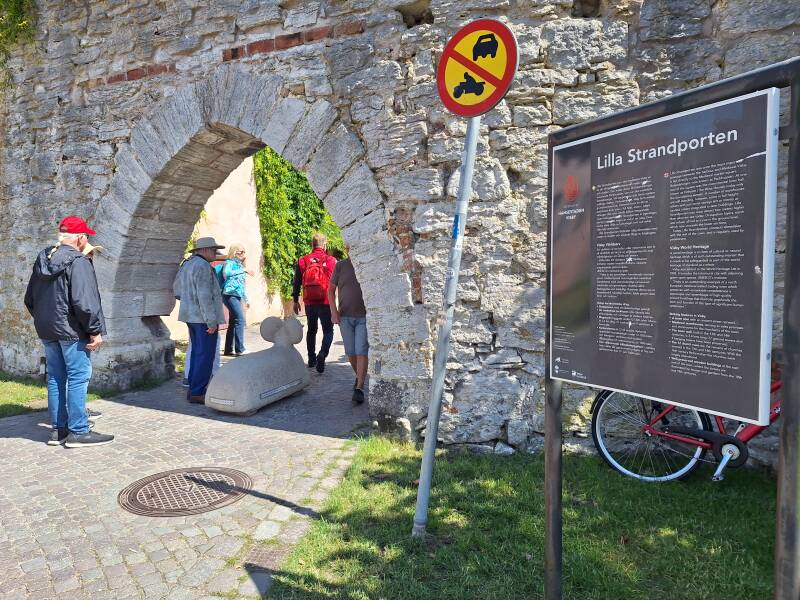
Lilla Strandporten was once the most important passage between the harbour and Medieval Visby. It led directly to the Medieval market square, Rolandstorget, now known as Packhusplan. At one end of the square was the monumental town hall, known as Vinhuset (The Wine House); today only the foundations remain. A number of warehouses are still standing, however, some in full height, others with just some storeys left or merely as vaulted cellars integrated in later buildings. Lilla Strandporten was once almost two metres higher than what we see today. Occupation layers, earth and refuse, all led to a rise in the ground level, which now conceals the lower sections.
Today, Lilla Strandporten connects Almedalen with the rest of the town, and is regularly used by pedestrians.
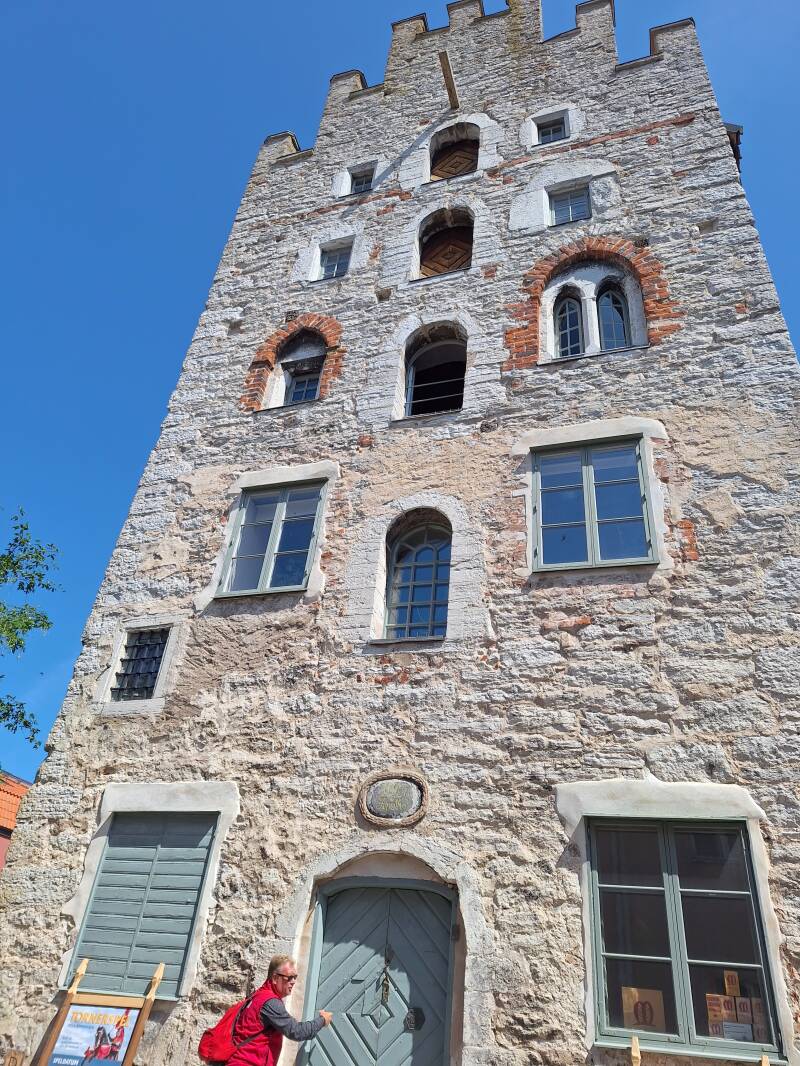
All women were witches, big fire was, they blamed Ingomar of course, locked her to the cold into the watchtower, but Ingomar had friends, they locked them too - 50 women. They were so afraid of them and burnt them town. Wanted to get them to Galgberget, didn't.
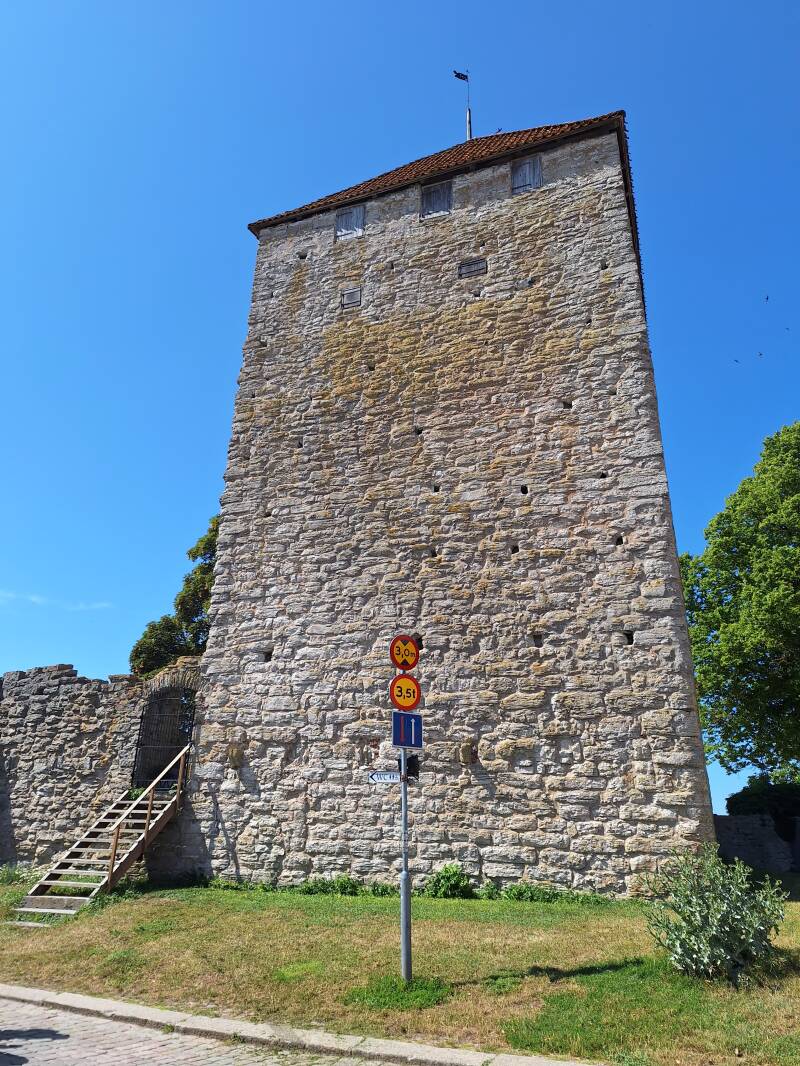
Watchtower, 1154, oldest cemented building in Scandinavia.
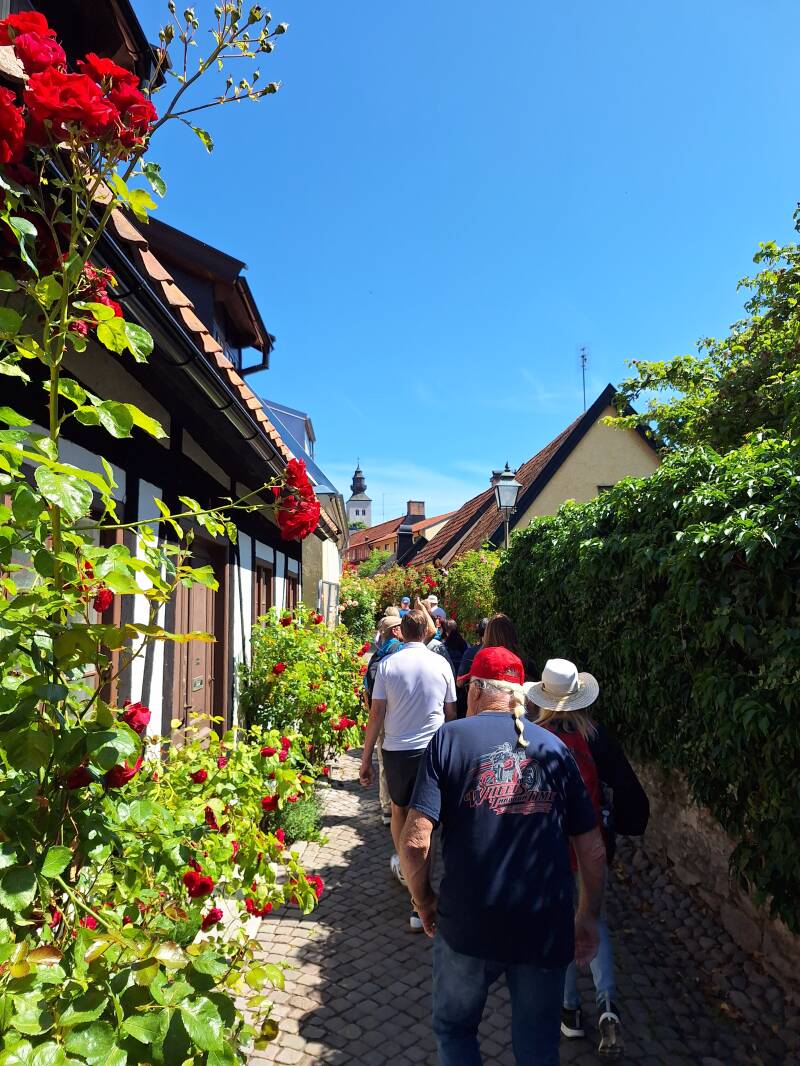
Fishermen houses. Guide has acted in Pipi Lockstocking's movie when was child. ;) Some parts of the movie filmed also on that street. Monks took roses to island.
Sycamore tree. Mägivaher.
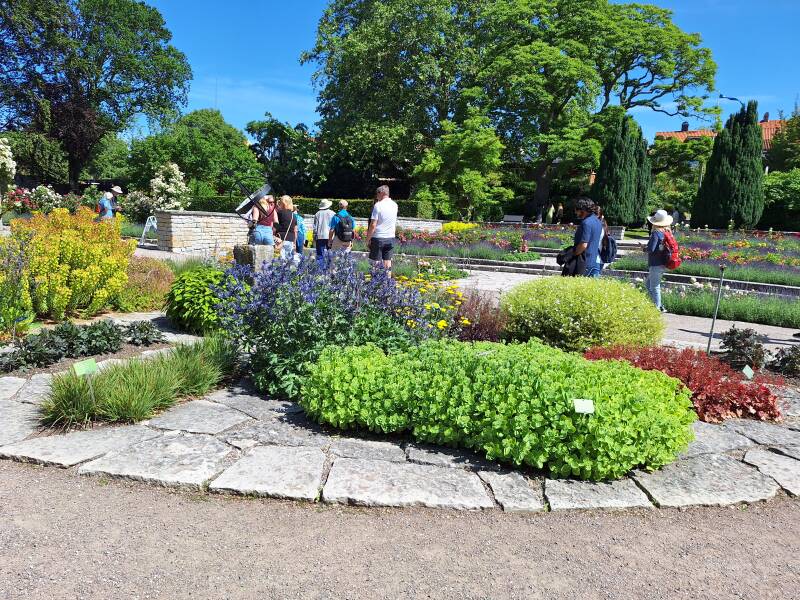
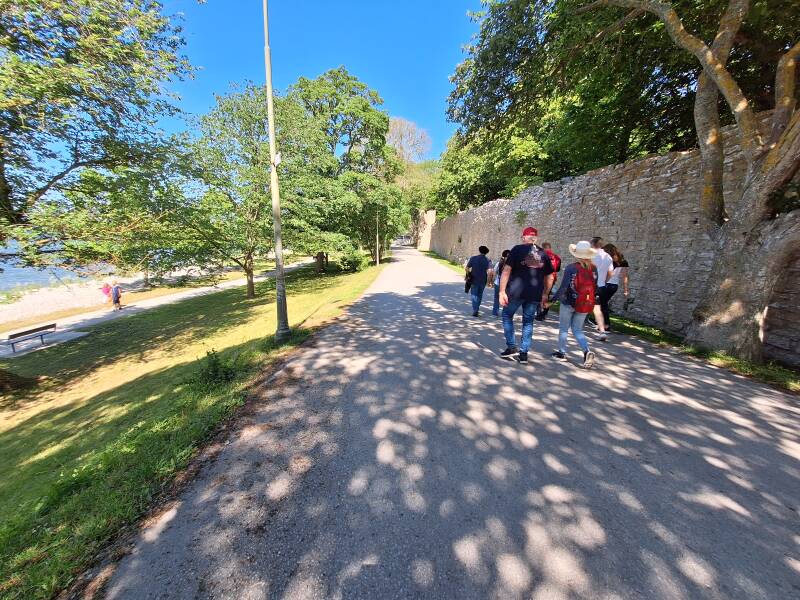
11 persons from cruise ship, all from States. And the bus is there. Guide's family name is Daun. Funny story: he had friends from Cuba and governmental person sent him a letter: Peter think positive, change your name to Up. Galgberget stop and then to... 200 people have lost their lives there by hanging. Guide's grandmother's grandmother saw the last execution andit was terrible, that was in the middle of 19th century. Right now there is almost no criminality on the island.
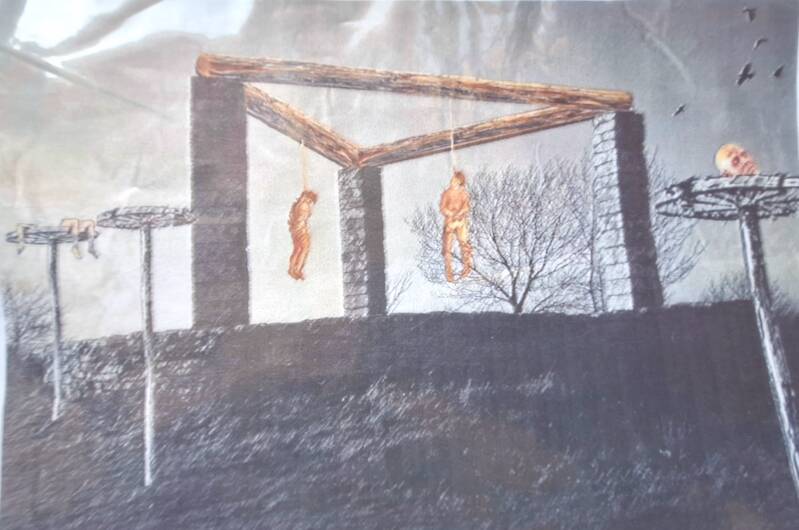
Gotland was German for 10 years only and Russian for 3 weeks (1808). From Danish, 1545, after 300 years period they went to Sweden, before all that were independent.
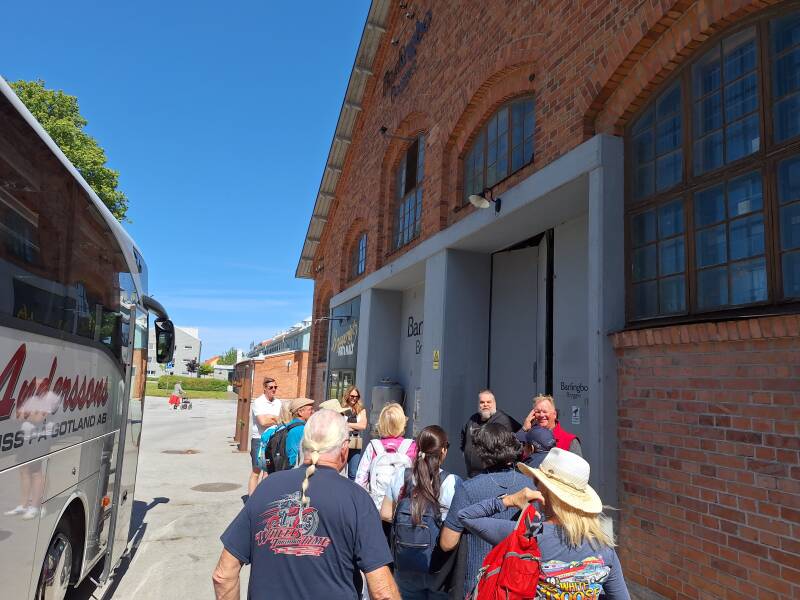
To the brewery. Gotland beer, 18 degrees. Guides not allowed to taste. Before was military training there, now brewery.
Brewery master Janne, started from garage... Nuns got 5 litres of beer per day, because cholera and water quality was under question. Beer is boiled.
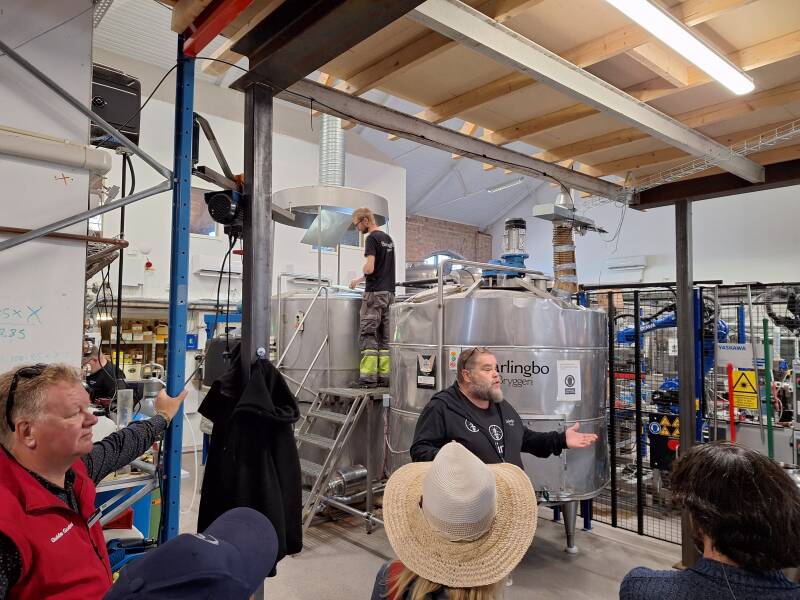
Beer comes from Mesopotamia. 7000 years ago, when people started to settle down. Pilsner comes from Pilsner area, from Bohemia. On Gotland now 13 breweries, some of them produce only for special restaurants. Water, barley, hops and yeast needed to produce beer... People from cruise ship have beer tasting session.
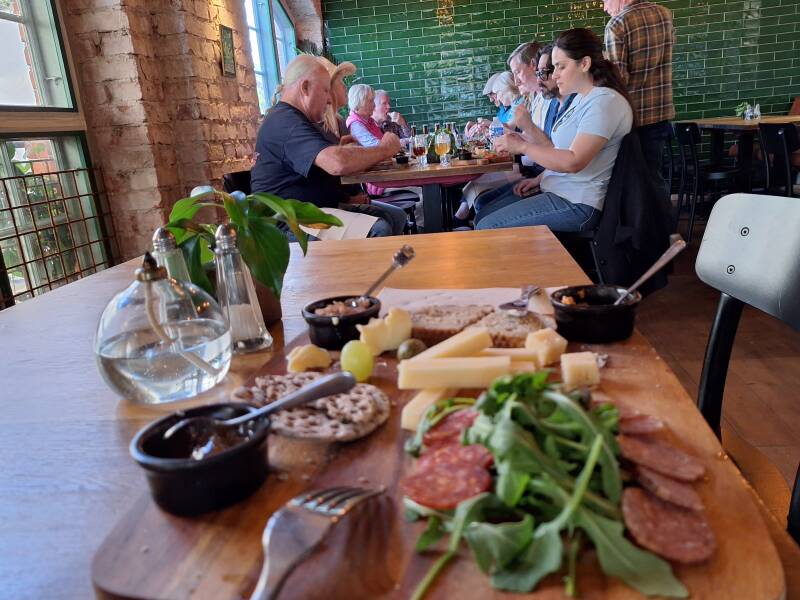
Huh, great snack table. I felt very hungry.
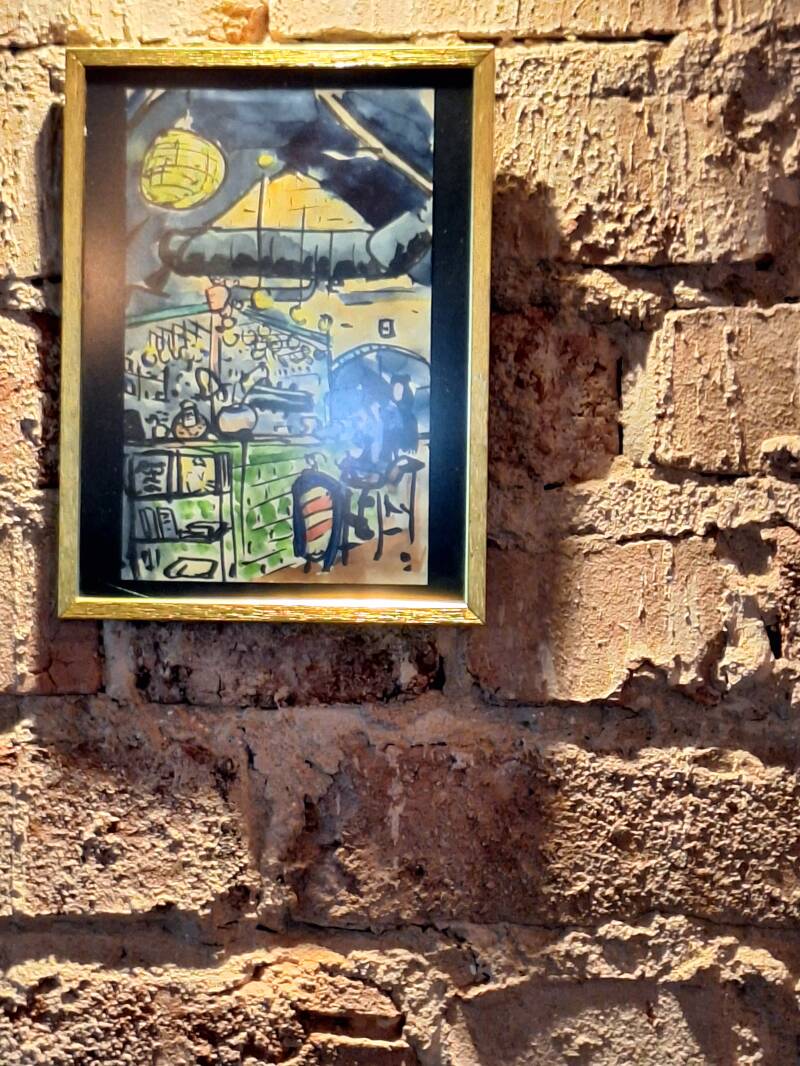
Guide was the first journalist, who travelled 1988, 1989 through Baltic States. Very difficult to get over borders and went to nuclear facilities in Paldiski, sent articles to Sweden via Interfax. Sweden didn't know that there were nuclear facilities of Soviet Union. Had translator, who knew 9 languages with him. . .
NATO, Sweden also member now. 1000 soldiers from different countries on the island.
Ringmür is 4 km.
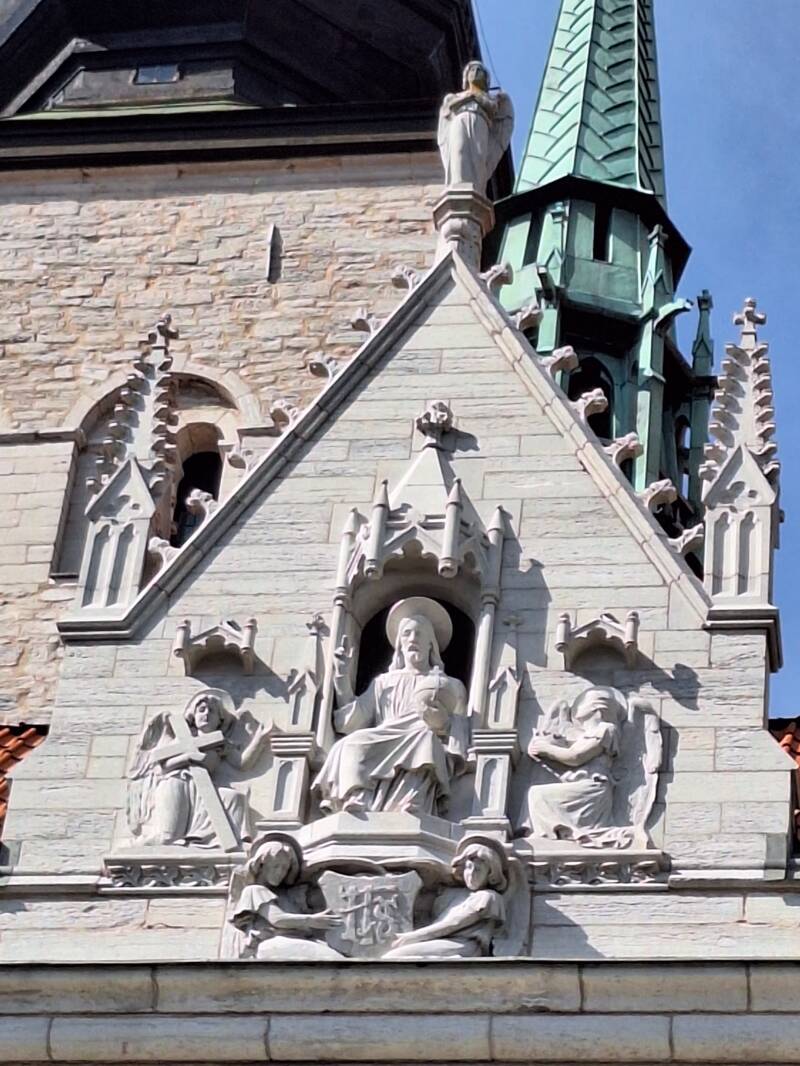
Difference between convent and monastery. Monastery is closed more likely and for prayers. From the convent they went out and also to teach. They were well educated, came from south and were given money also for educating.

Those ruins next to the Storamarket is Franciscan convent.
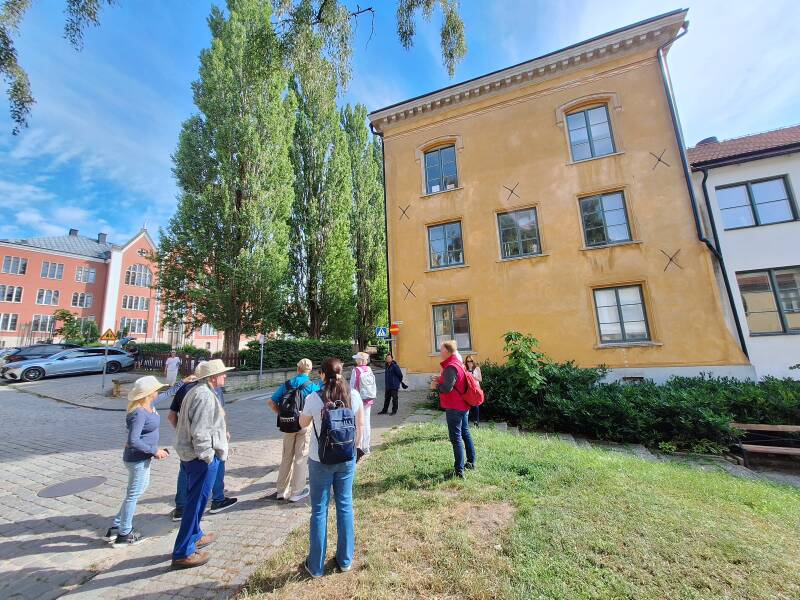
On the left is school now, was bathing house. Right side was governmental office rooms, 3000 people was working there. One moment they just sold it to the rich people from mainland. Now are just rentals.
Dagö - dag: day. One day to Dagö from Gotland.
Years ago was a murder attempt by maniac at Political days of Gotland. Very unusual to Gotland. Prime Minister also visits Political days of Gotland and many foreign politicians.
Biggest icecream shop in the world on the left, 355 different flavours.
Gods Terminal. Gods in Gotlandic language is fragile things, goods. For English speaker seems a bit religious.
There is one Swedish IT studies guy, whom I see sometimes in dormitory and we speak a bit. He had a head ache. Seems that it is a storm coming...
11.10.2025
Rainy, wind gusts up to 40 meters. Standing under the Söderport. One ship might try to land, other one cancelled. Had a coffee for free from Lotto kiosk, nearby the dormitory. Very generous, they said, we hope the customers will buy then more.
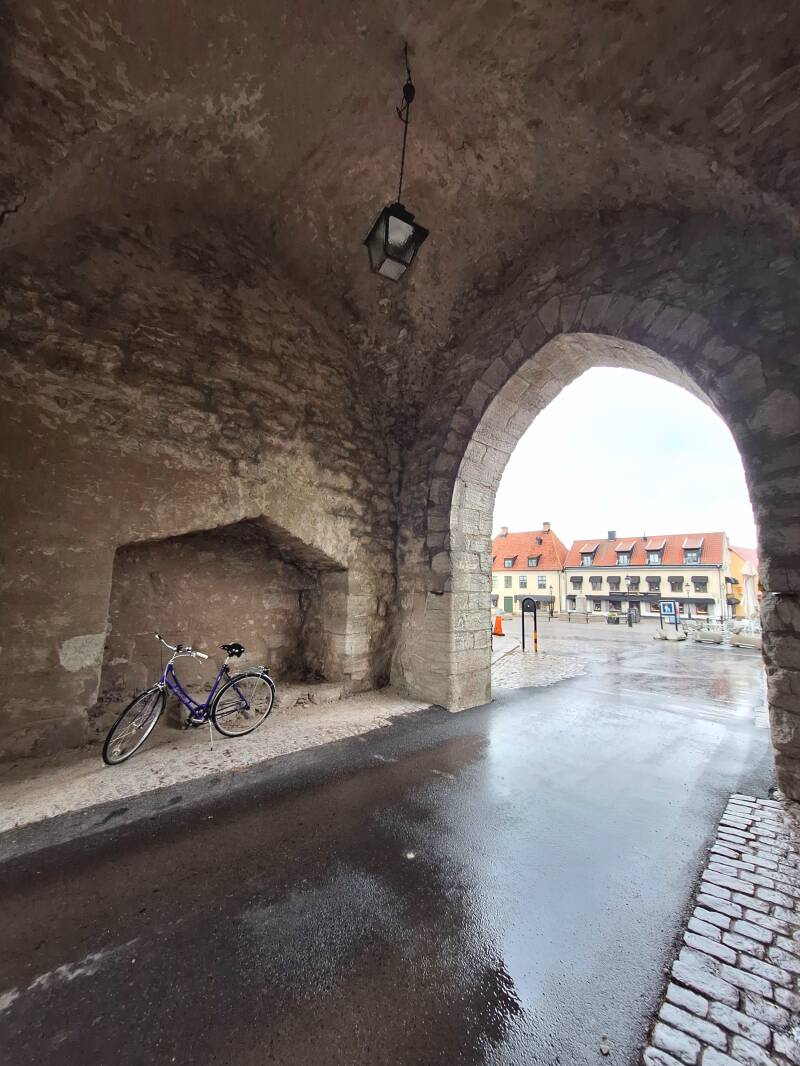
I think they have cancelled... They try to get landed, but now is really bad weather. We will see. Crystal Serenity.
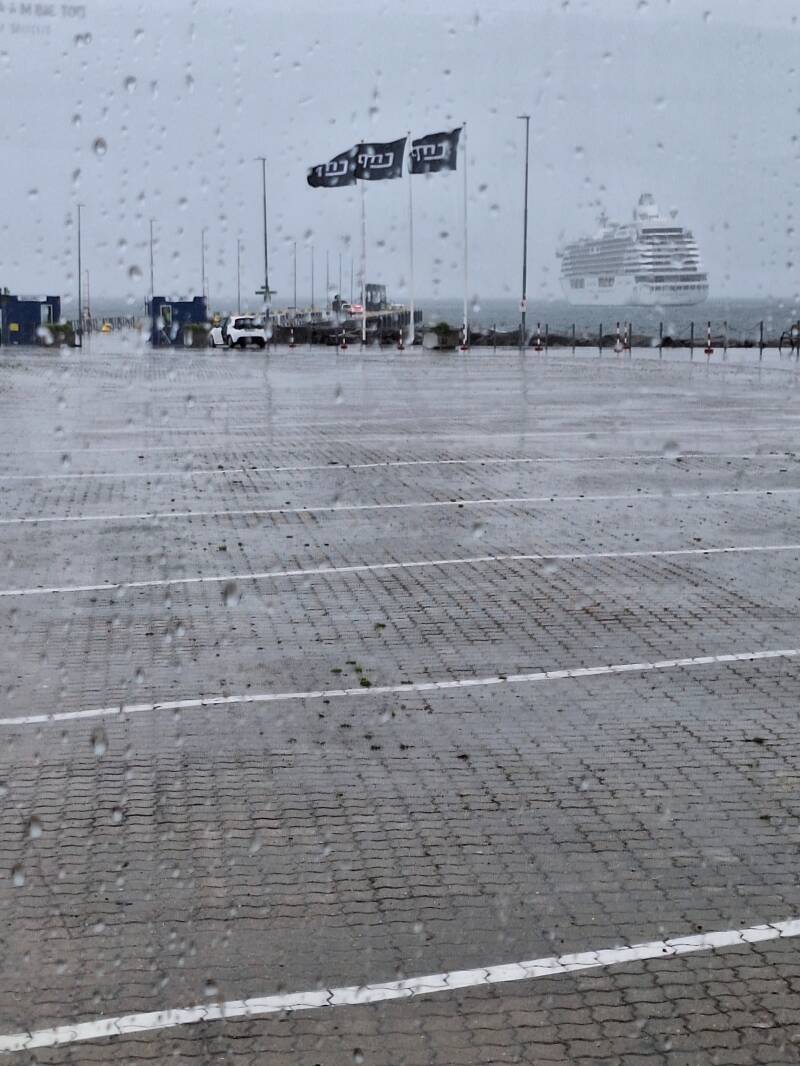
Crystal Serenity gave up & left.
It's a Friday and such a bad weather, all the people seem to be at the shopping area near Österport.
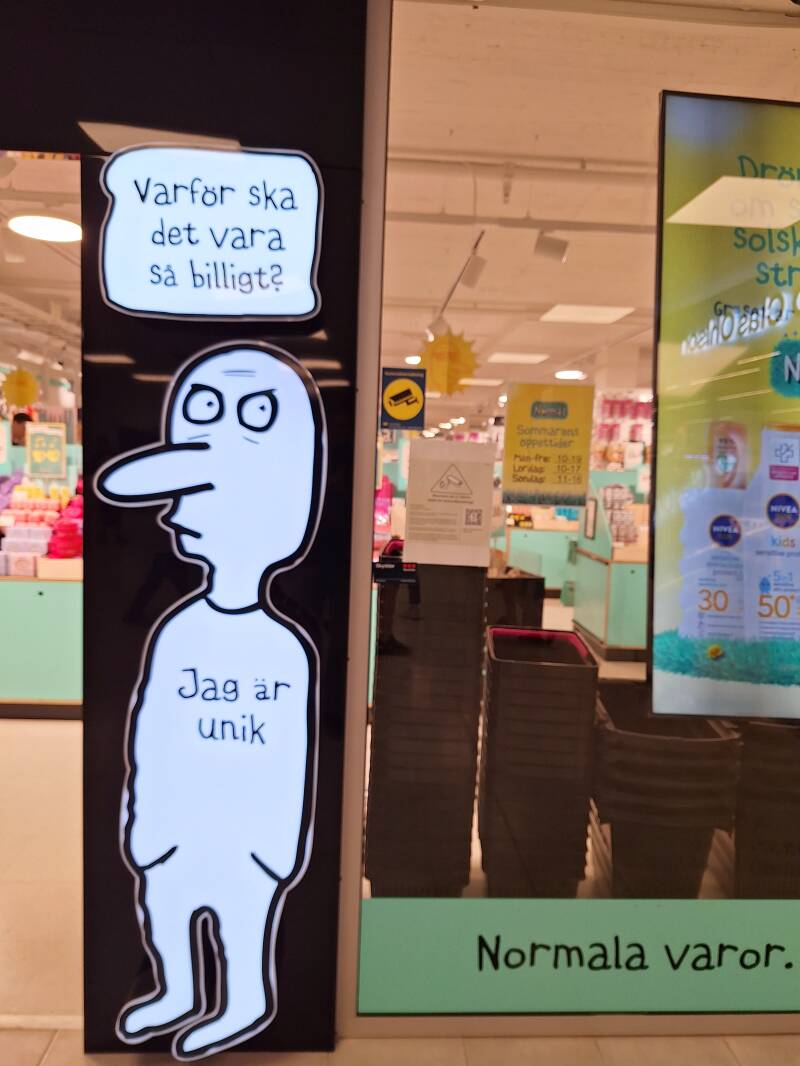
Should start with Swedish course, understand already smth.
New electrical stove is just great to have. Tea & coffee + other. Worked with my social media. Itinerary wil be ready sooner or later, with add-ons. Shopping observations. Tomorrow - headsets guy. Again rain, outside.
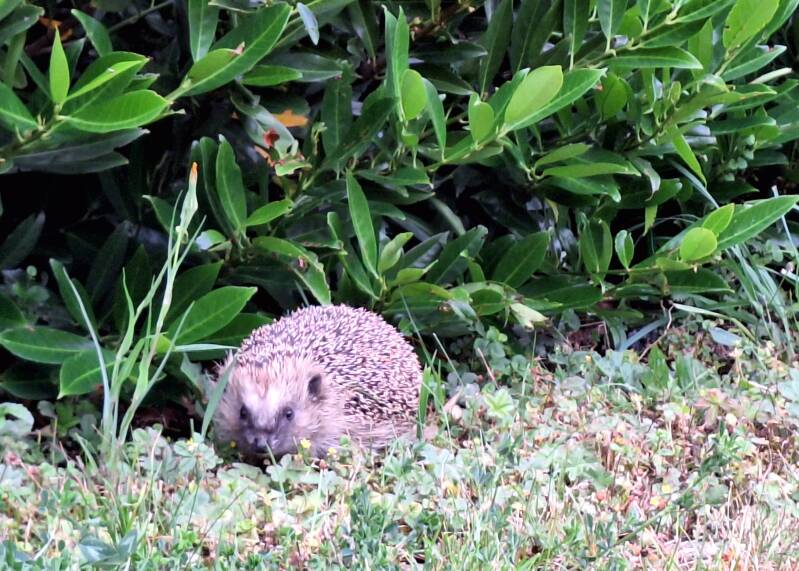
Hedgehog in front of the house says probably good night to me. Scratching himself a lot.
12.07.2025
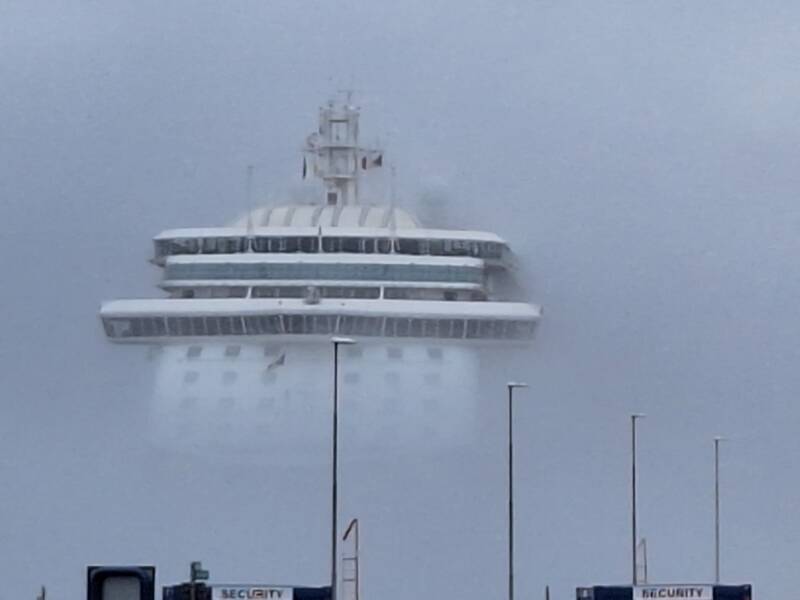
Britannia, 4000 people on board...
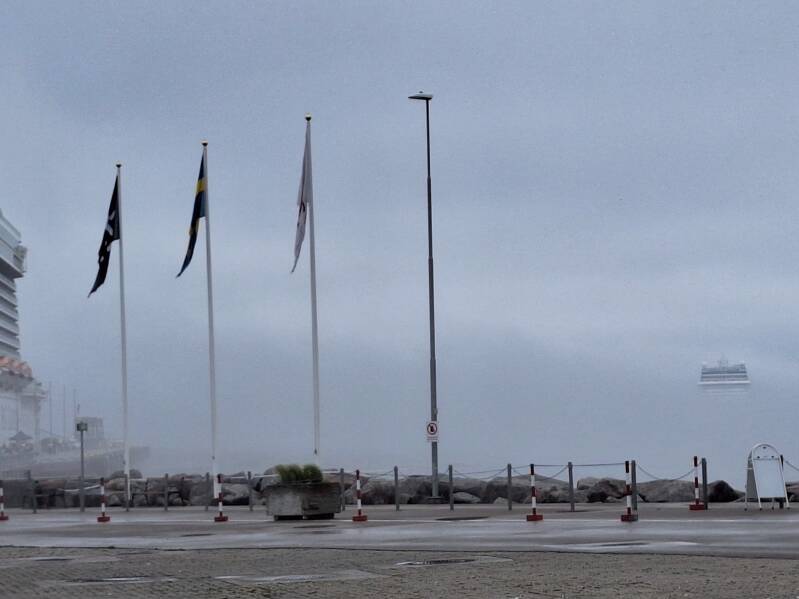
Second ship is coming... Vista.
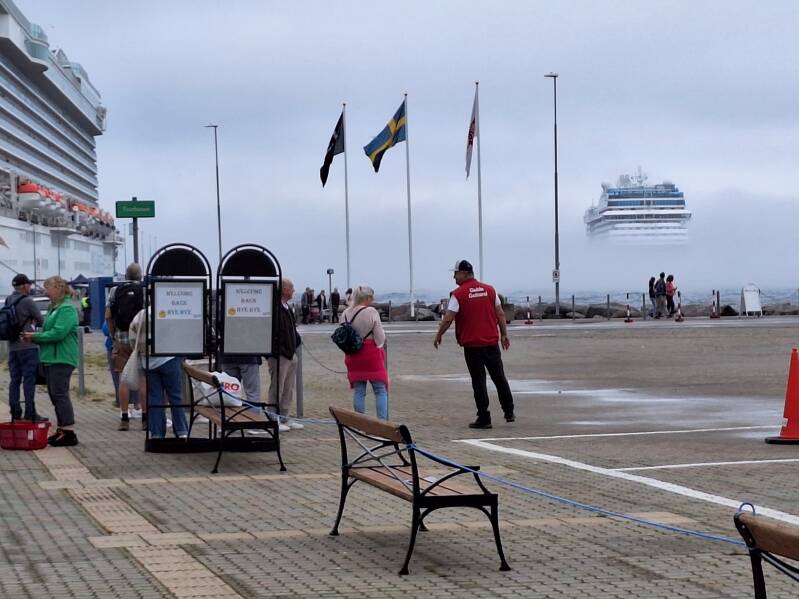
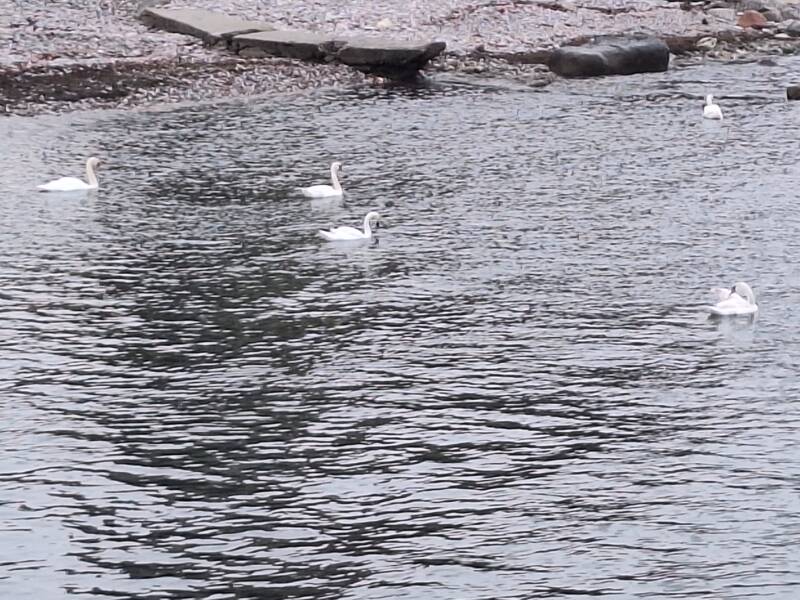
Lot's of tours and people...
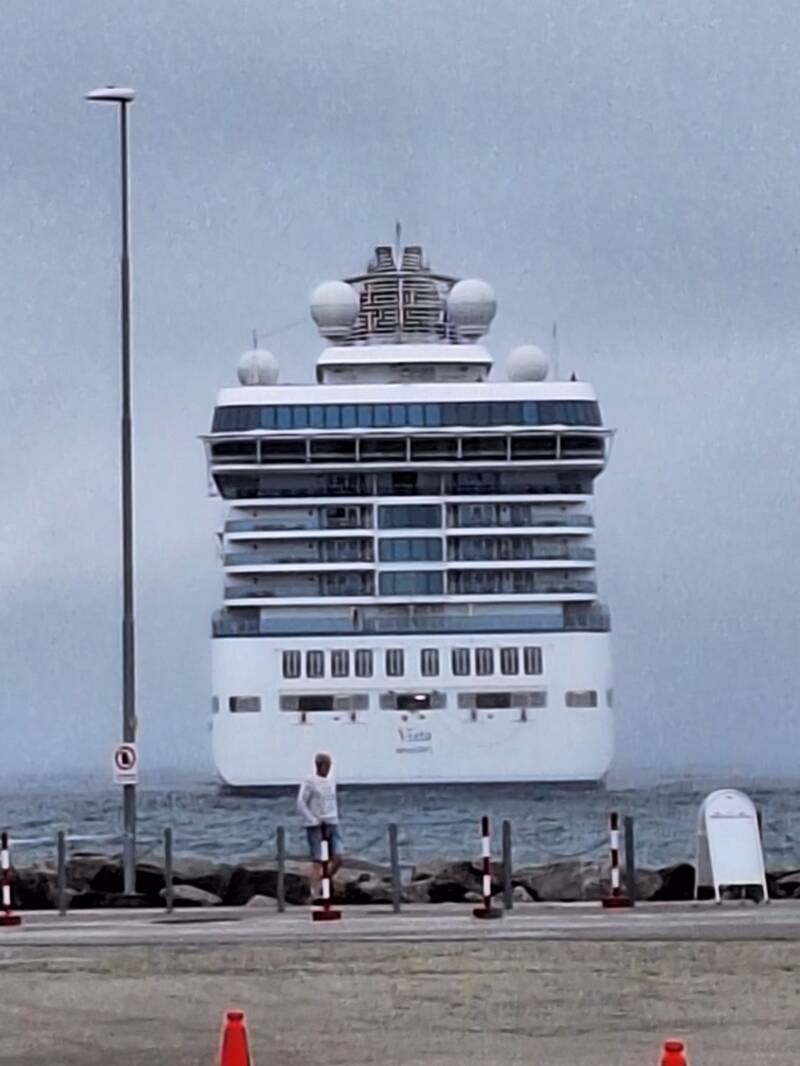
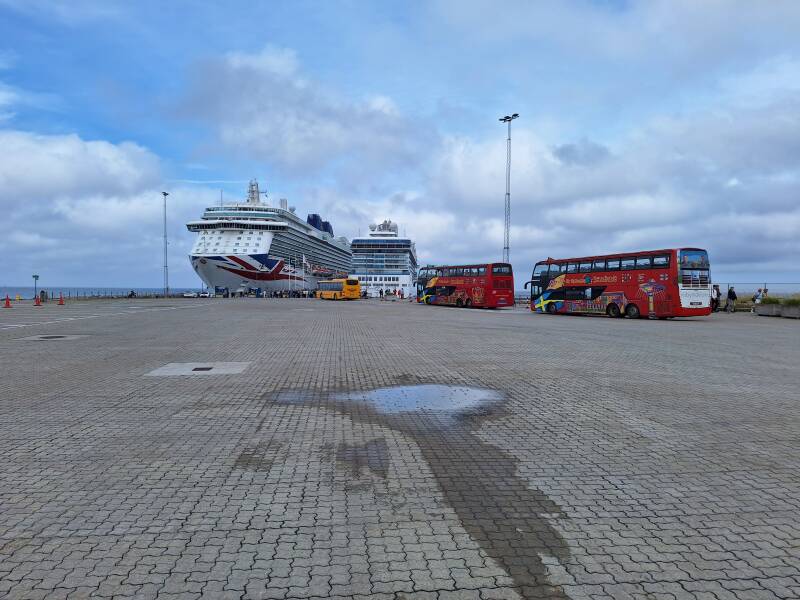
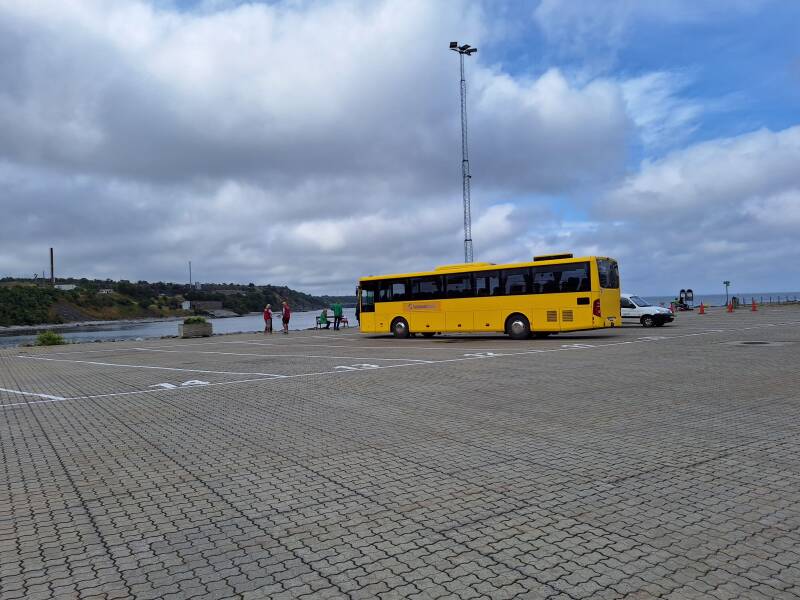
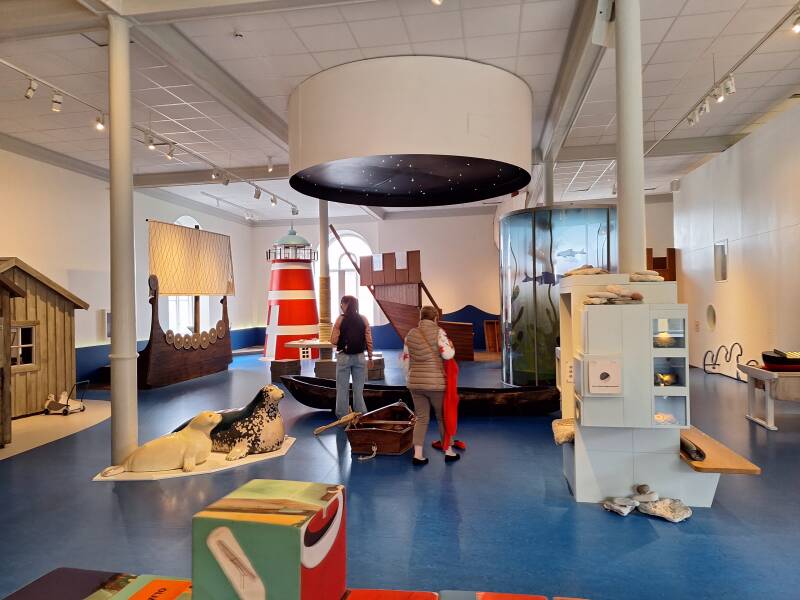
Were to the museum, because two transmitters were not functioning or missing. Christian drove me there. Now all should be good.
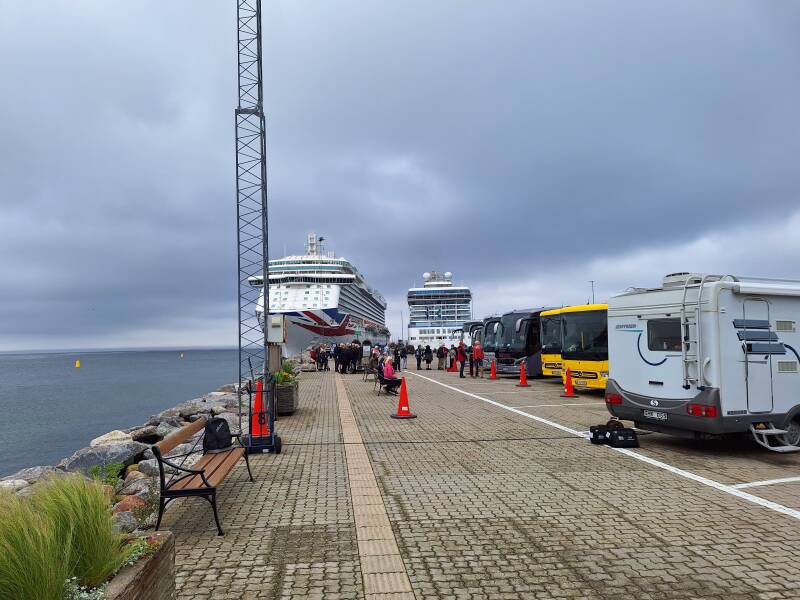
If there are two ships at the same time, it is more complicated. There is a third in the city center kaj too. It has only one excursion and guide handles it all alone.

Two are missing. Transmitters. Still more to come from the afternoon buses - they might be on board or in bus, hope they come out. Guy from the cruise ship walks with transmitters to the cruise ship. I can't - don't have a cruise card.
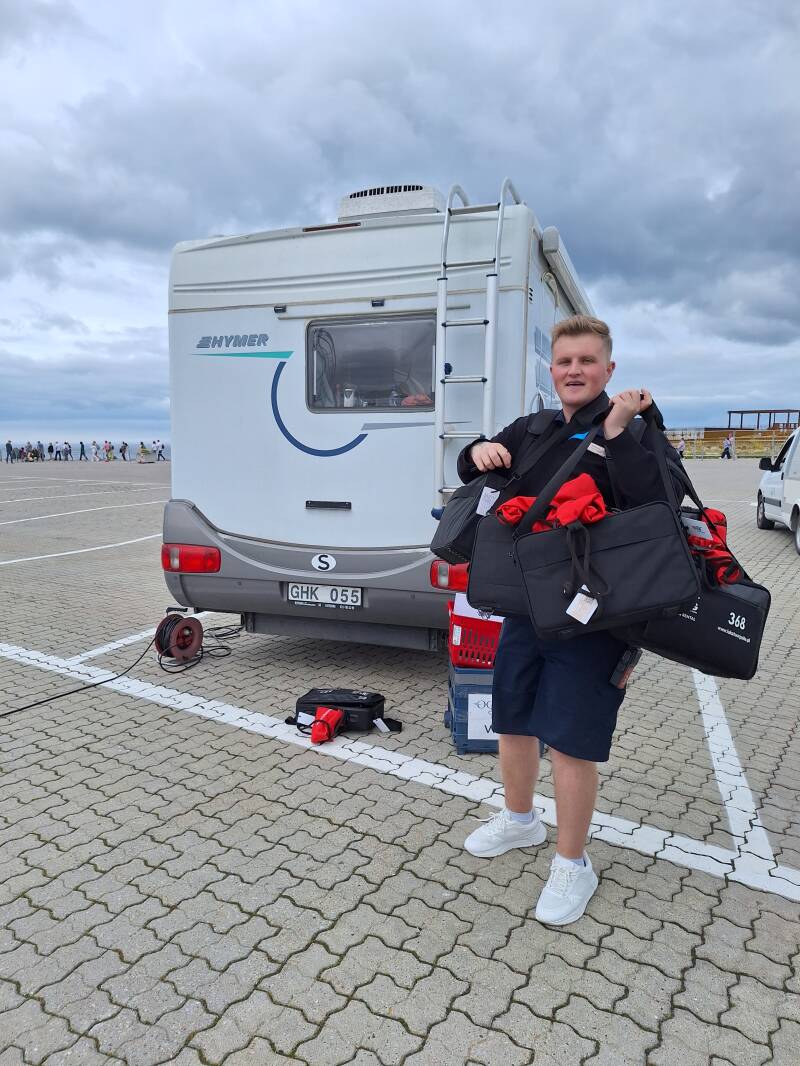
Those two missing transmitters were on board. He brought them. Perfect.
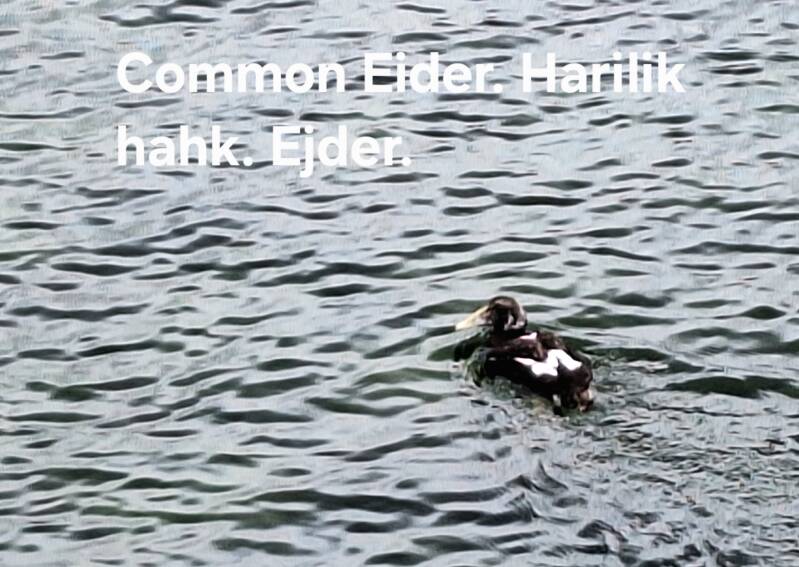
Tomorrow comes up to 25 Celsius, fortunately easy day.
13.07.2025
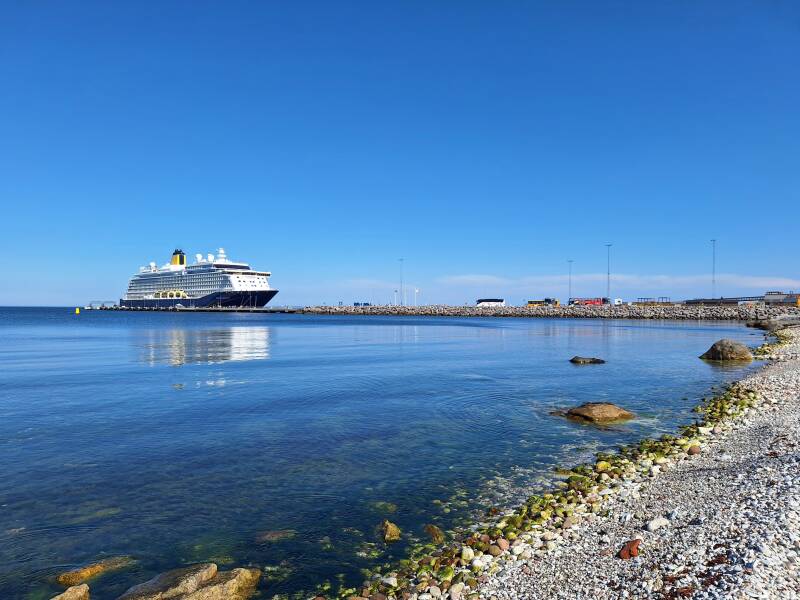
Spirit of Adventure. Back to that seaplane project, mentioned earlier: https://aerospacetechreview.com/elfly-group-presents-all-electric-seaplane-design-noemi/?utm_source=chatgpt.com
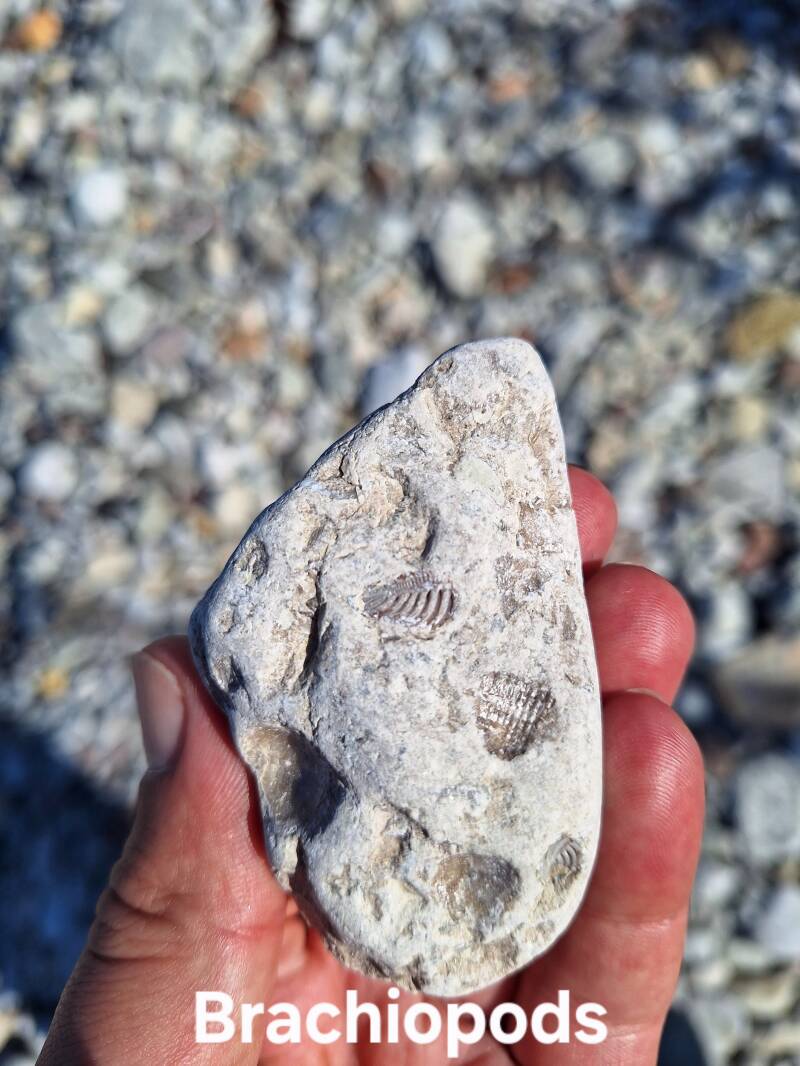
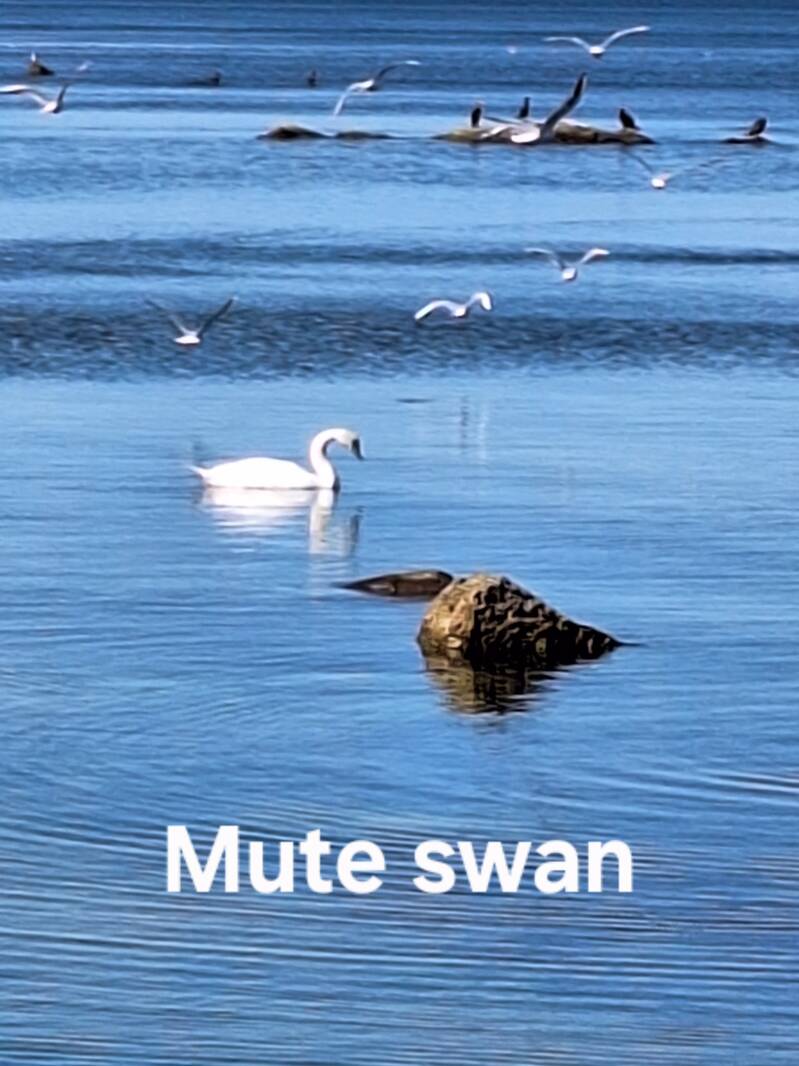
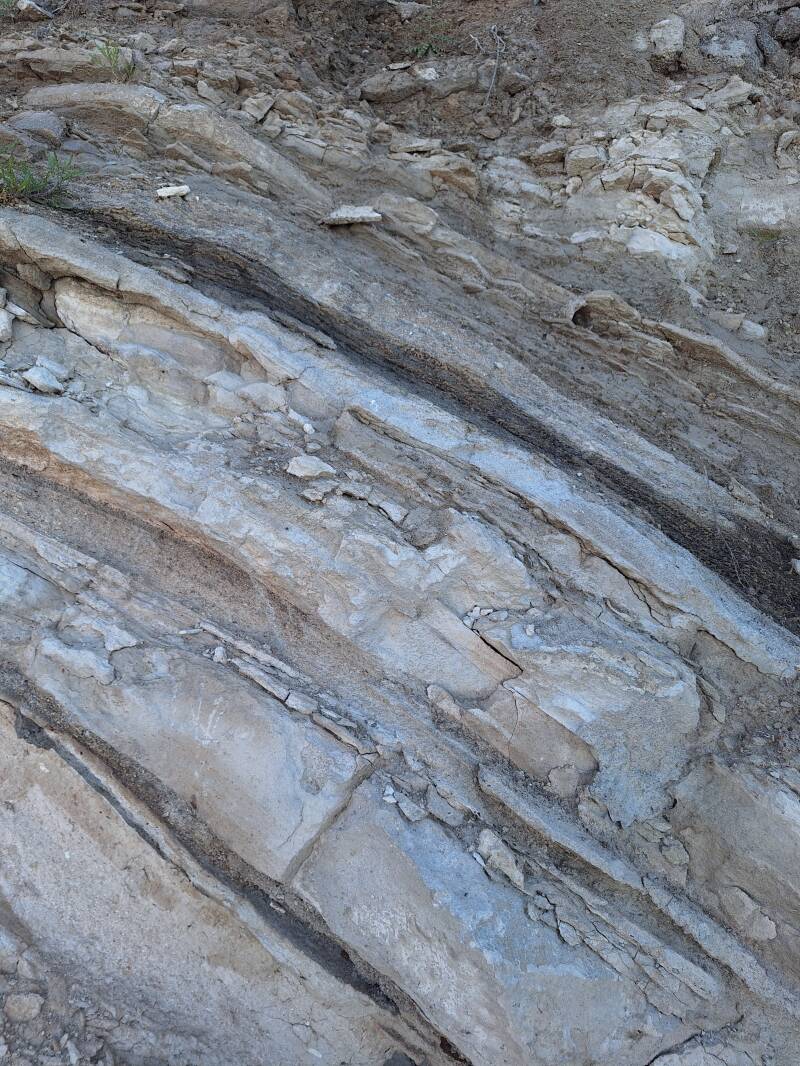
Found some fossils at the harbour, cruiseship is here.
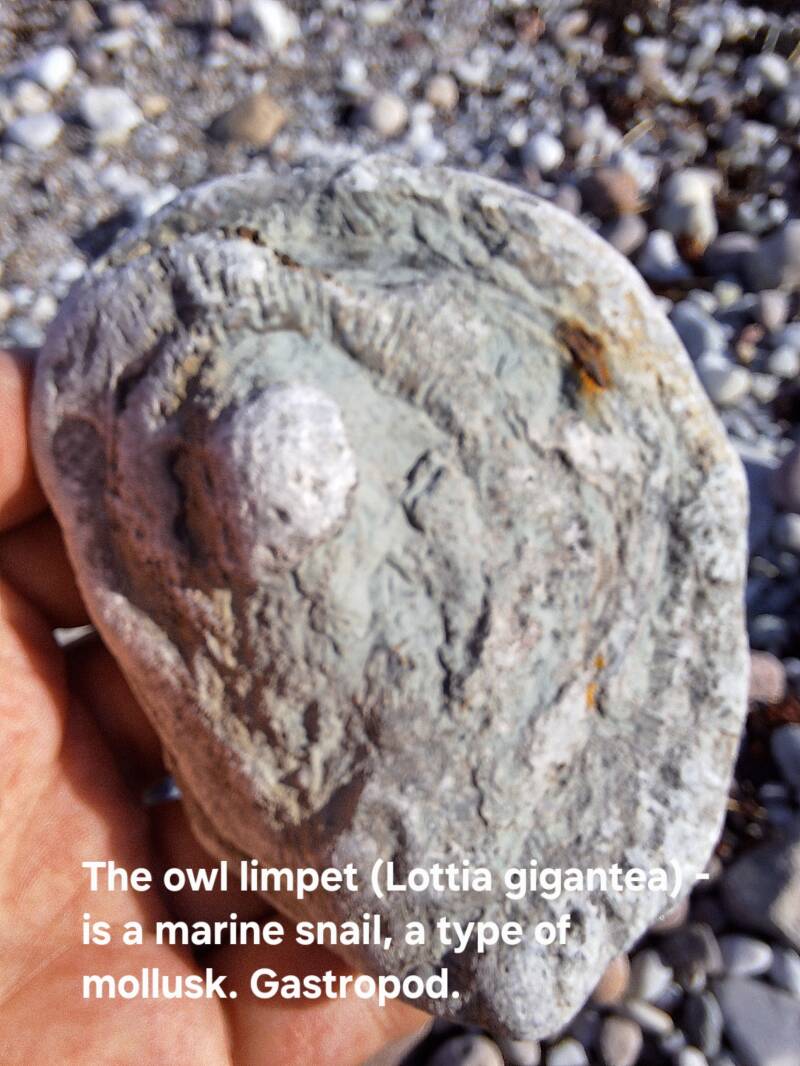
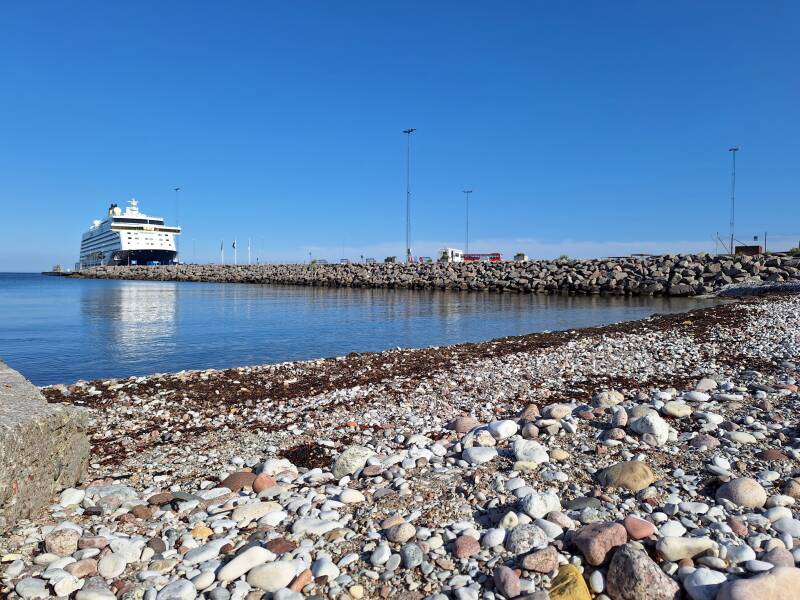
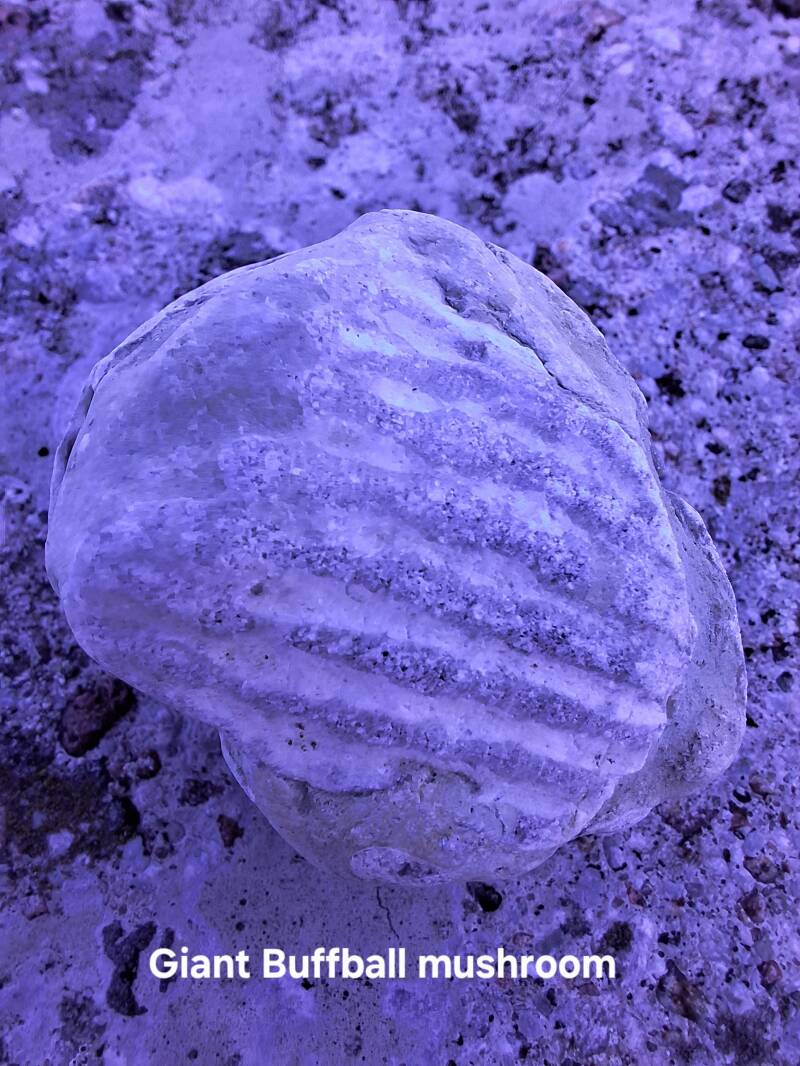
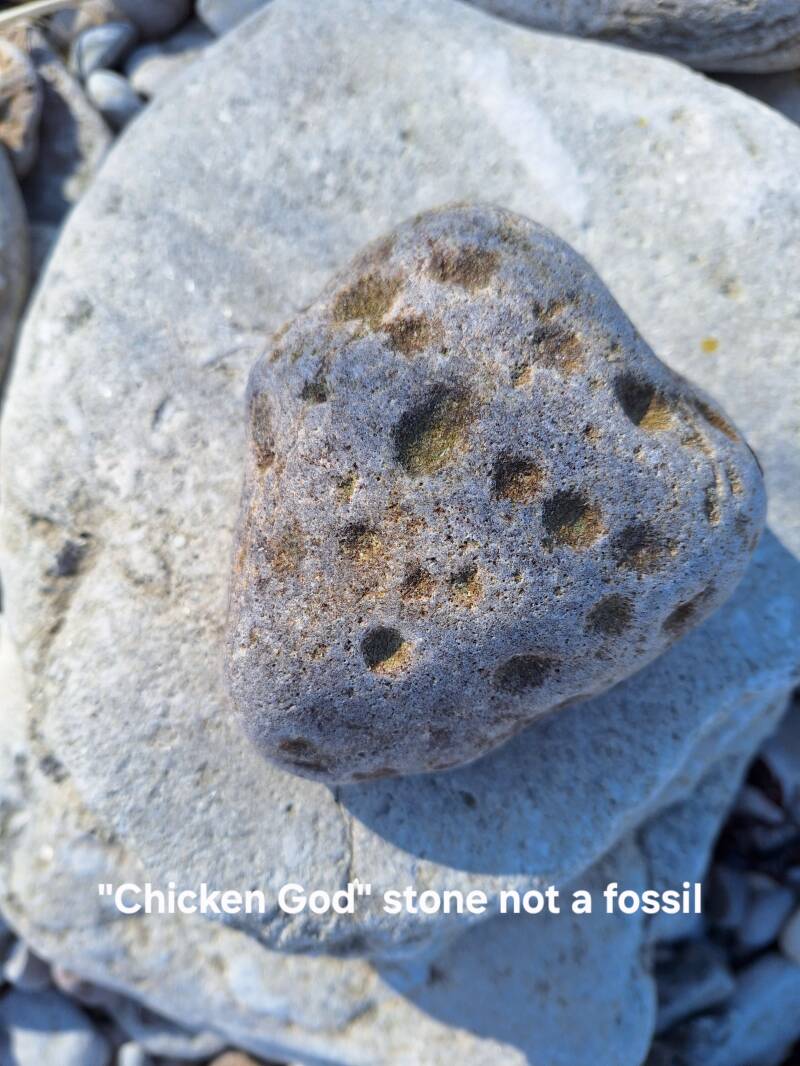
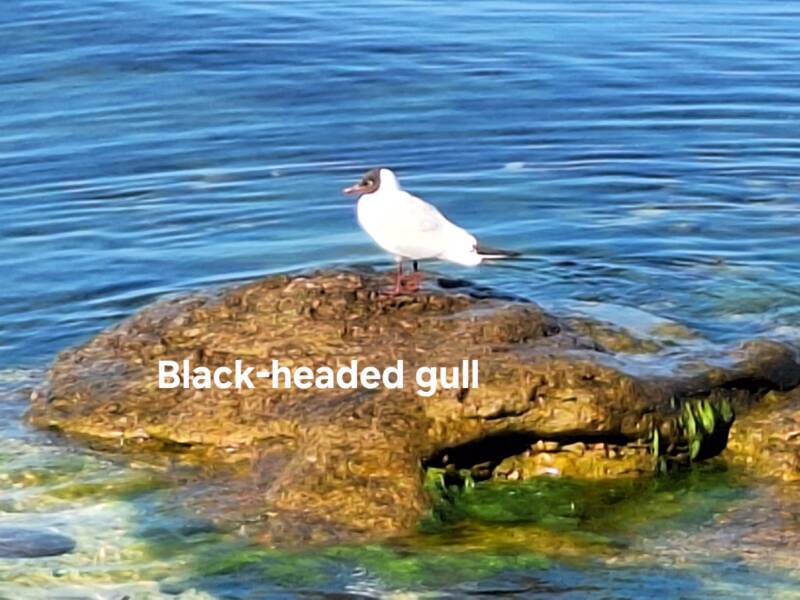
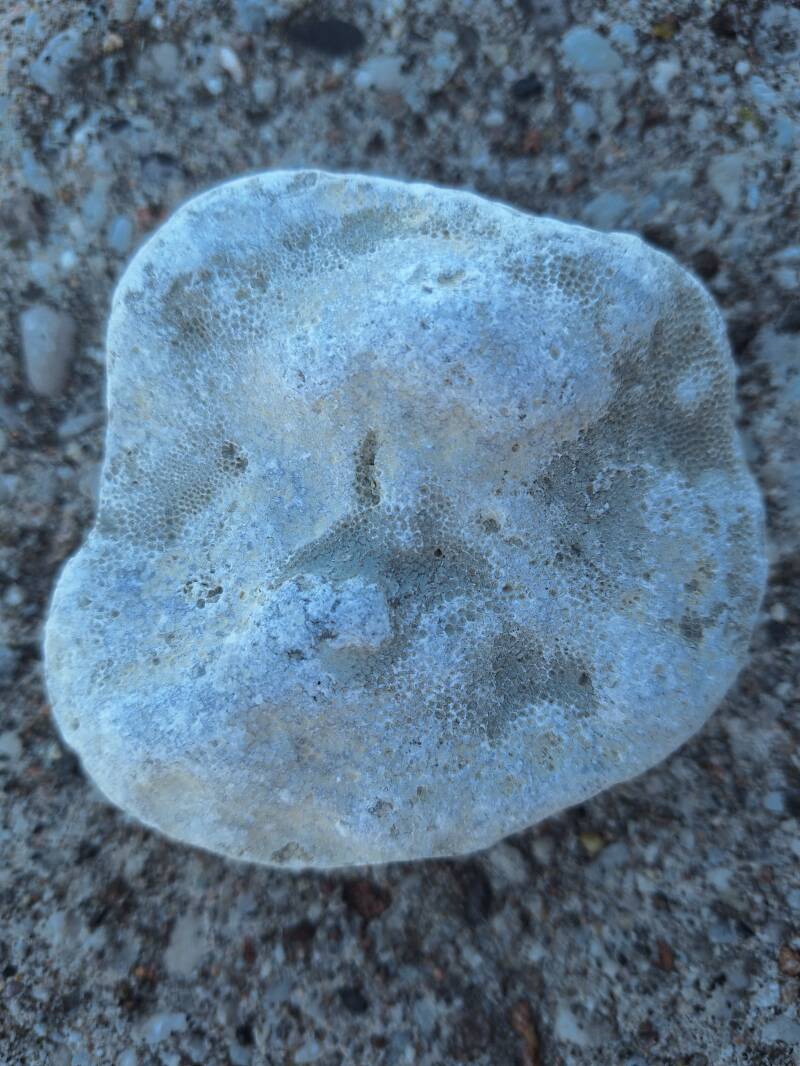
Gastroporod
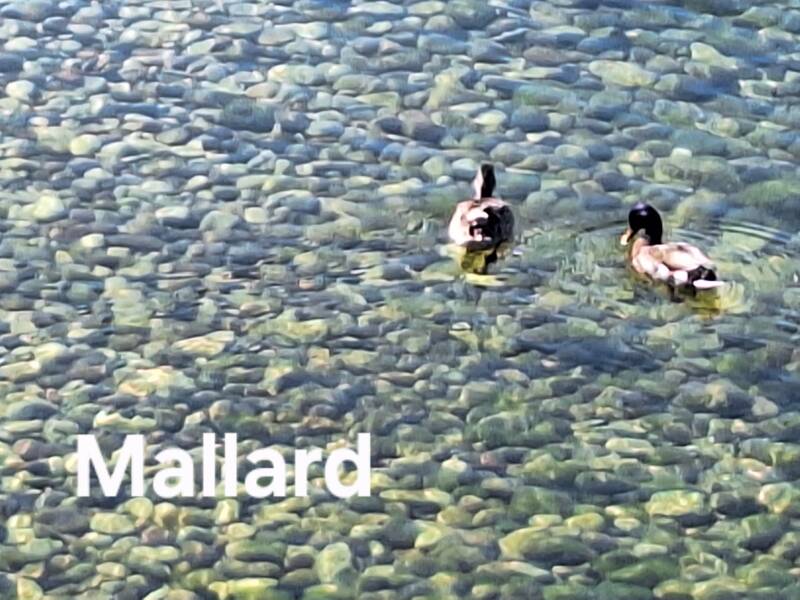
Guide Nick. From England. Has lived here already 45 years. Visby Tour. Guides are not allowed to speak about sex & politics. I'll be more likely a listener today, not so much a blogger. Through Volga and Dnipro, Black Sea, even the goods from China. Perhaps the name Gotland comes from Goths. Good jokes, humour. Inside the wall 3000 people living. The Cathedral has been used for grain storage and also a warehouse for goods - the goods were kept on the upper level, nobody couldn't steal them then. Martin Luther also gave the Bible in Swedish, when they decided to convert to protestantism. That was also one reason. Good atmosphere. Nice and easy. All are British, one from Scotland. They gave the choice: Clean all the toilets or get hanged at gallows? If the hospital is full, helicopter takes people to Stockholm. The first guest of the museum is dead already, the skeleton, 9000 years old skeleton. 40 000 silver coins from Iran / Iraque only 300 coins from Sweden and other. Biggest silver coin collection in the world. In the museum. Swedish best golf course. Also very expensive. Bird watching, spring time. Campus of Gotland has mainly foreign students and from USA, China too, of course other nationalities too. They can't build more windmills for two reasons. Noise they make, environmental issues. They cannot listen for the Russians because of the noise those make, if they build more, defence issues. Got a candy too, at the end of the excursion from their consigner / assistant. The guide spoke also about professional immigrants to one cruiser, questioner, what wasn't part of the official tour, it was useful to acknowledge that. Good day.
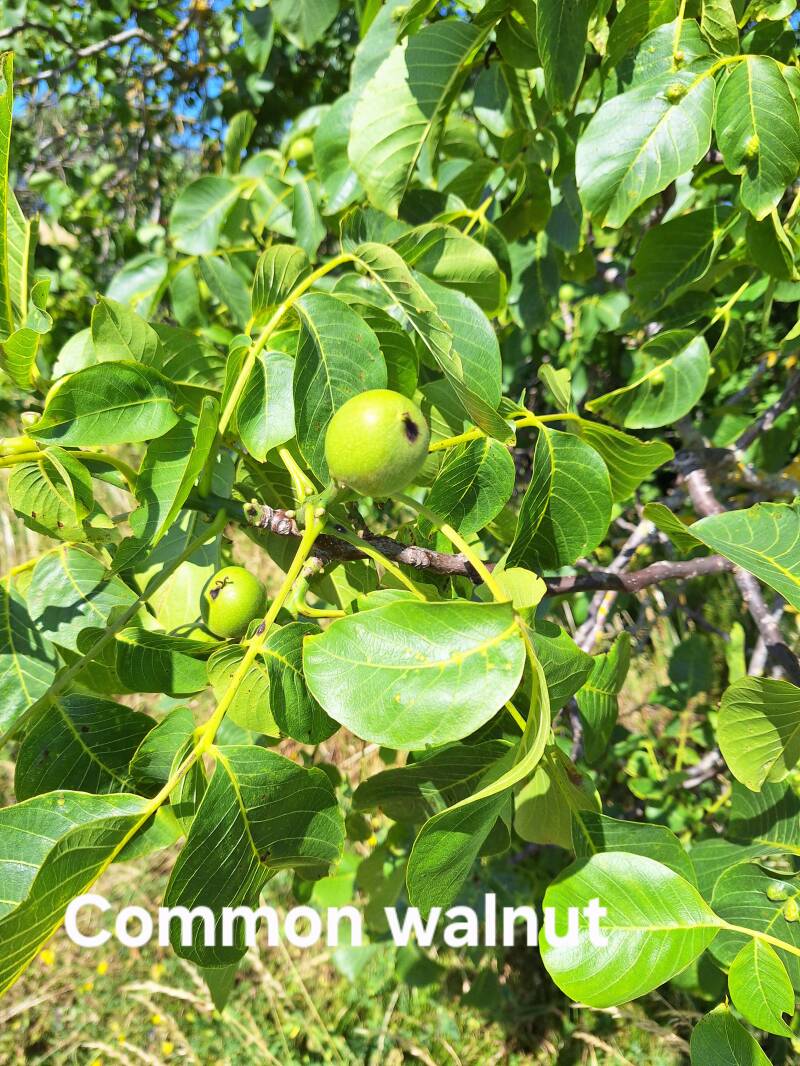
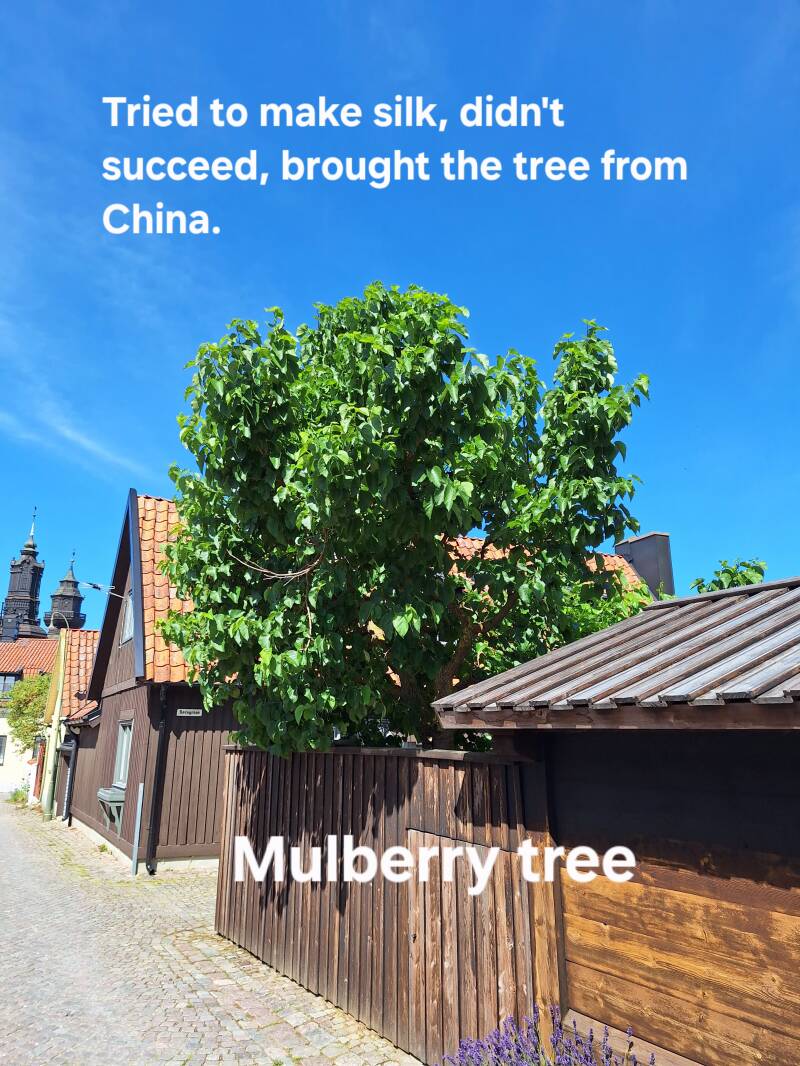
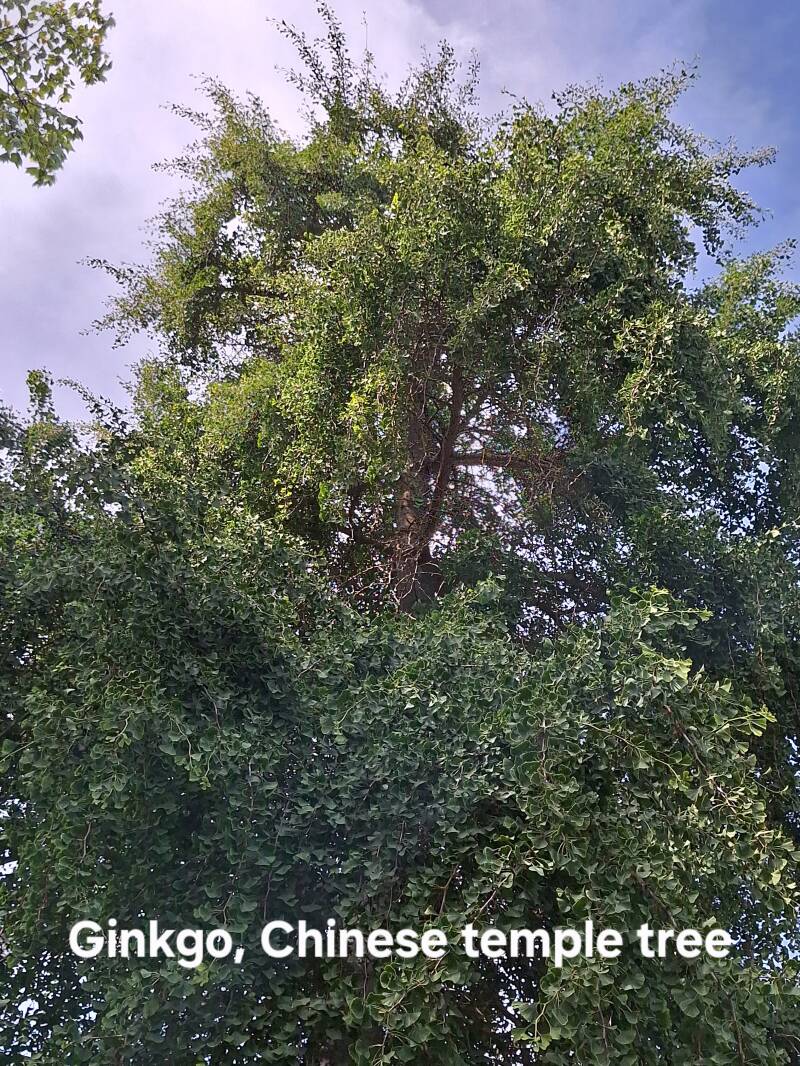
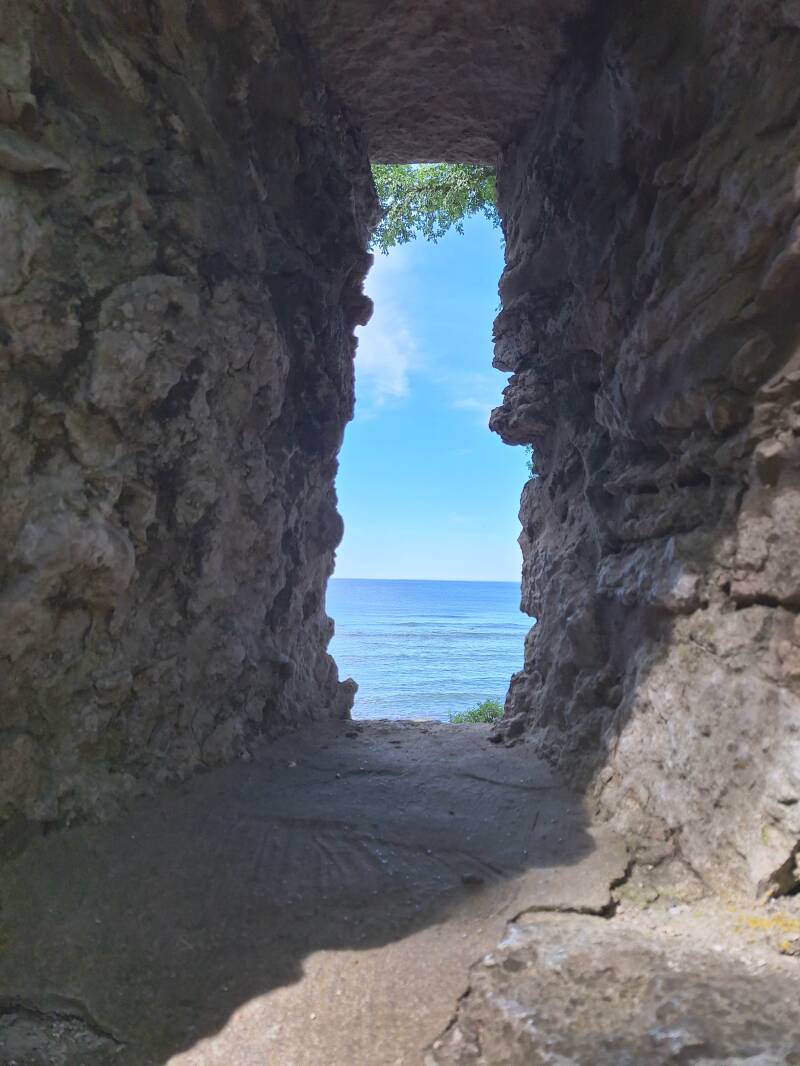
End of the tour.
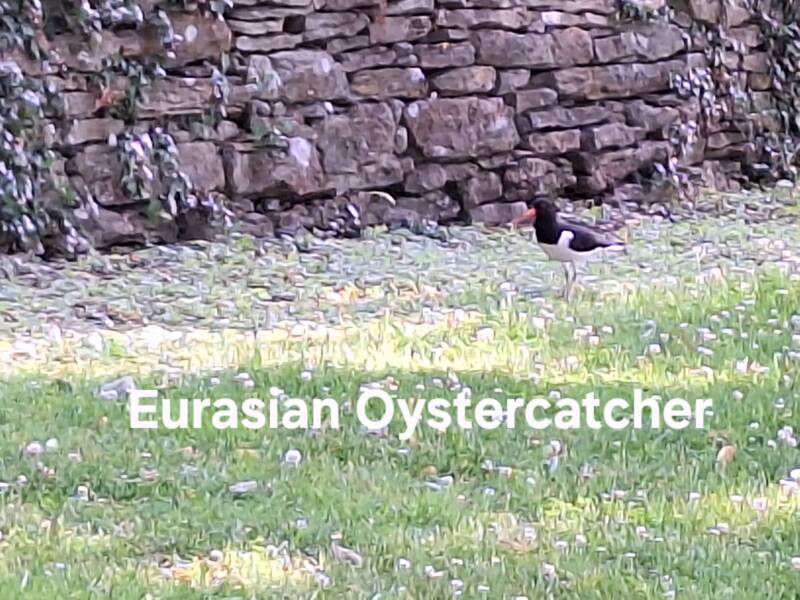
Free days. Did timeline (Itinerför) for my excursion. Wise card came by post. Needs to do a bit of shopping and housekeeping. Useful site for nature guides: https://www.gotlandnature.se/naturupplevelser/naturguidning-pa-gotland-upplev-smultronstallena/
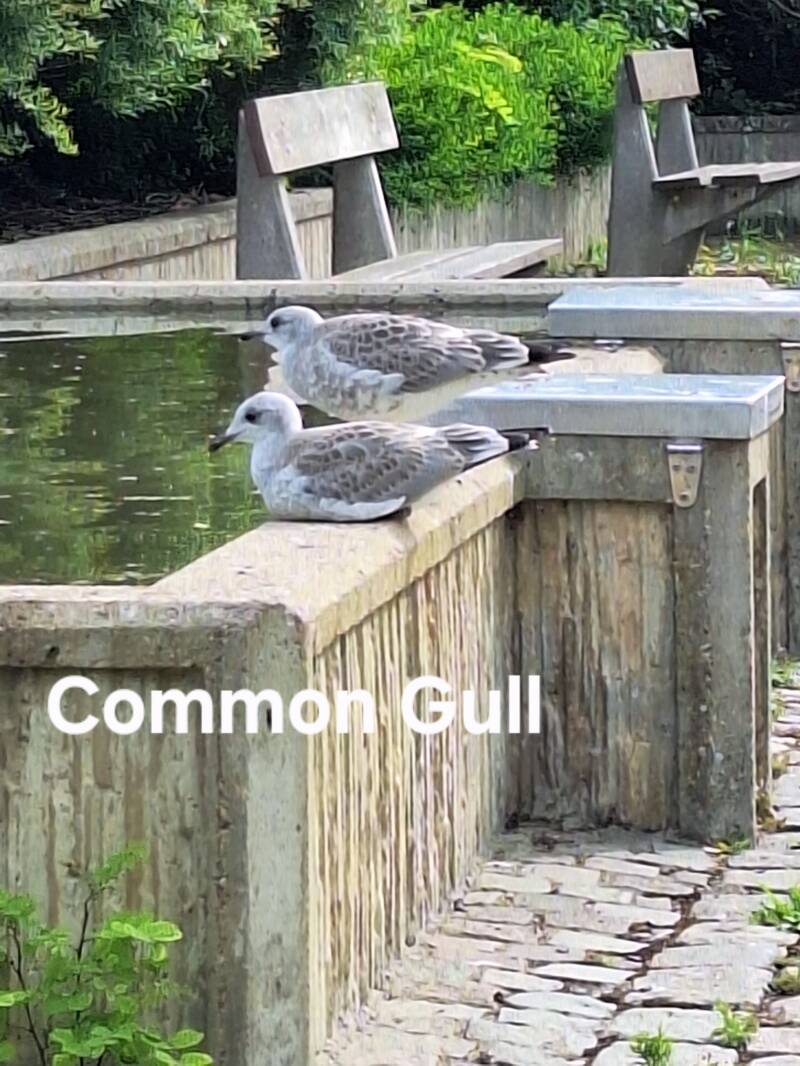
Earlier visited also Visby Storamarket, there was live music, band Jonopalten:
https://youtube.com/@loodusgiidmikk?si=r97uIeQ-FwJ-RRZz
16.07.2025
Gotland’s provincial bird is not White-taled eagle nor Eurasian sparrowhawk, but the Collared Flycatcher (Ficedula albicollis). Rainy, foggy. The excursion plan isn't completely ready yet. Found good Pizzeria at Gråbo - green, residential area here. Might go to eat there today, data roaming package usage has been quite heavy. There is free WiFi. Washing machines are here exactly the same as those were on shrimp trawlers, those are really good, back to those days when I worked for shrimp trawlers.
Braziljack Circus opens today near Söderport. Tickets 270 regular, 370 SEK with better views. Shows starts every day at 06.00 PM.
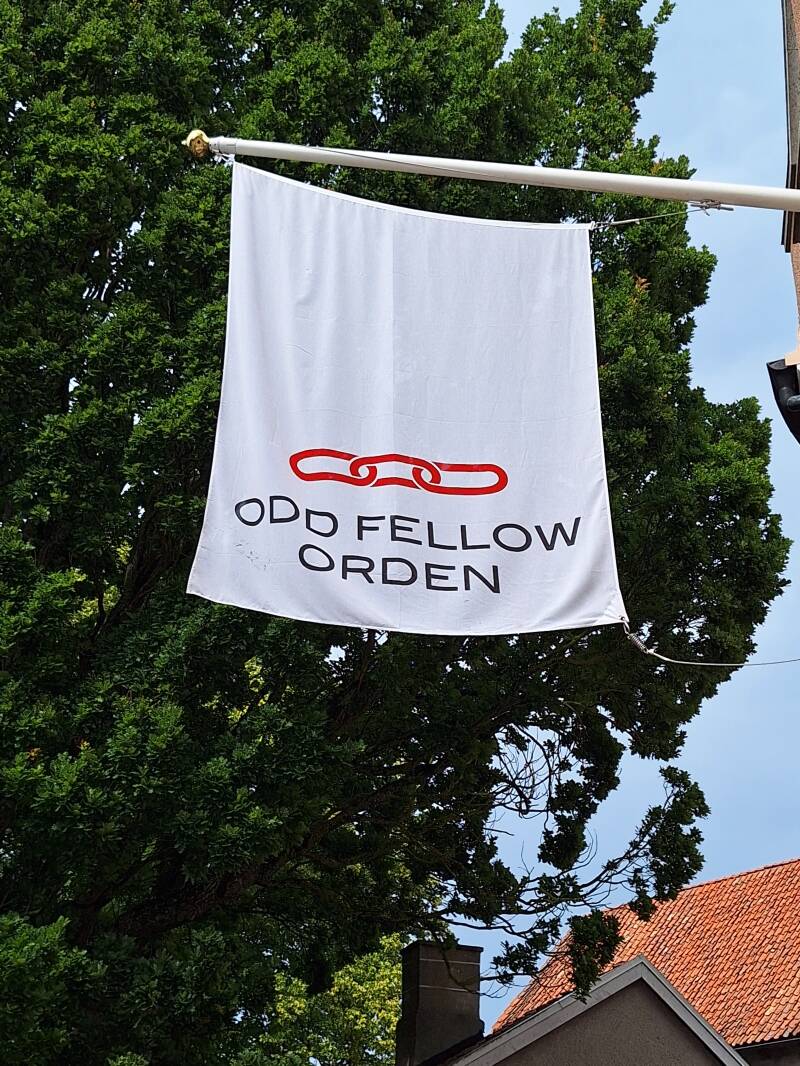
What is that - Old Druids Order of America?
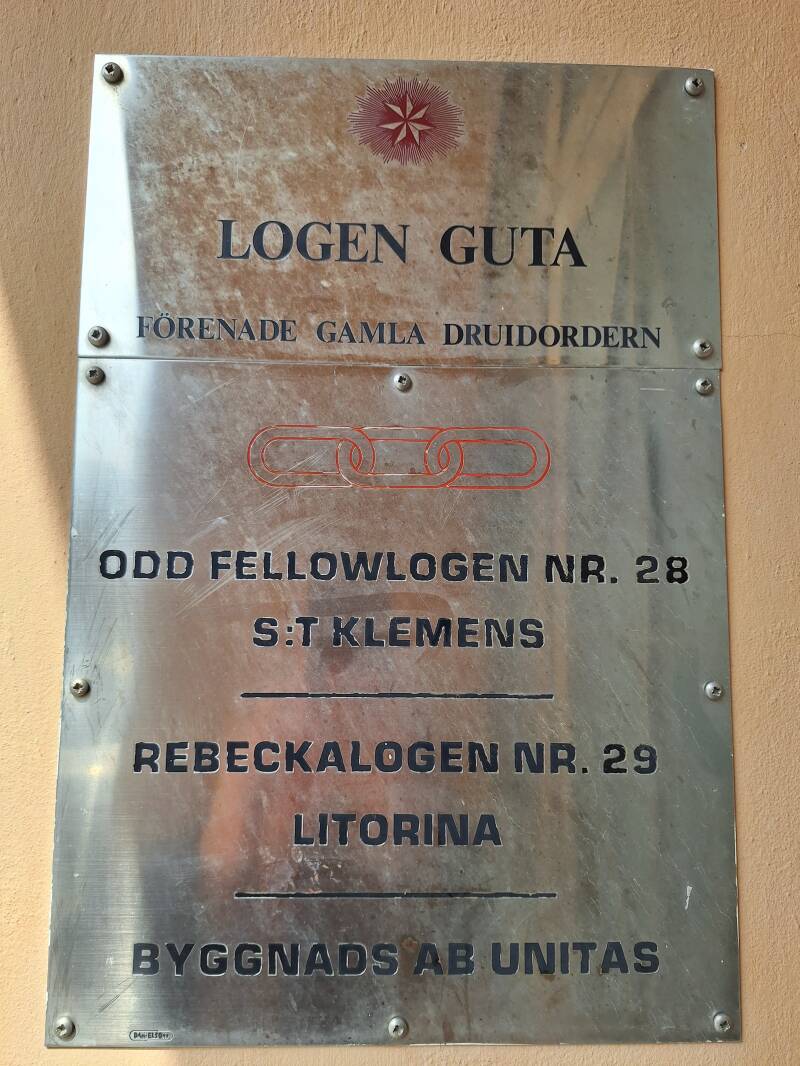
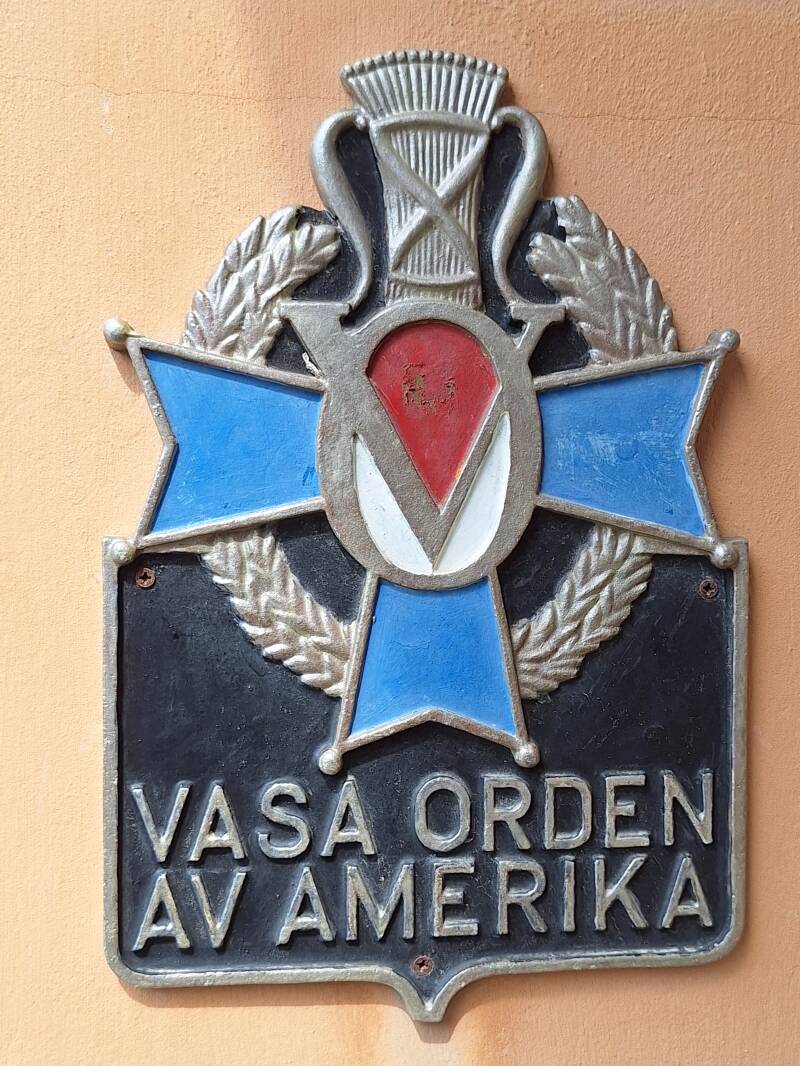
17.07.2025
Good day.
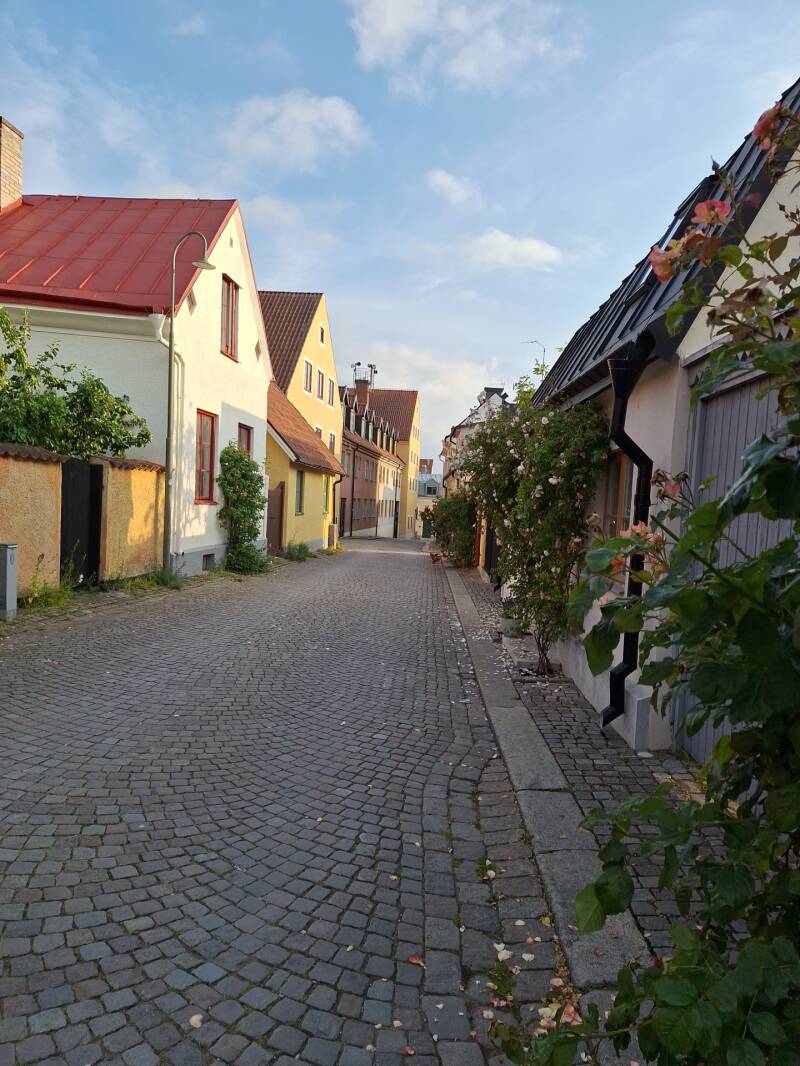
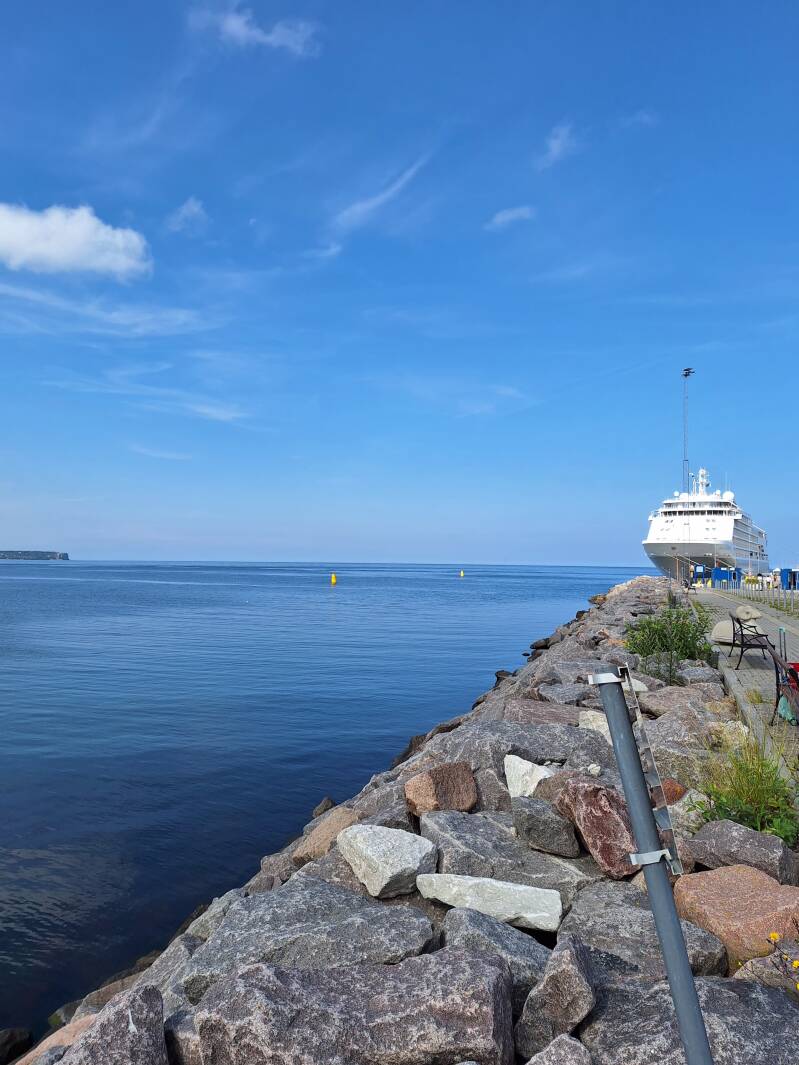
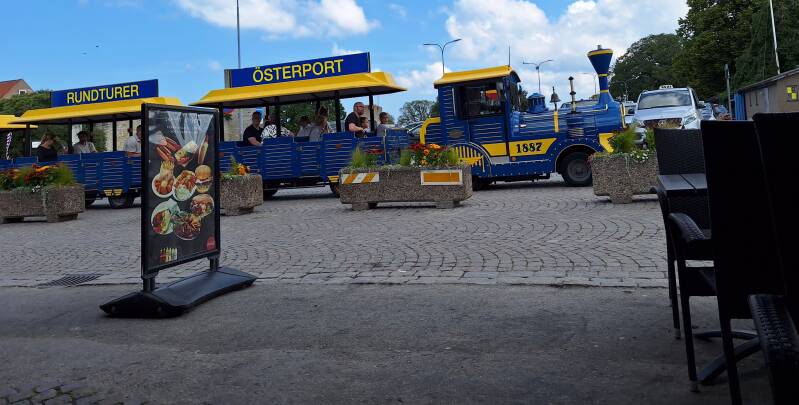
18.07.2025
Testing, tested the excursion route, with Hillevi & Gunilla. They were my tourists. Had to make it shorter. It will be 4 hours and 15 minutes in total. Now have to study the English names of the plants. And we saw a Grey Heron yesterday. It seems that I could do it. Weather is quite hot, sun is shining. Almost no clouds.
19.07.2025
Found huge park nearby dormitory. Good to be here and study in shade.
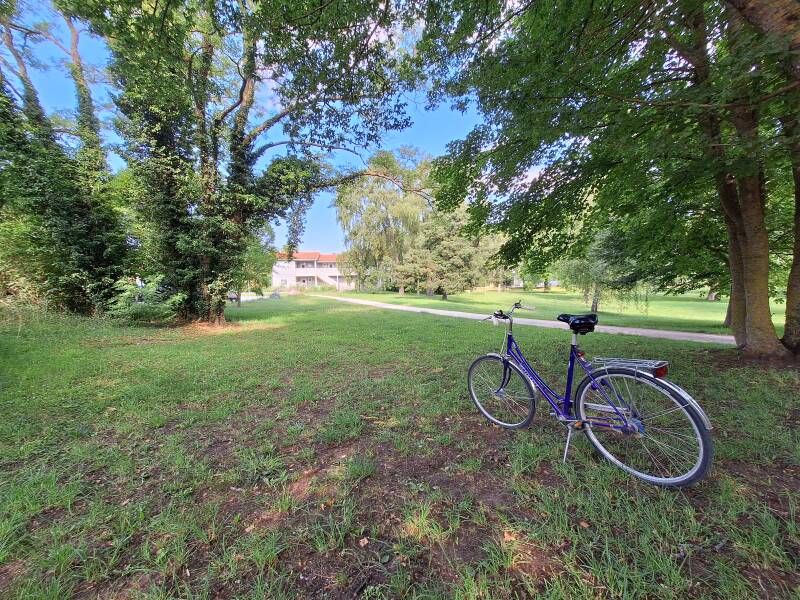
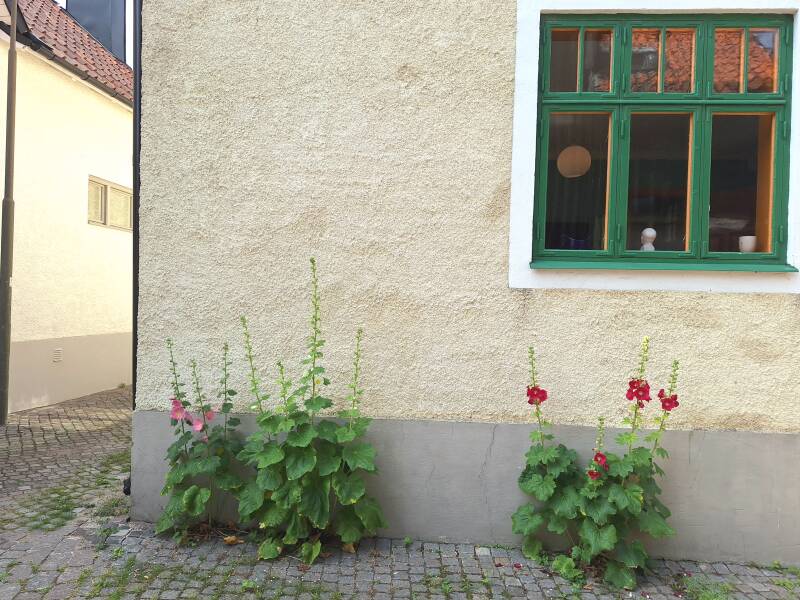
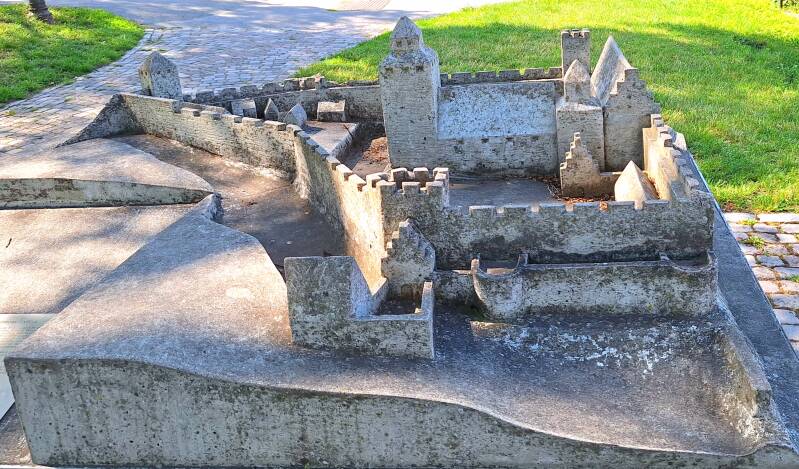
VISBORG CASTLE
was erected in the early 15th century by the King of Nordic Kalmar Union, Eric of Pomerania. He unded the building by raising the rural population's annual taxation from 100 to 9000 marks of silver.
The castle was sited on a cliff above Visby's new harbour, integrated in the southwest corner of the Town Wall. It covered most of the sloping area between Visborgsgatan/Skansporten and Slottsterassen.
Visborg Castle was the first explicit symbol of royal power on Gotland, and was one of the strongest fortresses in the Baltic Sea. The castle was the headquarters of a series pirates from 1436 to 1525.
The castle was blown up by the Danes in 1679. Any surviving walls were knocked down and the stones were either sold as building material or burnt to lime.
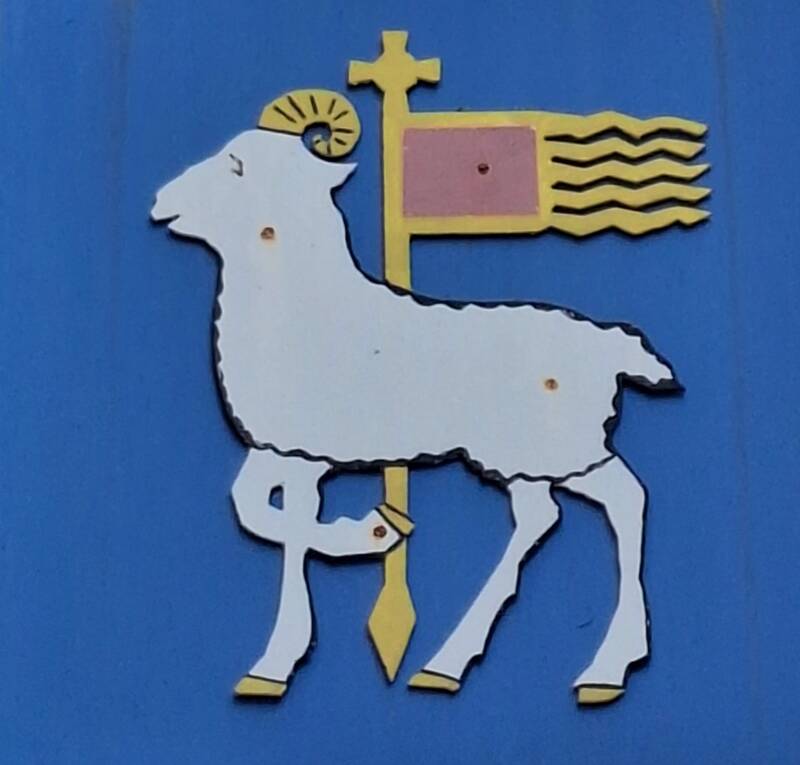
Heraldic symbol of Gotland & Visby. From 13th century. RAM. Symbol from St. John the Baptist.
20.07.2025
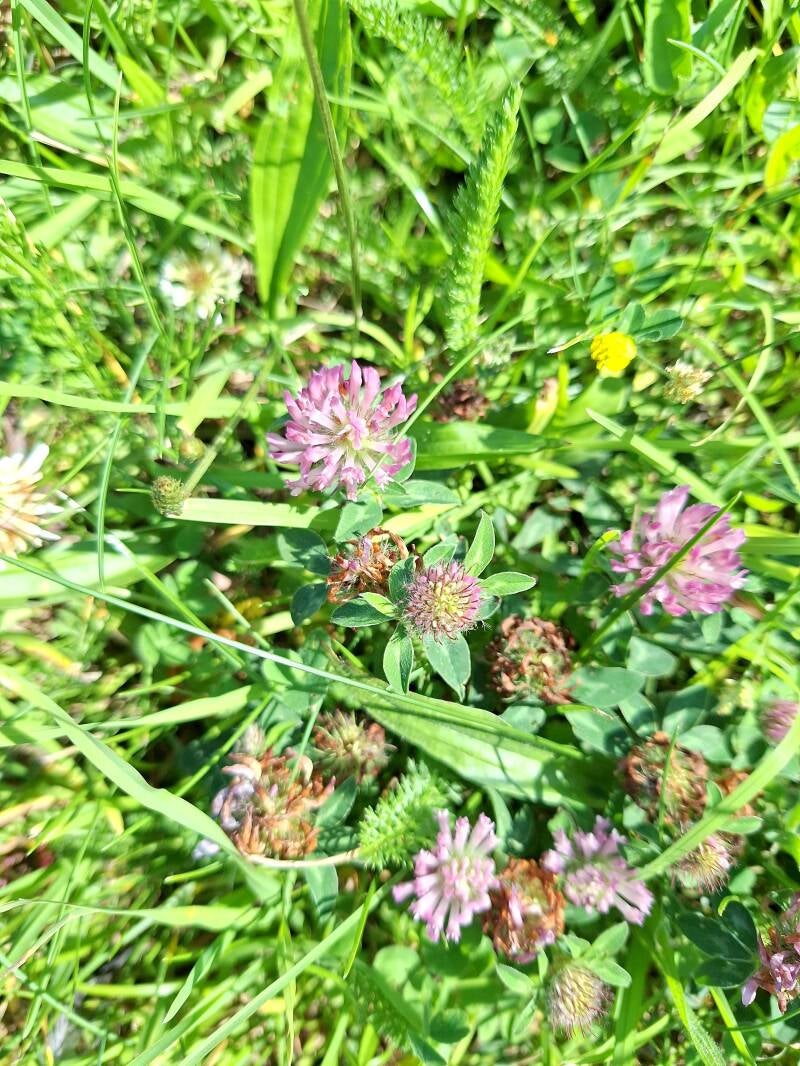
Red 🍀 clover
21.07.2025
Near house. Plant names in English.
22.07.2025
Had a meeting with Hillevi. I know now, what I have to do better. And how do the guides prepare at the company for tours. And also much more background information about organizing and systems. Means that I got many things to do now. It is better to know what to speak in every stop at the tour. I am going to walk that through one more time. It is better to take some action, than to worry. Pitty that my German skills are weak. Will come one German group.
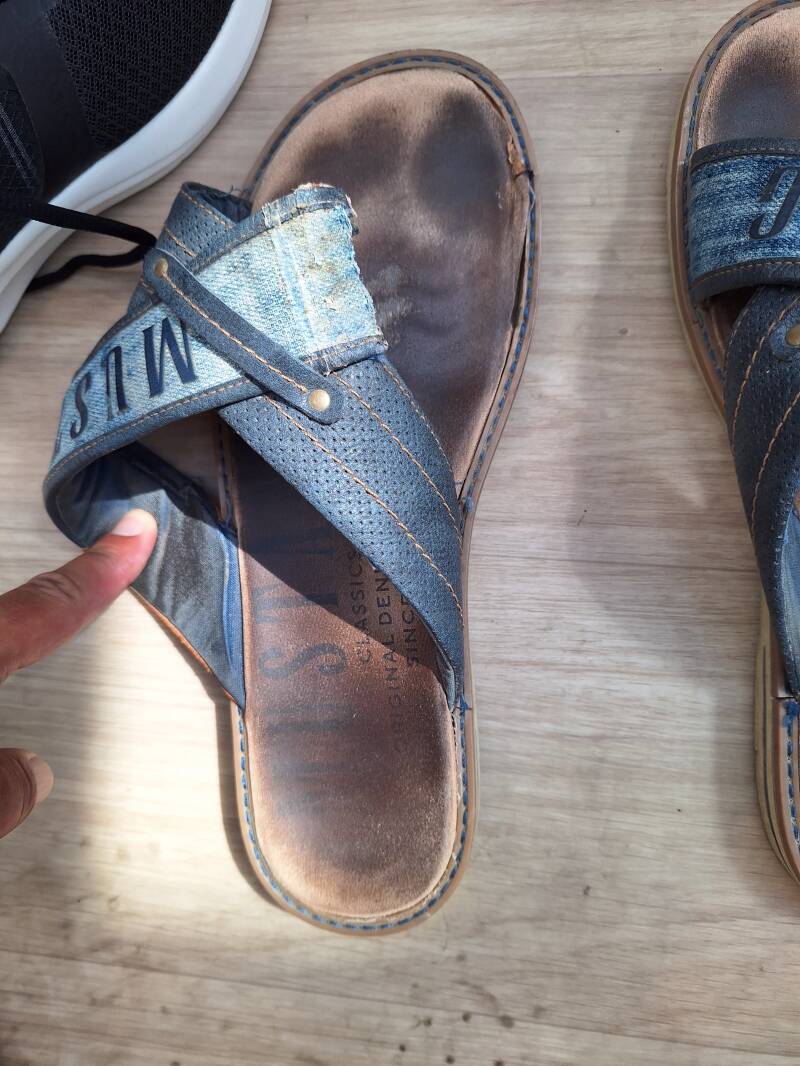
Just on my way from Visby to Brucebo, shoe broke down. Had to buy new ones from Visby Gallery. Such a hot day again. Fortunate that it wasn't far.
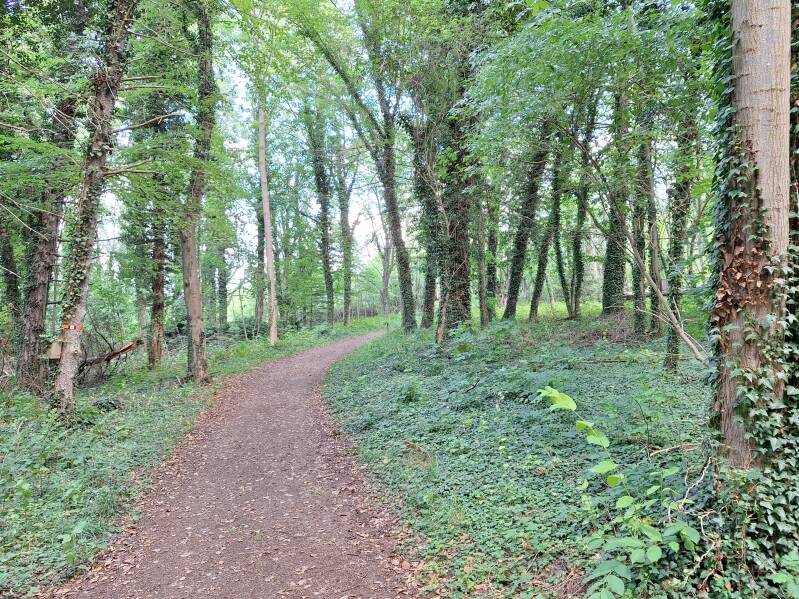
Now already on a shady place. So much ivy. Love trail.
Snäck beach was full of people. Yes, before wasn't the hot weather started yet.
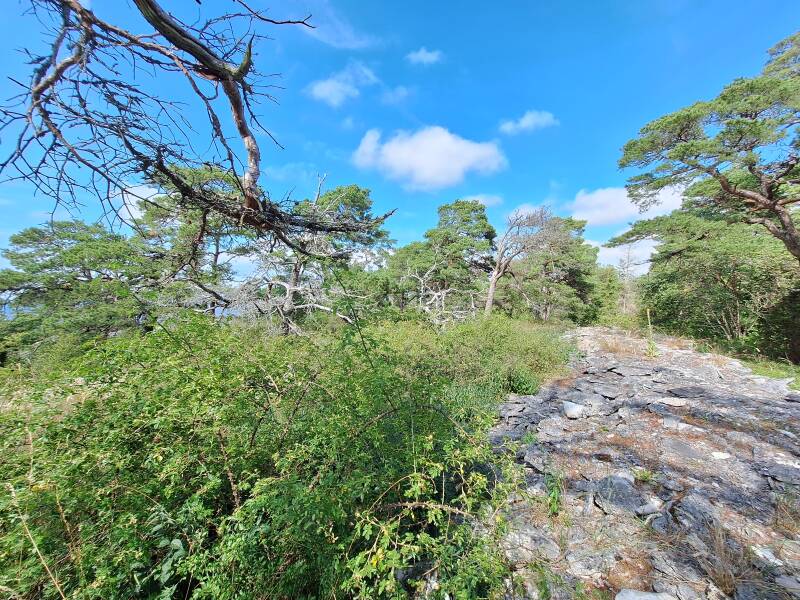
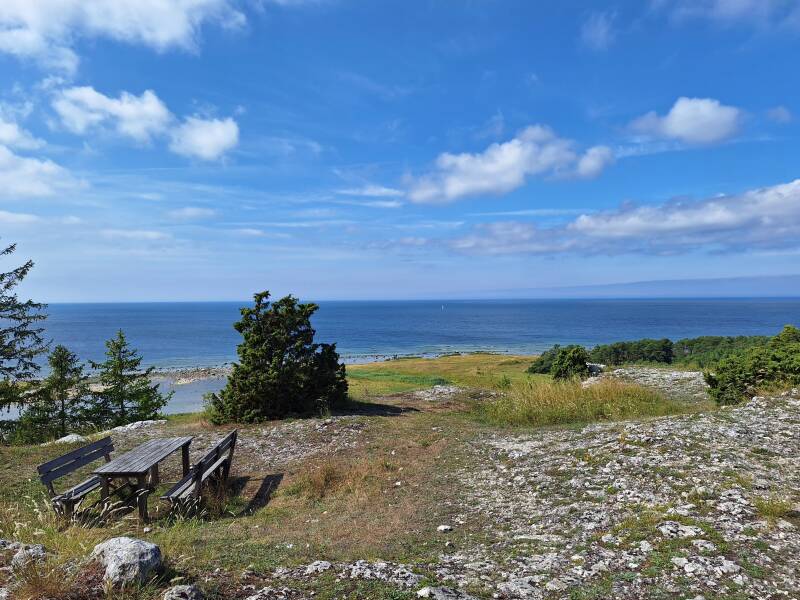
Bygdeborg
There are about 100 ancient castles on Gotland. Most are located on flat land.
Land consists of a closed wall or earthen embankment with one or more moats. About 30 are located on cliffs along the coast or in the country. Both walls and ramparts may have been topped by wooden palisades.
Studies show that most were built and used primarily during the Iron Age.
During different times they may have been used in different ways. Ancient forts on the coast and those with a wide view further inland, should have had a defensive purpose. Through fire, smoke and perhaps sound one could quickly communicate. But for smoke and fire signals visibility between the forts is required. Therefore, more cliffs and headlands, than we know today, should have been included.
This ancient castle, which used to be called Bygdeborg, is located between two famous Viking Age ports - one at Snäck and one at Själsö. Was the approach to both of them guarded from here? The castle measures 100 x 60 m and is protected from the landward side by a 92 m long and today 3 m wide limestone rampart. In some places, the original wall of stacked stone is visible, which has been restored to the south. No protection was needed against the steep slope. The pits in the castle come from quarrying. Was stone quarried for the castle walls here, or is it a question of later quarrying for lime burning?
Ancient remains are protected by law.
There are about 100 hillforts on Gotland. This fort is one of those built on.
Somebody is with tent here.
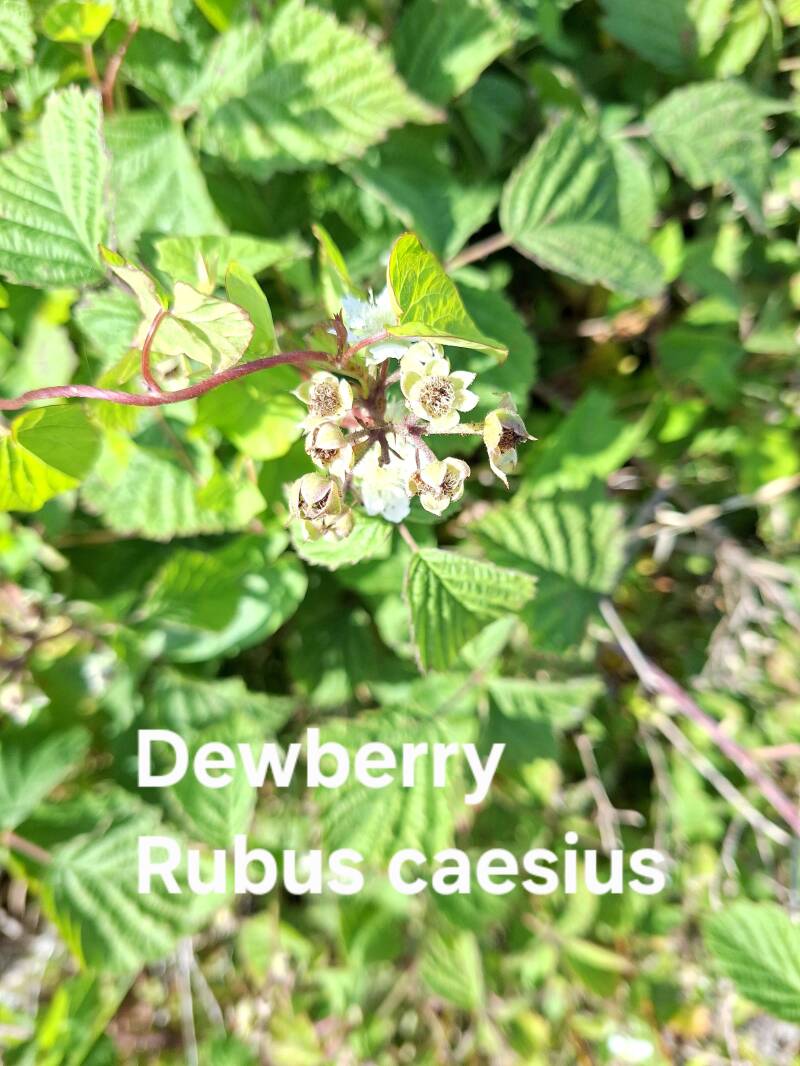
Saffron pancake is served with a jam of that berry.
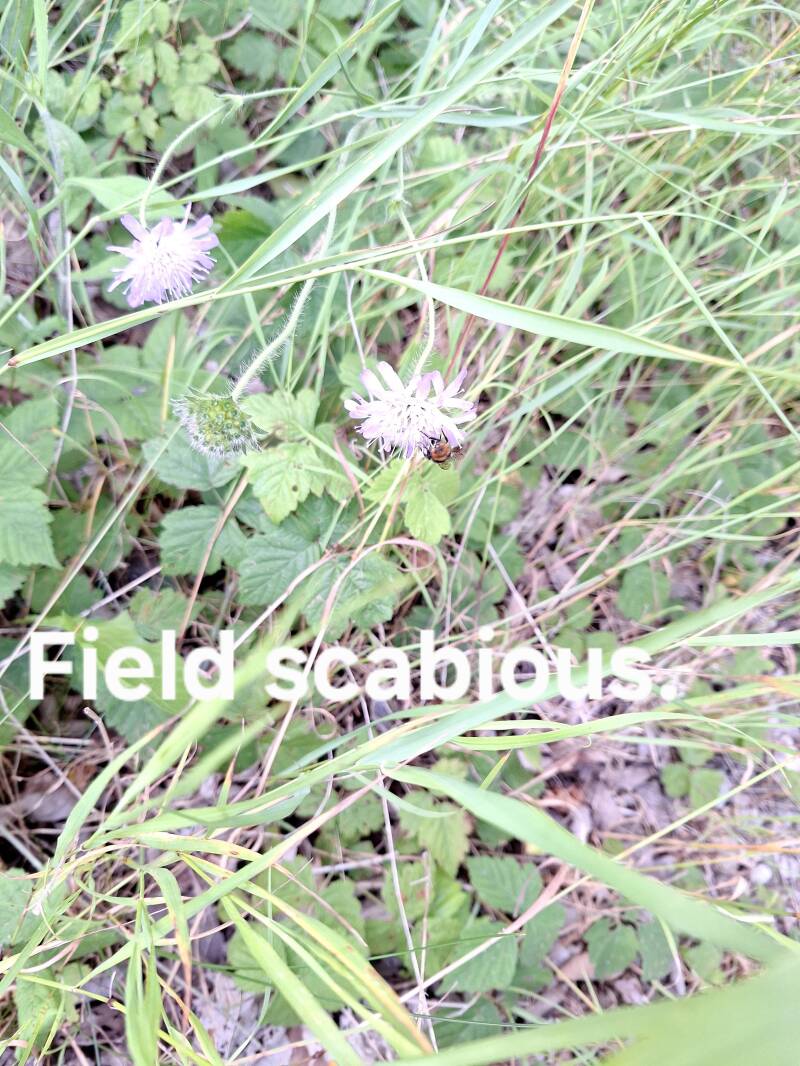
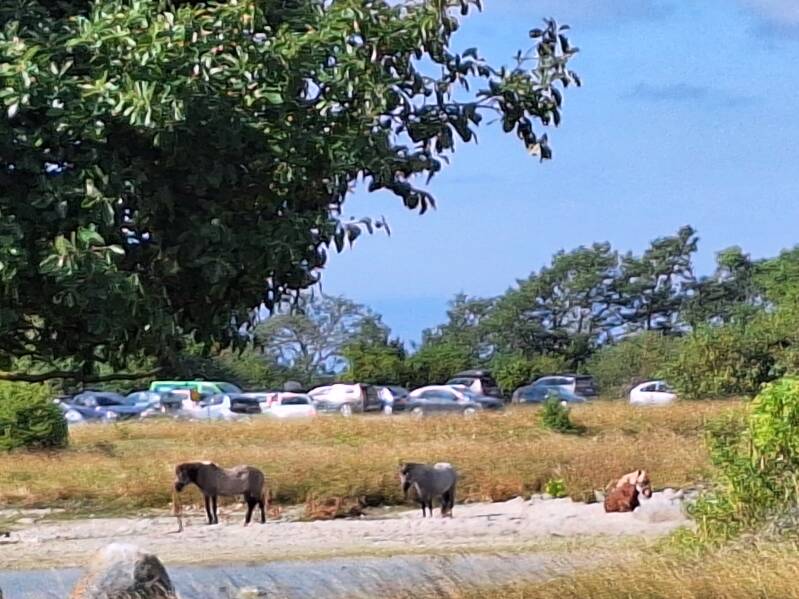
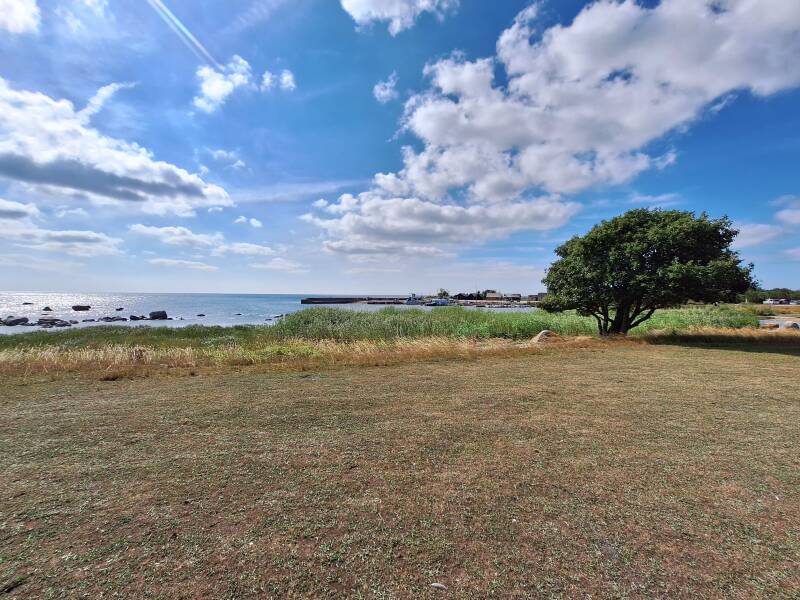
Soon will add a link for the photos of my tour stops, hopefully.
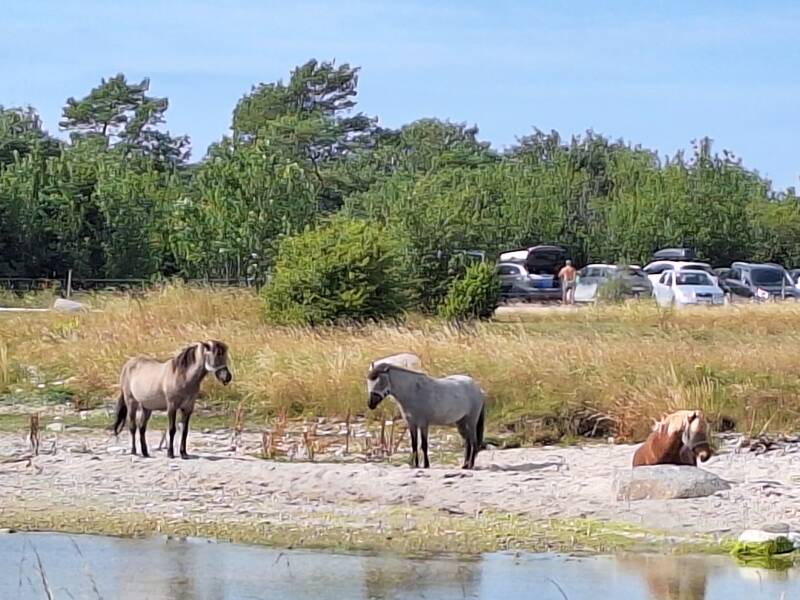
Tour plan is on Google drive not shared into the blog. But Brucebo to Själsö stops are here: https://drive.google.com/drive/folders/1gw8izUHoh4FloI8w6YFNQ5fe2TYEl4YI
Tomorrow will come Visby Ringmür stops.
Have learnt a lot. Most importantly: different guides - nature & city...
23.07.2025
Germans coming.
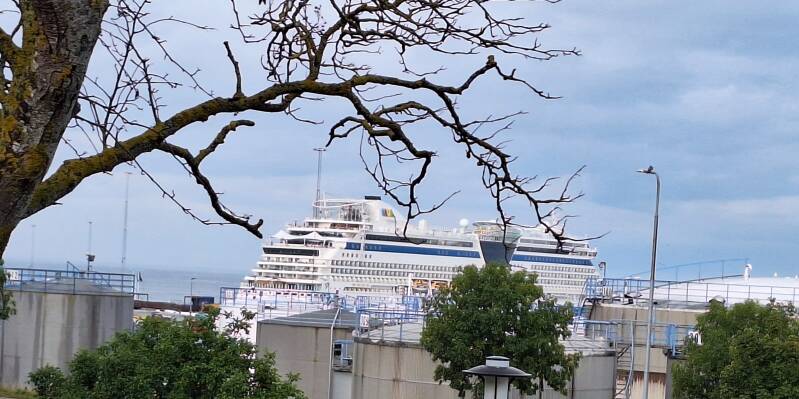
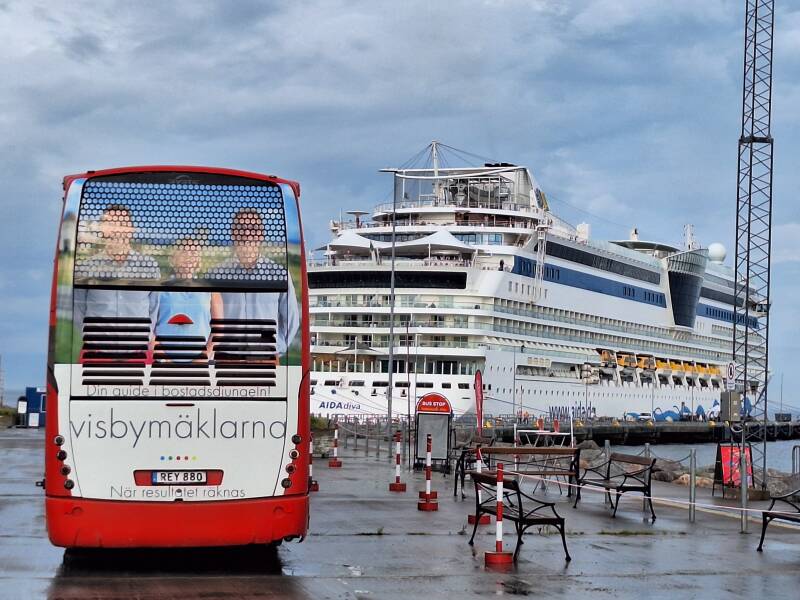
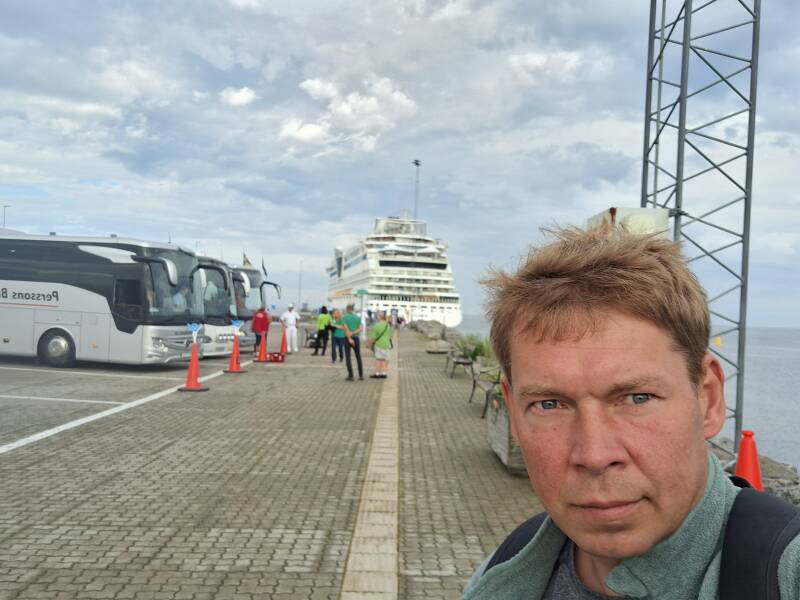
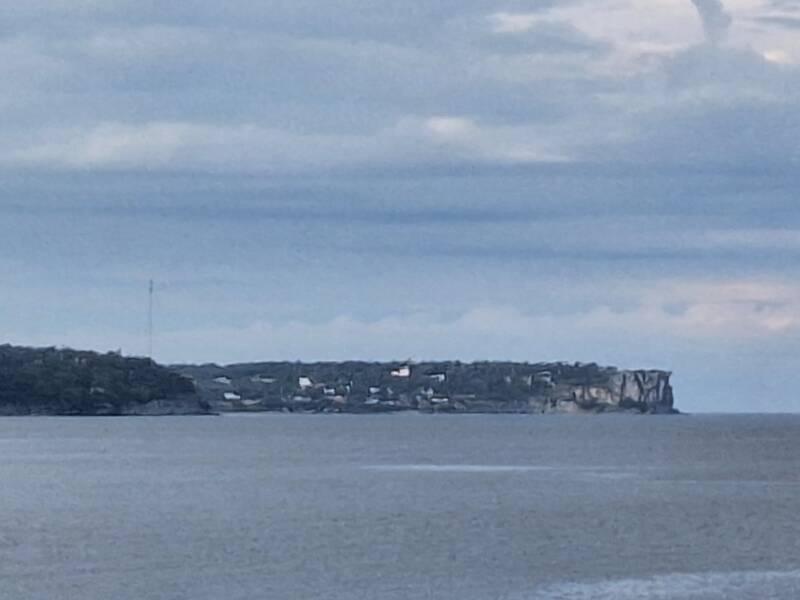
Soon the stops in Visby Ringmür.
There is Military Police out there today. Perhaps trainings.
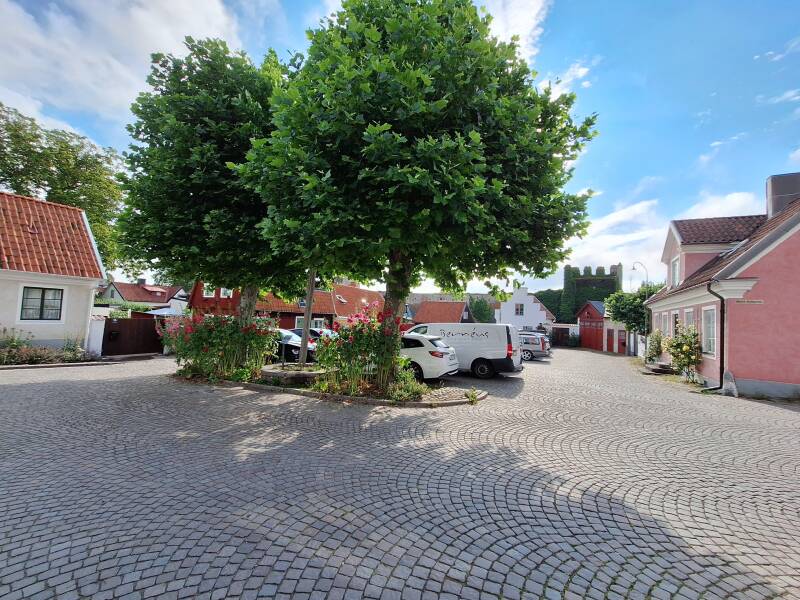
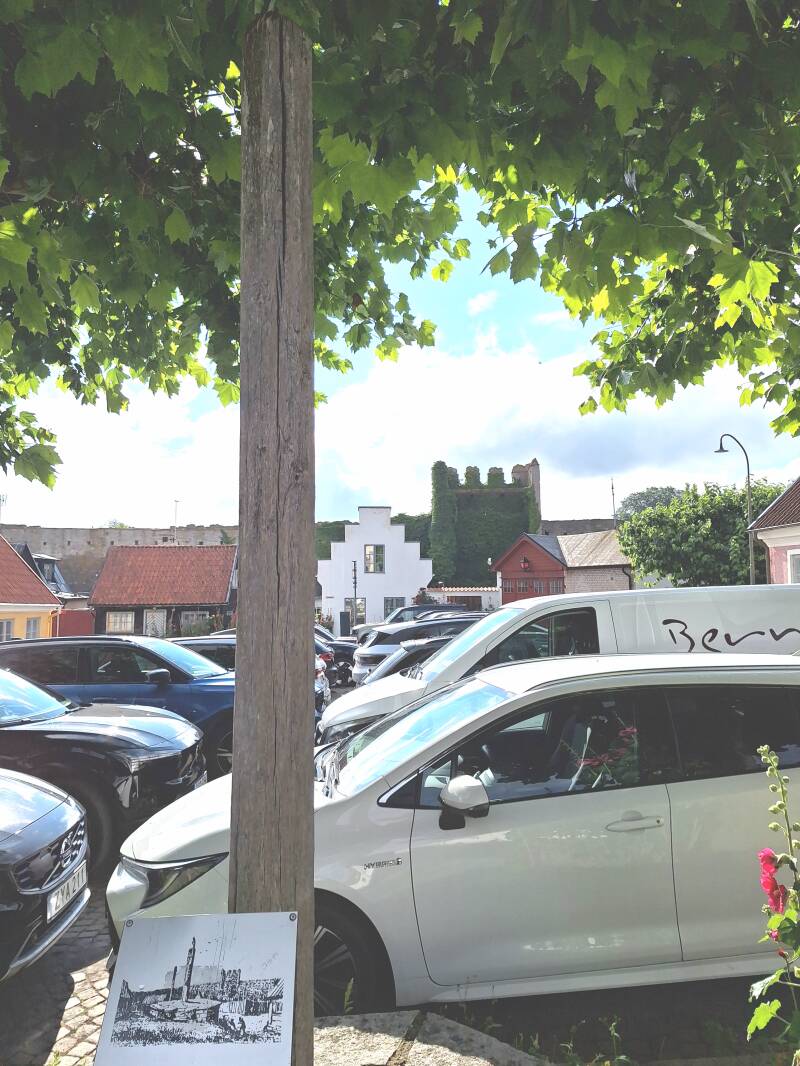
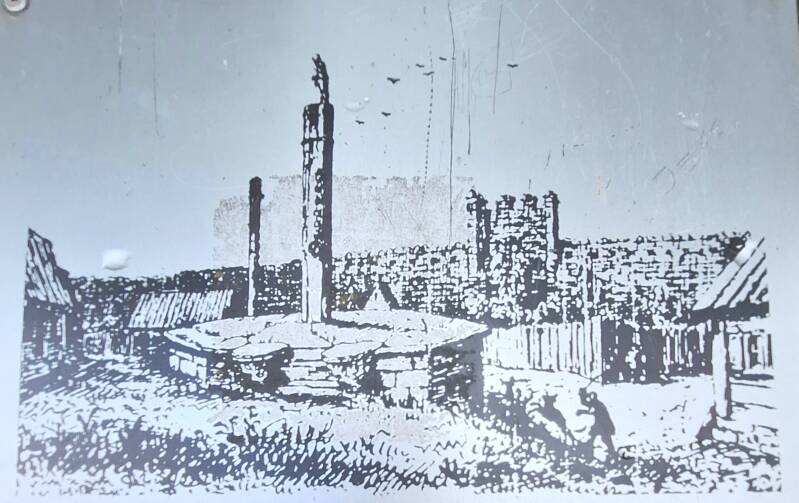
THE ROD POLE
In the 18th century, the city's scaffold and whipping post were moved from Stora Torget to this location. The drawing from the 1840s shows the scaffold with the pillory in the middle, where the guilty party was shackled with an iron collar. The whipping post can be seen in the background. The punishment at the whipping post was carried out by the executioner or his assistant, the rascal. When the instruments of punishment were moved here to Klinten, the place was named Spötorget. Later the name was changed to Klinttorget. In 1850, the penal institution was moved outside Söderport. This replica of the original whipping post was erected in 1987.
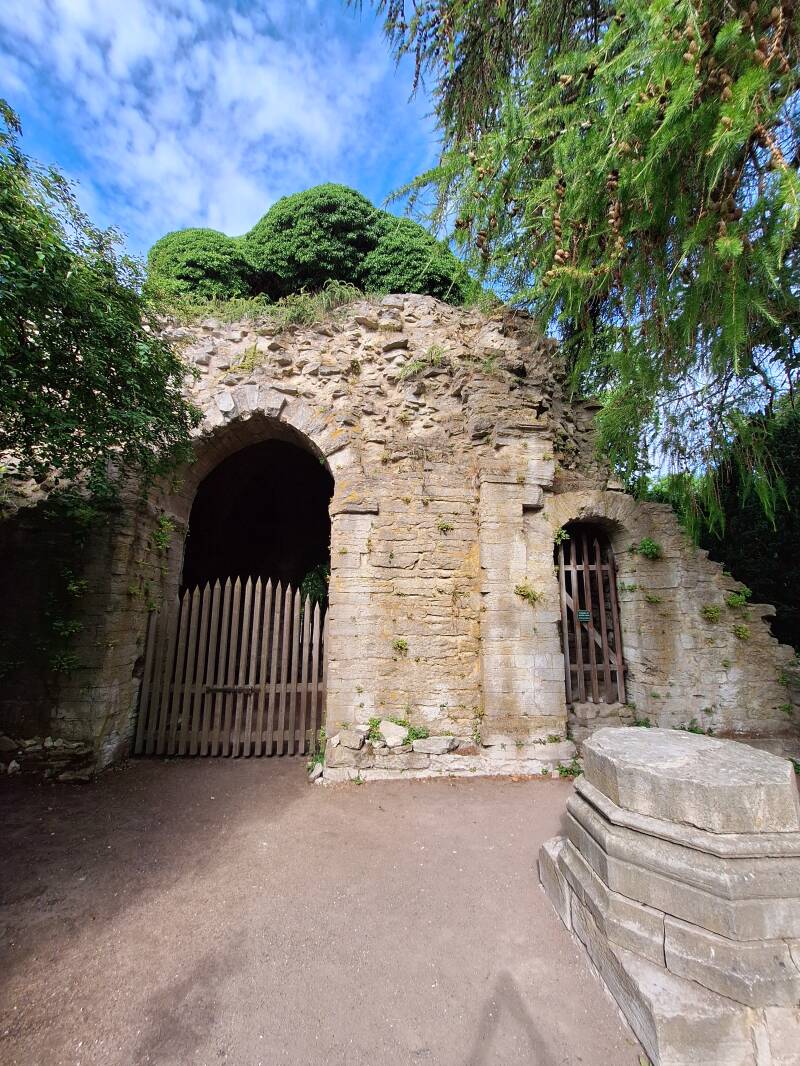
The church was built in the first half of the 13th century and dedicated to Sankt Olaf, the first and the most popular saint in the Nordic countries.
In real life Olaf Haraldsson was King of Norway. He was born in 995, in the Viking Age, and took part in several plundering expeditions. Olaf was baptised in Normandy, France and then had the population of Norway converted to Christianity.
Olaf fell at the battle of Stiklestad in 1030 and was buried there. His coffin was later moved to Nidaros, today's Trondheim, where people experienced miracles at his grave. The Pope in Rome then canonised Saint Olaf (Olav).
Today only fragments of the tower remain, but Sankt Olof church was roughly as big as Visby Cathedral. The nave comprised a high central part and two lower parts on either side.
In the tower there were stairs up to a private room for the wealthy. The trading town of Visby attracted many German merchants with families, and Sankt Olof church was built for the German inhabitants of the parish.
By the end of the 14th century, Visby's golden age was over. In the 1530s the Crown (state) reformed the Church, which was to become Protestant. The Crown then seized the riches of the Church and the monasteries.
All the churches except Visby Cathedral became redundant. They were left as ruins and became material for new buildings.
In 1805, the church ruins in Visby were given legal protection and in the 1880s they began to be maintained. Nowadays several of the ruins are used for different summer events. The National Property Board manages the church ruins, which are part of our heritage.
Tour stops of Visby Ringmür (second part of my tour). I have memo for every stop too. https://drive.google.com/drive/folders/1joxWftTbvoMswSKhwV5A-3PmJYBxNjCA
Not so hot day. Interesting. Library is very peaceful today.
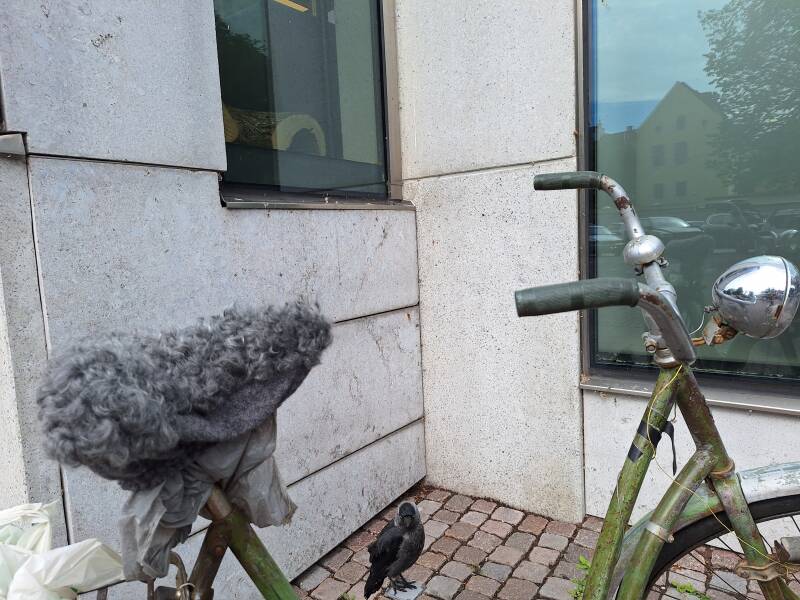
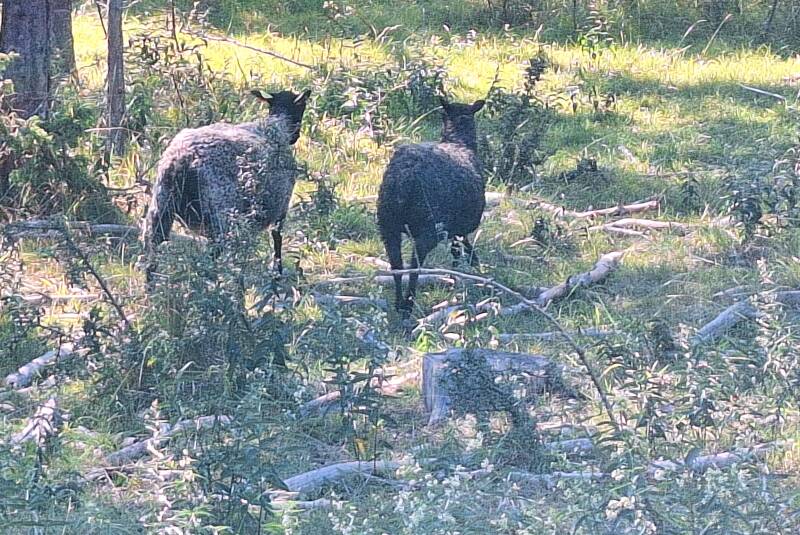
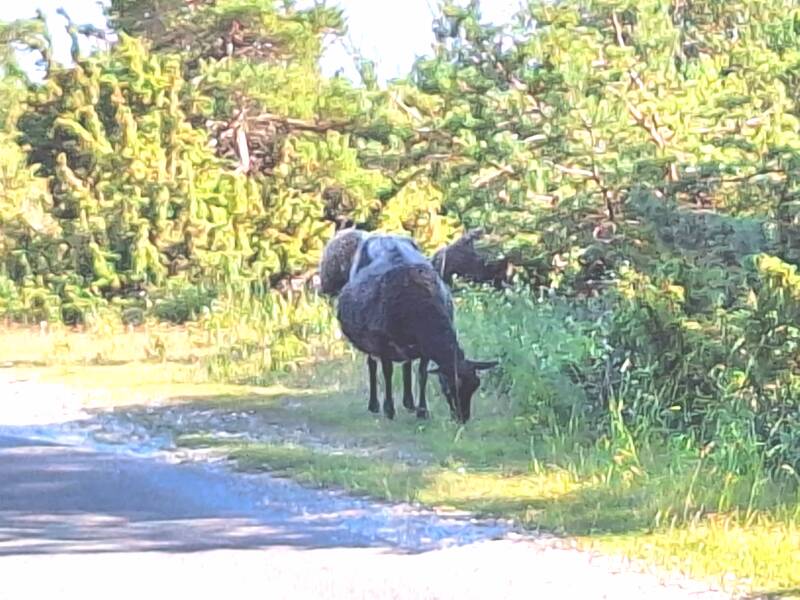
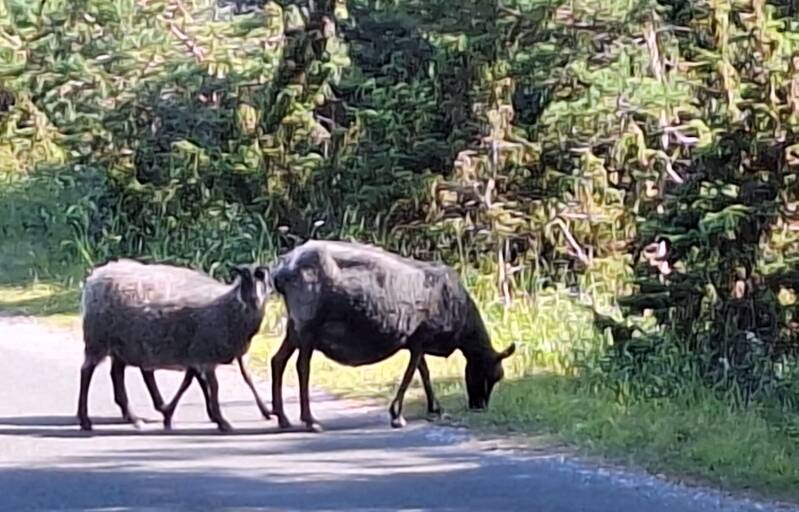
Made from Gotland Pelt.
Took a bus to Fårösund. Let's see.
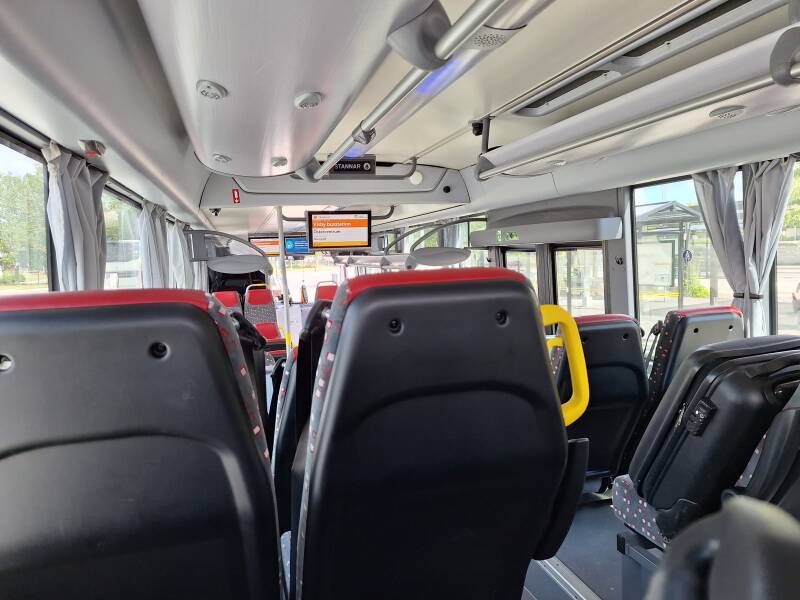
Lärbro. Takstens. Rute Kyrka. Bunn...
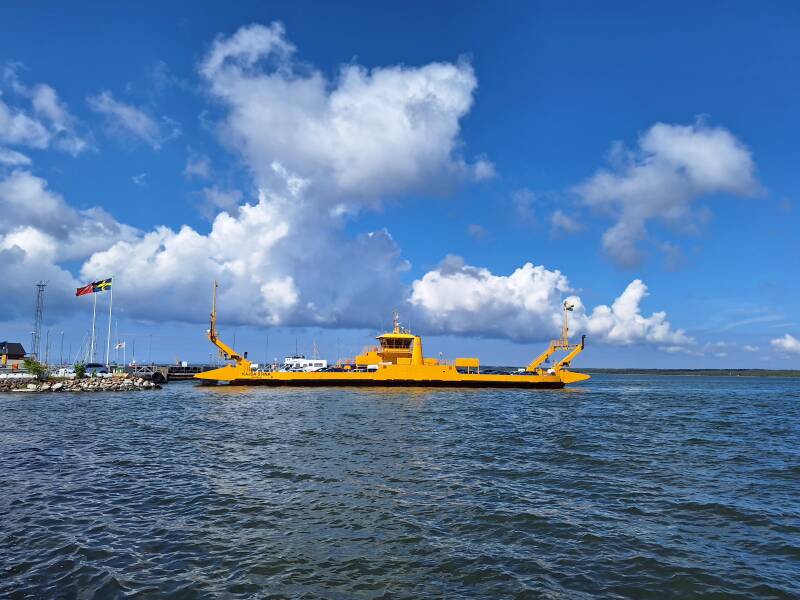
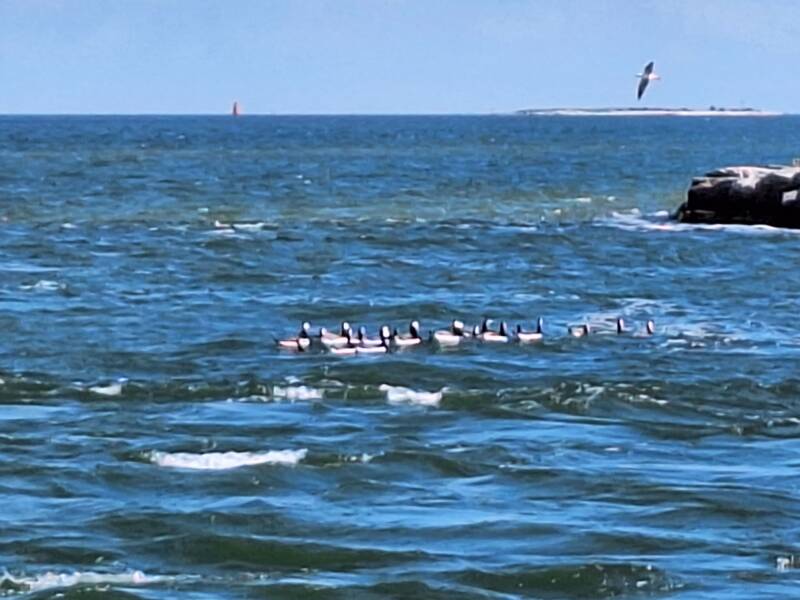
To Fårö island...
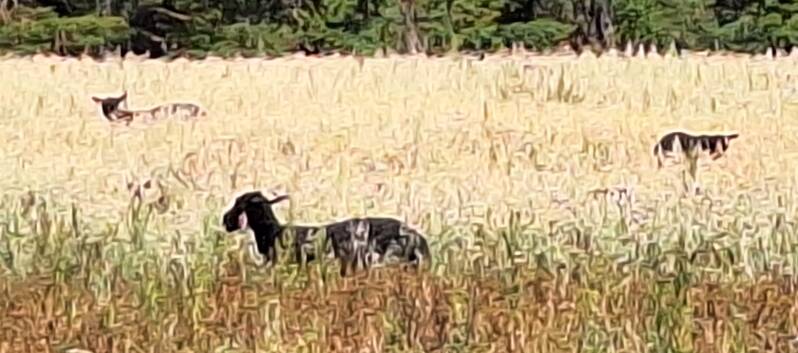
Gotland Pelt
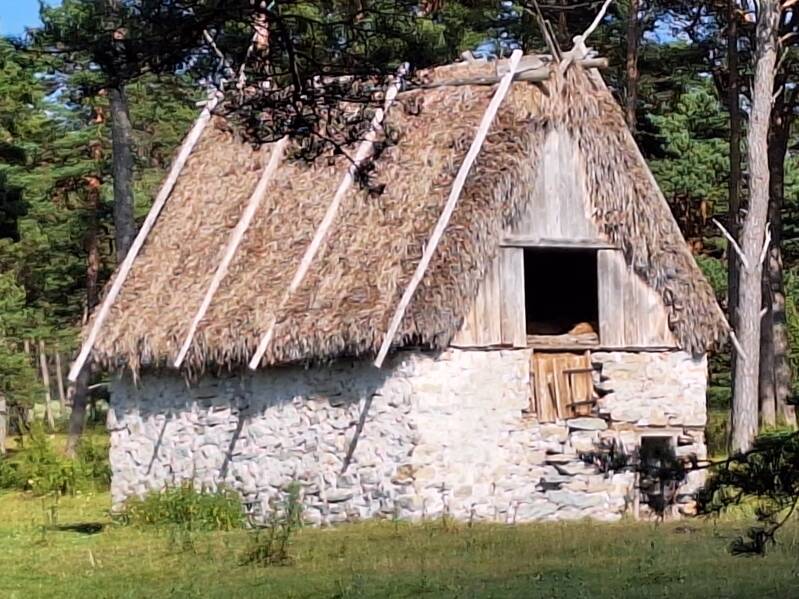
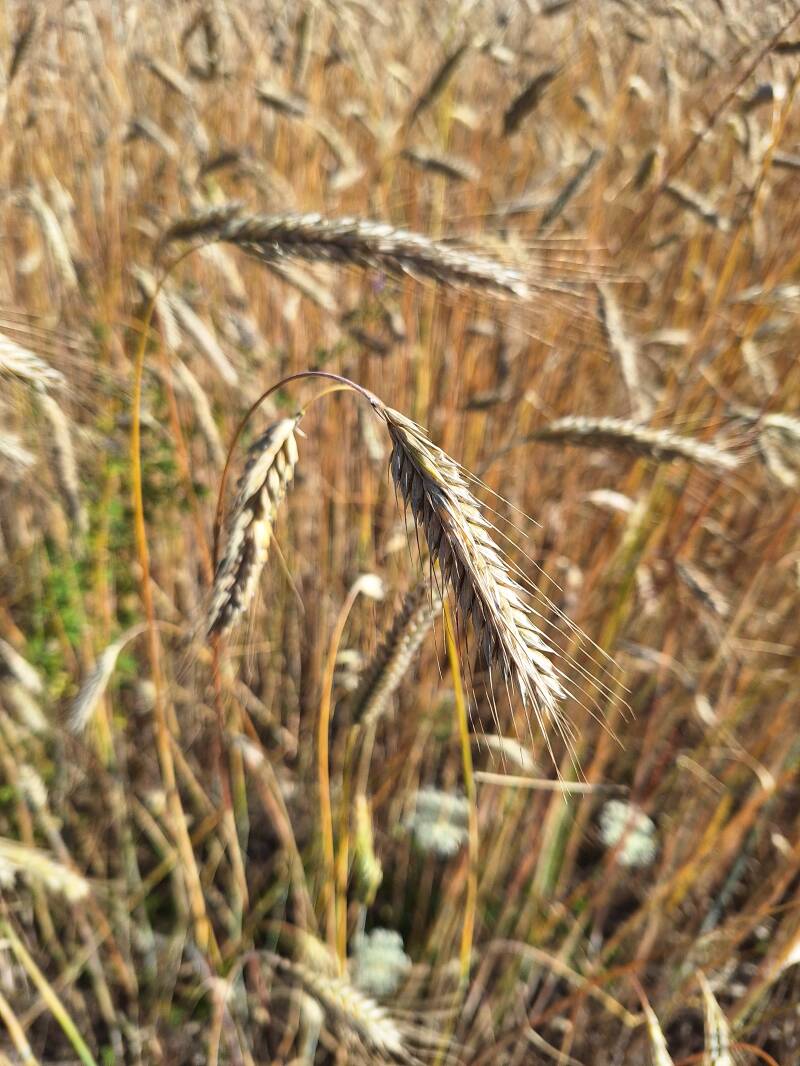
Ryssnäs nature Reserve
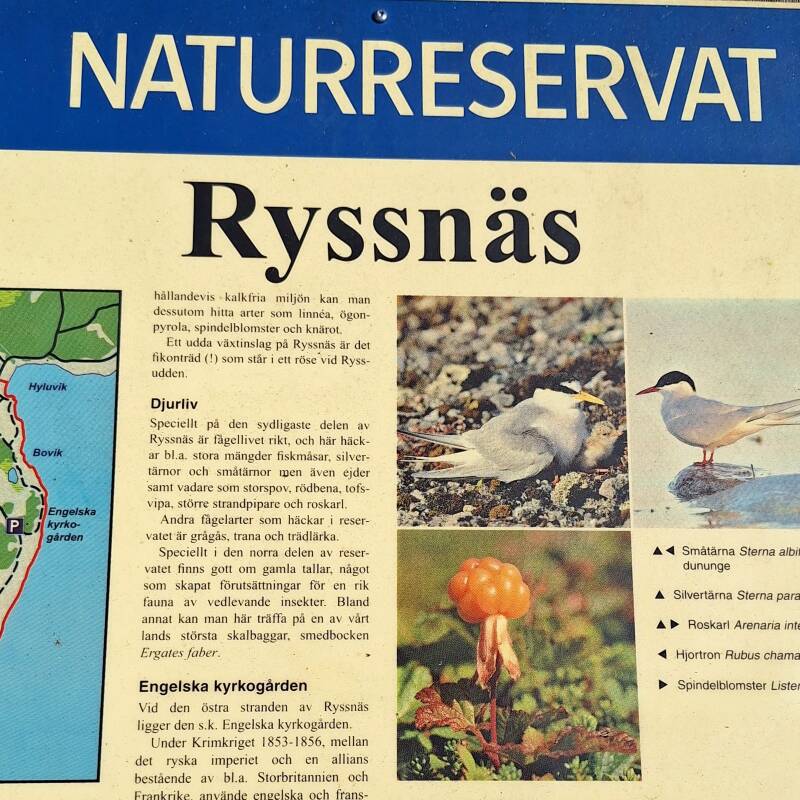
Towards the end of the 20th century, Ryssnäs was training ground for the coast-artillery. This ceased in 2000, and since 2009, the headland is a nature reserve, covering an area of just over 22km
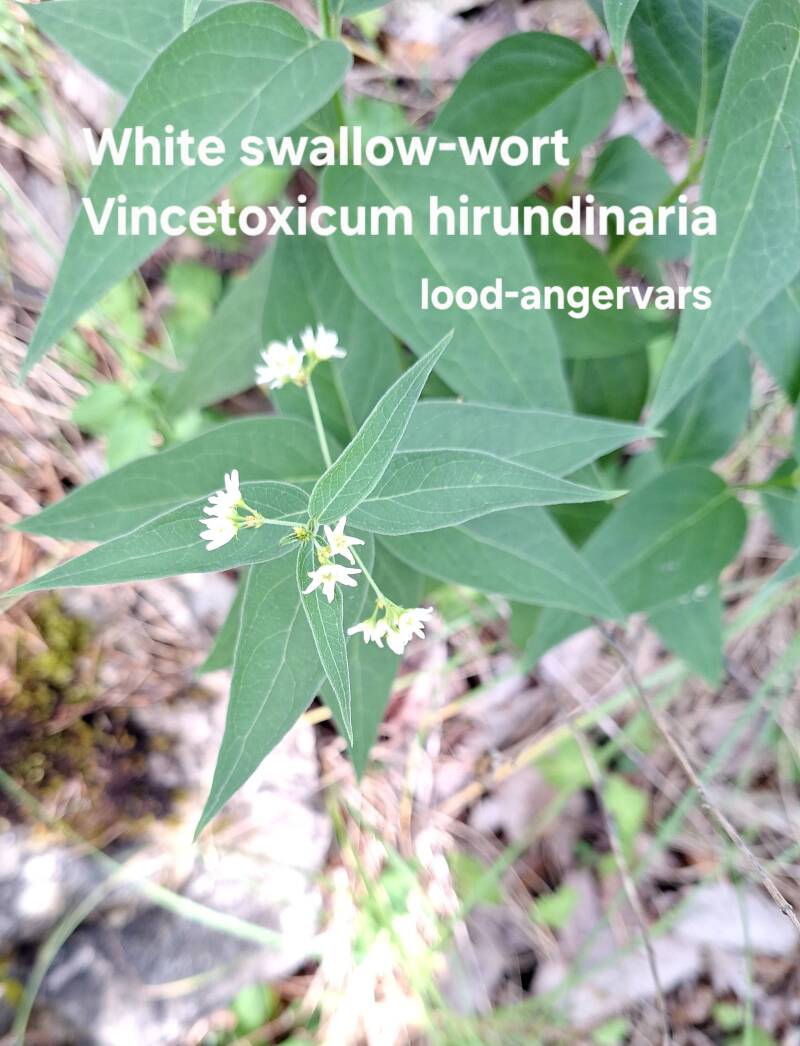
Vegetation at Ryssnäs is dominated by pine forest interspersed with alvar (treeless areas of almost bare rock) and tracts of bare, limestone rock. On drier ground, the most common flora include vincetoxicum, wild thyme, dropwort, biting and white stonecrop, dwarf, mask and carline thistles, bulbous, buttercup, spring cinquefoil, ragwort and northern bedstraw, harebell, spiked edweil and mountain everlasting.
There are som sedge fens.
The bay Hajdeviken is a smaller coastal area...
The north end of the reserve hosts a particularly large population of old pine trees, which has created prerequisites for a rich fauna of xylogenous insects, including one of our country's largest, bettles, Ergates faber.
The English cementary
What is known as "The English Cementary" is situated on the east shore of Ryssnas. During the Crimean War (1853-1856) between
Graunkullamyr is one of Gotland's few peat bogs, and the. moor is the only place on Gotland where cloudberries grow. Flora such as twinflower, one-flowered wintergreen, lesser twayblade and creepong ladeis tresses are to be found in this somewhat lime-deficient enviroment. An uncharacteristic. floral feature at Ryssnäs is a fig tree (!).
Fauna
Bird life is particularly rich at the southernmost end of Ryssnäs, the breeding place of numerous common gulls, Arctic and little terns, ejder and the waders curlew, redsharks, lapwing, ringed plover and turnstone. Other species breeding in the reserve include the greylag goose, crane and woodlark.
France Russian Empire and a coalition of great Britain, kingdom of Sardinia and the Ottoman Empire, the Anglo-French navy established a base at Fårösund. In the couse of the war, several hundred ships both warships and others, put in at the harbour.
A cholera epidemic broke out at Fårösund at the end of August 1854, mainly afflicting the crews of the ships in the harbour. In this connection, two sick bays were erected at Ryssnäs, and the English bought a piece of land close to the barracks to be used as a cementary. Some twenty English sailors found their final place of rest here.
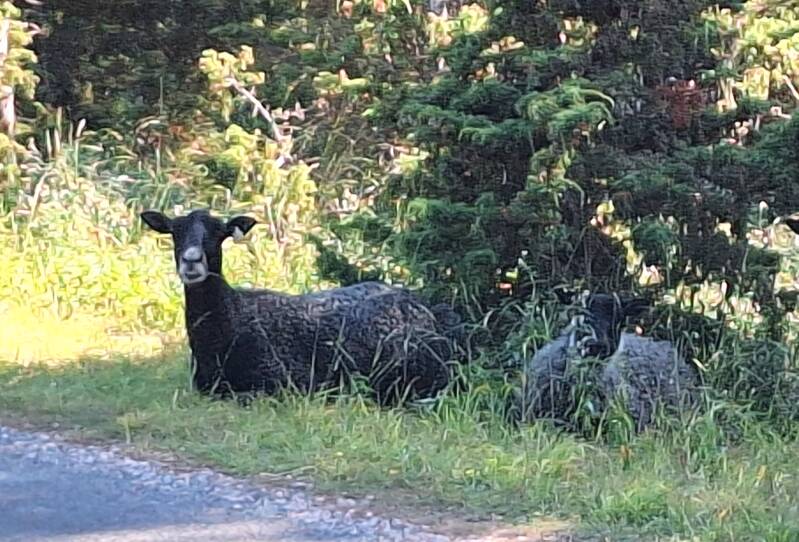
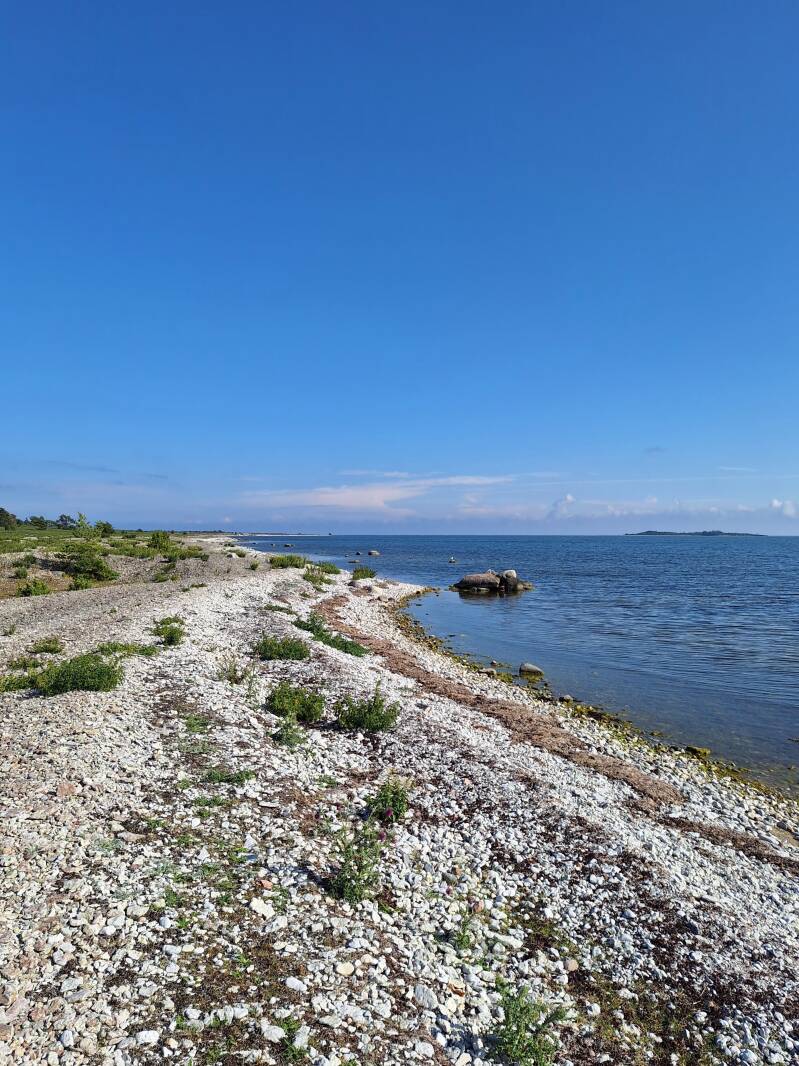
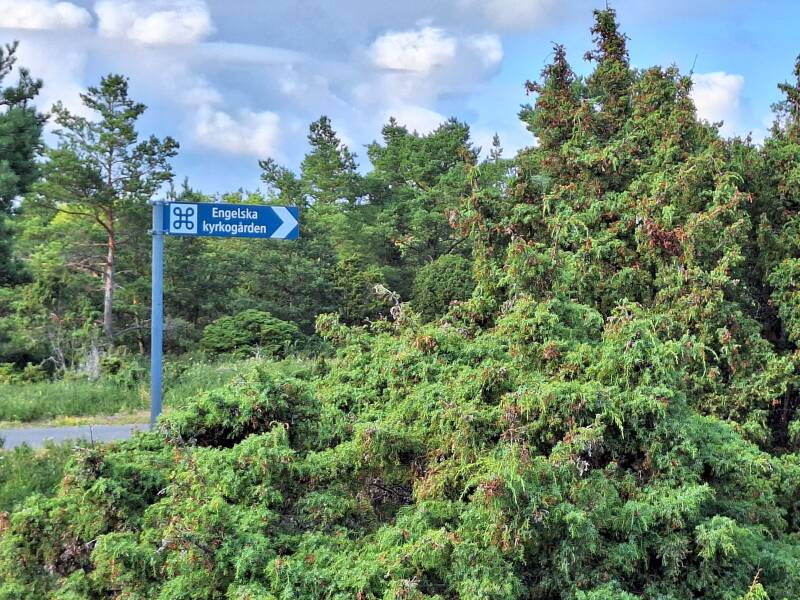
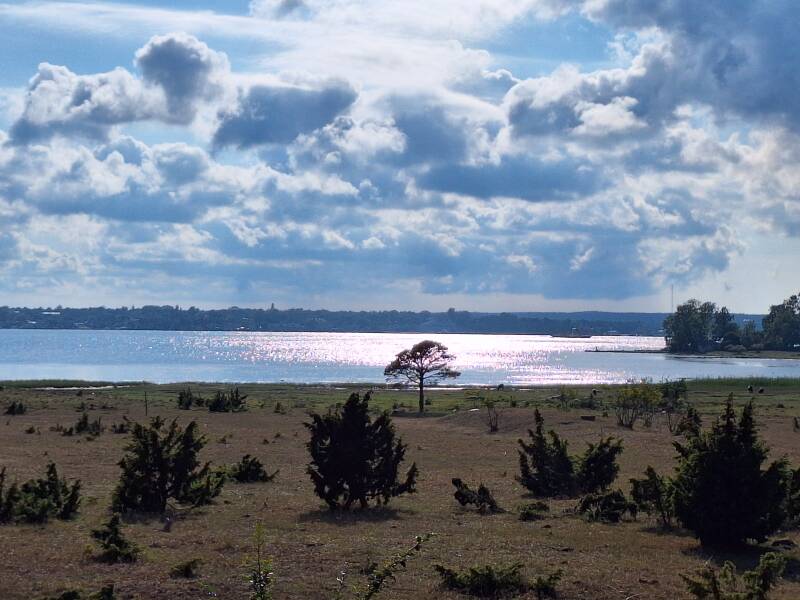
Fårö is full of stonehedges, there are typical wooden and other too, but those are stacked out from lime.
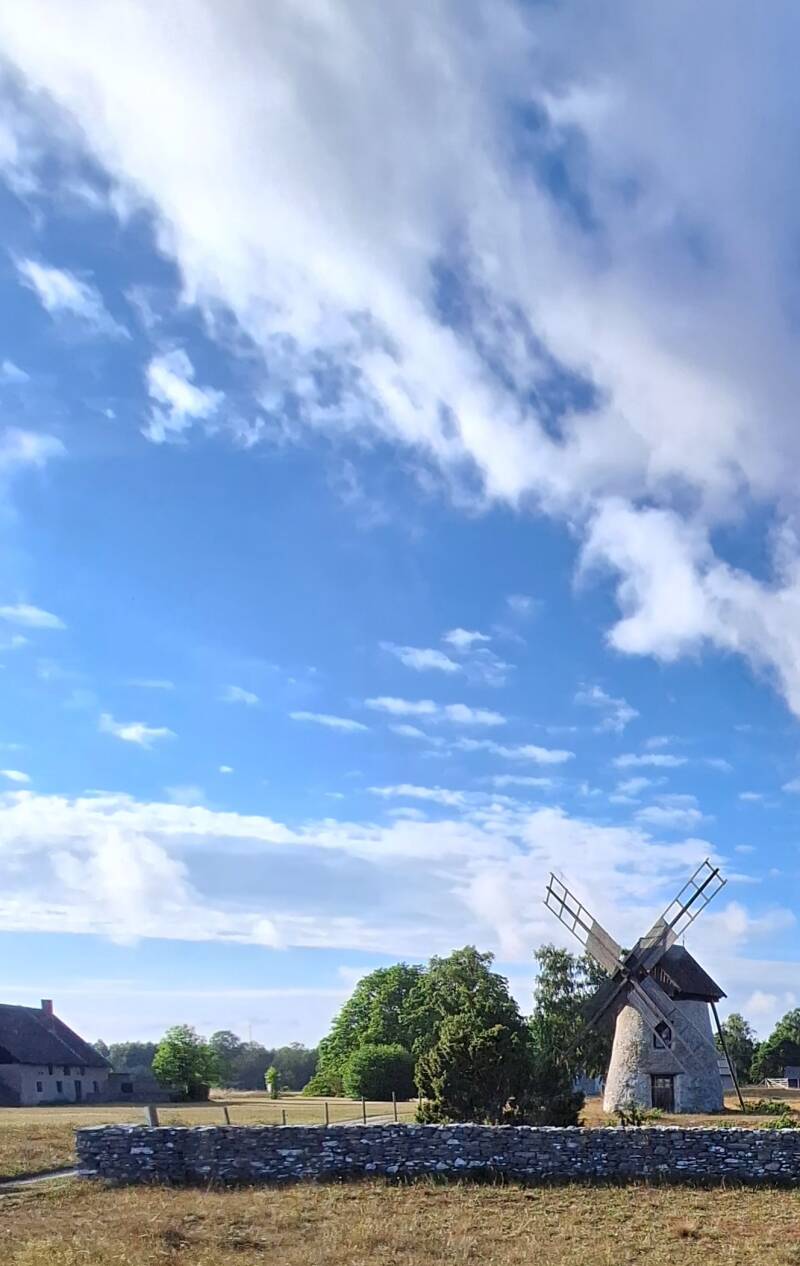
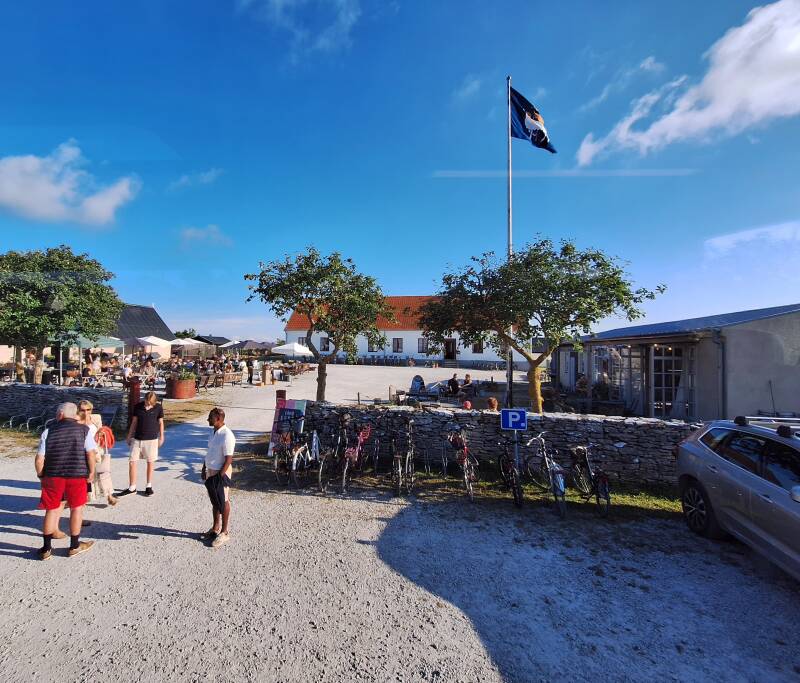
Ekeviken bad. Hmm.
24.07.2025
Comes a real Fårö day. Now I have a plan and know how to go through all the sights. Will add a link to the photos.;) 😁 To Sudersand. Interesting stop: Tingstäde bad.
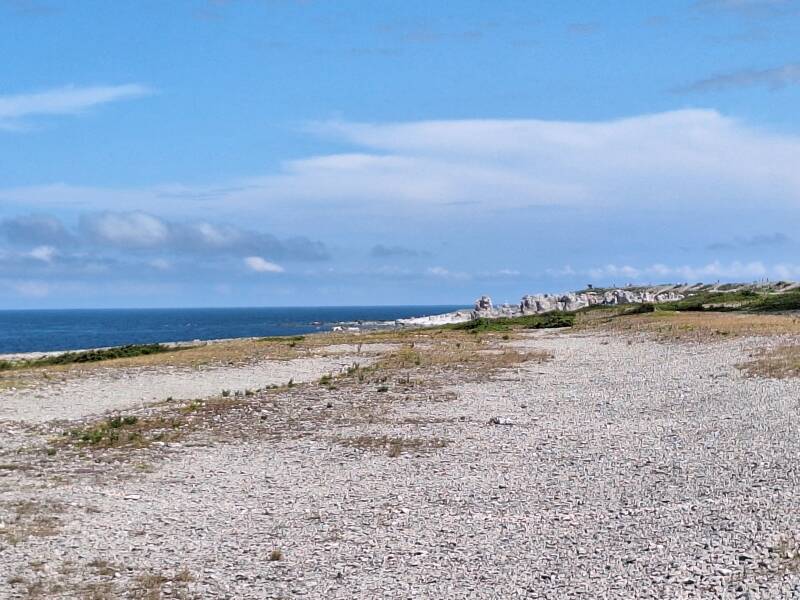
Langhammers rauks soon. Huh, totally swetting.
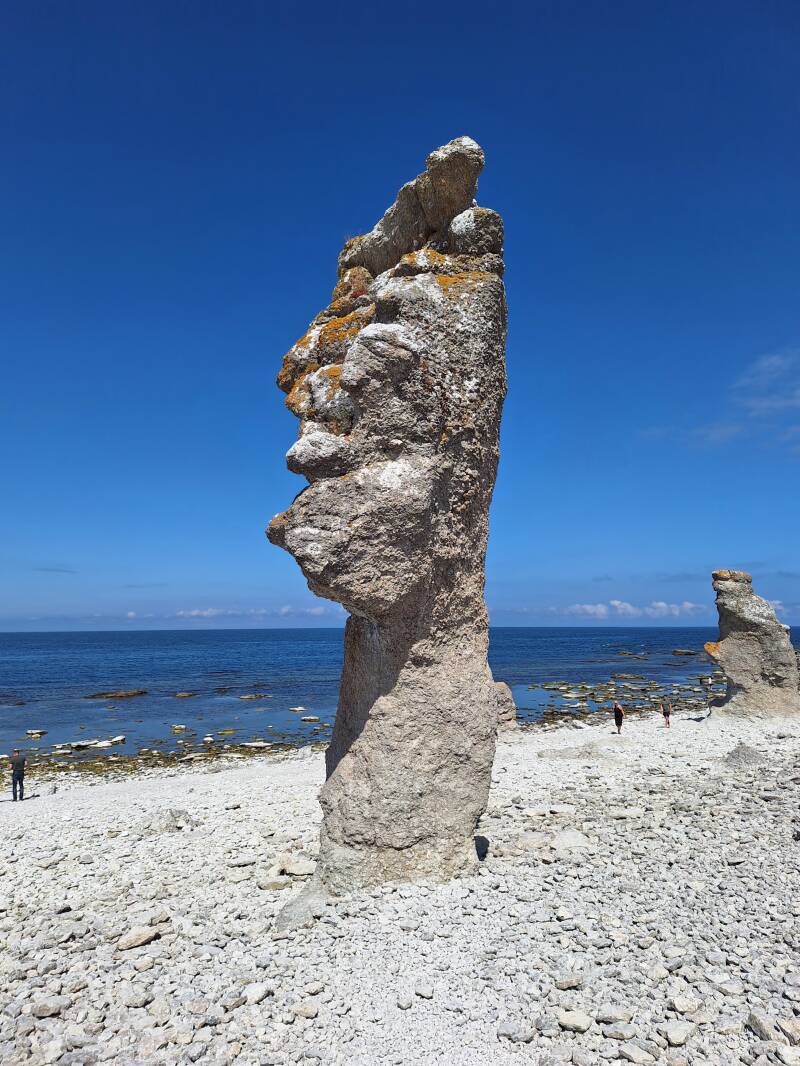
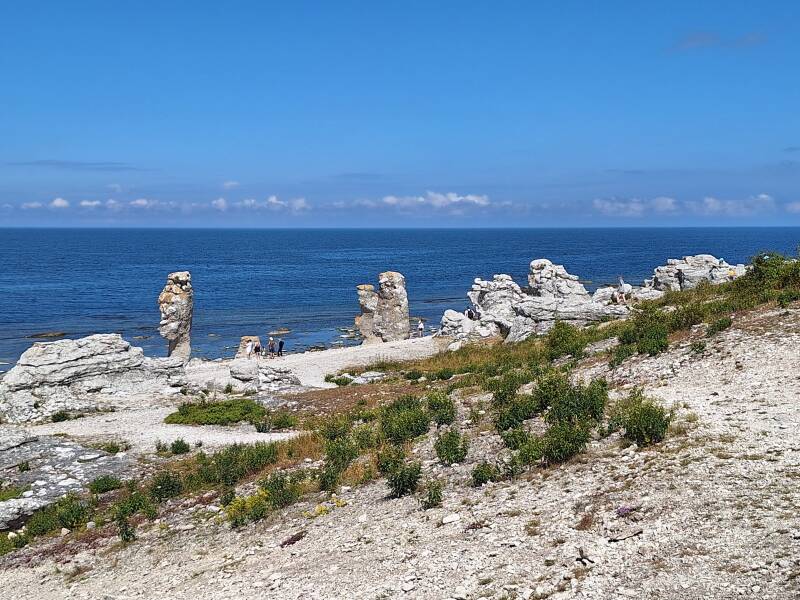
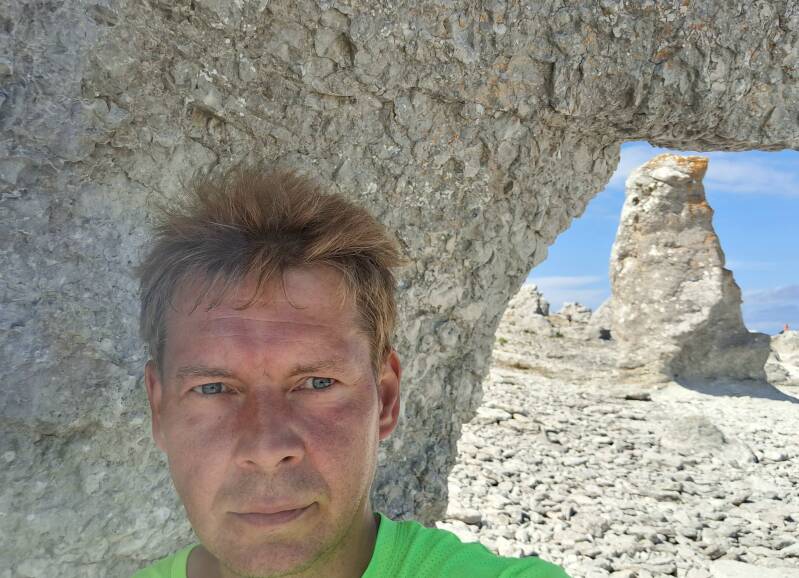
Have to run to the water now, because I am like a wet blanket, after that cycling. Like an alga.
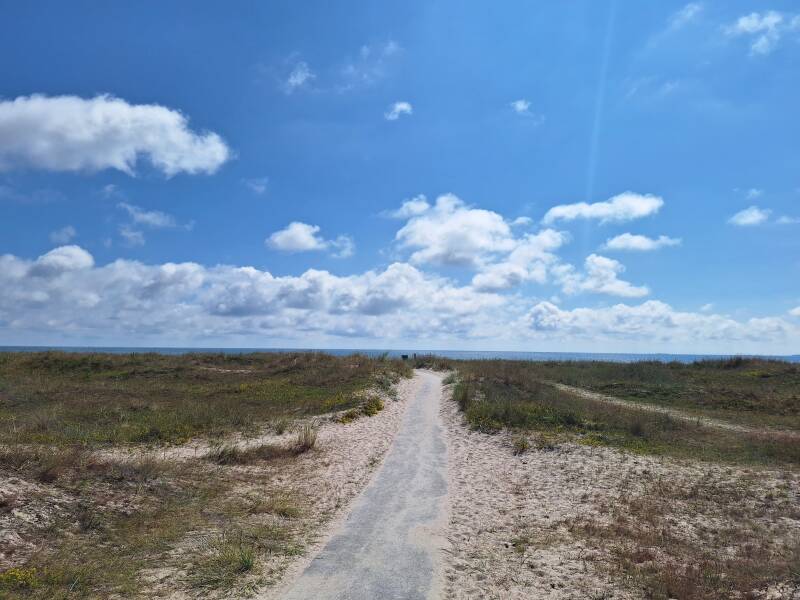
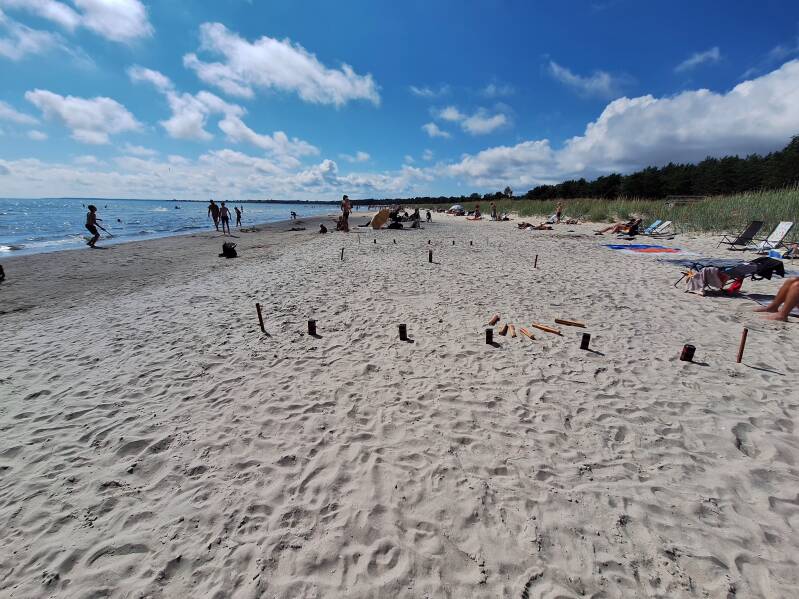
Vikings. The name of the game is Vikings. What's next? Ingmar Bergman? Bergmancenter. It is more than two hours by foot - too hot day. Better not.
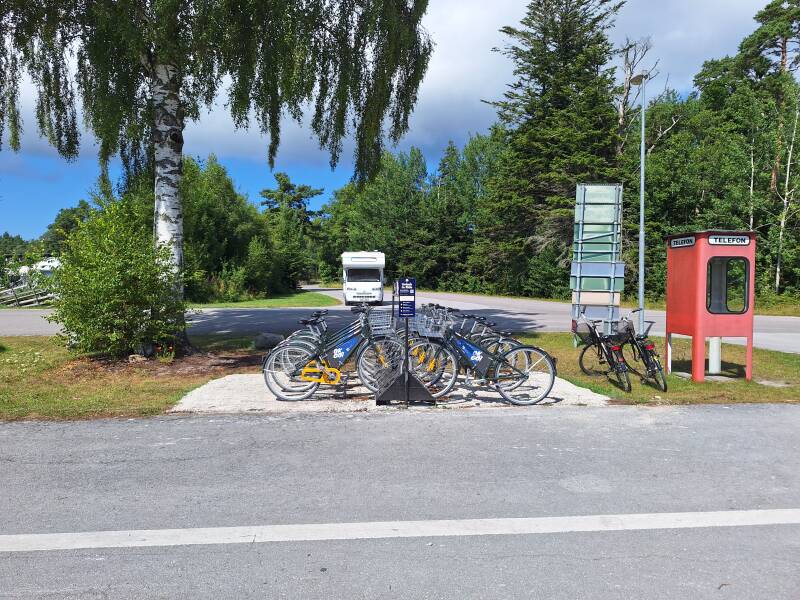
There is something I studied about cycling safety. If it is a touristic area, hot, very difficult trail behind and one reaches to parking area. Sees only that bike rental spot in 15 metres and has got through some slow bikers. There are parked cars and if some school child comes from behind a car - one sees him/her only when he/she is in front of you. Because school child is not tall, can't see him before. Good that the breakes were good. No accident. One meter. A little shaky, breakes down said I didn't see you, you came from behind that car. Sorry, sorry. One meter. This time was good, no accident. Those automatic bike rentals are per hour payment, that is also and the bikes might not be as good as they should. But both smiled, no accident.
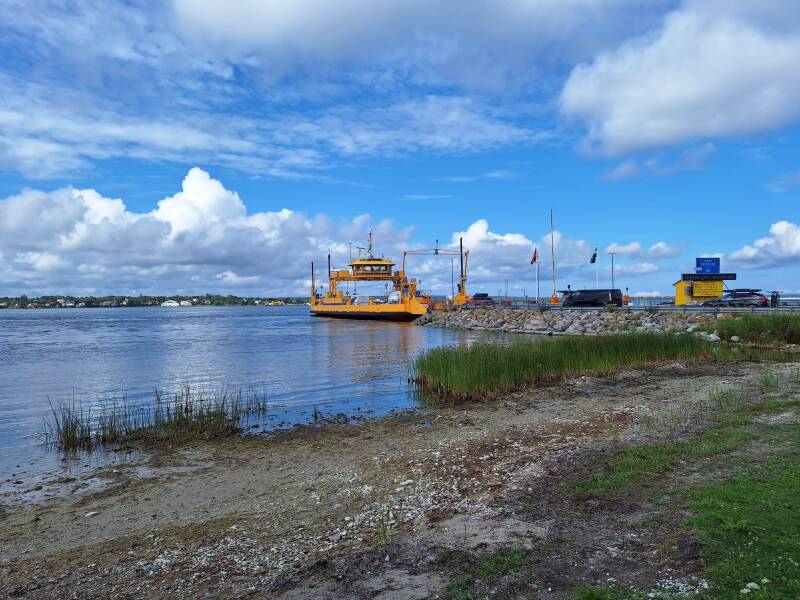
Near Bunge Kyrka are many interesting sights: stone labyrinth, thatched roof houses, other.
More photos from today:
https://drive.google.com/drive/folders/1o5D9KOKXfPt_Q1eQPk6skadZ5qMBGZRv
Tomorrow probably Brucebo or Visby, have to check stops...
Actually the medieval churches are really beautiful here. Could do the tour of 100 medieval churches.
Why not getting to swim in Baltic Sea, Visby tour - just to go to the water from nearby Almadalen. By bikes there and good refreshment on hot summer day, after it to...
Only I have planned already a quite complicated tour plan, so I have to keep on going with that...
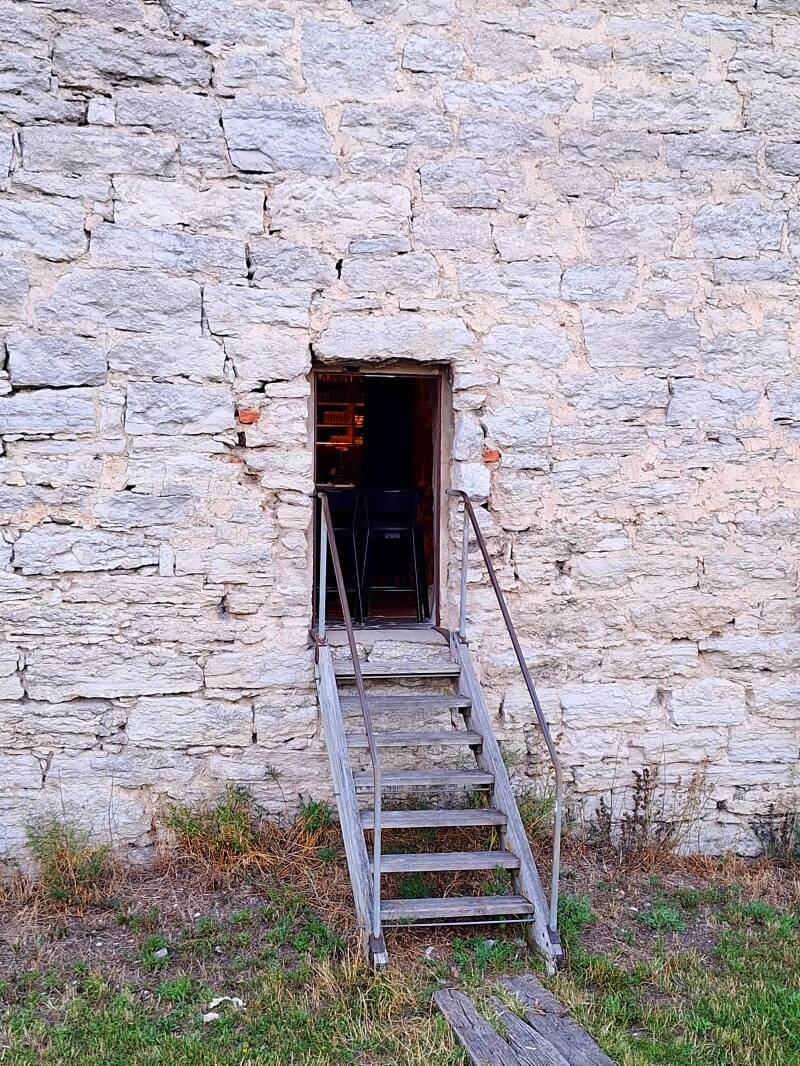
Visby Hof ;)
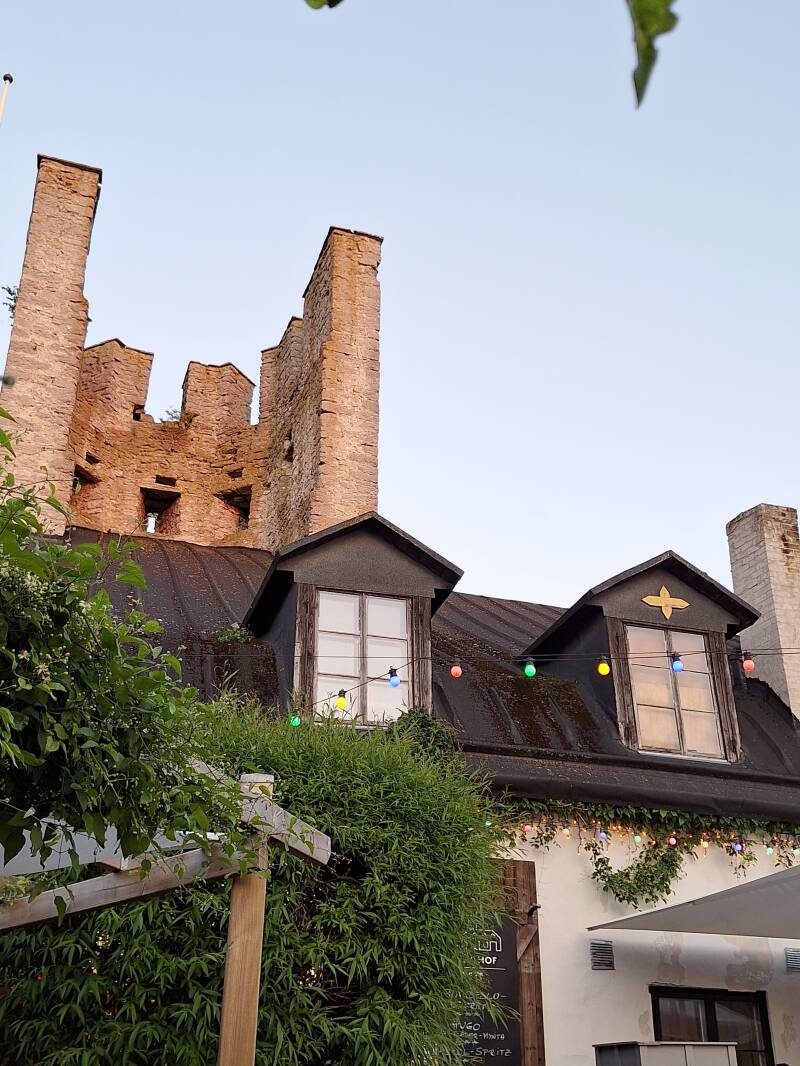
25.07.2025
Afternoon to Brucebo or Ringmür, depends on weather. Or... To practice and walk through. Until that time, plants.
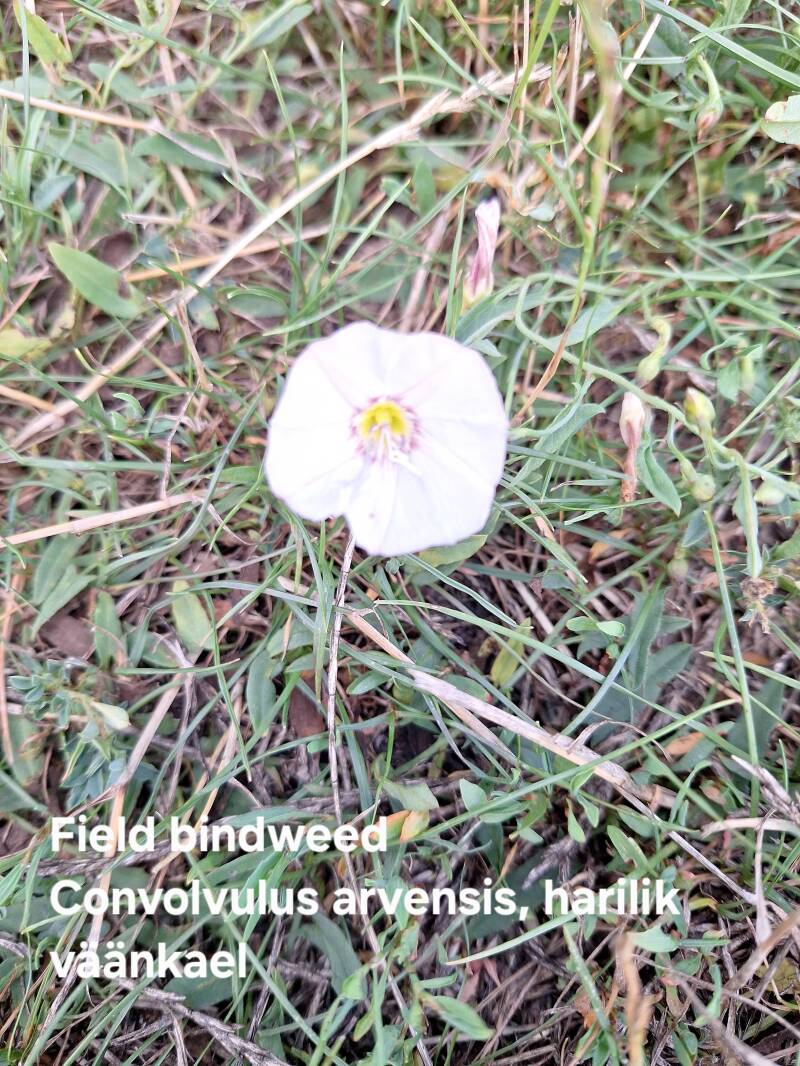
Alder - al - lepp...
I think I could try to do 9 day trips to whole Gotland, Visby, 2-3 days. But in April-May, perhaps June too, September. Very interesting.
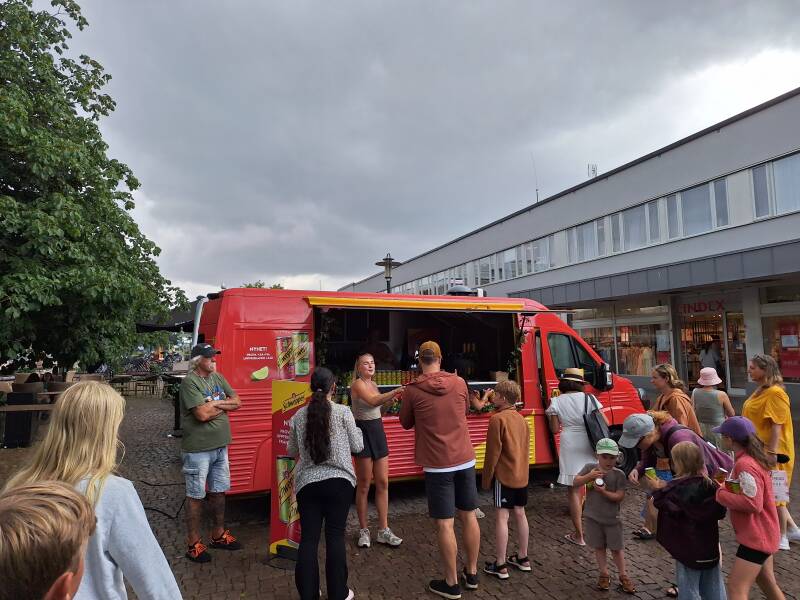
Lemonade propaganda. For free. New products. Raining, trying to do my final rehearsal tomorrow. Should I change it for shopping tour when it is raining. I could introduce it well or to offer free raincoats. Is Abba and similar from Sweden coming music just composed without any professional orchestra background? Like no composer, nor conductor.
Short visitation to Klintehamn, to South of Visby, however not going to check out the Karl's islands... Many ferns on the road. Why the bus is totally empty?
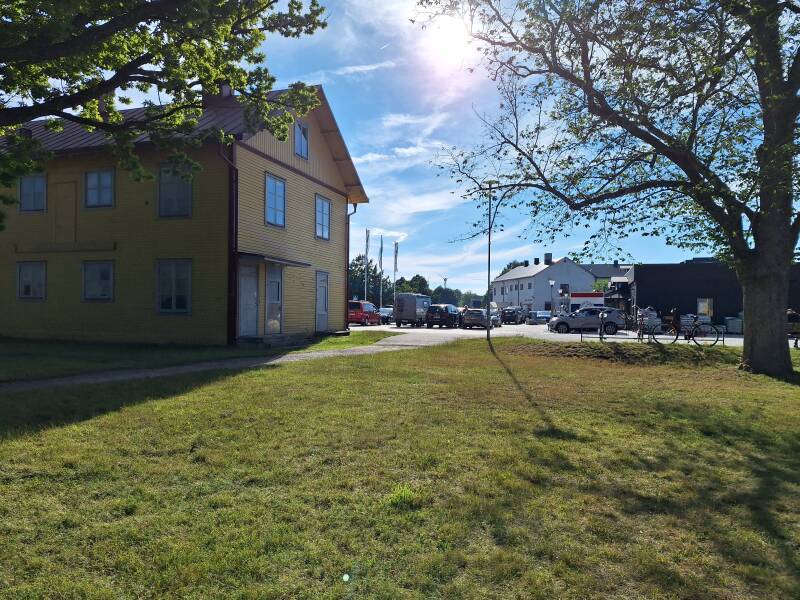
Arrived to Klintehamn.
Christoffer studied in university IT studies, but works for Sigma. He gave me very different new insight for Nordic history. I just met him. Was opened for my questions.
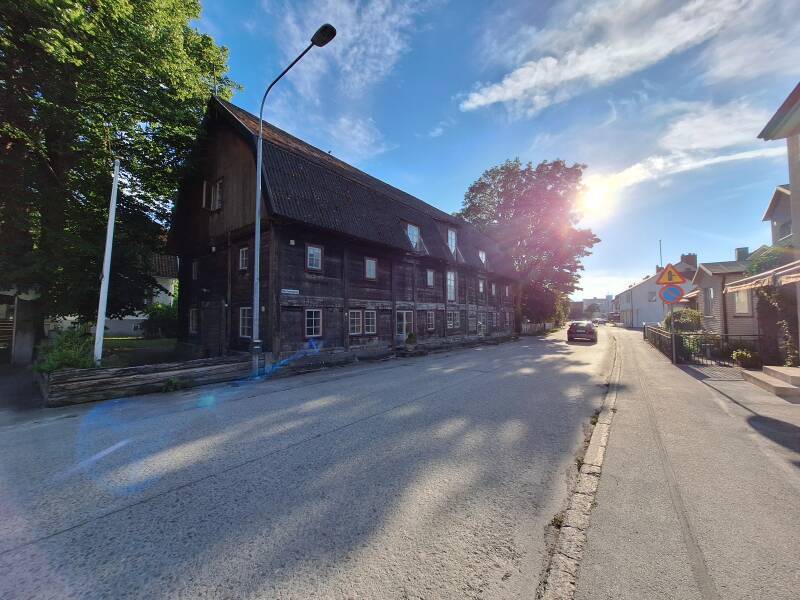
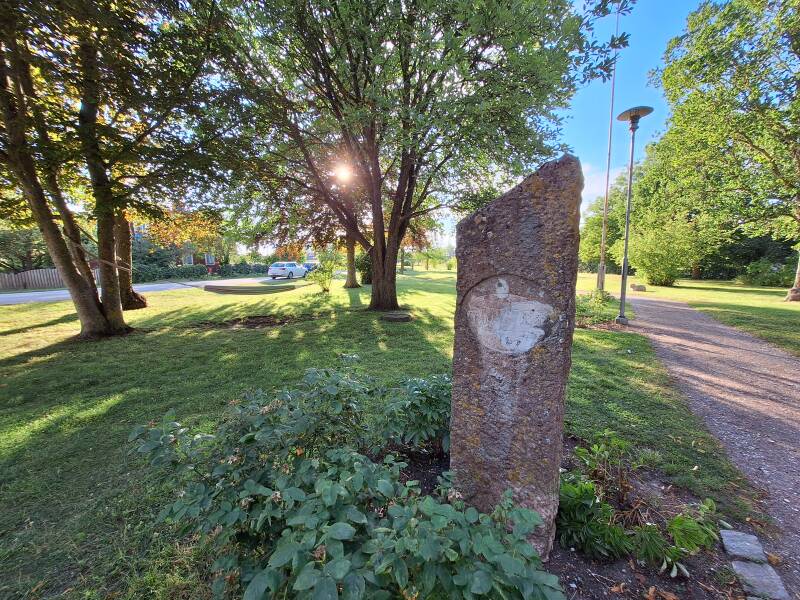
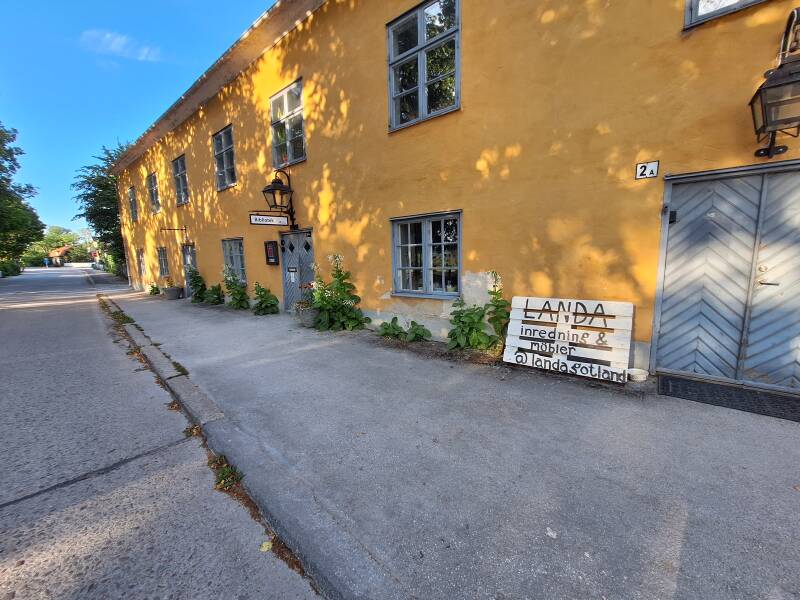
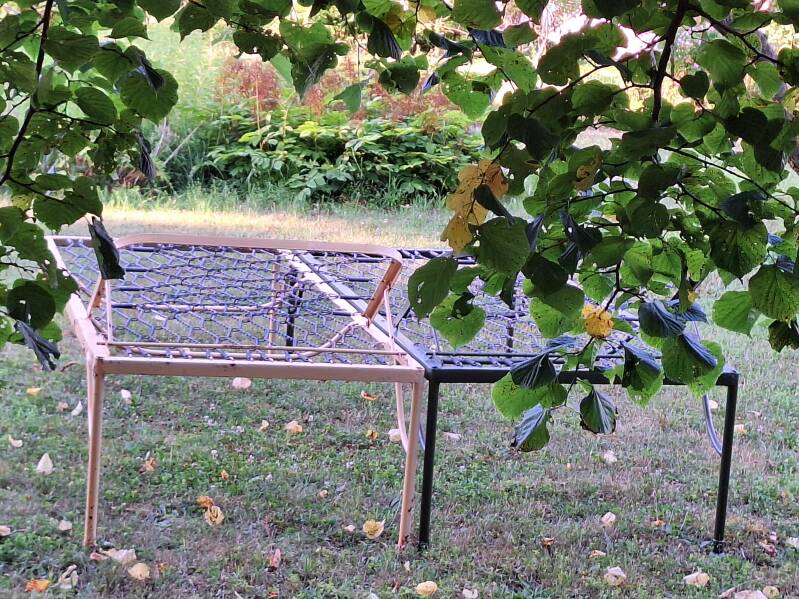
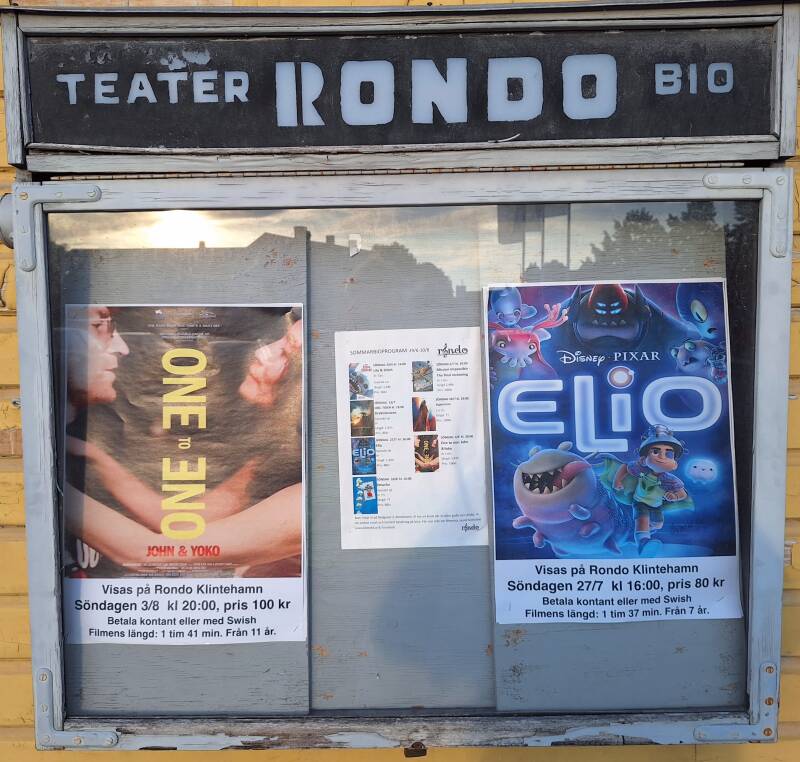
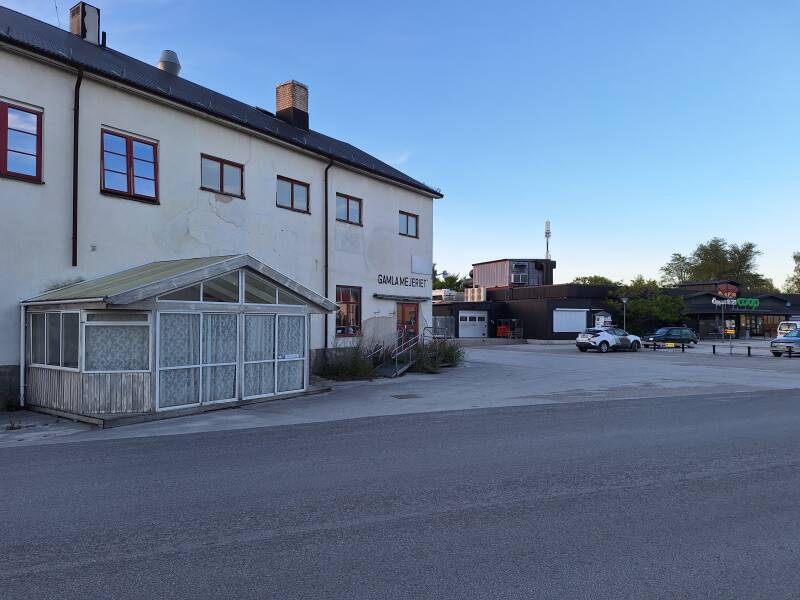
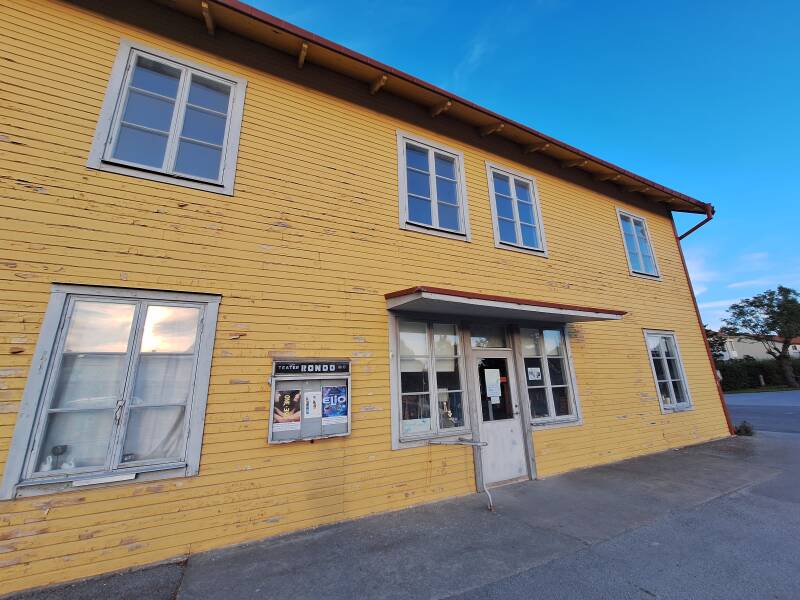
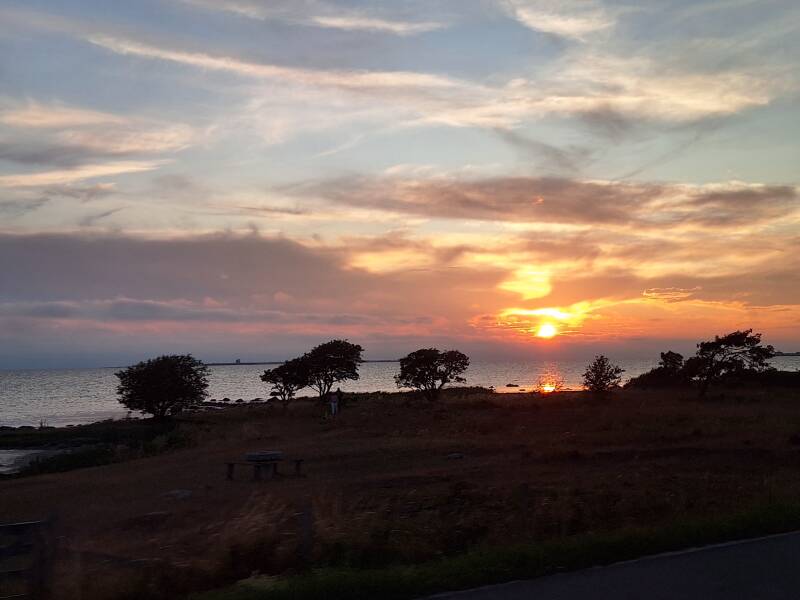
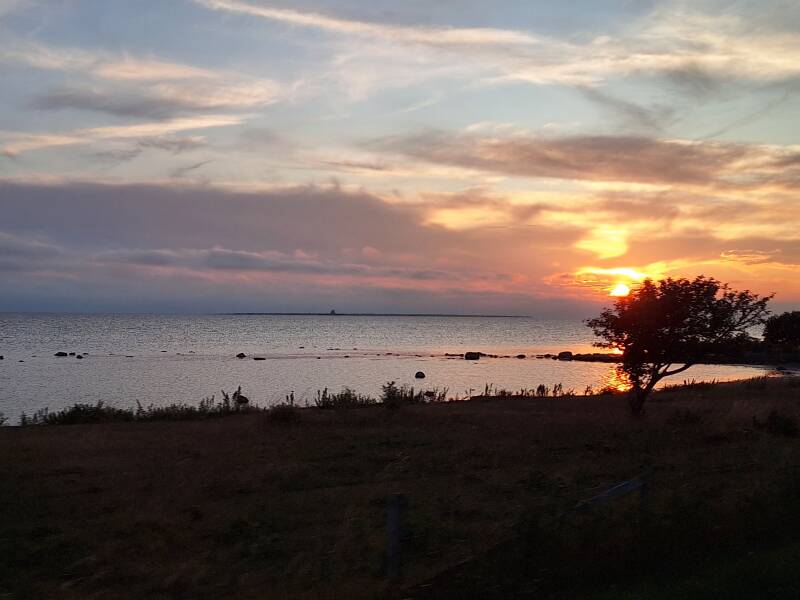
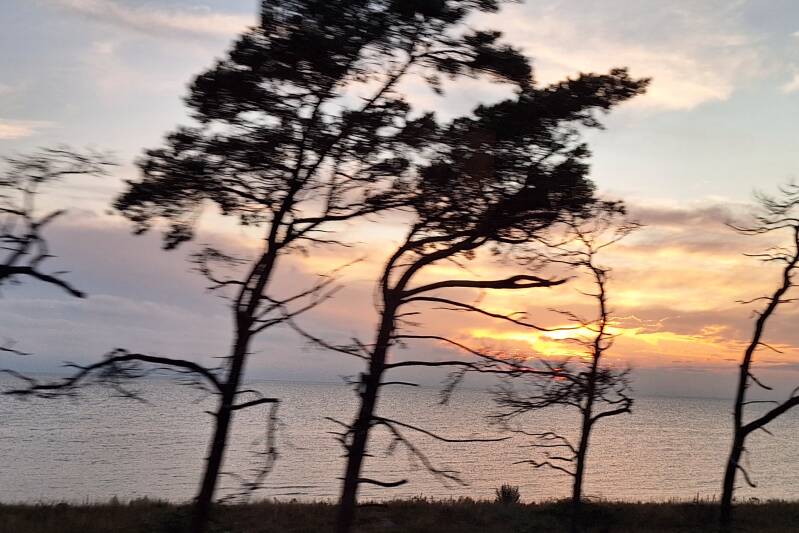
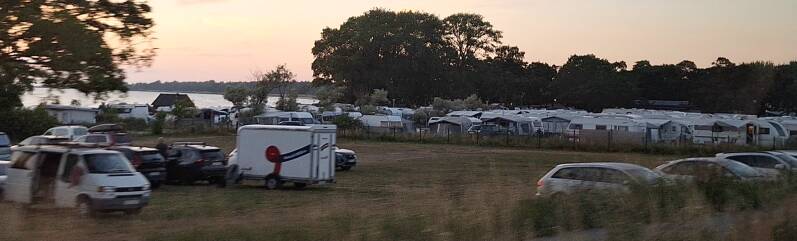
Tofta
The bus is full of young people.
Sweden is holding number one position in having the highest number of islands. Finland is second.
There are 200 000 Fins living in Sweden? Why? Main reason was one economical shift. After II WW - history. They still say that Swedish economy is slightly better.
But why the most controversial politician of Sweden and a man with social views Olof Palme was killed. Unsolved. Stockholm. On the other context Astrid Lindgren, how many characters she crafted. Did she visited families?
26.07.2025
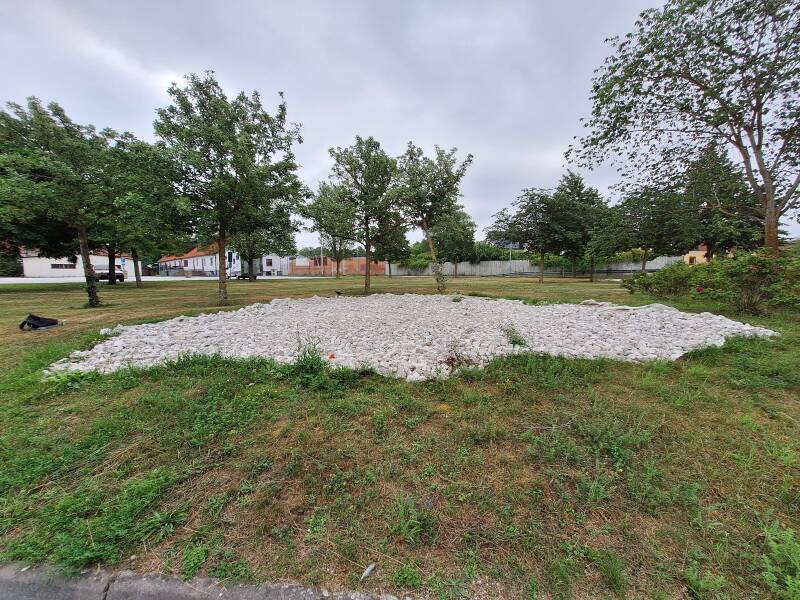
27.07.2025
Thank You. Aitäh. Probably the end of the blog. On 30th I have a flight to Helsinki and then ferry to Tallinn.
🐬🦔🦐
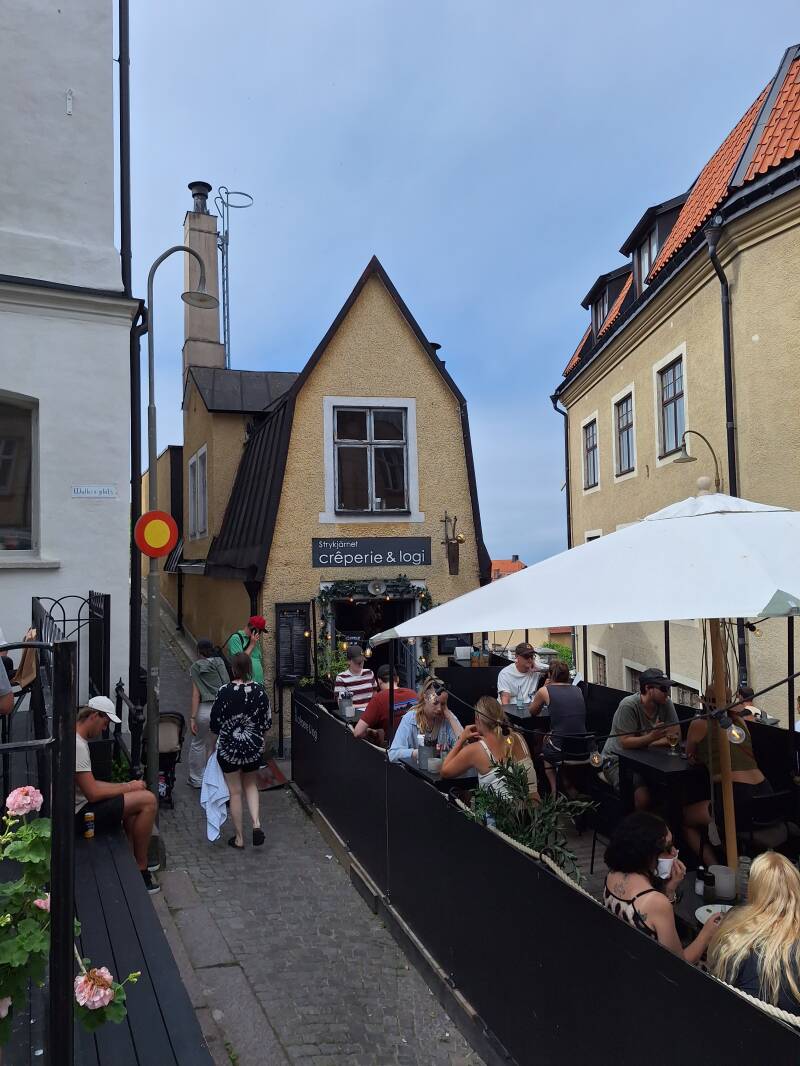
Add comment
Comments